
Loading, please wait...


LOT 2480
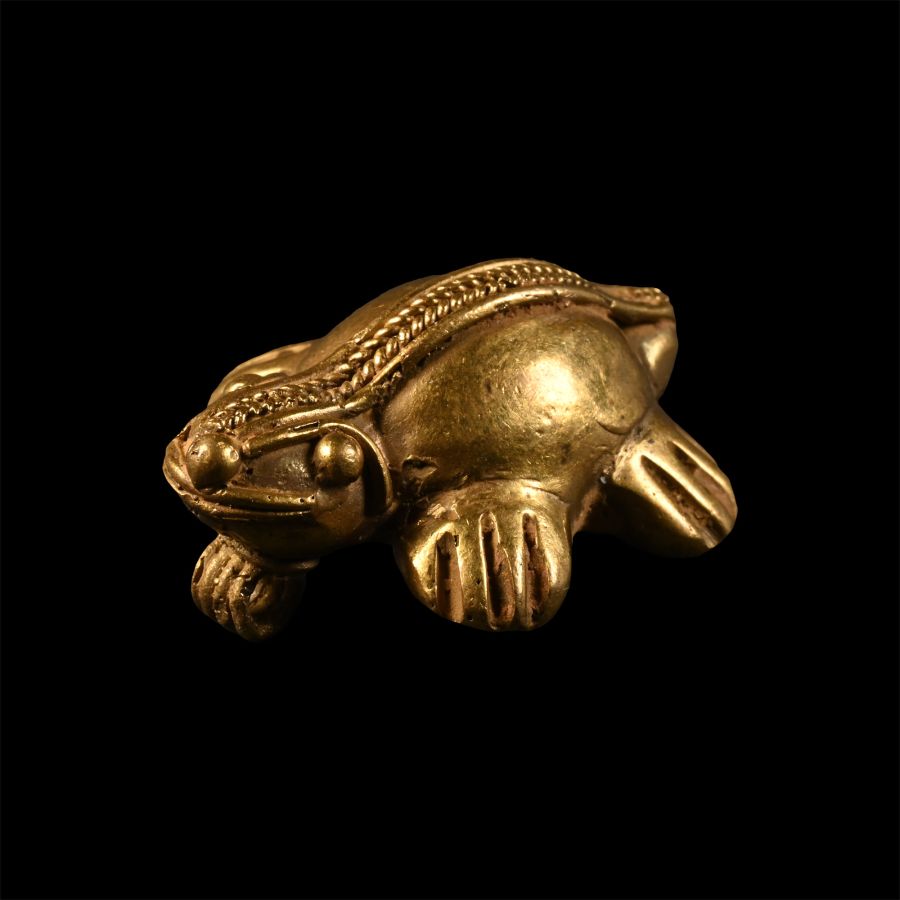
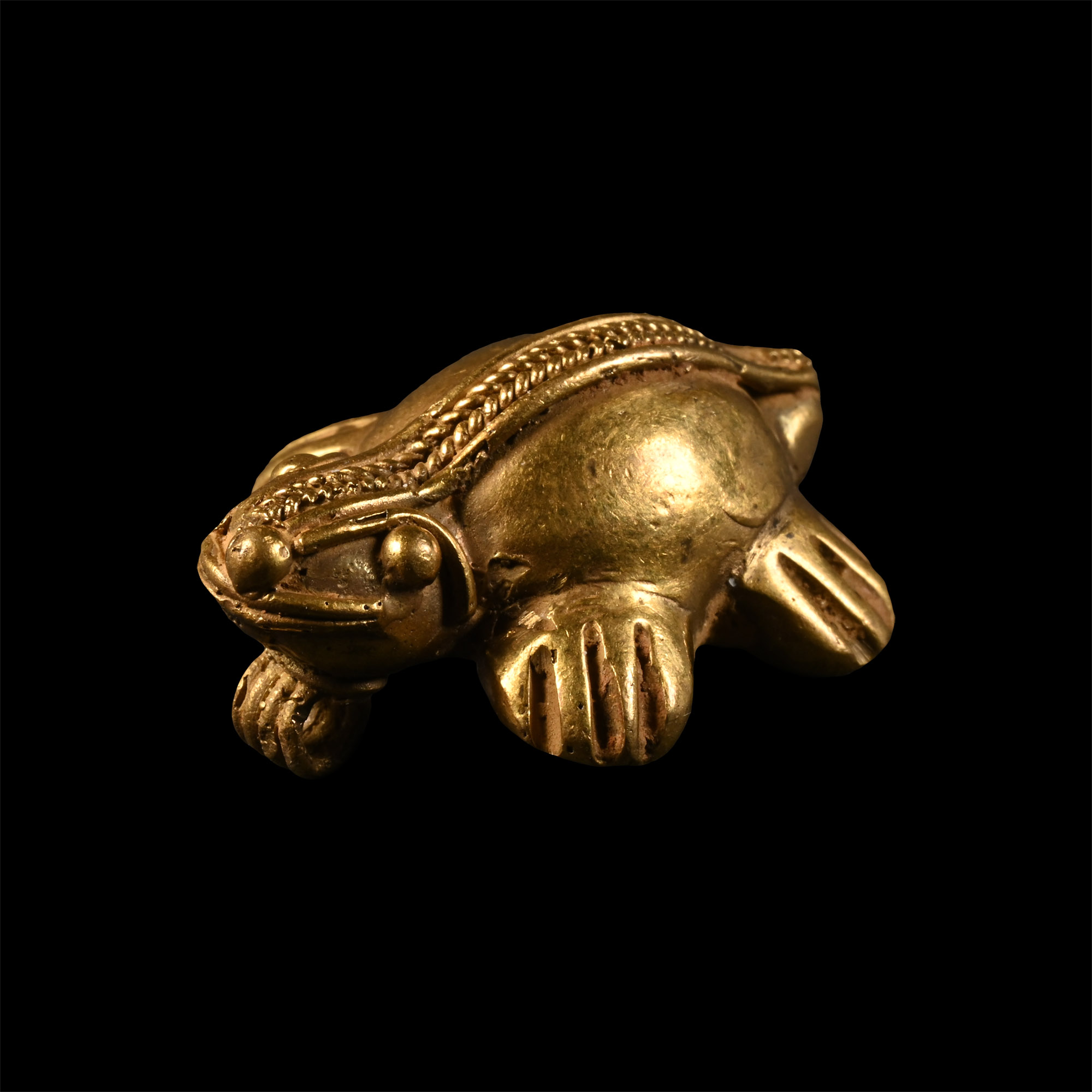
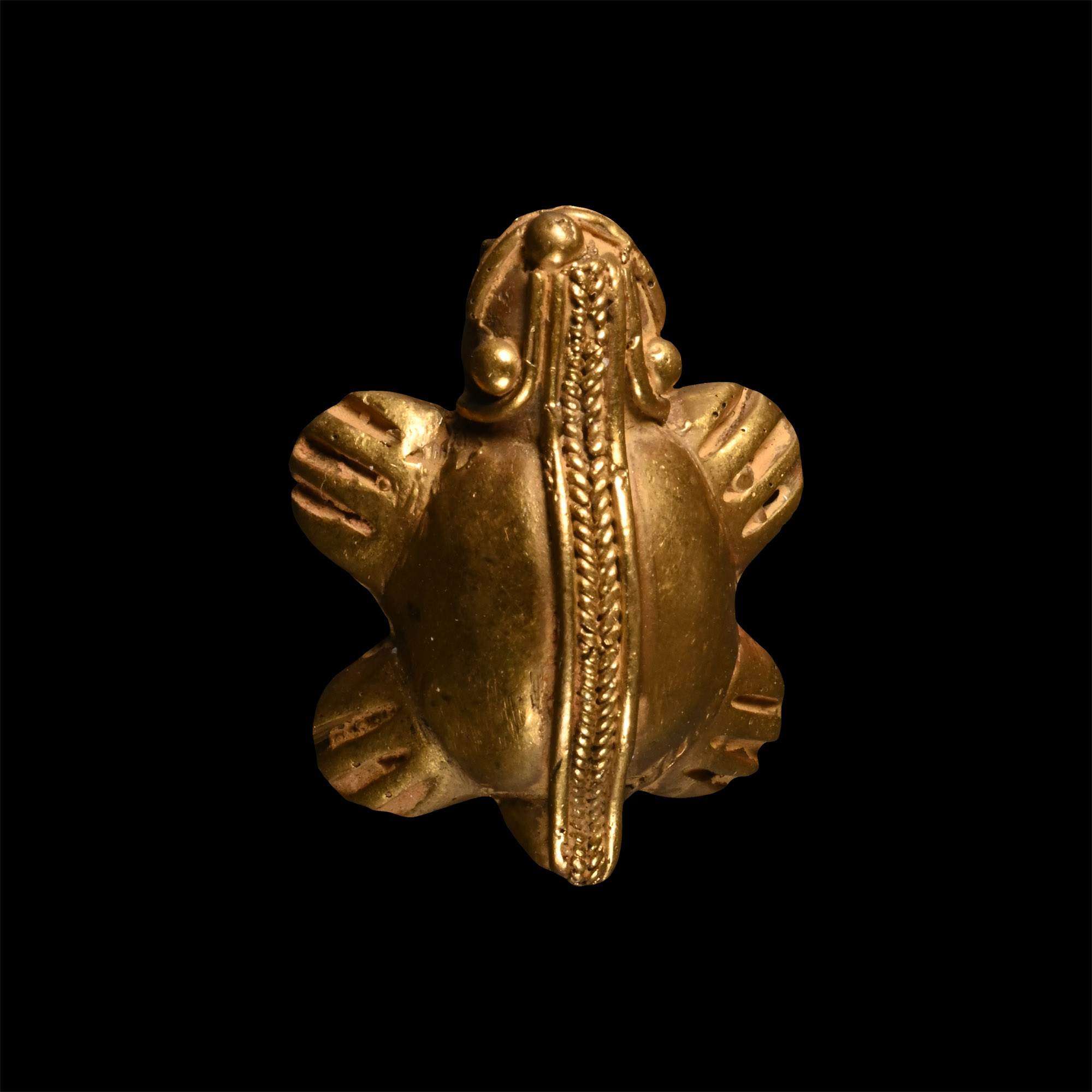
Pre-Columbian Gold Frog Amulet
9TH CENTURY A.D. OR LATER
1 in. (5.75 grams, 27 mm).
Tumbaga (gold-copper-alloy) amuletic pendant with applied filigree and ropework bands, hollow to reverse with ribbed suspension loop; Tairona workmanship.
ProvenanceFrom the collection of Mrs Davenport, Cambridgeshire, UK, from the past 30 years.
This lot is accompanied by an illustrated lot declaration signed by the Head of the Antiquities Department, Dr Raffaele D’Amato.
See Mitchell, J., The Art of Pre Columbian Gold, Weidelson and Nicolson, London, 1985, p.43, for a range of frogs crafted in Panama.
CONDITIONTimeLine Auctions follows a vetting process to ensure the authenticity and legality of all items, reinforcing our commitment to integrity and responsible trading. Each antiquity, antique, and coin lot undergoes thorough examination by a vetting committee of at least ten external specialists, professional trade association members, scientists, and archaeologists: Our Vetting Process
AUCTIONS:
TimeLine is a leading auction house specialising in antiquities, ancient art, collectables, natural history, coins, medals, and books. Our auctions offer museums, collectors, historians, and enthusiasts the opportunity to acquire unique and historically significant pieces.
-
Pre-Columbian Terracotta Colima Standing Figure
100 B.C.-250 A.D.Sold for (Inc. bp): £117
Modelled in the round as a long-haired female with arms folded across the chest, applied hair, ears, girdle and loincloth; impressed points to the eyes and pierced ears. 109 grams, 15.2 cm
From a USA private collection. Ex Dr David Harner collection, Arkansas, 1950s-1960s. Ex TimesAncient, Bristol, UK. Accompanied by a copy of a previous catalogue entry. This lot is accompanied by an illustrated lot declaration signed by the Head of the Antiquities Department, Dr Raffaele D’Amato.
Hand modelled early Colima figures are famed for their variety and insight into how the Colima lived thousands of years ago. Figures were hand modelled and show both men and women partaking in daily activities in addition to the shaman and dancers engaged in religious ceremonies. -
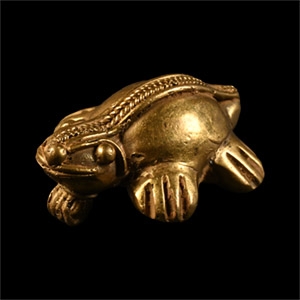
Pre-Columbian Gold Frog Amulet
9th century A.D. or laterSold for (Inc. bp): £715
Tumbaga (gold-copper-alloy) amuletic pendant with applied filigree and ropework bands, hollow to reverse with ribbed suspension loop; Tairona workmanship. 5.75 grams, 27 mm
From the collection of Mrs Davenport, Cambridgeshire, UK, from the past 30 years. This lot is accompanied by an illustrated lot declaration signed by the Head of the Antiquities Department, Dr Raffaele D’Amato. -
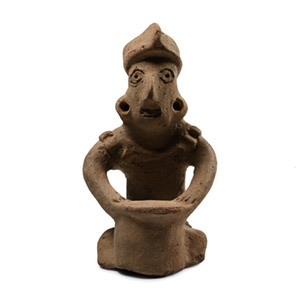
Pre-Columbian Terracotta Colima Drum Player
100 B.C.-250 A.D.Sold for (Inc. bp): £59
Modelled in the round as a seated male playing a drum, wearing a pointed cap, ear plugs and a necklace, sitting with both hands resting on the edge of the drum. 346 grams, 14.6 cm
From a USA private collection. Ex Dr David Harner collection, Arkansas, 1950s-1960s. Ex TimesAncient, Bristol, UK. Accompanied by a copy of a previous catalogue entry. This lot is accompanied by an illustrated lot declaration signed by the Head of the Antiquities Department, Dr Raffaele D’Amato.
Hand modelled early Colima figures are famed for their variety and insight into how the Colima lived thousands of years ago. Figures were hand modelled and show both men and women partaking in daily activities in addition to the shaman and dancers engaged in religious ceremonies.
