
Loading, please wait...

LOT 2333
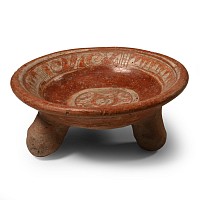
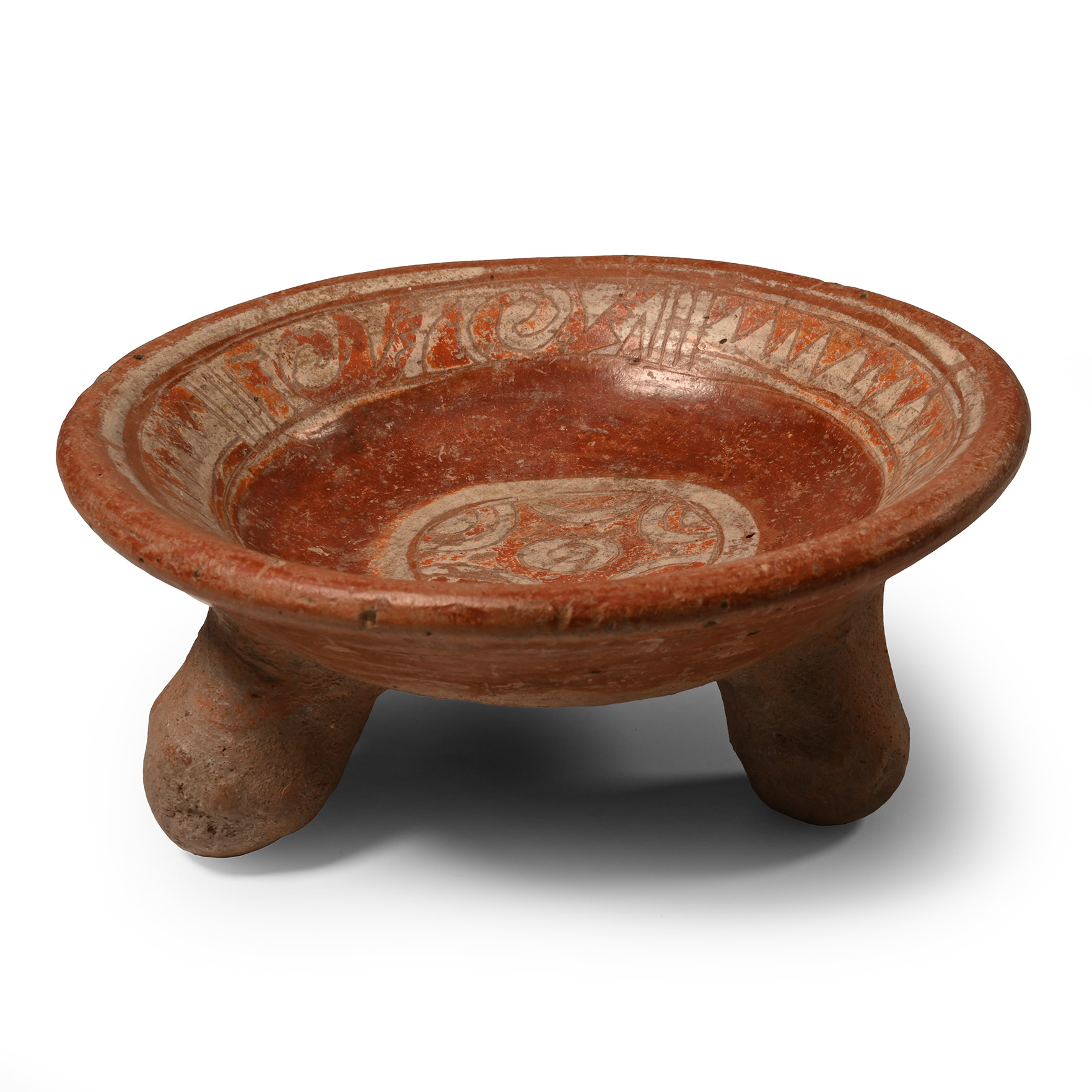
Pre-Columbian Aztec Rattle-Legged Tripod Bowl
12TH-14TH CENTURY A.D.
5 5/8 in. (358 grams, 14.2 cm wide).
Broad dish with three radiating stub legs, central tondo with reserved star pattern, outer band of spirals and interlocking triangles; the legs hollow-formed with inclusions to form a rattle. [No Reserve]
ProvenanceFrom a family collection mostly formed in the 1940s-1950s, thence by descent.
CONDITIONTimeLine Auctions follows a vetting process to ensure the authenticity and legality of all items, reinforcing our commitment to integrity and responsible trading. Each antiquity, antique, and coin lot undergoes thorough examination by a vetting committee of at least ten external specialists, professional trade association members, scientists, and archaeologists: Our Vetting Process
AUCTIONS:
TimeLine is a leading auction house specialising in antiquities, ancient art, collectables, natural history, coins, medals, and books. Our auctions offer museums, collectors, historians, and enthusiasts the opportunity to acquire unique and historically significant pieces.
-
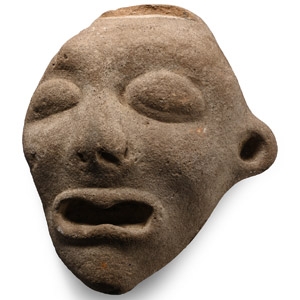
Pre-Columbian Stone Face Mask
Circa 1st millennium A.D.Sold for (Inc. bp): £156
Carved in three-quarte view with bulging lentoid eyes and gaping mouth, old label to verso: '3708'. 318 grams, 13 cm
From a collection acquired on the UK art market from various auction houses and collections mostly before 2000. From an important Cambridgeshire estate; thence by descent. -
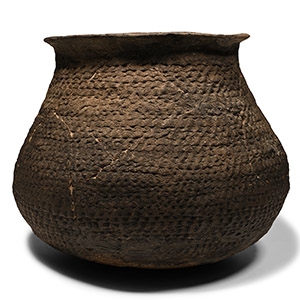
Large Pre Columbian Puebloan Anasazi Black Ware Ancestral Bowl
Circa 13th century A.D.Sold for (Inc. bp): £169
Squat in profile, coil-formed with flared and everted rim, bands of impressed-cord and other texturing to the outer face; restored. 1.66 kg, 26.5 cm wide
From a family collection mostly formed in the 1940s-1950s, thence by descent. -
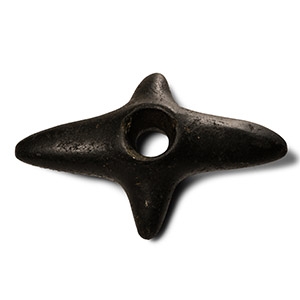
Pre-Columbian Polished Spiked Macehead
Circa 1st millennium B.C.Sold for (Inc. bp): £416
Comprising two long round-section spikes tapering to the ends with socket to the centre and two small lateral ellipsoid-section spikes. 397 grams, 15.9 cm
Acquired in Oxford, UK. From the private collection of Kenneth Machin (1936-2020), Buckinghamshire, UK; with collection no.N177; his collection of antiquities and natural history was formed since 1948; thence by descent.
