
Loading, please wait...
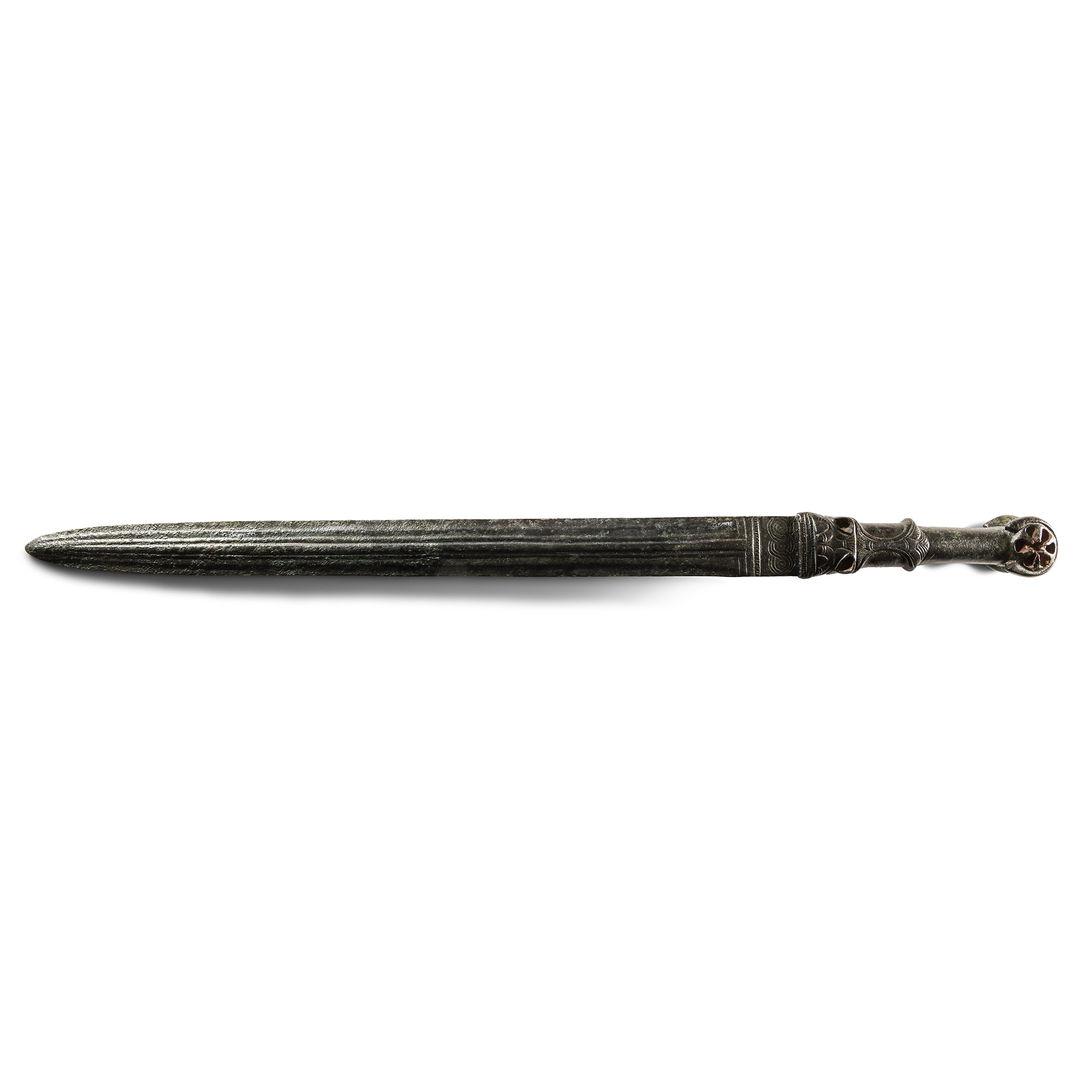
LOT 0293
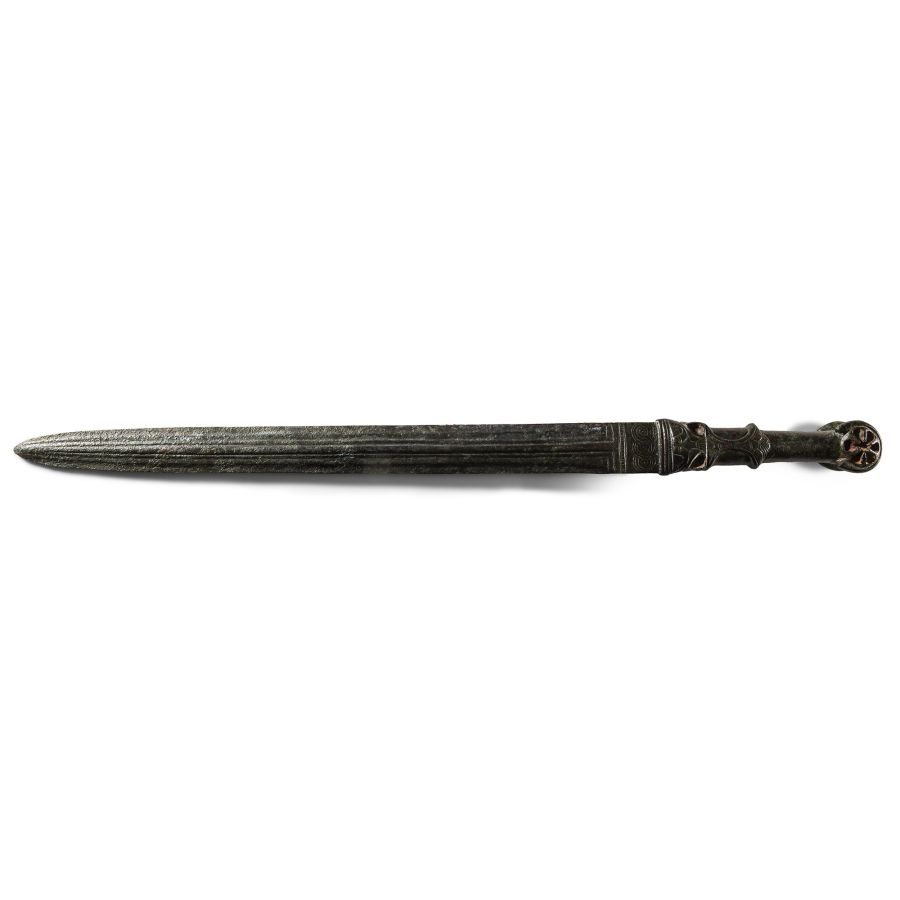
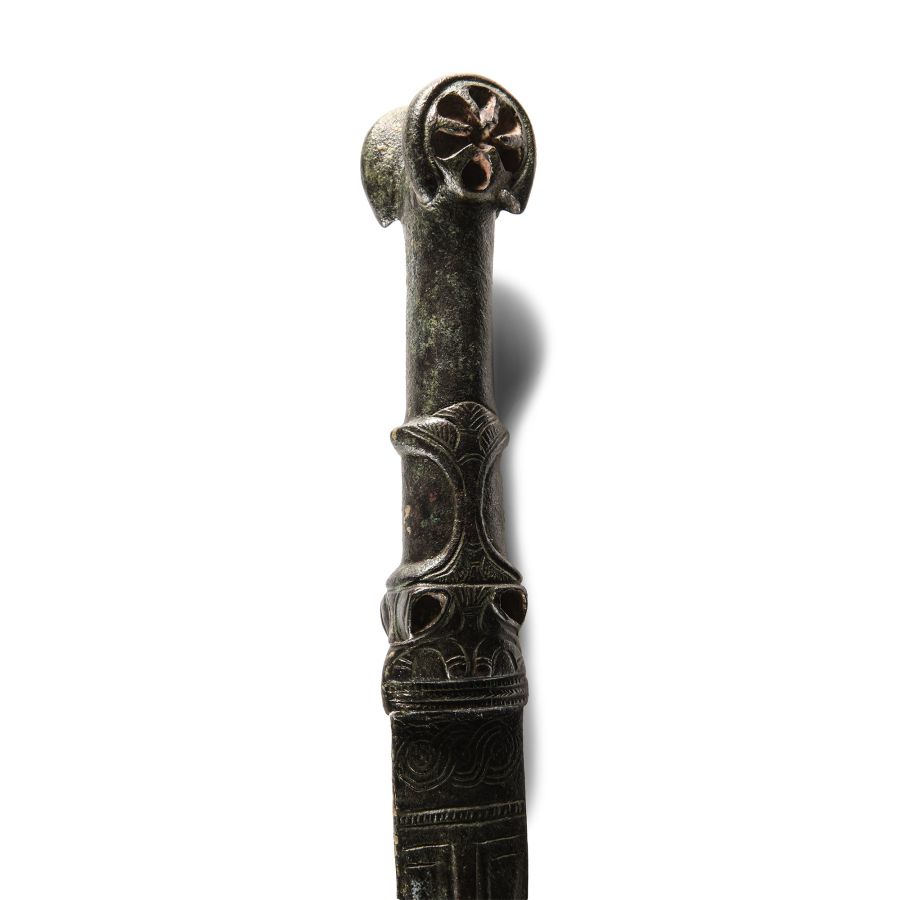
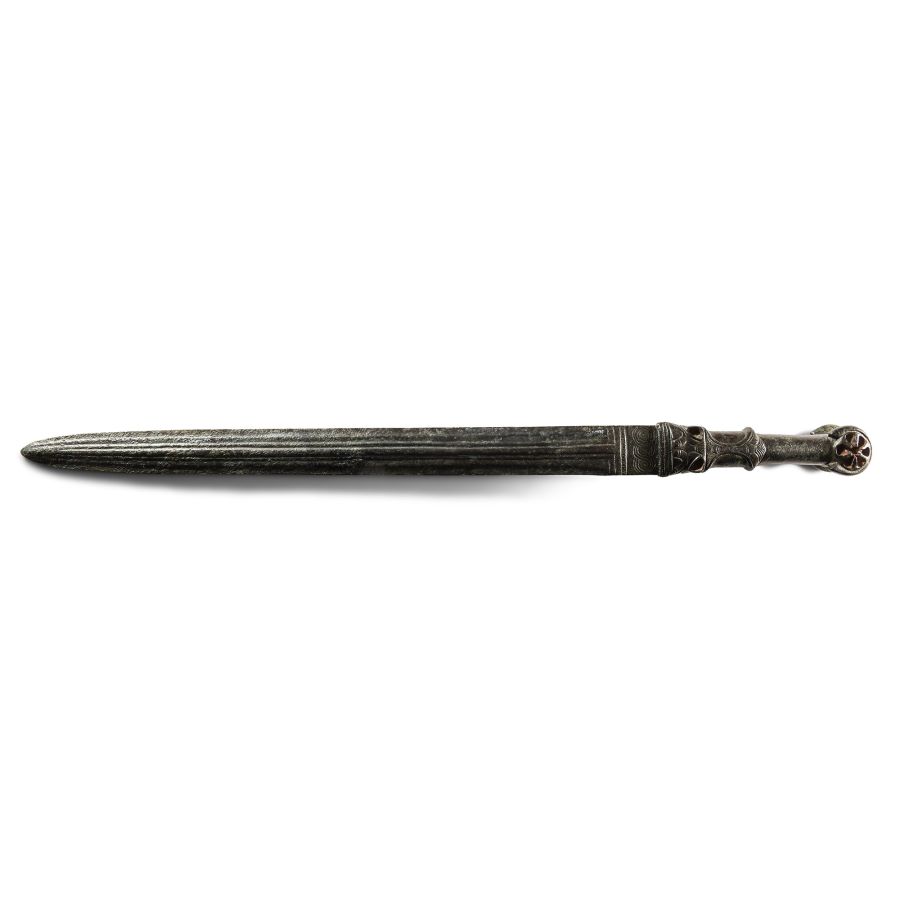
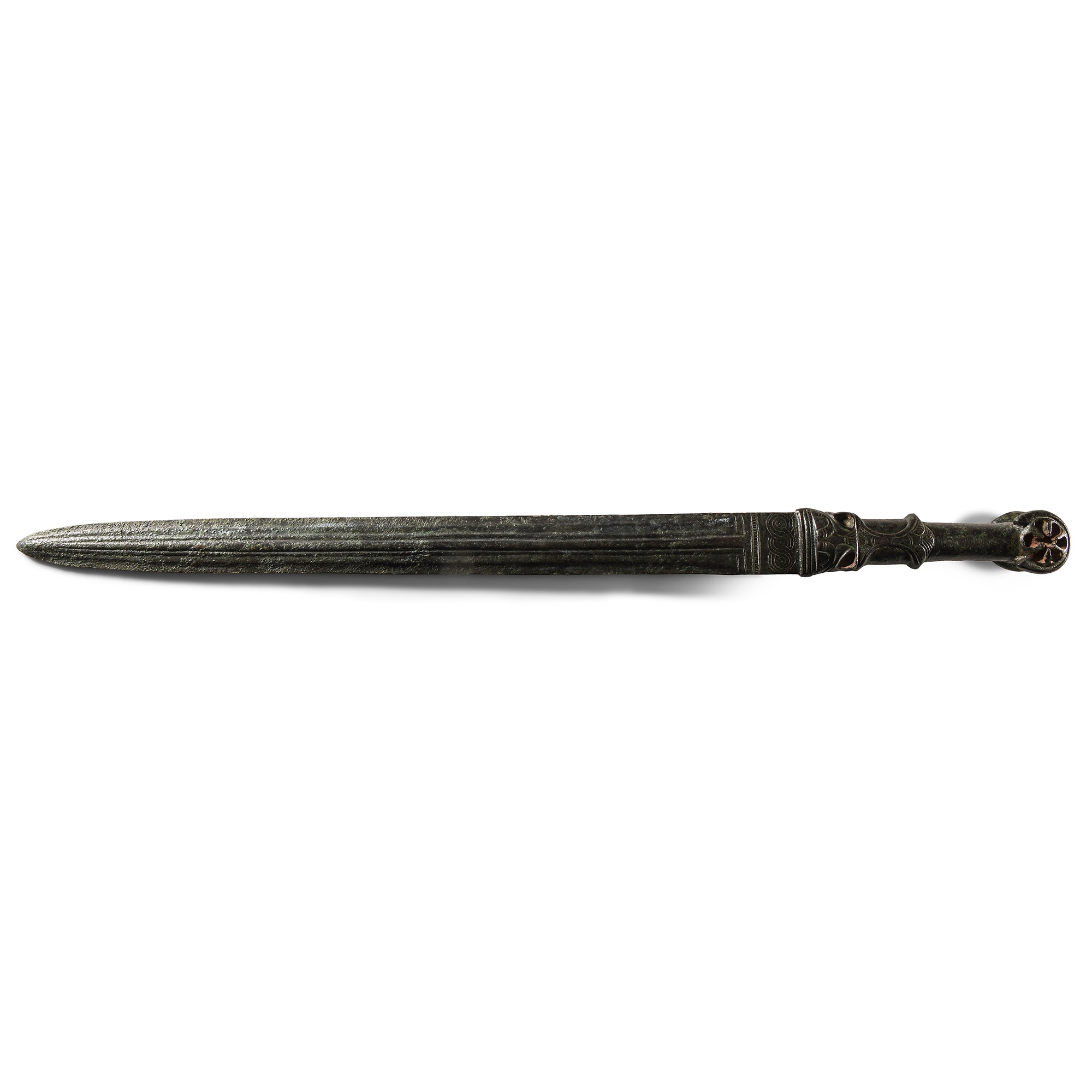
Pre-Achaemenid Bronze Short Sword with Bifurcated Pommel
CIRCA 8TH CENTURY B.C.
19 5/8 in. (665 grams, 50 cm).
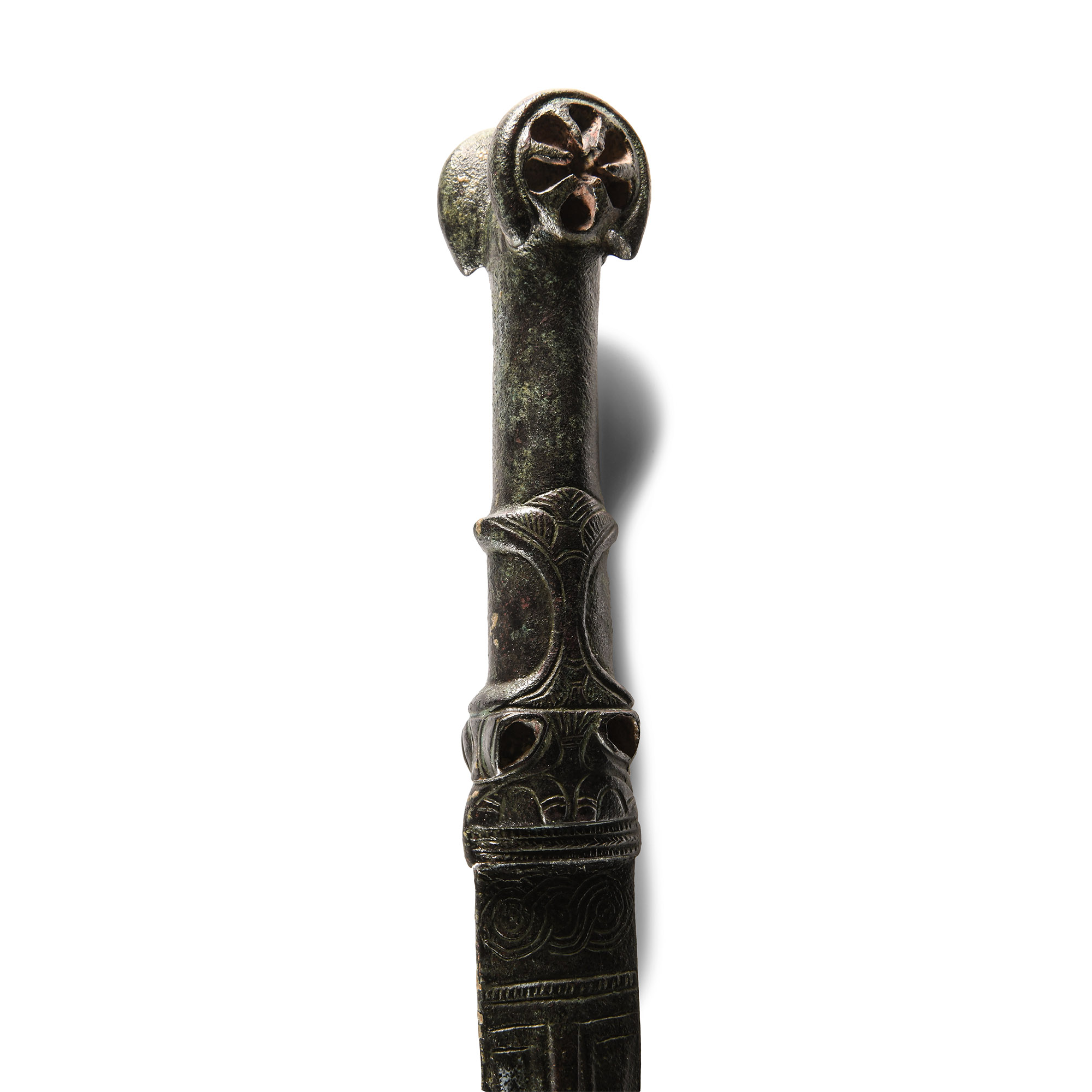
The blade with mid-rib divided in five vertical lines, emerging from the mouth of two stylised lion-heads, the eyes recessed to accept red inlay; the grip and upper part of the blade with incised spiral decoration; the ribbed pommel with twin roundels, each decorated with a recessed six-petalled rosette, traces of red pigment still visible.
ProvenanceEx old English collection.
London art market, pre 2000.
Property of a London, UK, gentleman.
This lot has been checked against the Interpol Database of stolen works of art and is accompanied by search certificate no.11974-210547.
Cf. Muscarella, O. W., Bronze and Iron: Ancient Near Eastern Artefacts in The Metropolitan Museum of Art, New York, 1988, pp.285-286, no.390, fig.282; Christie's, Axel Guttmann collection of Ancient Arms and Armour, Part 2, London, South Kensington, 28th April 2004, lot 32.
FootnotesExamples of swords and daggers with the guard in the form of addorsed animal heads with the blade projecting from the mouths are known from Assyrian reliefs (for example on the orthostats from Tell al Rimah).
CONDITIONTimeLine Auctions follows a vetting process to ensure the authenticity and legality of all items, reinforcing our commitment to integrity and responsible trading. Each antiquity, antique, and coin lot undergoes thorough examination by a vetting committee of at least ten external specialists, professional trade association members, scientists, and archaeologists: Our Vetting Process
AUCTIONS:
TimeLine is a leading auction house specialising in antiquities, ancient art, collectables, natural history, coins, medals, and books. Our auctions offer museums, collectors, historians, and enthusiasts the opportunity to acquire unique and historically significant pieces.
LOT 0293
Pre-Achaemenid Bronze Short Sword with Bifurcated Pommel
Estimate £3,000 - 4,000€3,480 - 4,640 (for guidance only)$4,050 - 5,400 (for guidance only)
-
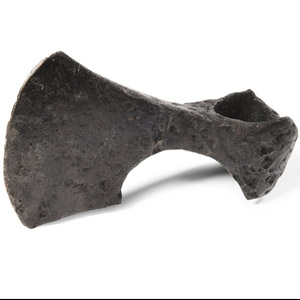
Viking Age Iron Bearded Axehead
9th century A.D.Sold for (Inc. bp): £338
Hand-forged with triangular-section narrow blade widening to a broad bevelled edge with square chin, socket with lateral flanges and rounded panel to the rear. 359 grams, 12.4 cm
From the private collection of a London gentleman, from his grandfather's collection formed before the early 1970s.
The axe seems to belong to the typology of Viking side axes of Wheeler type B (Wheeler III / Rygh 559). Usually these bearded axeheads (skeggöks) had a longer edge, designed to split tree trunks into planks and beams, or heads in two parts. Some of the bearded axes were known as halfÞynna öx, the neck on such 'half thin axe' was thinly forged, to make it lighter. -
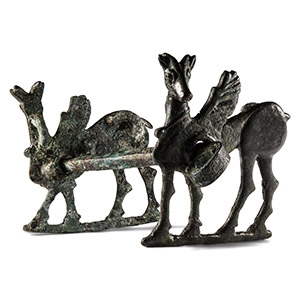
Luristan Bronze Horse Bit
9th-8th century B.C.Sold for (Inc. bp): £910
The cheekpieces formed as winged deer with horns and small ears, a circular opening to the body for the bar to pass through, two loops and studs to the reverse; the bar with looped circular terminals. 543 grams, 17.5 cm
Ex old English collection. London art market, pre 2000. Property of a Lonodon, UK, gentleman.
The most admirable horse bits ever created by man are undoubtedly those from Luristan, a province which extended along the valleys that make up the central part of the Zagros mountains. Worked in cast bronze with the lost wax process, they almost always had a rigid cannon in round or square bars which were flattened and rolled up around themselves at the ends, but their exceptional feature were the figural side bars. The local metalsmiths, in a period of time between 1200 and 700 B.C. managed to create an infinite number of typologies: horses, oxen, ibex, roosters and various mythological animals. -
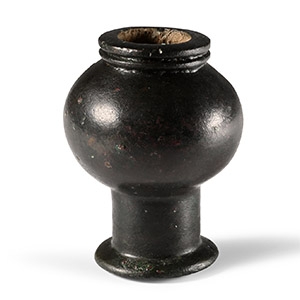
Luristan Sar-e Gorz Luristan Bronze Macehead
14th-13th century B.C.Estimate: £200 - 300 (+bp*)
Opening Bid: £111
With plain globular body, extended to a small raised ring encircling the top of the mace-head, circular short shaft expanding to a circular flat base. 279 grams, 70 mm high
Acquired 1980-2015. Ex Abelita family collection.
Caucasian stone and bronze maces were distinguished by modestly finished, clean processed and predominantly close-to-ball shapes (with a variety of surface finishing, ranging from the smooth, ribbed, lobular forms to the rounded with protrusions and spikes), and the Western Iranian maces, especially the Luristan ones, notable for the variety of different forms. Similar mace-heads, probably realised in Luristan, decorated the head of the sceptres of Assyrian kings like Tukulti-Ninurta I (1243-1207 B.C.).
