
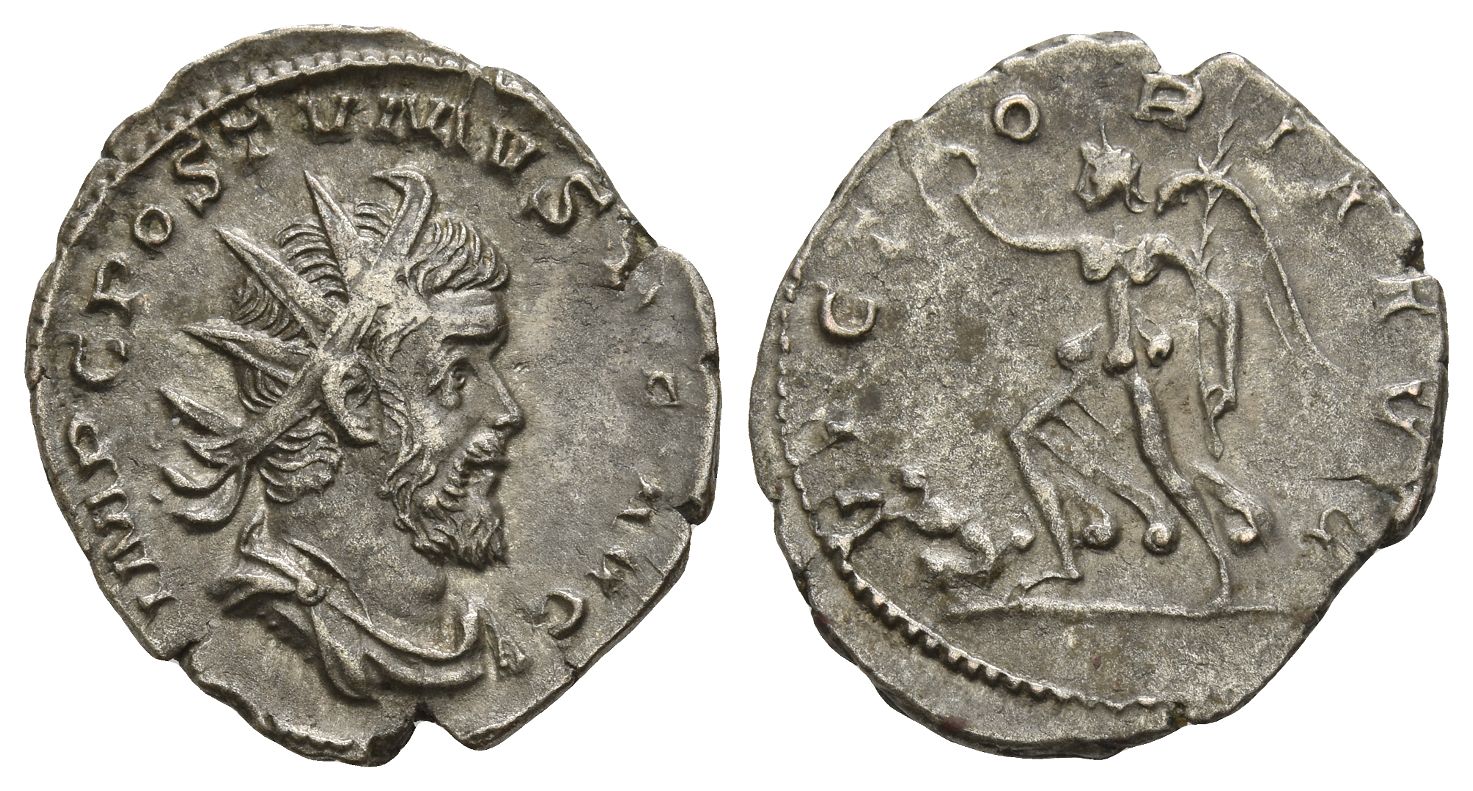
LOT 2968
Postumus, Romano-Gallic Emperor AR Antoninianus. AD 260-269.
Treveri mint; struck AD 260. IMP C POSTVMVS P F AVG, radiate, draped and cuirassed bust to right / VICTORIA AVG, Victory walking to left, holding wreath and palm, treading on captive seated to left. RIC V.2 89 (Lugdunum); RSC 377a (Lugdunum). Good Very Fine.(3.34gr, 22mm, 6h.).
ProvenanceFrom the collection of a London antiquarian, formed since the 1980s.
TimeLine Auctions follows a vetting process to ensure the authenticity and legality of all items, reinforcing our commitment to integrity and responsible trading. Each antiquity, antique, and coin lot undergoes thorough examination by a vetting committee of at least ten external specialists, professional trade association members, scientists, and archaeologists: Our Vetting Process
AUCTIONS:
TimeLine is a leading auction house specialising in antiquities, ancient art, collectables, natural history, coins, medals, and books. Our auctions offer museums, collectors, historians, and enthusiasts the opportunity to acquire unique and historically significant pieces.
-
![Group of Twelve [12] BI Roman Antoniniani.](https://timelineauctions.com/upload/images/items/small/225873-s.jpg)
Group of Twelve [12] BI Roman Antoniniani. 3rd century AD.
Sold for (Inc. bp): £46
Various emperors. 28.57gr total.
Fine to Good Very Fine.
From a private collection formed since the 1940s. From UK art market. Property of an Essex, UK, gentleman. -
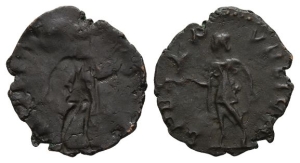
Tetricus I or II BI Antoninianus. AD 272-274.
Sold for (Inc. bp): £65
Uncertain mint. Incuse of reverse / SPES PVBLICA, Spes walking to left, holding flower with right hand and raising hem of skirt with left. For reverse type cf. RIC V.1 135 (Tetricus I, Treveri); cf. RIC V.2 272 (Tetricus II, Treveri). 2.07gr, 20mm.
Very Fine.
From a private, UK, collection in the 1980s. Property of a London, UK, antiquarian.
Brockage errors are caused when an already minted coin sticks to the coin die and impresses onto another blank that hasn't been struck yet, pressing a mirror image of the other coin into the blank. Until the late 3rd century AD brockages showing the reverse are much less common since mint workers would be more likely to see the stuck coin in the anvil die. -
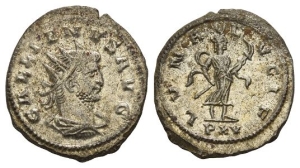
Gallienus BI Antoninianus. AD 253-268.
Sold for (Inc. bp): £39
Antioch mint; struck AD 266-267. GALLIENVS AVG, radiate and cuirassed bust to right / LVNA LVCIF, Luna Lucifera walking to right, holding torch; PXV in exergue. RIC V.1 609 (Asia, sole reign); MIR 1665k; RSC 599. 4.33gr, 22mm, 11h.
Extremely Fine. Fully intact silvering.
Acquired on the UK art market; Property of an Essex, UK, gentleman.
