
Loading, please wait...
LOT 1333
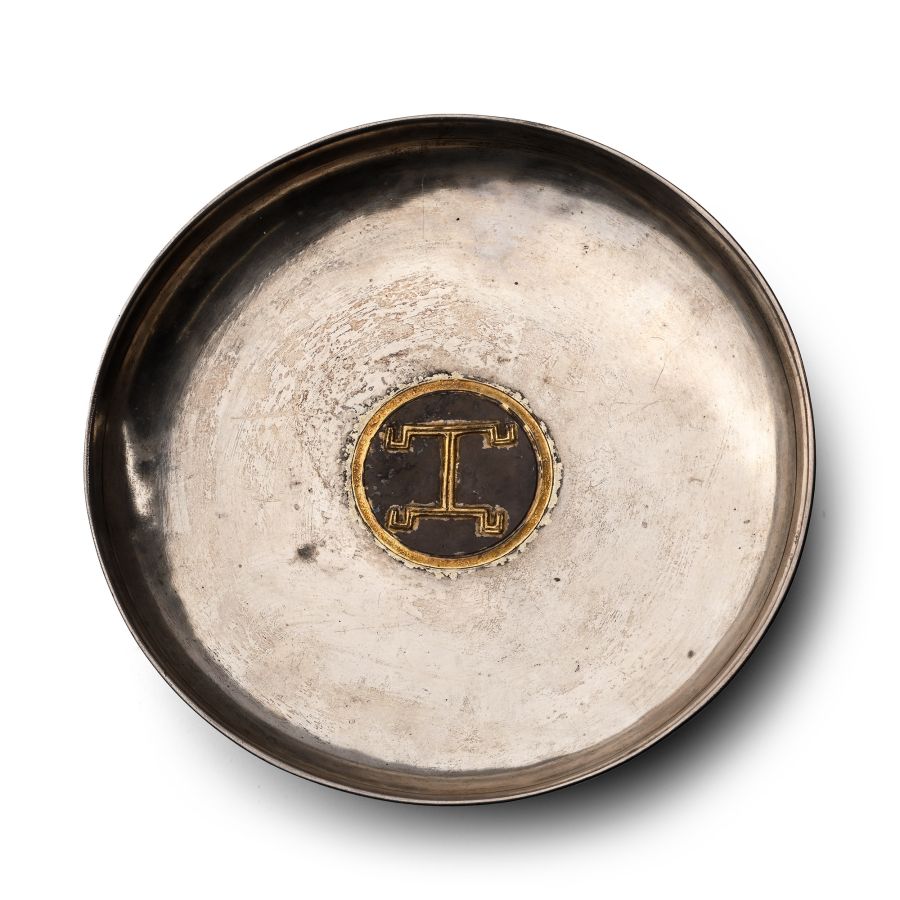
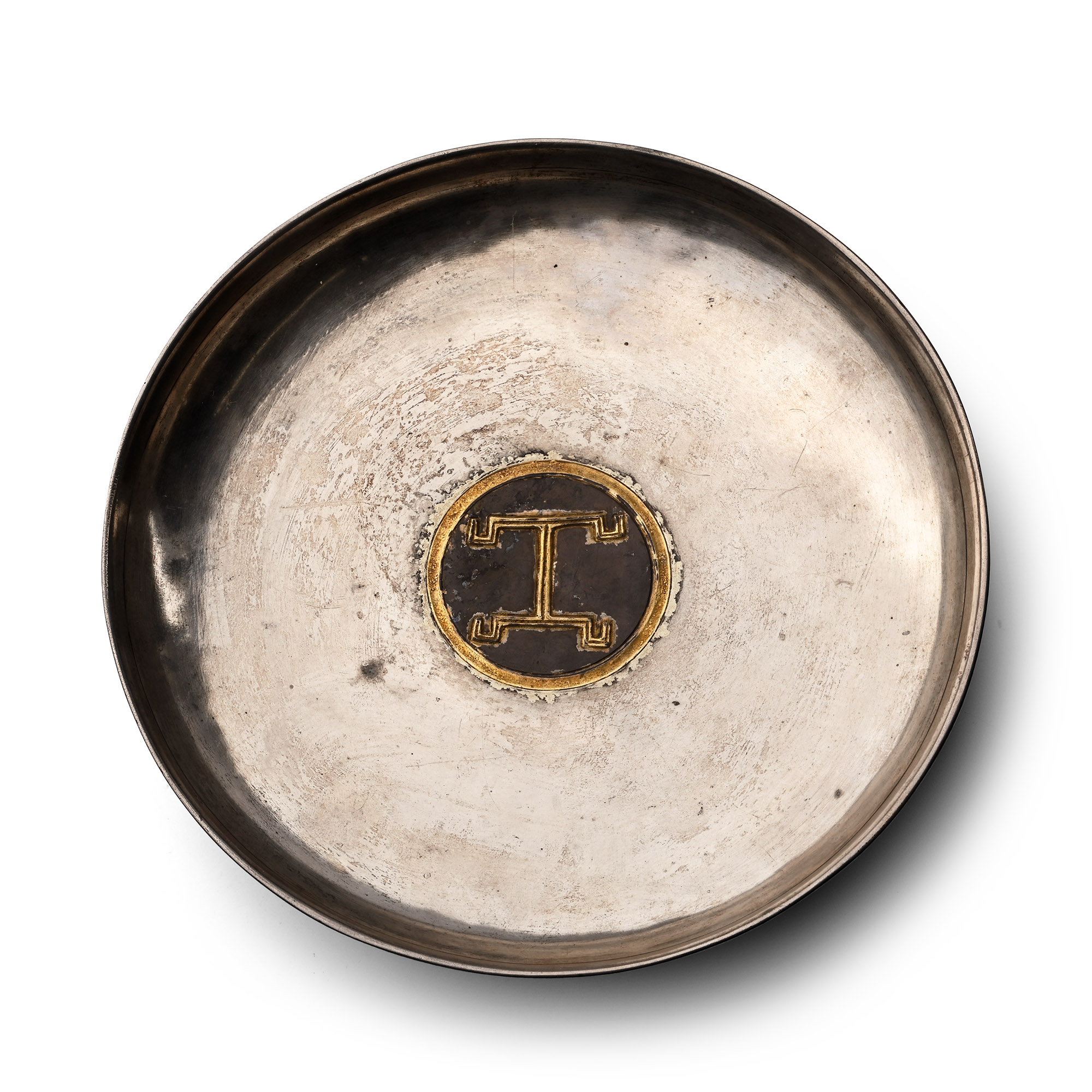
Post Sasanian Silver Footed Dish with 'Tamga'
CIRCA 8TH-10TH CENTURY A.D. OR LATER
8 5/8 in. (466 grams, 22 cm).
Discoid footed dish with raised rim, central tondo with parcel-gilt ring and 'tamga' motif.
ProvenancePrivate collection, UK.
Accompanied by an academic report by Dr Raffaele D’Amato.
This lot has been checked against the Interpol Database of stolen works of art and is accompanied by search certificate number no.13029-247330.
Cf. for a general discussion and some examples of Sasanian dishes Aimone, M., The Wyvern collection, Byzantine and Sasanian Silver, Enamels and Works of Art, London, 2020, esp. cat.no.49, pp.192-193; for the Neshan cf. Brunner, C. J., Sasanian Stamp Seals in the Metropolitan Museum of Art, New York, 1978; Farrokh, D., Sassanian Elite Cavalry, AD 224-642, Oxford,2005, pp.22-23.
FootnotesDuring the Sasanian Empire, the North Iranian ‘tamgas’ became ‘Neshan’ or seals and heraldic symbols of nobility and military personnel, worn on their dress, horses, standards and personal belongings like this vessel. This characteristic continued during the early Muslim domination. Among the Neshan published by Christensen, one particular ‘tamga’, related to an unknown Sasanian clan, recalls exactly half of the one impressed on the present example (Farrokh, 2005, p.23 no.5).
CONDITIONTimeLine Auctions follows a vetting process to ensure the authenticity and legality of all items, reinforcing our commitment to integrity and responsible trading. Each antiquity, antique, and coin lot undergoes thorough examination by a vetting committee of at least ten external specialists, professional trade association members, scientists, and archaeologists: Our Vetting Process
AUCTIONS:
TimeLine is a leading auction house specialising in antiquities, ancient art, collectables, natural history, coins, medals, and books. Our auctions offer museums, collectors, historians, and enthusiasts the opportunity to acquire unique and historically significant pieces.
LOT 1333
Post Sasanian Silver Footed Dish with 'Tamga'
Estimate £1,500 - 2,000€1,740 - 2,320 (for guidance only)$2,030 - 2,700 (for guidance only)
-
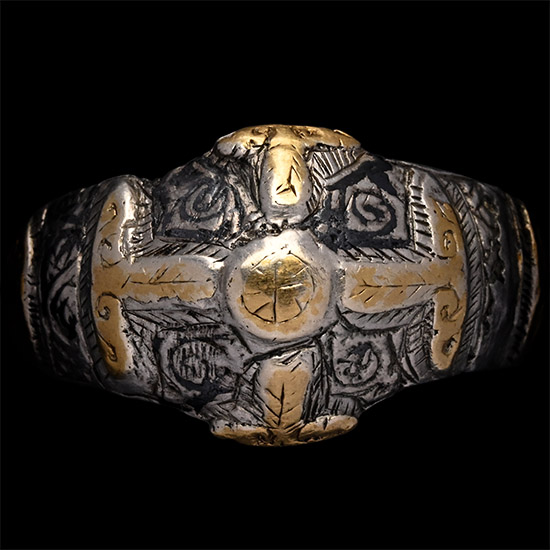
Seljuk Silver Ring with Gilt Cross
11th-12th century A.D.Sold for (Inc. bp): £624
Comprising a D-section hoop with expanding shoulders, a gilt shield with scrolls on each shoulder, and a low-relief cross expanding across the bezel with scrollwork background. 7.68 grams, 24.33 mm overall, 17.70 x 18.33 mm internal diameter (approximate size British O, USA 7, Europe 14.98, Japan 14)
Acquired on the European art market. -
.jpg)
Old Babylonian Haematite Cylinder Seal Fragment
Circa 2000-1750 B.C.Sold for (Inc. bp): £221
Fragment with incuse frieze depicting a presentation scene with bull-man facing, gripping a rampant lion, storm-god in conical hat holding a calf towards a standing figure in tiered robes; supplied with impressions. 10.9 grams, 19 mm
From the S. Negev desert, Israel. From the private collection of Mr Brian Edwards, New Malden, Surrey, UK, formed from the late 1970s-early 1980s; thence by descent. Accompanied by an old handwritten information card. -
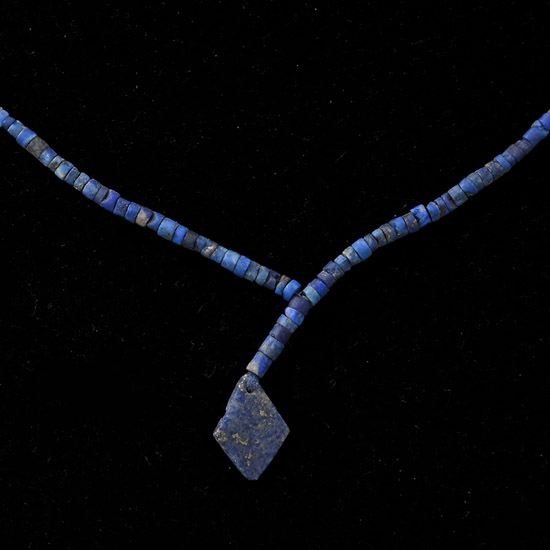
Western Asiatic Lapis Lazuli Bead Necklace String
Circa 1st millennium B.C.Sold for (Inc. bp): £117
Composed of small cylindrical beads with a lozenge-shaped pendant, restrung. 3.19 grams, 31 cm
Ex late Japanese gentleman's private collection, 1970-2010. Accompanied by a previously illustrated catalogue card with provenance.
