
Loading, please wait...
LOT 0562
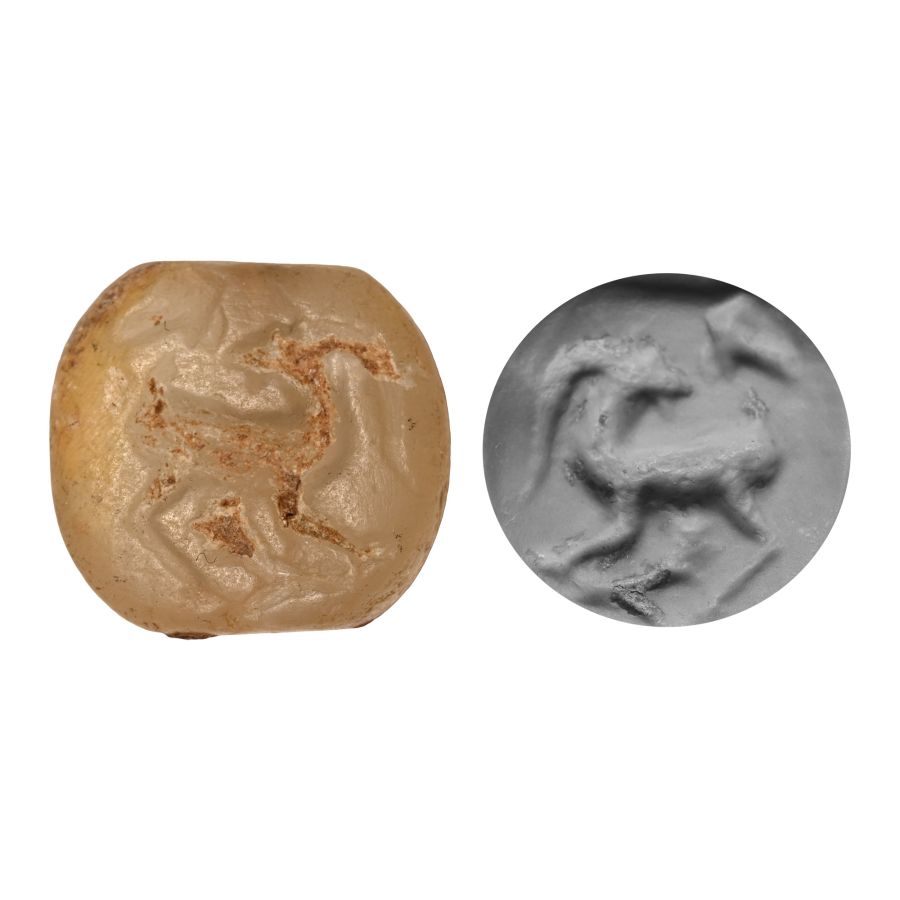
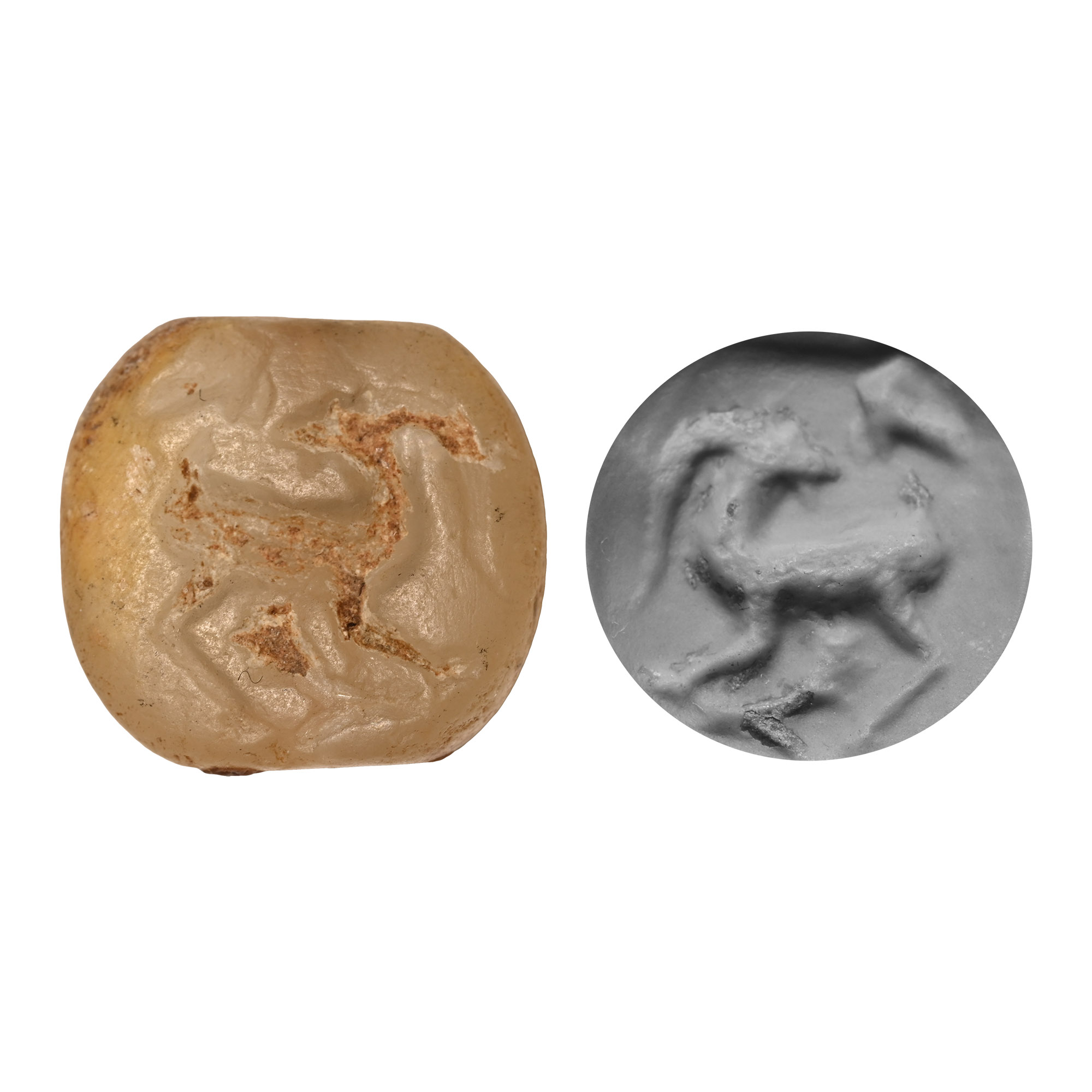
Post Minoan Agate Gemstone with Goat
AEGEAN, 9TH-8TH CENTURY B.C.
1/2 in. (1.52 grams. 13 mm).
Lentoid in section with intaglio goat looking backwards towards a bird in flight; supplied with a museum-quality impression. [No Reserve]
ProvenanceFrom the collection of a London antiquarian, formed since the 1980s.
This lot is accompanied by an illustrated lot declaration signed by the Head of the Antiquities Department, Dr Raffaele D’Amato.
TimeLine Auctions follows a vetting process to ensure the authenticity and legality of all items, reinforcing our commitment to integrity and responsible trading. Each antiquity, antique, and coin lot undergoes thorough examination by a vetting committee of at least ten external specialists, professional trade association members, scientists, and archaeologists: Our Vetting Process
AUCTIONS:
TimeLine is a leading auction house specialising in antiquities, ancient art, collectables, natural history, coins, medals, and books. Our auctions offer museums, collectors, historians, and enthusiasts the opportunity to acquire unique and historically significant pieces.
-
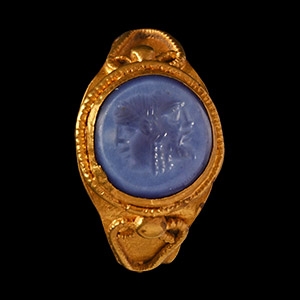
Graeco-Roman Gold Ring with Double Actor's Mask Gemstone
1st century B.C.-1st century A.D. and laterSold for (Inc. bp): £2,340
Hoop with applied filigree and granules to the shoulders, inset later nicolo intaglio with janiform bust of male and female heads. 6.00 grams, 22.90 mm overall, 17.58 mm internal diameter (approximate size British O, USA 7, Europe 14.98, Japan 14)
Ex German art market, 2000s. Acquired from an EU collector living in London. From the collection of Surrey, UK, gentleman. This lot is accompanied by an illustrated lot declaration signed by the Head of the Antiquities Department, Dr Raffaele D’Amato. -
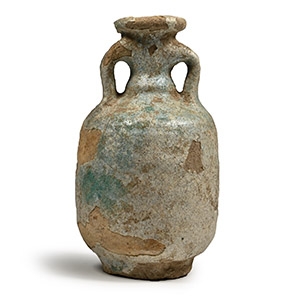
Parthian Glazed Jar with Two Handles
1st-2nd century A.D.Sold for (Inc. bp): £98
Comprising a barrel-shaped body, basal ring, balustered neck with everted rim to the mouth and two lateral strap handles. 164 grams, 11.2 cm
From a London, UK, collection, 1990s. This lot is accompanied by an illustrated lot declaration signed by the Head of the Antiquities Department, Dr Raffaele D’Amato. -
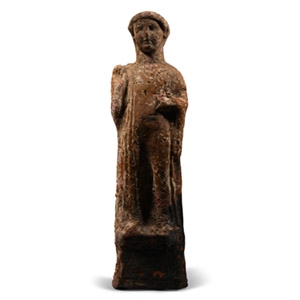
Large Greek Terracotta Draped Statue in Praying Attitude
4th century B.C.Sold for (Inc. bp): £1,820
Hollow-formed standing male in floor-length robe with copious sleeves, the left hand held across the chest and the right hand raised palm-outward; short hair combed forward in a severe style; tiered base. 1.53 kg, 37 cm
Acquired in the mid 1980s-1990s. Private collection, Switzerland, thence by descent. Private collection, since the late 1990s. This lot has been checked against the Interpol Database of stolen works of art and is accompanied by search certificate number no.12214-222196. This lot has been cleared against the Art Loss Register database, and is accompanied by an illustrated lot declaration signed by the Head of the Antiquities Department, Dr Raffaele D’Amato.
