
Loading, please wait...
LOT 0351
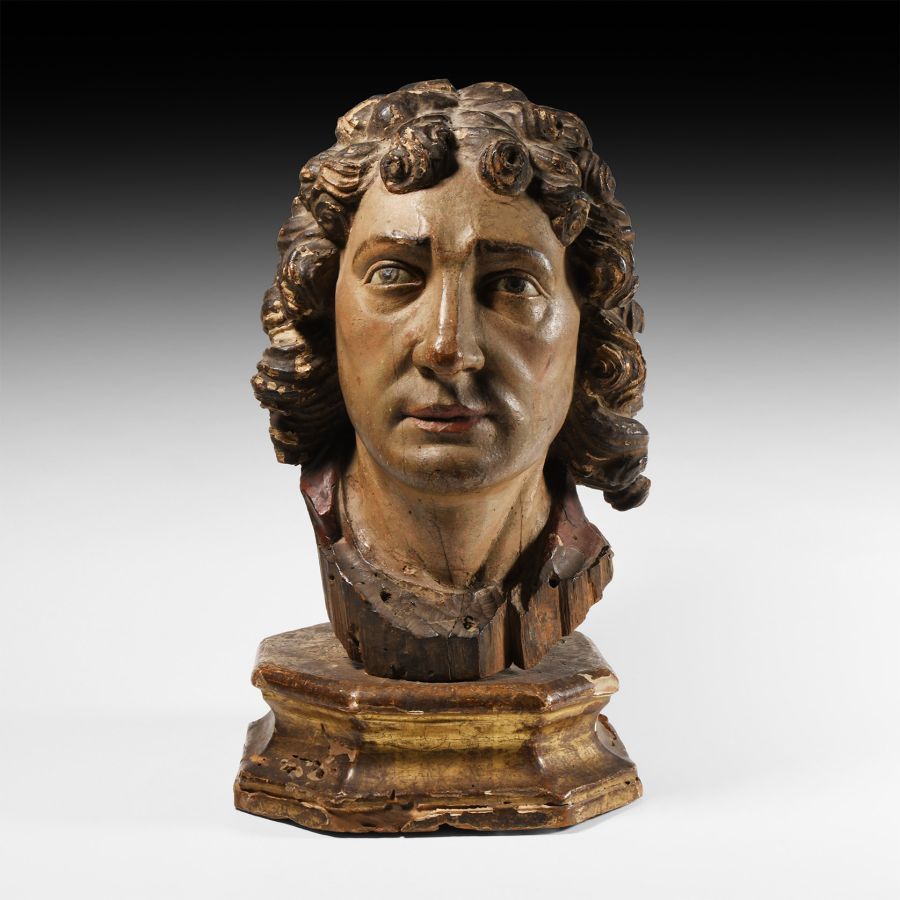
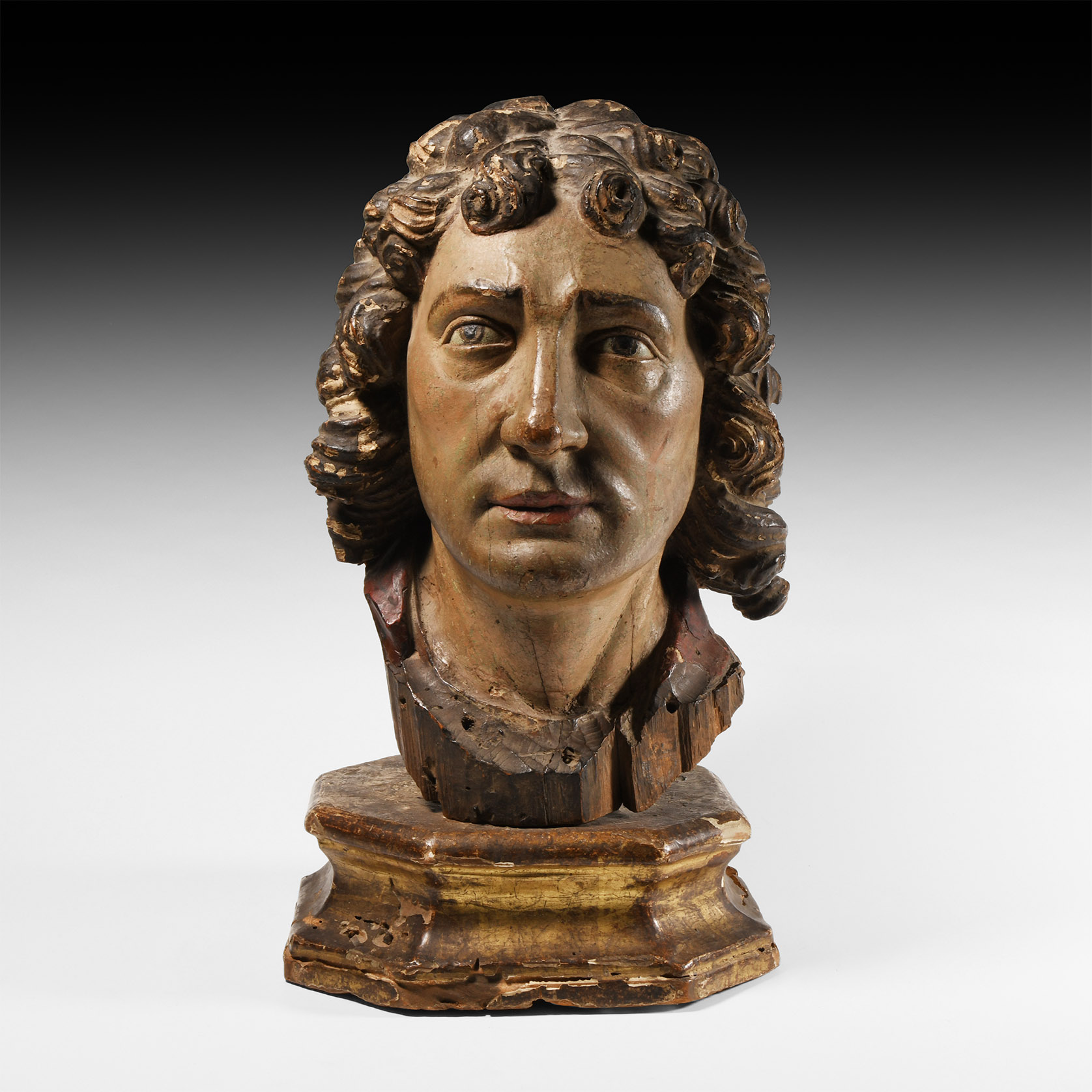
Post Medieval Wooden Painted Head of St John
LATE 16TH CENTURY A.D.
15 in. (4.2 kg total, 38 cm high including stand).
A wooden head mounted on a waisted octagonal plinth base, the head modelled naturalistically in the round and retaining extensive areas of polychrome detailing, pigmentation and gilding.
ProvenanceEx private Dutch collection. English private collection.
This lot has been checked against the Interpol Database of stolen works of art and is accompanied by search certificate no.11673-199836.
The timber shows some old insect flight holes and we are advised that this piece has been recently treated with Permethrin, as a precaution.
CONDITIONTimeLine Auctions follows a vetting process to ensure the authenticity and legality of all items, reinforcing our commitment to integrity and responsible trading. Each antiquity, antique, and coin lot undergoes thorough examination by a vetting committee of at least ten external specialists, professional trade association members, scientists, and archaeologists: Our Vetting Process
AUCTIONS:
TimeLine is a leading auction house specialising in antiquities, ancient art, collectables, natural history, coins, medals, and books. Our auctions offer museums, collectors, historians, and enthusiasts the opportunity to acquire unique and historically significant pieces.
LOT 0351
Post Medieval Wooden Painted Head of St John
Estimate £5,000 - 7,000€5,800 - 8,120 (for guidance only)$6,750 - 9,450 (for guidance only)
-
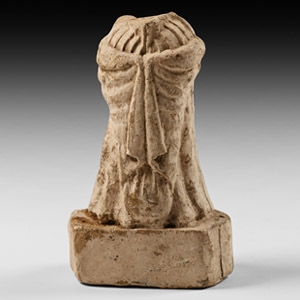
Tudor 'Thames' Pipe Clay Bishop Chess Piece
Circa 16th century A.D.Sold for (Inc. bp): £39
An acephalic clay chess piece representing a Bishop, with detailing to his robes and their voluminous sleeves. 18.1 grams, 45 mm high
Found on the Thames foreshore, London, UK. Acquired on the UK antiques market between 1974-1985. Albert Ward collection, Essex, UK. -
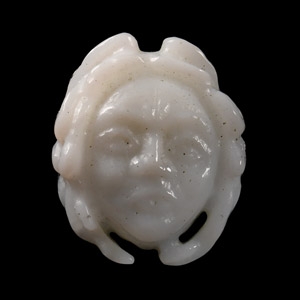
Post Medieval Glass Cameo Bust
19th century A.D.Estimate: £200 - 300 (+bp*)
Opening Bid: £100
A glass cameo with bust of Medusa; imitating agate. 3.72 grams, 18 mm
Very fine condition.
Acquired Munich, Germany, late 1990s. Property of an East London gentleman. -
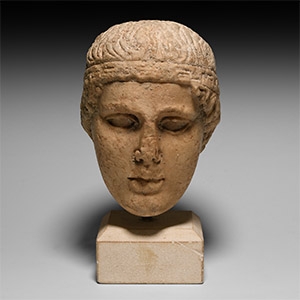
Post Medieval Marble Head
20th century A.D. or earlierSold for (Inc. bp): £1,170
A marble head carved naturalistically in the round with cropped hair, wearing a taenia headband seemingly featuring Greek key motif; possibly representing a deity, a muse or even a female satyr; mounted on a carved stone base. A marble head carved naturalistically in the round with cropped hair, wearing a taenia headband seemingly featuring Greek key motif; possibly representing a deity, a muse or even a female satyr; mounted on a carved stone base.
with Arts D'Orient, Artcurial, Paris, 19 May 2014, lot 138. English private collection.
