
Loading, please wait...

LOT 0340
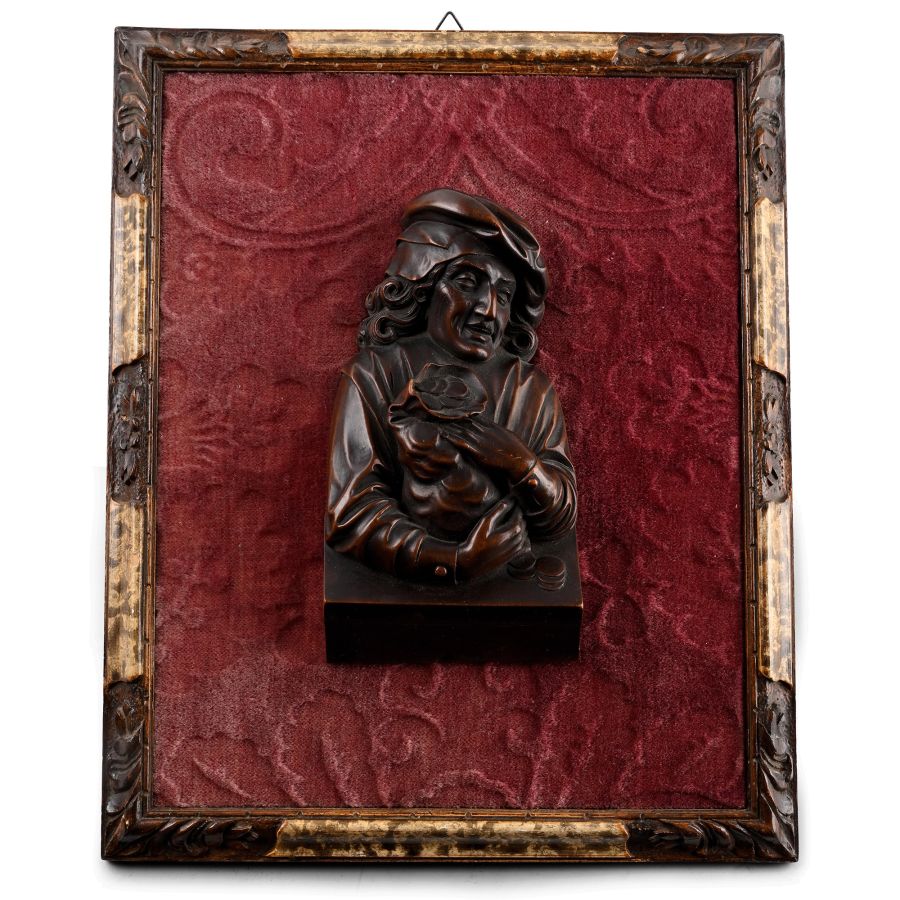
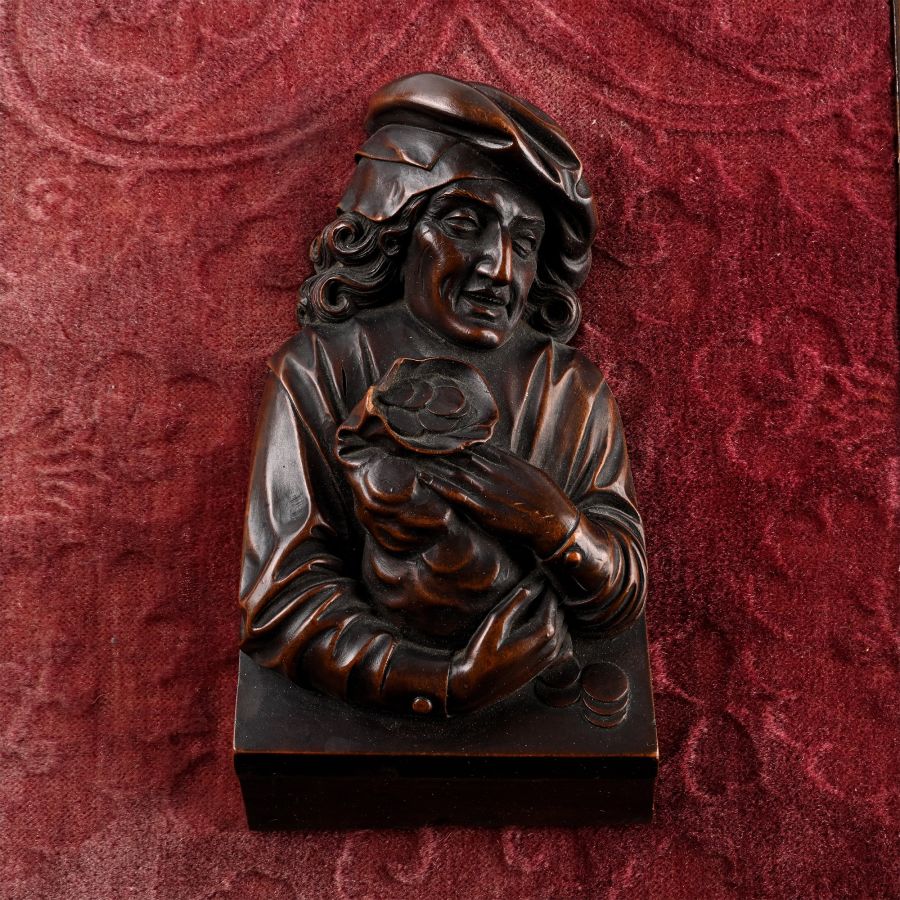
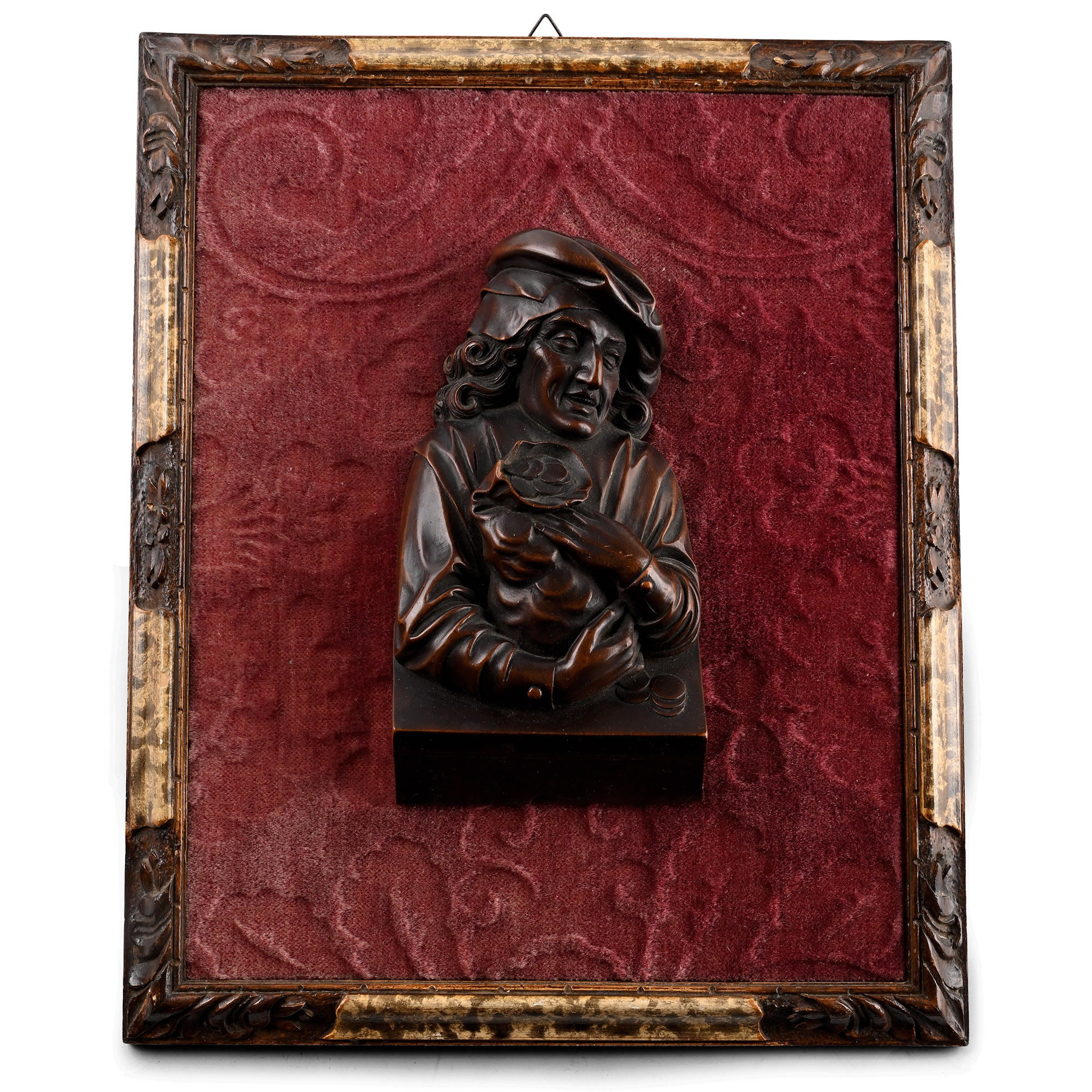
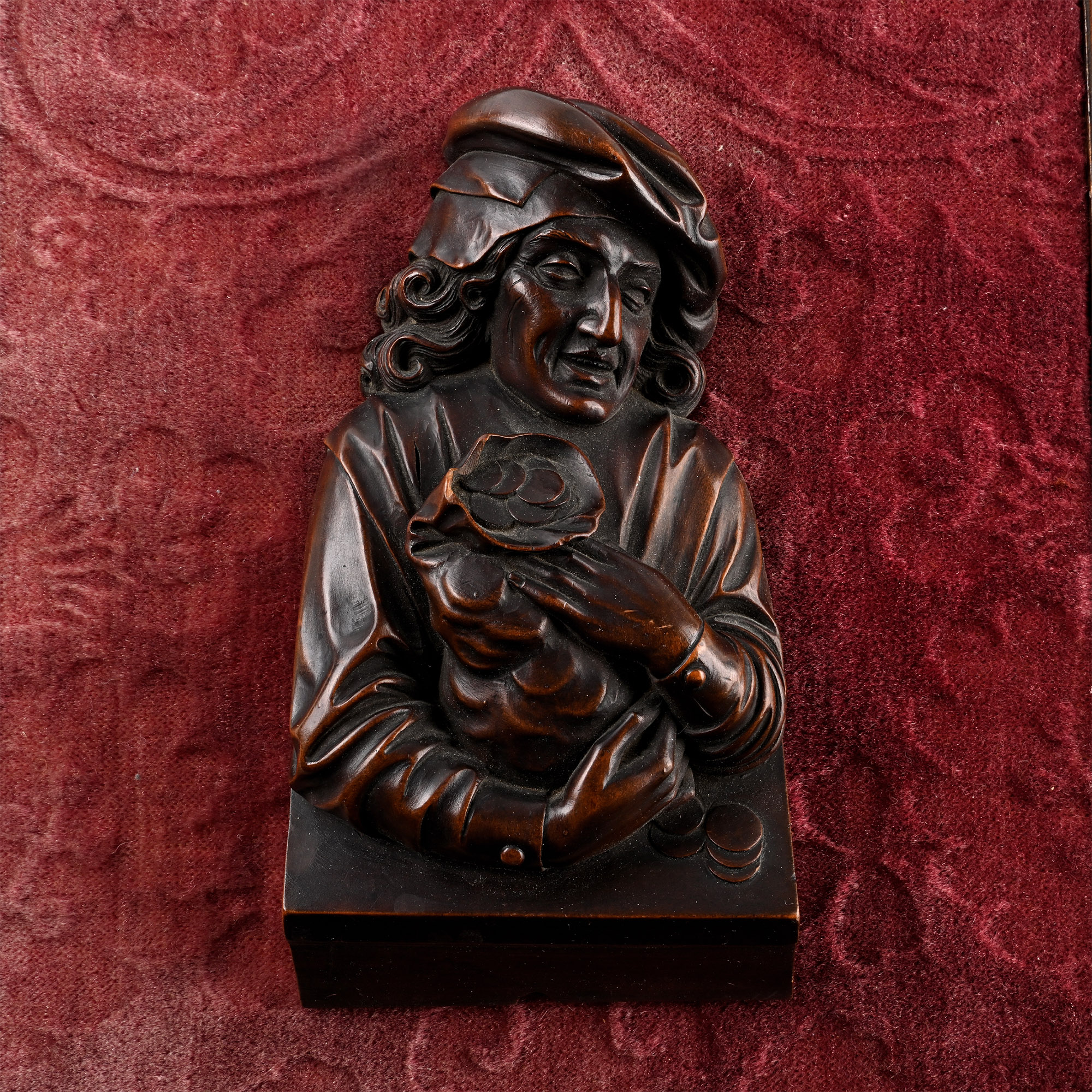
Post Medieval Wooden Bas Relief Representing a Gentleman Illustrating an Allegory of Avarice
BELGIUM, ANTWERP, 17TH CENTURY A.D.
13 1/4 x 10 5/8 in. (689 grams, 33.5 x 27.1 cm).
Carved in the half-round, clean-shaven man with cap and flowing hair clutching a bag of coins to his chest with more coins on the surface of the table; mounted on a velvet-covered board with faux-shell detailing to the frame. [No Reserve]
ProvenancePrivate collection, Spain, 2024.
This lot has been checked against the Interpol Database of stolen works of art and is accompanied by search certificate no.13546-262841.
For painted representations of the Allegory of Avarice csee Frazier, K,B., We are the Reckless, We are the Wild Youth: Decadence and Debauchery in the Art of the Utrecht Caravaggisti, University of Mary Washington, 2015, figs.21,22,24,25.
FootnotesIn the historical context of the Netherlands and Flanders (particularly during the 16th and 17th centuries), the depiction of the seven deadly sins was a central theme in moralising and satirical art. The allegory of Avarice was frequently represented in paintings, as well as in sculptures and wooden bas-reliefs intended for furnishings, architectural panels, or private collections.
CONDITIONTimeLine Auctions follows a vetting process to ensure the authenticity and legality of all items, reinforcing our commitment to integrity and responsible trading. Each antiquity, antique, and coin lot undergoes thorough examination by a vetting committee of at least ten external specialists, professional trade association members, scientists, and archaeologists: Our Vetting Process
AUCTIONS:
TimeLine is a leading auction house specialising in antiquities, ancient art, collectables, natural history, coins, medals, and books. Our auctions offer museums, collectors, historians, and enthusiasts the opportunity to acquire unique and historically significant pieces.
LOT 0340
Post Medieval Wooden Bas Relief Representing a Gentleman Illustrating an Allegory of Avarice
Estimate £3,000 - 4,000€3,480 - 4,640 (for guidance only)$4,050 - 5,400 (for guidance only)
-
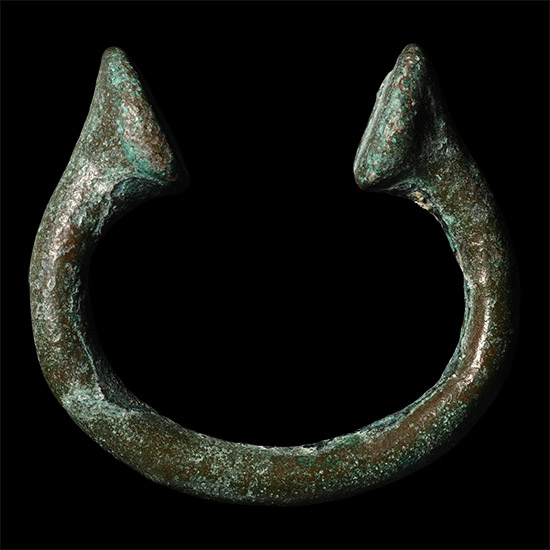
Shipwreck African Slave Trade Manilla Currency Bracelet from the Schooner Duoro
Sunk 1843 A.D.Estimate: £30 - 40 (+bp*)
Opening Bid: £5
Penannular bracelet with trumpet-shaped flaring terminals. 71 grams, 59 mm
From the shipwrecked English Schooner 'Duoro', sunk off the Isles of Scilly in 1843. Acquired on the UK art market. Property of a London, UK, antiquarian. Accompanied by the original box and certificate from The Isles of Scilly Underwater Centre.
The ship wrecked in 1843 on a voyage from Liverpool to Oporto. Manillas were used as currency in the transatlantic trade in enslaved African people, where enslaved people were traded for between 10 and 60 manillas. Manillas are also known as okpogho, ejemma, igbiki and kpugi. They were sometimes worn in African communities as body decoration, such as along the coast between modern-day Liberia and Côte d’Ivoire. Europeans later produced manillas to trade for enslaved African people, and they became a form of currency. This currency was used in parts of West Africa until it was demonetised in 1948. -
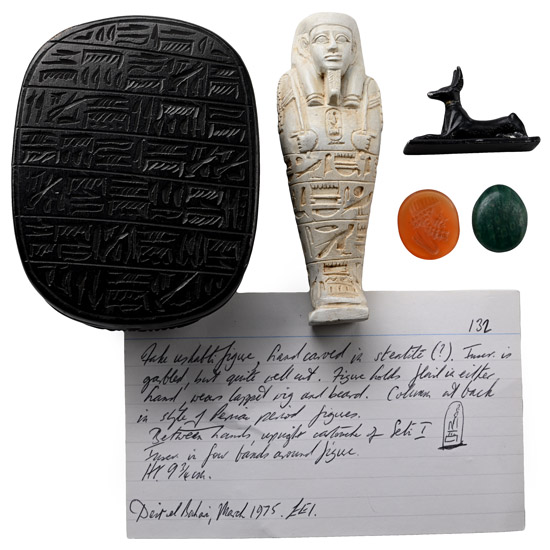
Egyptian Style Artefact Group
20th century A.D.Estimate: £20 - 30 (+bp*)
Bids: 1 | Current Bid: £5
Comprising: a shabti figure with garbled hieroglyphic text, a reclining Anubis figurine, a carnelian intaglio with a bearded bust, and a large heart scarab with seven lines of hieroglyphic text. 570 grams total, 22-98 mm
From the private collection of Peter Clayton, FCILIP, Dip, Arch, FSA, FRNS, Hemel Hempstead, Hertfordshire, UK; formed since the late 1950s. The shabti purchased at Deit el Bahai in March 1975. -
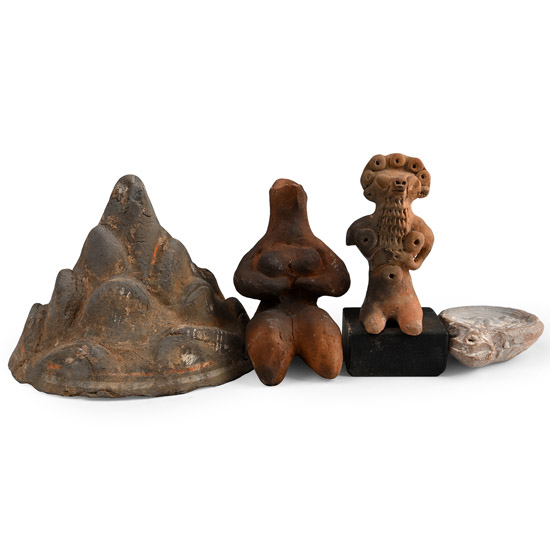
Reproduction Terracotta Artefact Group
20th century A.D.Estimate: £20 - 30 (+bp*)
Opening Bid: £5
Including conical mountain model, squat oil lamp and other items. 1.3 kg total, 8 - 15 cm
Acquired on the UK art market since the 1990s. From the property of a late Lincolnshire, UK, gentleman; thence by descent.
