
Loading, please wait...
LOT 2101
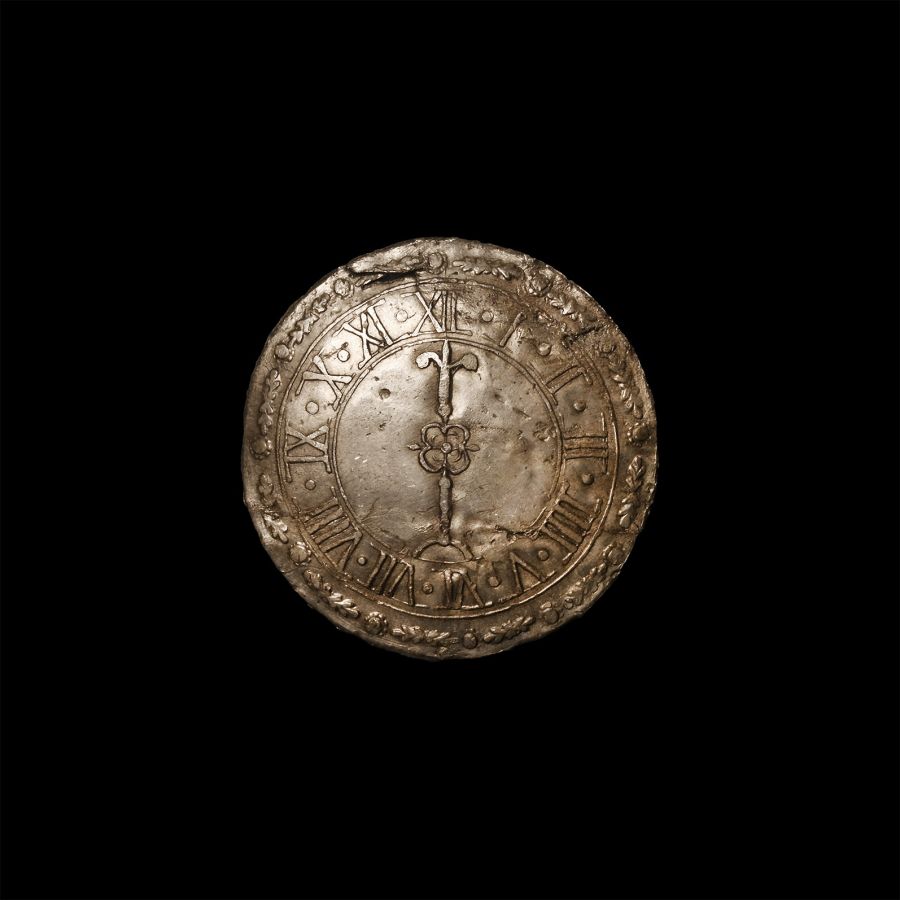
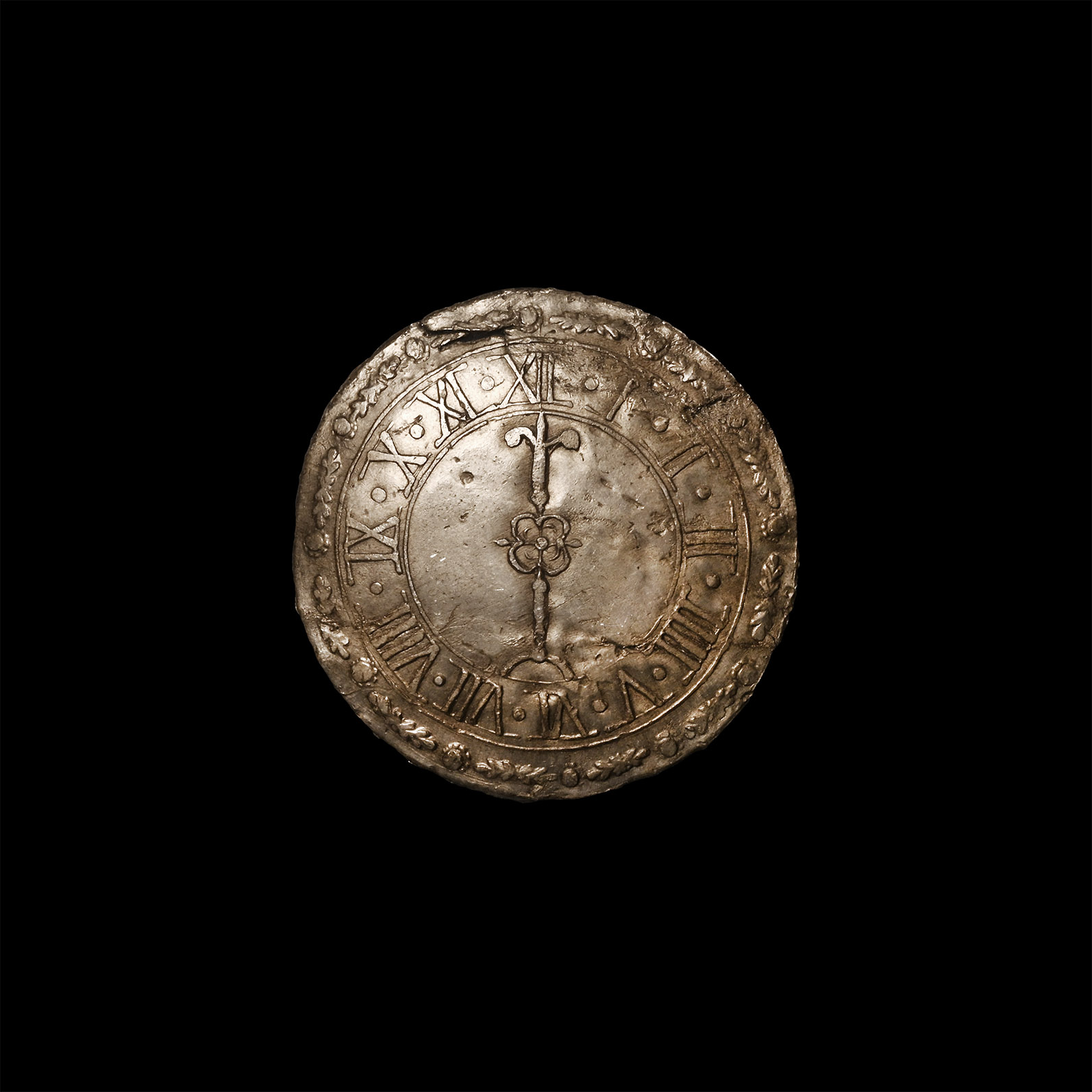
Post Medieval 'Thames' Pewter Toy Watch Face
LATE 17TH CENTURY A.D.
1 1/4 in. (3.53 grams, 33 mm).
Displaying Roman numerals I-XII with half-hour pellets between, central rosette and hour hand with trefoil pointer, floral outer border. [No Reserve]
ProvenanceFound Billingsgate spoil from the Thames foreshore, London, UK.
CONDITIONTimeLine Auctions follows a vetting process to ensure the authenticity and legality of all items, reinforcing our commitment to integrity and responsible trading. Each antiquity, antique, and coin lot undergoes thorough examination by a vetting committee of at least ten external specialists, professional trade association members, scientists, and archaeologists: Our Vetting Process
AUCTIONS:
TimeLine is a leading auction house specialising in antiquities, ancient art, collectables, natural history, coins, medals, and books. Our auctions offer museums, collectors, historians, and enthusiasts the opportunity to acquire unique and historically significant pieces.
-
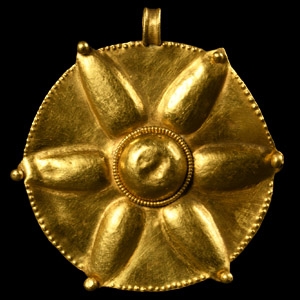
Gold Roman Style Pendant
20th century A.D.Sold for (Inc. bp): £390
Discoid with repoussé radiating petals, repoussé central boss, pellets to the rim and granule to the tip of each petal, beaded wire collar to the boss. 10.72 grams, 51 mm
From the collection of a North American gentleman, formed in the 1990s. -
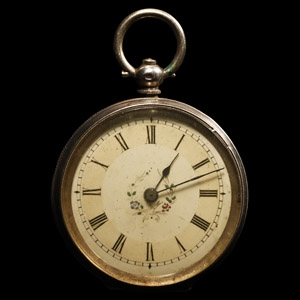
Silver Pocket Watch
Late 19th-early 20th century A.D.Sold for (Inc. bp): £33
Being a Continental silver-cased watch for key-winding with engraved outer back and plain inner, marked '900 fine' and with '38361(?)' serial number; the unnamed mechanism with hour and minute hands; fitted with an enamelled dial with Roman numerals and a 'bird and flowers' central detail, with suspension ring and back release catch. 38.5 grams, 53 mm
Acquired 1960s-1990s. Late Alison Barker collection, a retired London barrister. -
.jpg)
Framed Watercolour Painting
Persia, late 19th-early 20th century A.D.Estimate: £80 - 100 (+bp*)
Opening Bid: £40
With a mother and child seated on grass amongst flowers, wispy tree growing behind, gilt flecks to the woman's clothes, jewellery, the tree and flowers, gilt border; set in a reveal within a glazed wooden frame. 838 grams, 37 x 29 cm
Fine condition.
Acquired on the UK art market, 1980s-1990s. The Woodbridge collection of Indo-Persian art.
