
Loading, please wait...
_900x900.jpg "Post Medieval Stone Mortar with Heads")
_200x200.jpg "Post Medieval Stone Mortar with Heads")
.jpg "Post Medieval Stone Mortar with Heads")
LOT 2182
Post Medieval Stone Mortar with Heads
18TH CENTURY A.D.
6 1/8 in. (1.4 kg, 15.6 cm).
Squat in profile with four radiating lugs to the rim with low-relief facial detailing, one with a shallow pouring channel above.
ProvenancePrivate UK collection.
Acquired in the 1980s.
Property of a Cambridgeshire gentleman.
This lot is accompanied by an illustrated lot declaration signed by the Head of the Antiquities Department, Dr Raffaele D’Amato.
TimeLine Auctions follows a vetting process to ensure the authenticity and legality of all items, reinforcing our commitment to integrity and responsible trading. Each antiquity, antique, and coin lot undergoes thorough examination by a vetting committee of at least ten external specialists, professional trade association members, scientists, and archaeologists: Our Vetting Process
AUCTIONS:
TimeLine is a leading auction house specialising in antiquities, ancient art, collectables, natural history, coins, medals, and books. Our auctions offer museums, collectors, historians, and enthusiasts the opportunity to acquire unique and historically significant pieces.
LOT 2182
Post Medieval Stone Mortar with Heads
Estimate £100 - 140€120 - 160 (for guidance only)$140 - 190 (for guidance only)
-
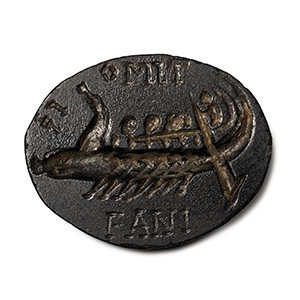
Roman Style Gemstone with Galley
19th-20th century A.D.Sold for (Inc. bp): £59
Ellipsoid in plan with incuse galley and legend '[??] OMIT FANI'. 1.84 grams, 21 mm
From the collection of a London antiquarian, formed since the 1980s. This lot is accompanied by an illustrated lot declaration signed by the Head of the Antiquities Department, Dr Raffaele D’Amato. -
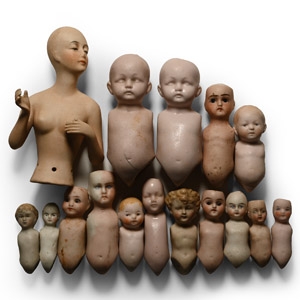
Victorian Porcelain Doll's Head and Body Group
19th-early 20th century A.D.Sold for (Inc. bp): £85
Most with open top to the head to accept hair, painted facial features. 266 grams total, 4.4-10.3 cm
Ian Wilkinson collection, Nottinghamshire, UK, formed since 1985. This lot is accompanied by an illustrated lot declaration signed by the Head of the Antiquities Department, Dr Raffaele D’Amato. -
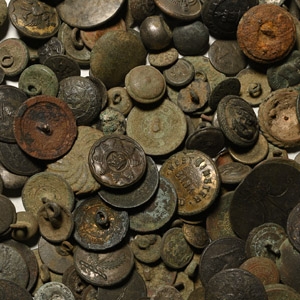
Post Medieval Livery and Other Button Group
19th-20th century A.D.Sold for (Inc. bp): £20
A large quantity of buttons of various sizes and motifs to the upper face, most with a loop to the reverse. 531 grams total, 10-29 mm
Found on various UK sites since 1974. Property of an Essex collector. This lot is accompanied by an illustrated lot declaration signed by the Head of the Antiquities Department, Dr Raffaele D’Amato.
