
Loading, please wait...
LOT 1028
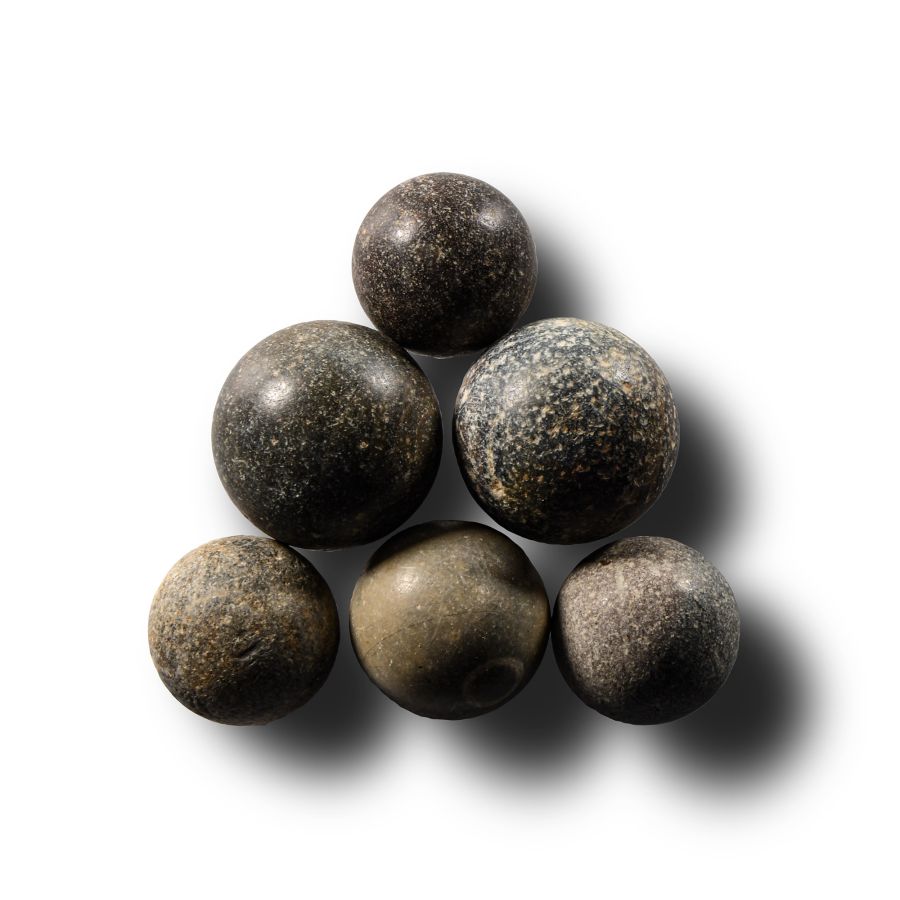
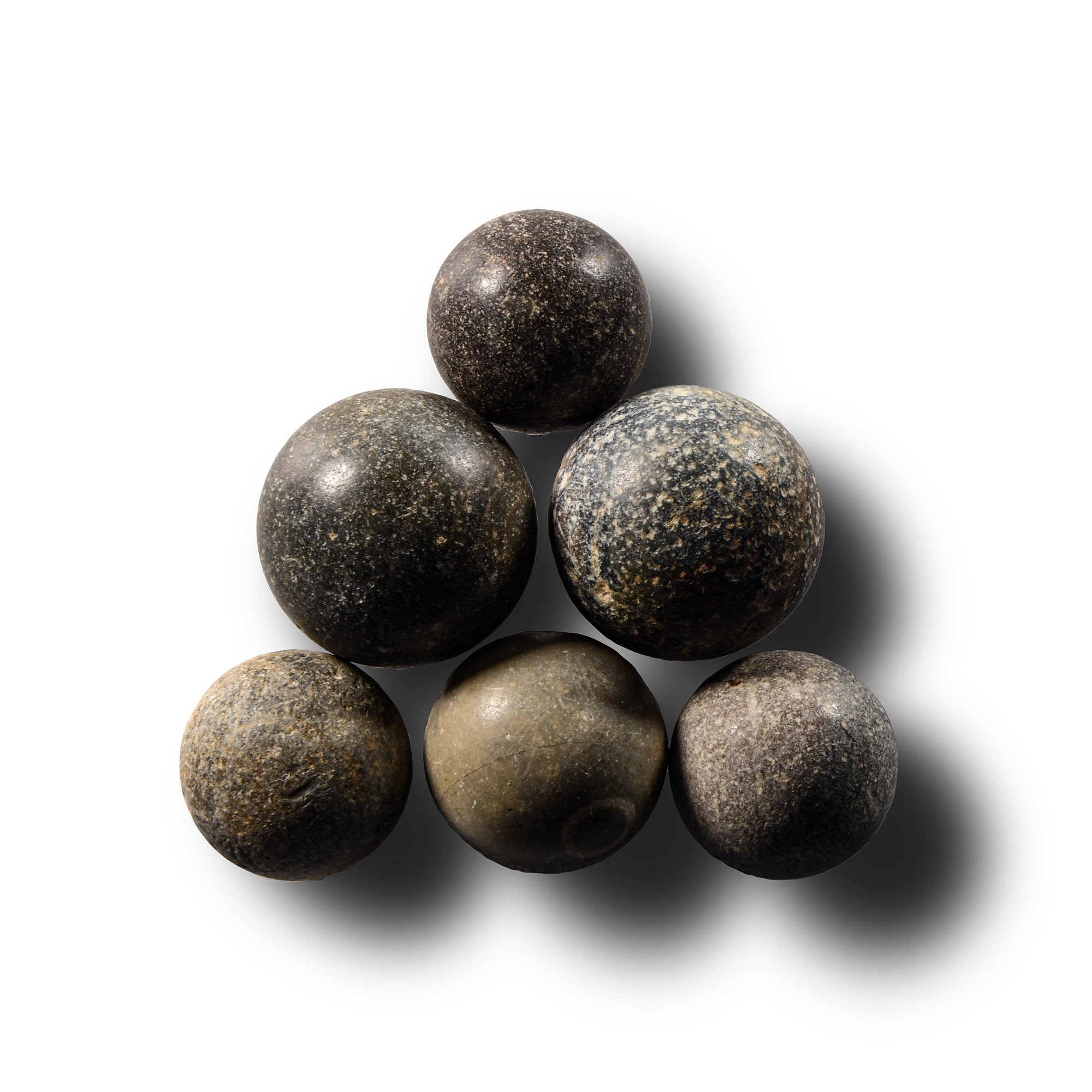
Post Medieval Stone Grapeshot Ammunition Collection
CIRCA 17TH-18TH CENTURY A.D.
1/2 - 5/8 in. (32 grams total, 14-17 mm).
Group of spherical grapeshot balls of various sizes. [6, No Reserve]
ProvenancePrivate collection formed in the 1990s.
Acquired from a central London gallery.
Property of an Essex gentleman.
TimeLine Auctions follows a vetting process to ensure the authenticity and legality of all items, reinforcing our commitment to integrity and responsible trading. Each antiquity, antique, and coin lot undergoes thorough examination by a vetting committee of at least ten external specialists, professional trade association members, scientists, and archaeologists: Our Vetting Process
AUCTIONS:
TimeLine is a leading auction house specialising in antiquities, ancient art, collectables, natural history, coins, medals, and books. Our auctions offer museums, collectors, historians, and enthusiasts the opportunity to acquire unique and historically significant pieces.
-
Officer's Presentation Sword with Islamic Script
Circa 1798 A.D.Sold for (Inc. bp): £780
British infantry officer's sword - 1796 pattern with lion-head pommel and knuckle-guard, short curved quillon to the rear; leather scabbard with brass fittings and escutcheon below the frog with the legend 'R. Johnston / late / Bland & Foster / Sword Cutler / & Belt Maker to his / Majesty / -68- / St. James's St/ London'; guilloche detailing to the border and to the langets; hollow-ground blade with inlaid brass Arabic script to both faces, possibly a trophy from the Battle of the Nile in August, 1798. 1.23 kg, 95 cm total
From a Suffolk, UK, private collection.
Richard Johnston took over the sword- and belt-making business from John Bland, who died in 1791, and his surviving partner, Robert Foster, who died in 1798. After Bland's death, Foster and Johnston moved their premises from 70 St. James's Street to number 68 in the same street, and continued the business until Foster's death in 1798, after which Johnston took on another shop, then displaying the address as '38 & 68 St. James's Street'. The cartouche gives the address as '68 St. James's Street', which shows that the sword was produced, finished and sold in 1798. -
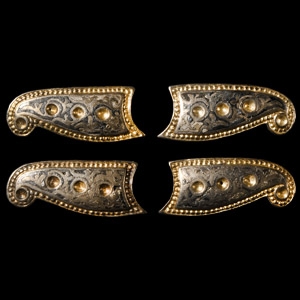
Mongol Silver Belt Mount Group
13th century A.D.Sold for (Inc. bp): £182
Each with a broader scooped edge tapering to a volute flourish, pellets adorning the perimeter, three medial circular dimples, fourth dimple to the scrolled end, against a field of foliate scrolls and niello fill; each with a set of mounting lugs to the reverse. 25.7 grams total, 40-41 mm
Fine condition.
Acquired in the 1980s-1990s. Ex an important central London gallery, London W1.
Similar plaques have been found in the burial graves of Mongol commanders and their wives, probably once part of a waist belt from which the sabre and other weapons were hanging. They were found together with arms, unique elements of the costume of fabric and leather, and splendid jewellery of gold and silver. -
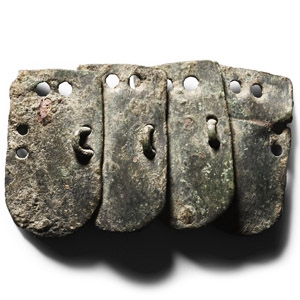
Roman Bronze Armour Segments
2nd-4th century A.D.Sold for (Inc. bp): £468
Comprising four interlocking tongue-shaped segments from a lorica squamata; each with double piercing on the top and the two side edges. 4.4 grams, 45 mm
Ex North American private collection. Acquired privately on the European art market in the 1990s. Property of a Buckinghamshire, UK, gentleman.
