
Loading, please wait...
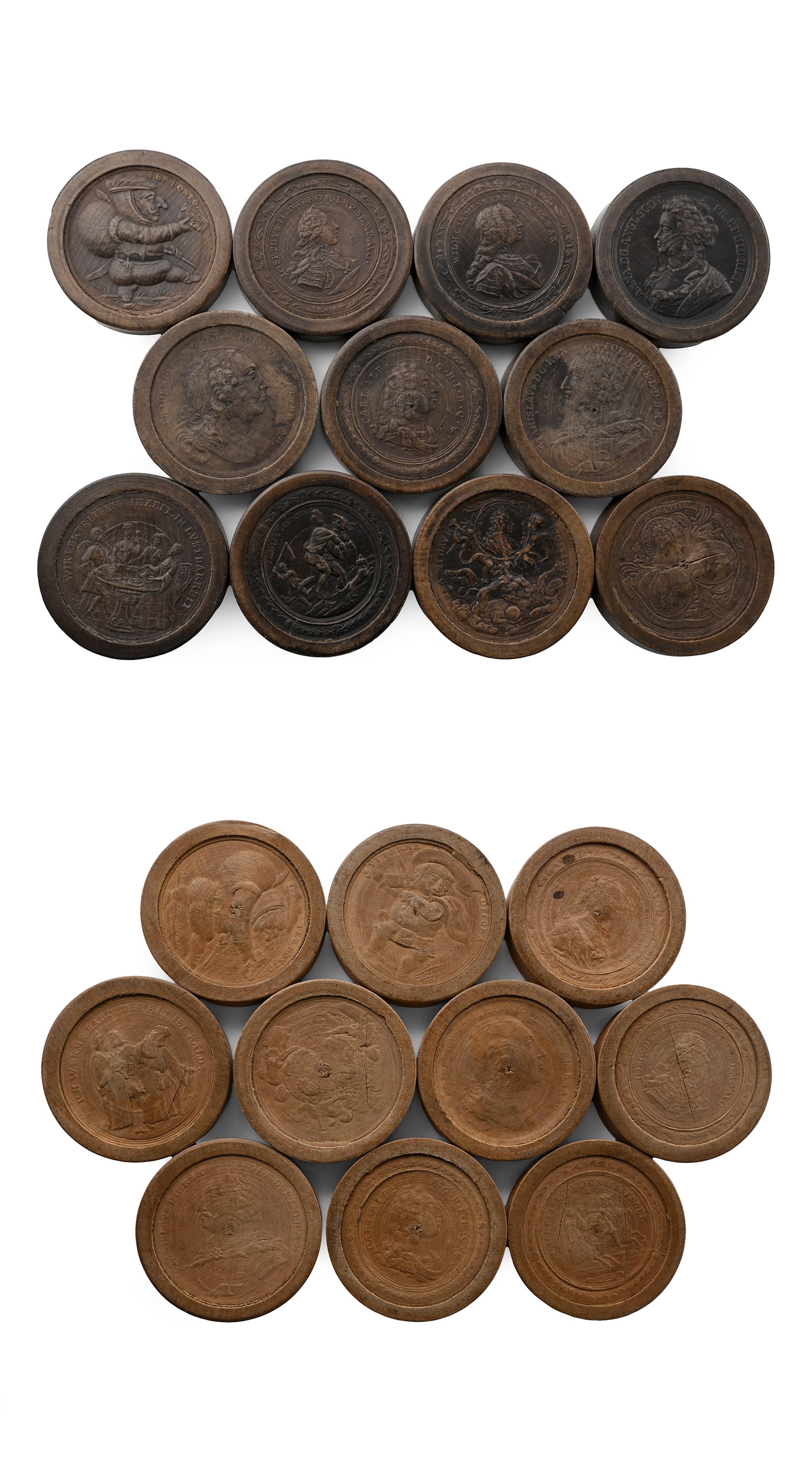
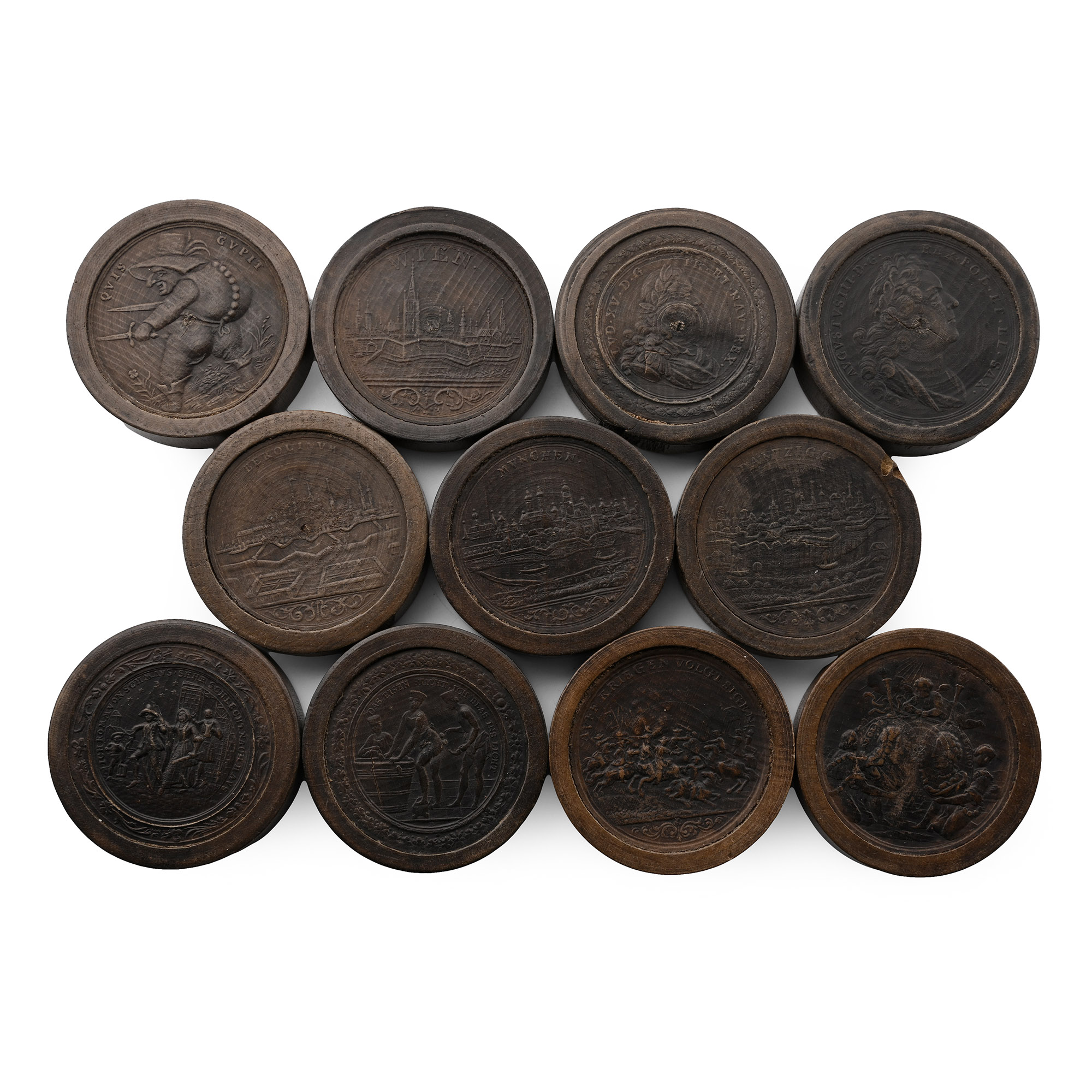
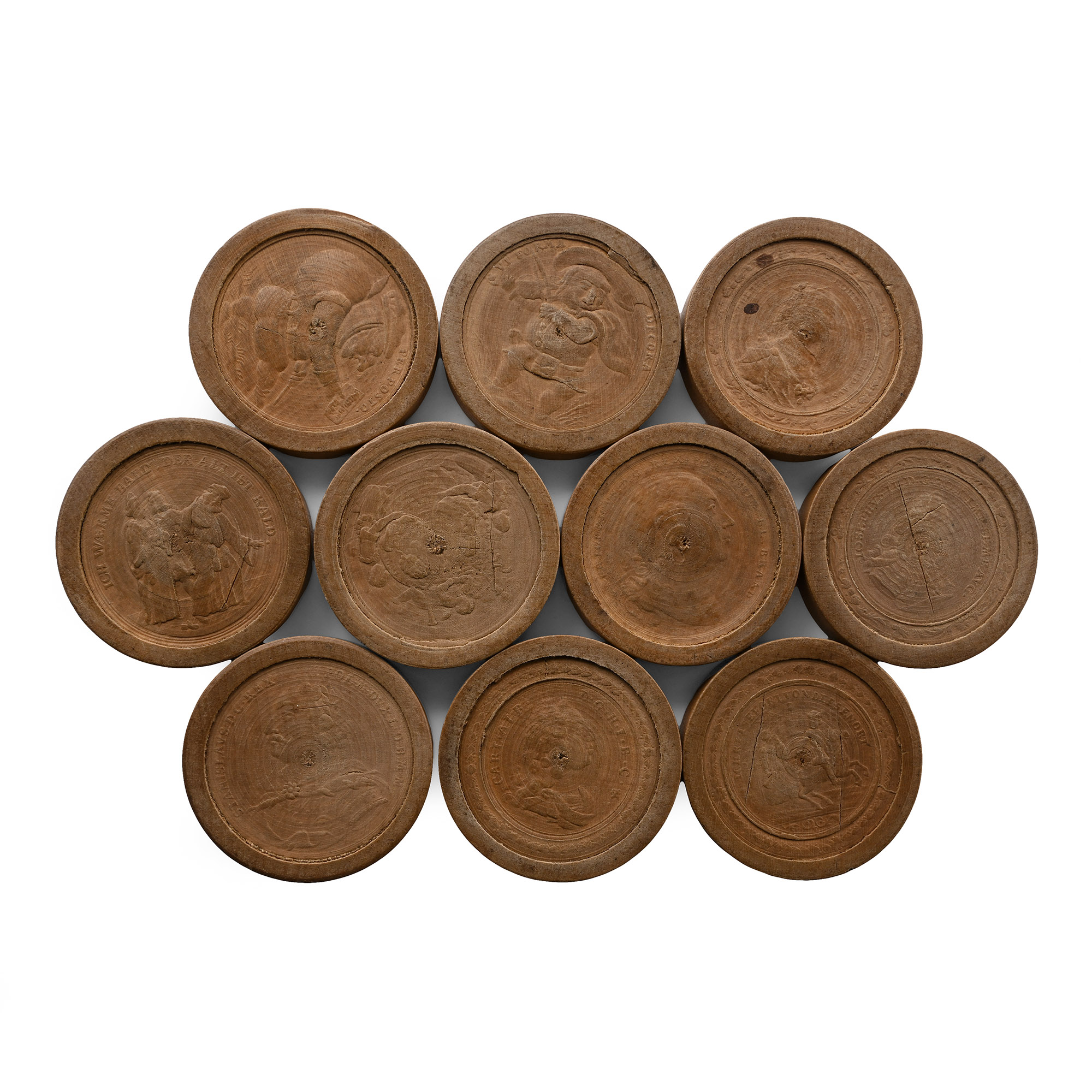
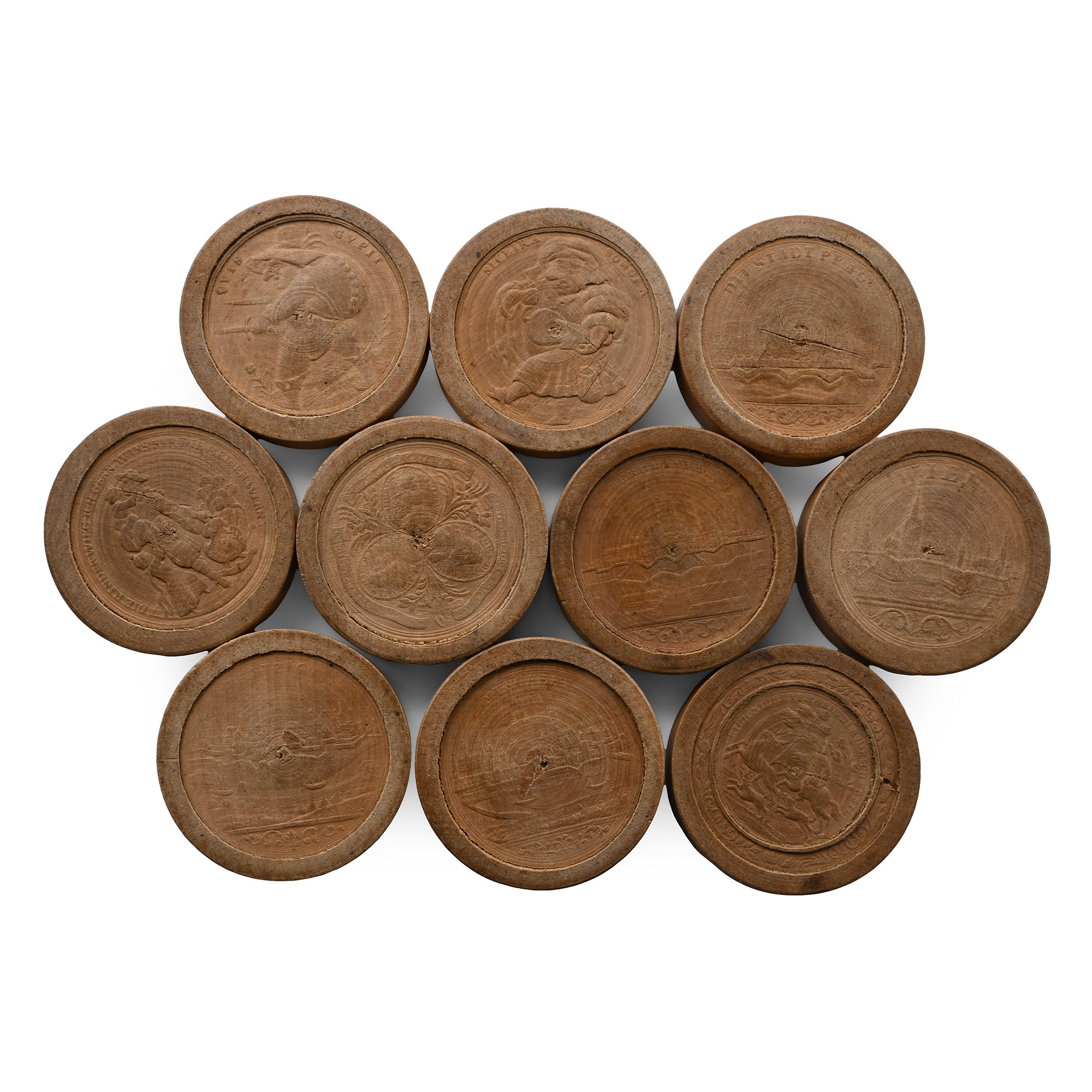
LOT 2082
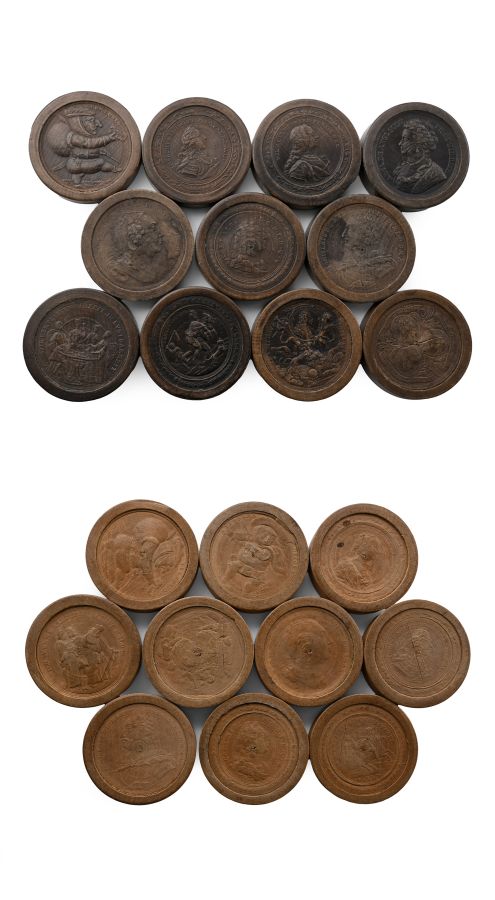
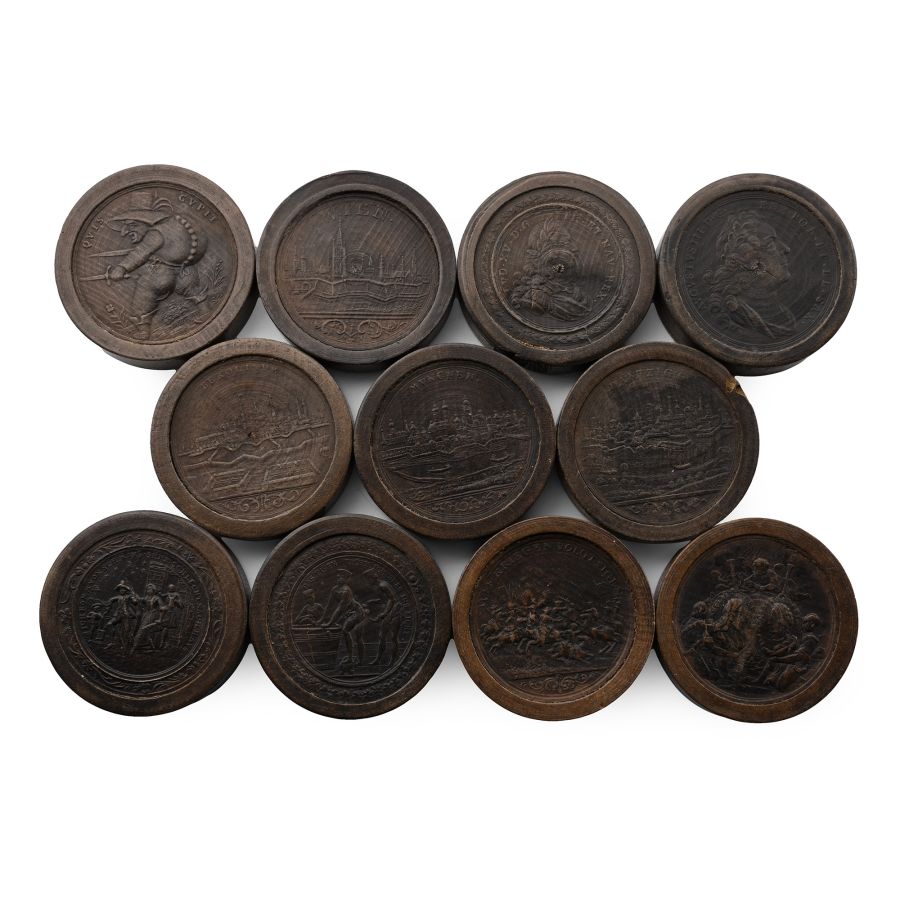
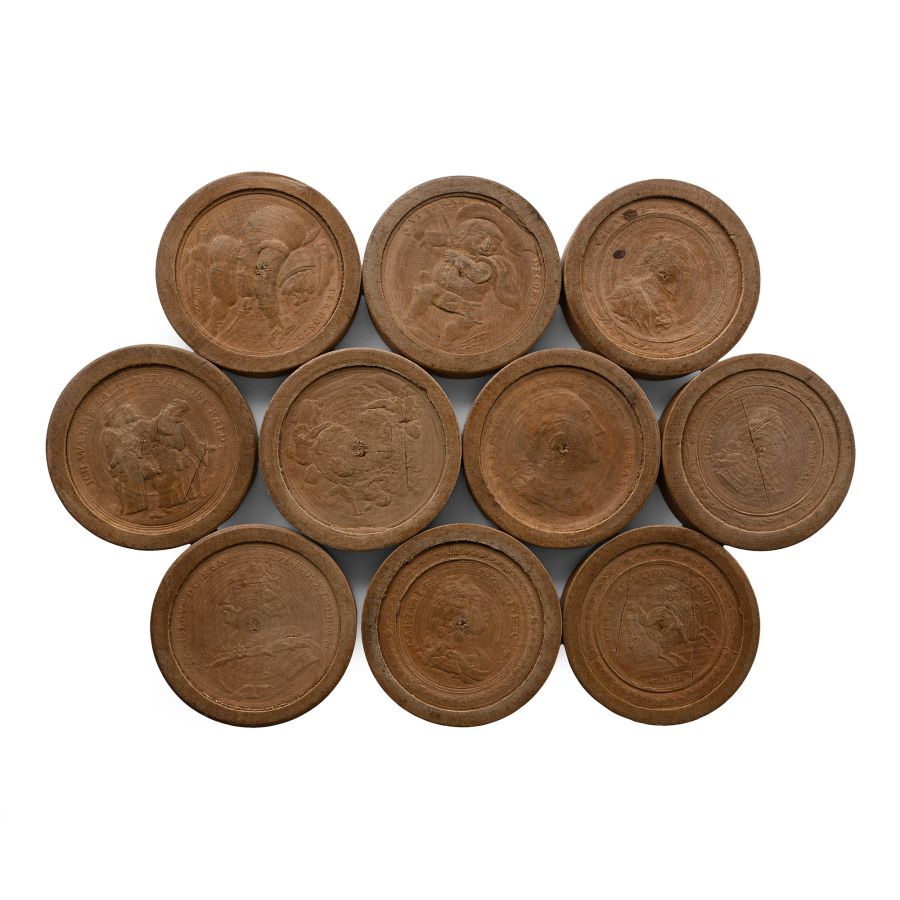
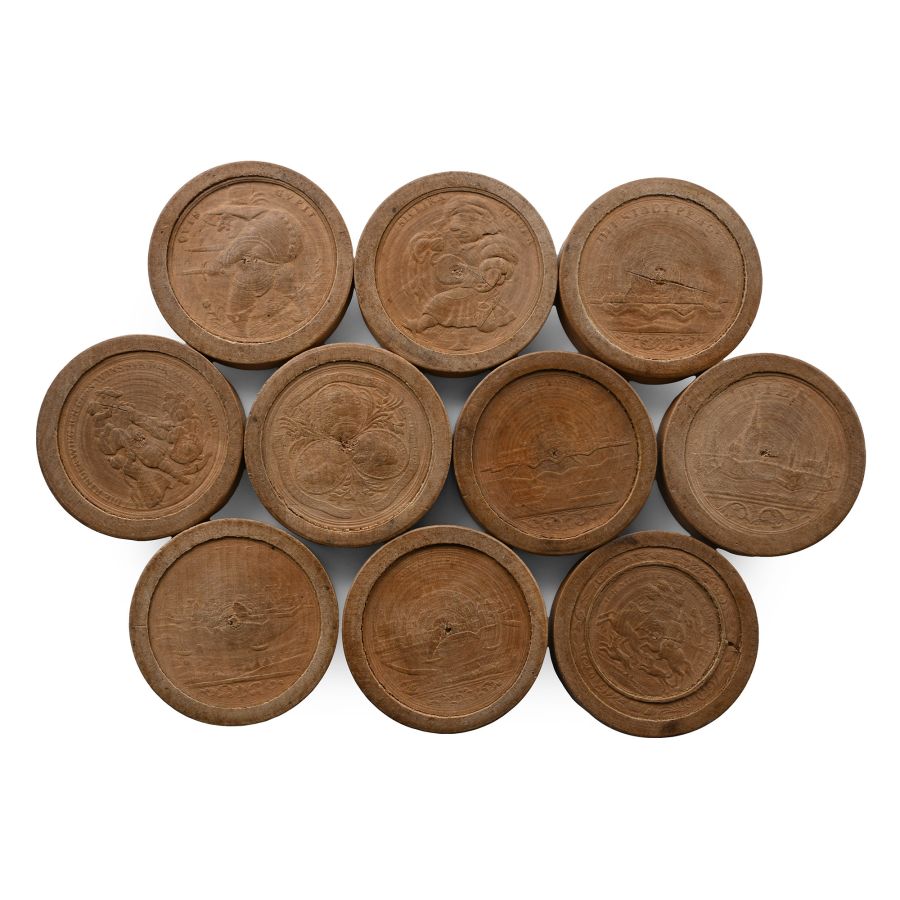
Post Medieval Stained and Natural Wooden Gaming Pieces
SOUTHERN GERMANY, NUREMBERG, 18TH CENTURY A.D.
2 in. (320 grams total, 51 mm each).
Turned wooden counters in natural and dark-stained versions; some of the darker type with the bust of a Holy Roman Emperor to one face and a prospect of a city (Vienna, Danzig, etc.), as well as comic figures and scenes; the lighter group with similar motifs as well as hunting and other scenes.
ProvenancePrivate collection, Europe.
Acquired on the English art market.
Similar game pieces are often signed ‘PHM’ for Philipp Heinrich Müller (1654-1719). There are eleven stained pear wood pieces and ten natural pear-wood pieces. The game pieces are decorated with busts, commemorative medals, cities, figural scenes including interiors, daily life and great battles, German / Austrian cities and figures from the engravings of Jacques Callot (1592-1635).
CONDITIONTimeLine Auctions follows a vetting process to ensure the authenticity and legality of all items, reinforcing our commitment to integrity and responsible trading. Each antiquity, antique, and coin lot undergoes thorough examination by a vetting committee of at least ten external specialists, professional trade association members, scientists, and archaeologists: Our Vetting Process
AUCTIONS:
TimeLine is a leading auction house specialising in antiquities, ancient art, collectables, natural history, coins, medals, and books. Our auctions offer museums, collectors, historians, and enthusiasts the opportunity to acquire unique and historically significant pieces.
-
.jpg)
Large Post Medieval Merchant’s Seal Ring Engraved with 'BG' and Shield
Germany, 16th century A.D.Sold for (Inc. bp): £12,350
Engraved with the owner's initials ‘B G’ above a tilting shield with flanche; merchant's mark motif of capital 'A' and a cross. 20.03 grams, 28.33 mm overall, 23.00 x 18.47 mm internal diameter (approximate size British T 1/2, USA 9 3/4, Europe 21.89, Japan 21)
Private collection, Europe. Acquired on the English art market. This lot has been checked against the Interpol Database of stolen works of art and is accompanied by a search certificate number no.13051-248349.
Merchants' marks were chosen by their owners as a form of personal cypher, and so it is almost impossible to decipher the owner of many merchants' marks, as they were not governed by the strict regulation and recording that heraldry laws dictated. Merchants' rings were engraved with geometric symbols used to mark their goods or personal belongings and used instead of a coat of arms for those not entitled to them. Most merchants in the sixteenth and seventeenth centuries had marks, easily identifiable and formed with a few strokes. Many such rings also bear religious or talismanic inscriptions or imagery, combining a spiritual with a commercial function. The shape of the shield on this example draws direct parallels to the heraldic shields and jewels of this period in Germany. -
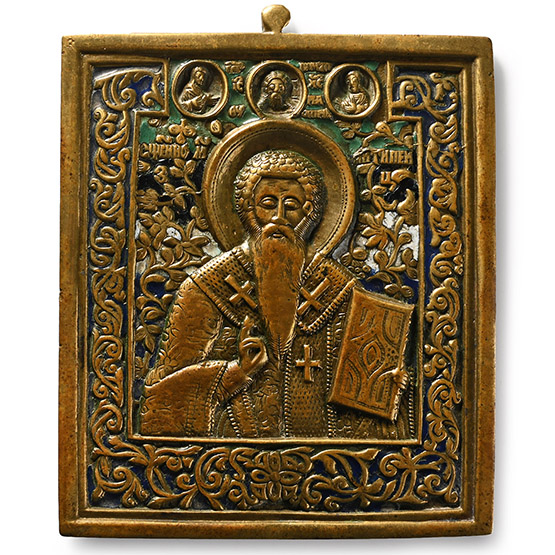
Russian Orthodox Enamelled Bronze Travel Icon with Saint Antipas of Pergamum
19th century A.D.Estimate: £250 - 350 (+bp*)
Opening Bid: £135
Representing Saint Antipas with a Gospel in his left hand and making the gesture of blessing with his right, dressed as a bishop, with sticharion, covered by omophorion, and surmounted by an epitrachelion; the Mandylion at the centre above the saint, Saint Mary on the left panel and Jesus on the right; Old Slavic inscription around the figures: 'ΙC ΧΡ' (Jesus Christ); 'ΜΡ ϴΥ'(Mother of God); Saint Antipas of Pergamum (Св Анти́па Перга́мский). 238 grams, 11.3 cm
Acquired from Chris Martin-Zakheim, Iconastas, 5 Piccadilly Arcade, London SW1. From the private collection of a West London, UK, gentleman, formed since the early 2000s.
The icon features meticulous craftsmanship typical of Orthodox iconography. Saint Antipas was popularly held to be a healer of tooth problems. He was martyred by burning in a brazen bull-shaped altar under the Emperors Nero or Domitian. -
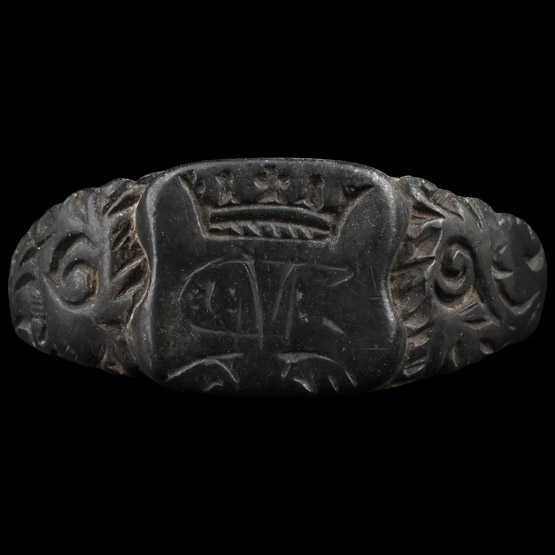
Post Medieval Bronze Ring with Crowned CVR
17th-18th century A.D.Sold for (Inc. bp): £85
Scrollwork to the shoulders, square bezel with impressed crown above incised 'CVR monogram. 4.25 grams, 22.75 mm overall, 19.59 mm internal diameter (approximate size British T 1/2, USA 9 3/4, Europe 21.89, Japan 21)
Ex German art market, 2000s. Acquired from an EU collector living in London. From the collection of a Surrey, UK, gentleman.
