
Loading, please wait...
LOT 2119
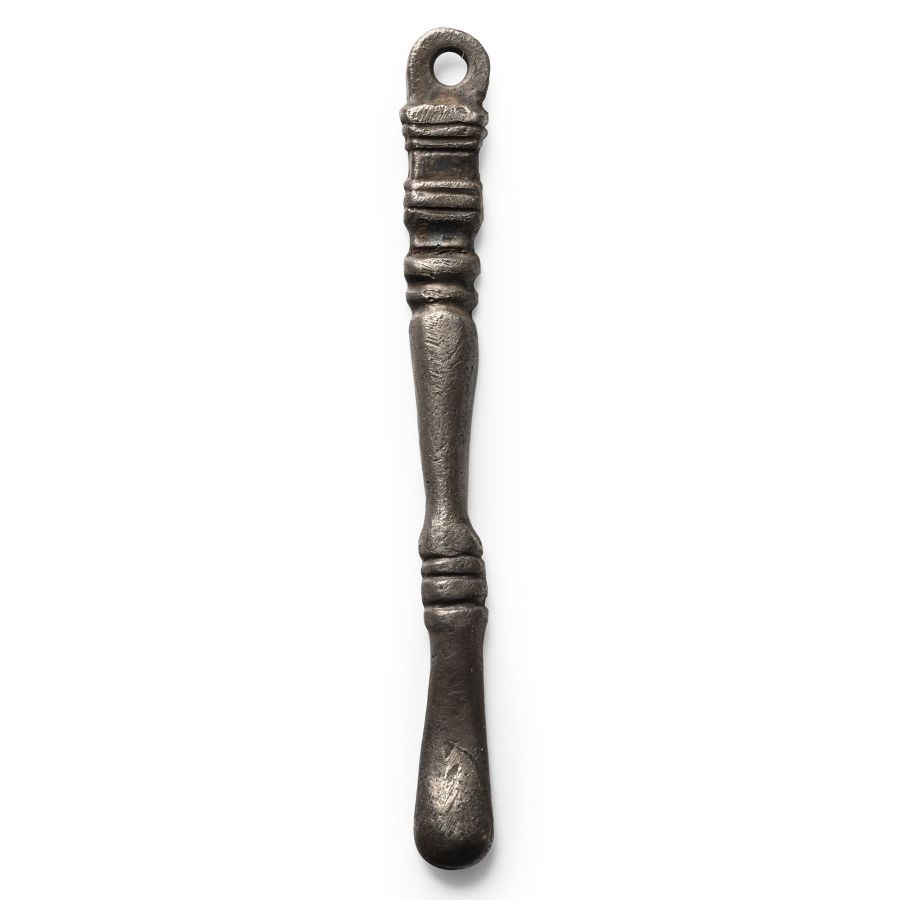
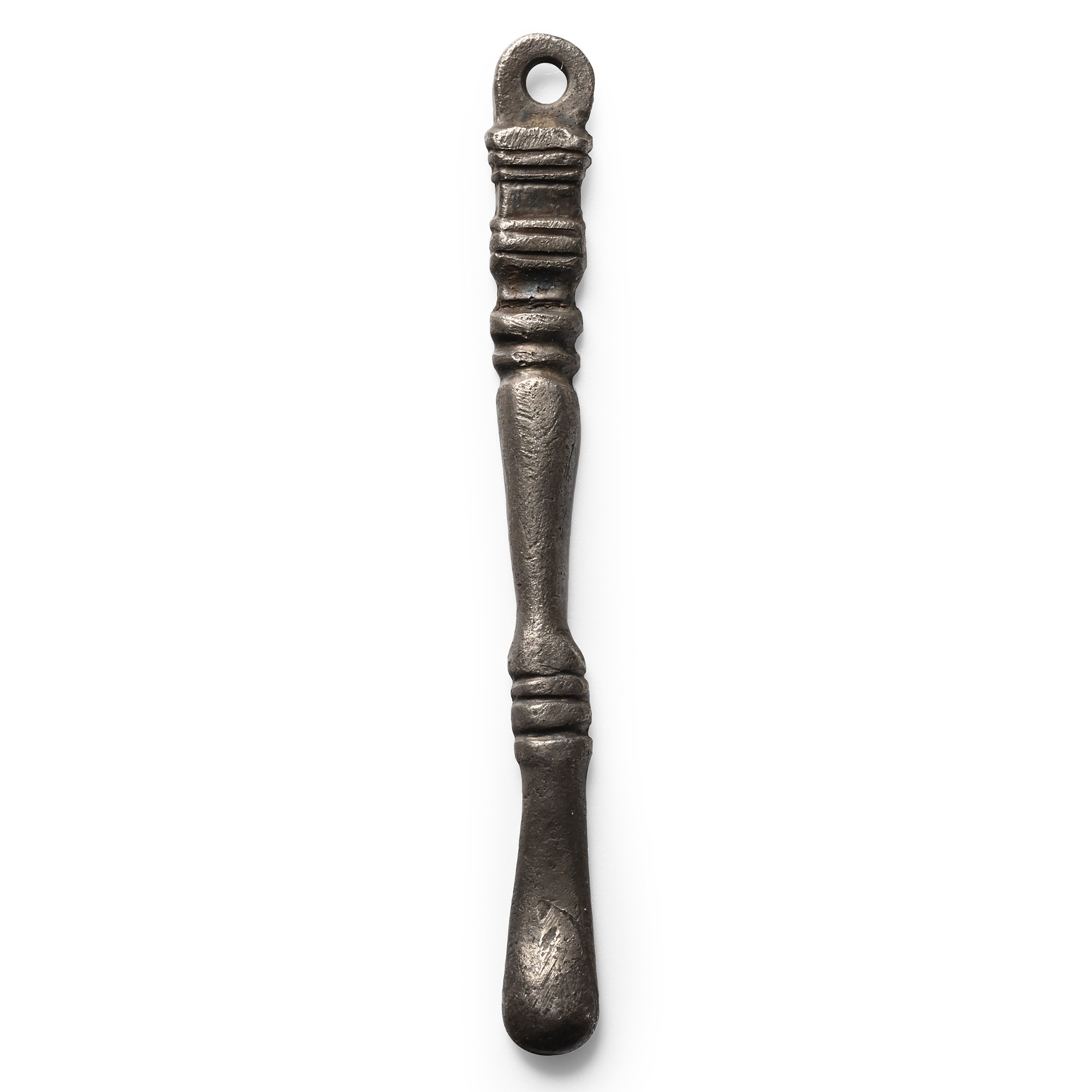
Post Medieval Silver Toilet Spoon
1600-1700 A.D.
1 7/8 in. (2.15 grams, 47 mm).
An ear scoop with egg-shaped bowl, and slender D-section handle with flat underside and moulded collar to the upper face, pierced through the top. [No Reserve]
ProvenanceFound whilst searching with a metal detector in Brompton, North Yorkshire, on Thursday 25 June 2008, recorded as Treasure and disclaimed by the Crown with Treasure Reference no.2009 T10.
Accompanied by a copy of the British Museum's Portable Antiquities Scheme (PAS) report no.NCL-B5BCC7.
Accompanied by a copy of a letter from the British Museum and Her Majesty's Coroner regarding the find.
This lot is accompanied by an illustrated lot declaration signed by the Head of the Antiquities Department, Dr Raffaele D’Amato.
TimeLine Auctions follows a vetting process to ensure the authenticity and legality of all items, reinforcing our commitment to integrity and responsible trading. Each antiquity, antique, and coin lot undergoes thorough examination by a vetting committee of at least ten external specialists, professional trade association members, scientists, and archaeologists: Our Vetting Process
AUCTIONS:
TimeLine is a leading auction house specialising in antiquities, ancient art, collectables, natural history, coins, medals, and books. Our auctions offer museums, collectors, historians, and enthusiasts the opportunity to acquire unique and historically significant pieces.
-
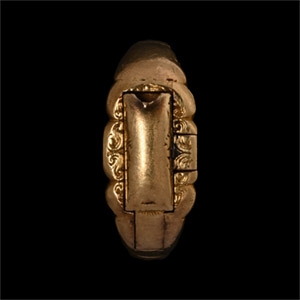
Civil War Period Gold Poison Ring
17th century A.D.Sold for (Inc. bp): £3,380
With expanding shoulders, scrolled outline to the plaque, hinged folding tube below the central panel. 7.49 grams, 22.28 mm overall, 18.87 mm internal diameter (approximate size British N 1/2, USA 6 3/4, Europe 14.35, Japan 13)
From the private collection of N.Thomas, 1979-1987. This lot has been checked against the Interpol Database of stolen works of art and is accompanied by search certificate number no.12481-229481. This lot has been cleared against the Art Loss Register database, and is accompanied by an illustrated lot declaration signed by the Head of the Antiquities Department, Dr Raffaele D’Amato. -
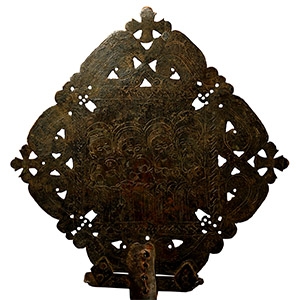
Ethiopian Engraved Bronze Cross with Figures of the Holy Fathers
Circa 1450-1480 A.D.Sold for (Inc. bp): £2,080
A bifacial Yämäṩor Mäsqäl processional cross finial comprising an openwork flat-section panel surmounted by a cross, with interlaced tendril design engraved with four seated saints on both faces in low-relief; tapering tubular socket with circumferential ribbing, lateral angled crosses. 404 grams, 30.5 cm
Ex central London gallery. This lot is accompanied by an illustrated lot declaration signed by the Head of the Antiquities Department, Dr Raffaele D’Amato.
In contrast with the hand cross that is fitted with a grip, the processional cross has a hollow shaft into which the pole supporting the cross is inserted, although the use of both is interconnected in the liturgy and ceremonial aspects of the Ethiopian Orthodox Church. In Amharic, it received the name of yämäṩor mäsqäl or "cross to [carry] on a pole", the term mäṩor also meaning a wooden handle. Processional crosses are used on "every qaddase day" occasions - an expression meaning whenever the liturgy is performed. This includes displaying the cross during the reading of the Gospels and other sacred texts, as well as holding it up to be viewed at the end of the service for the final blessing. -
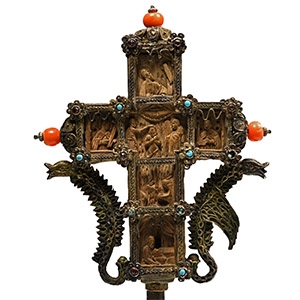
Mount Athos Wooden Cross with Silver-Gilt Mounts
Late 18th century A.D.Sold for (Inc. bp): £2,730
Comprising: a wooden cross with carved scenes from the life of Christ (Nativity and others to one face, Crucifixion and others to the other face) housed in a filigree frame; addorsed winged beasts supporting the arms of the cross; three coral beads to the arms, smaller glass beads to each face; balustered stem and domed base. 170 grams, 21.5 cm
Ex Iconastas, London SW1, UK, in 2004. Property of a London, UK, gentleman collector. Accompanied by a copy of the Iconastas invoice dated 18 February 2004. This lot is accompanied by an illustrated lot declaration signed by the Head of the Antiquities Department, Dr Raffaele D’Amato.
