
Loading, please wait...
LOT 2028
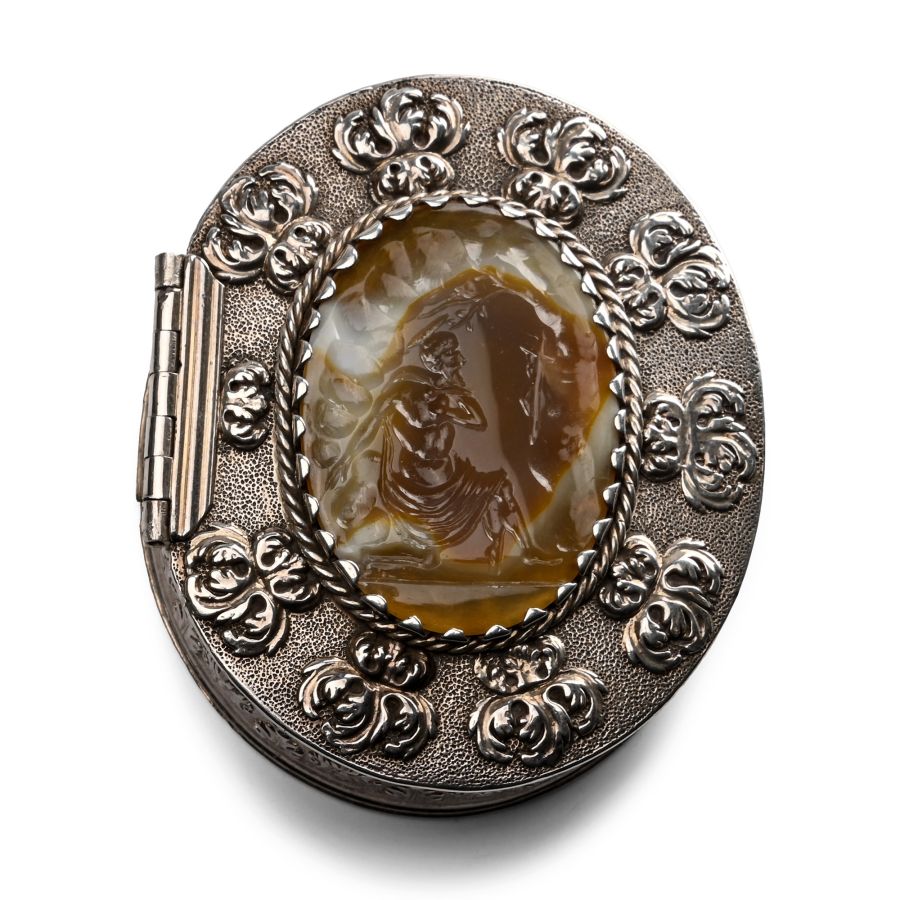
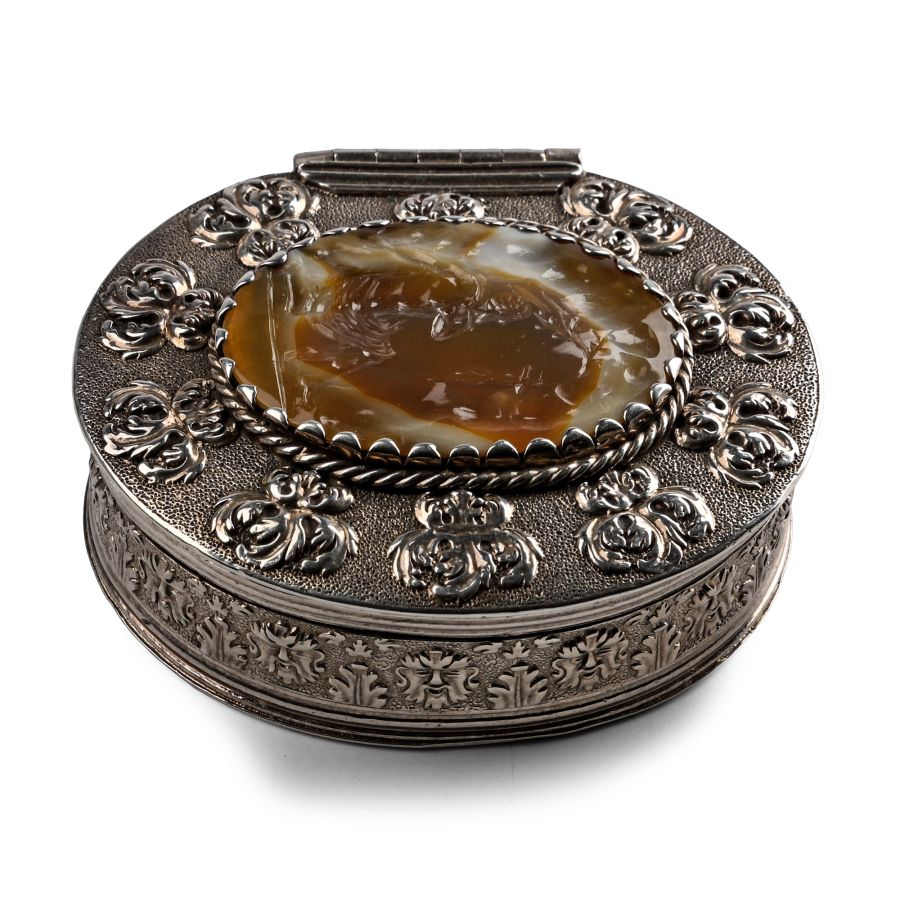
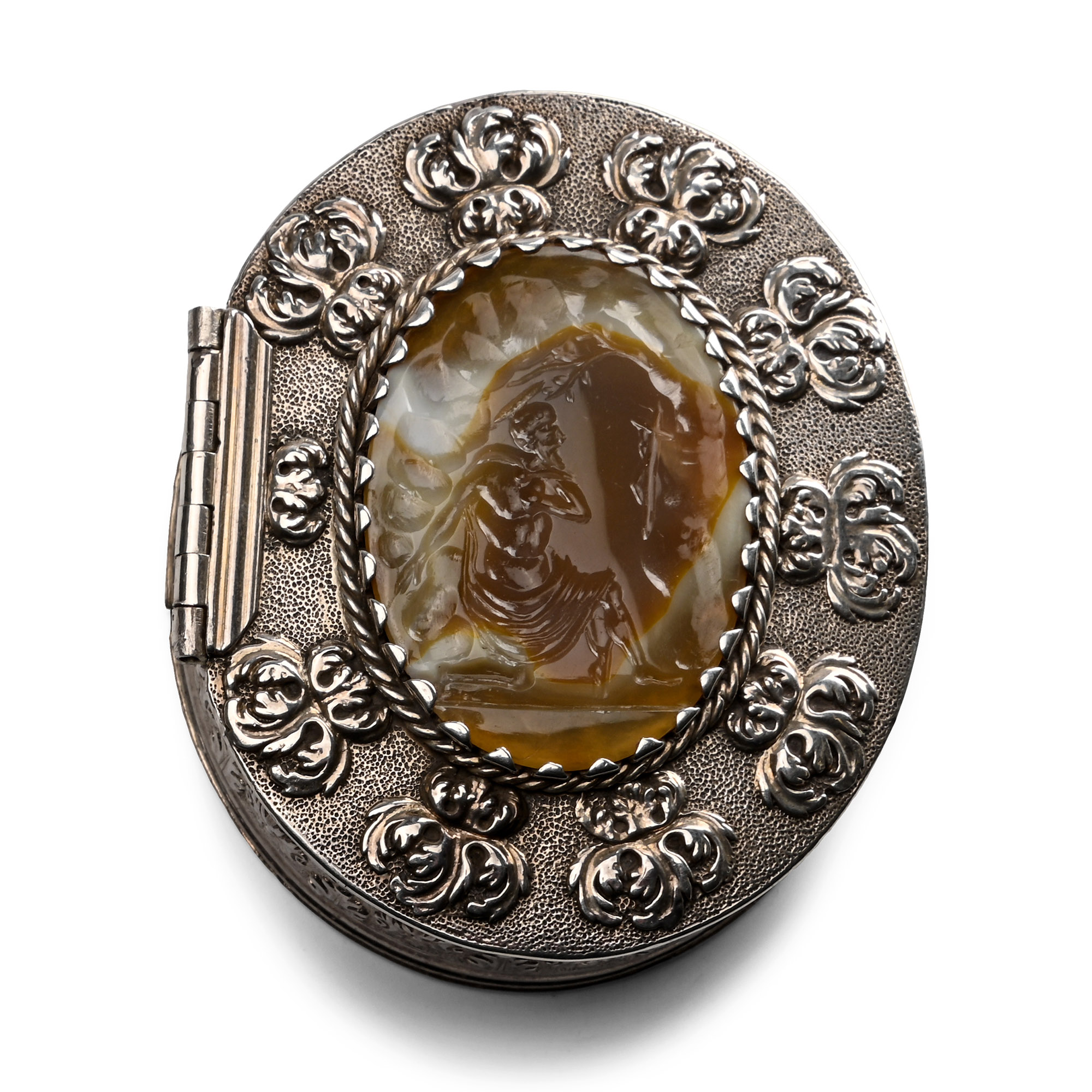
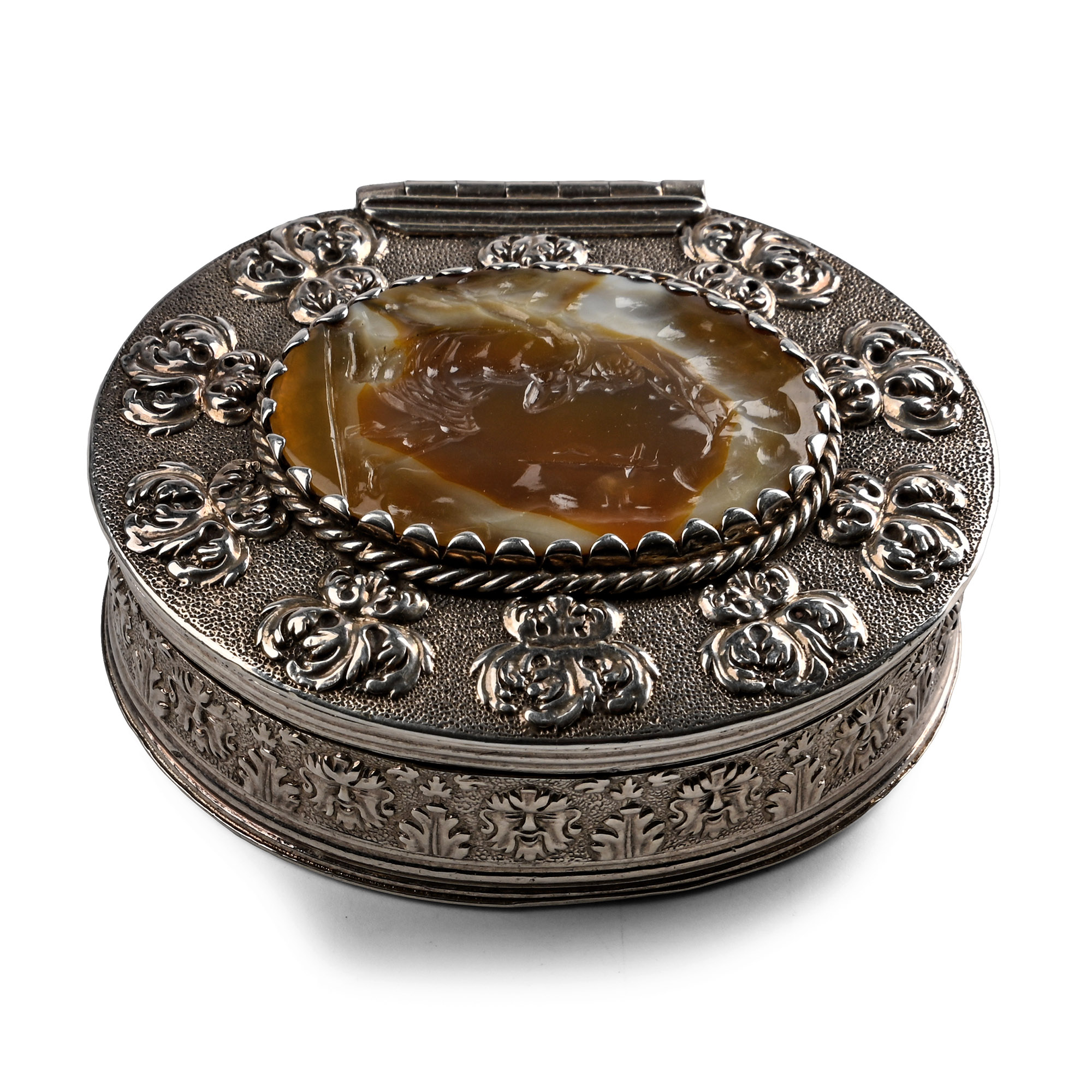
Post Medieval Silver Snuff Box Set with Agate Intaglio of Saint Jerome
ITALY, 16TH-17TH CENTURY A.D.
2 in. (52.7 grams, 53 mm).
Decorated with a repeating motif of acanthus leaves and facing masks of Bacchus; lid of set with an agate intaglio of Saint Jerome kneeling before a crucifix within a rope-twist and dog's tooth border, surrounded by leafy swags on a pounced field; old collector's label 'Walecki Collection 207006' to inner lid.
ProvenancePrivate collection, Europe.
Acquired on the English art market.
TimeLine Auctions follows a vetting process to ensure the authenticity and legality of all items, reinforcing our commitment to integrity and responsible trading. Each antiquity, antique, and coin lot undergoes thorough examination by a vetting committee of at least ten external specialists, professional trade association members, scientists, and archaeologists: Our Vetting Process
AUCTIONS:
TimeLine is a leading auction house specialising in antiquities, ancient art, collectables, natural history, coins, medals, and books. Our auctions offer museums, collectors, historians, and enthusiasts the opportunity to acquire unique and historically significant pieces.
LOT 2028
Post Medieval Silver Snuff Box Set with Agate Intaglio of Saint Jerome
Estimate £1,200 - 1,700€1,390 - 1,970 (for guidance only)$1,620 - 2,300 (for guidance only)
-
Large Post-Classical Eastern Bloodstone Gemstone with Three Busts
19th century A.D. or earlierEstimate: £400 - 600 (+bp*)
Opening Bid: £200
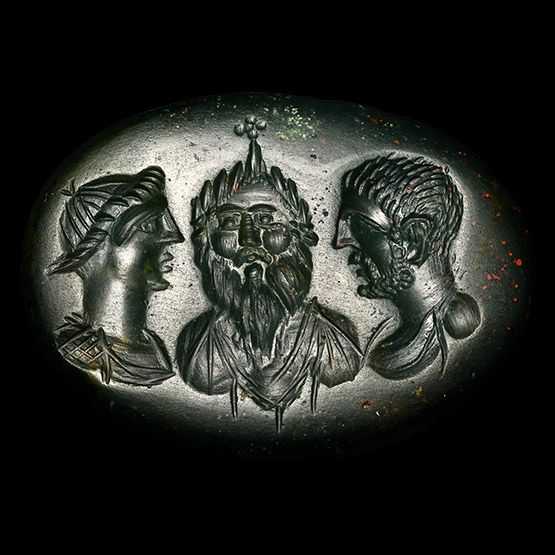
Three intaglio busts facing, comprising: left, youthful female with long neck and neatly bound hair, mantle to the shoulders; centre, facing bearded male with diadem topped by a quatrefoil; right, youthful male with short hair and neat beard; cut in the Roman style of the 3rd century A.D; supplied with a museum-quality impression. 9.27 grams, 35 mm
Private collection, England.
The three figures may represent Venus, Jupiter and Mars. -
Tudor and Later Mixed Artefact Group
16th-21st century A.D.Sold for (Inc. bp): £91
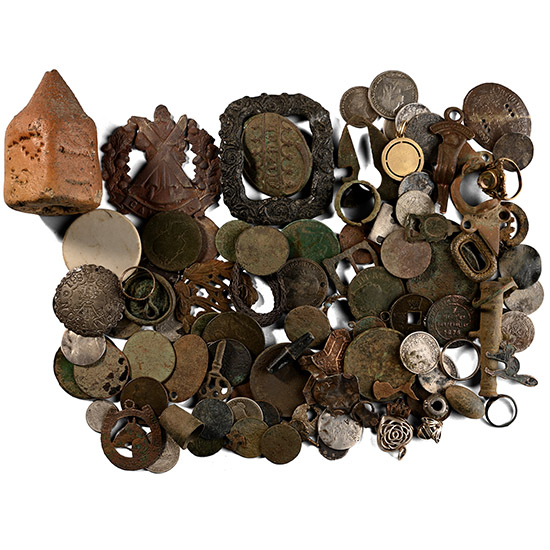
Including various coins, mounts, rings, a toy cannon, and others. 540 grams total, 11-62 mm
Found Tyne and Wear, UK. This lot is for UK buyers only, not for export. -
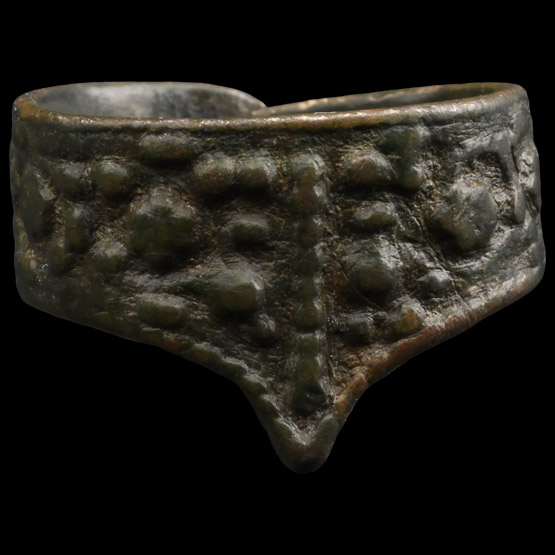
Post Medieval Bronze Archer's Thumb Ring
16th-17th century A.D.Sold for (Inc. bp): £46
With broad triangular flange, low-relief raised pellets and bands. 7.66 grams, 25.12 mm overall, 21.8 mm internal diameter (approximate size British V, USA 10 1/2, Europe 23.77, Japan 22)
From an old English collection, 1980s.
