
Loading, please wait...
LOT 1481
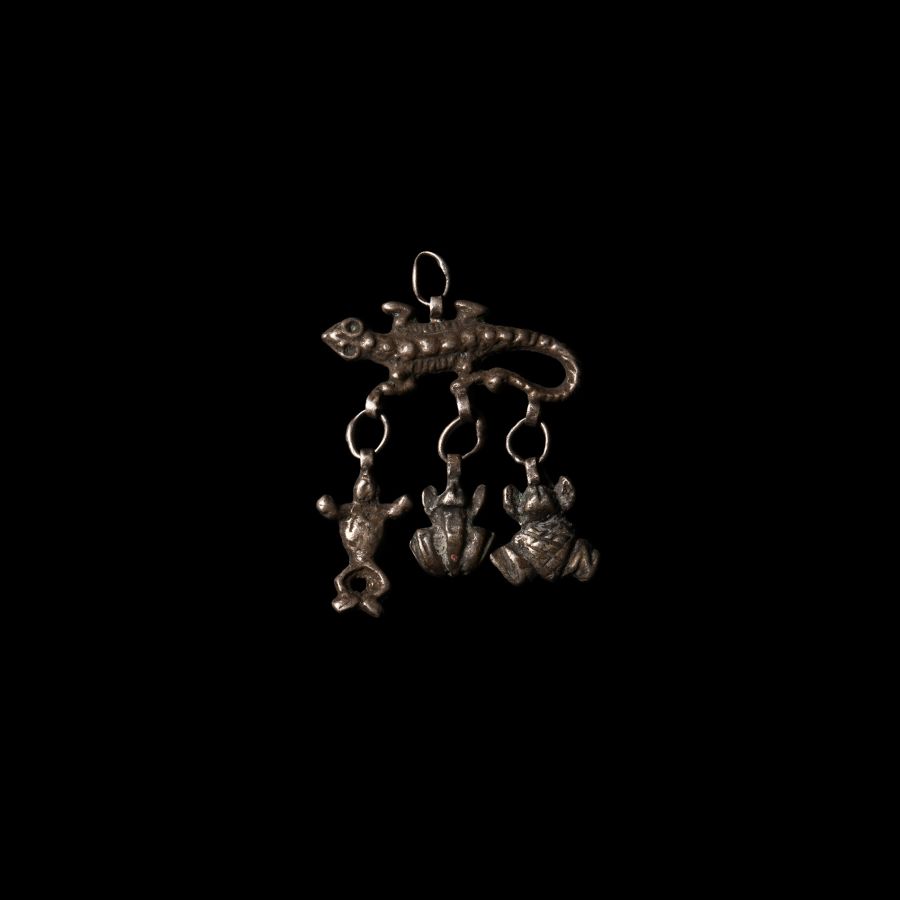
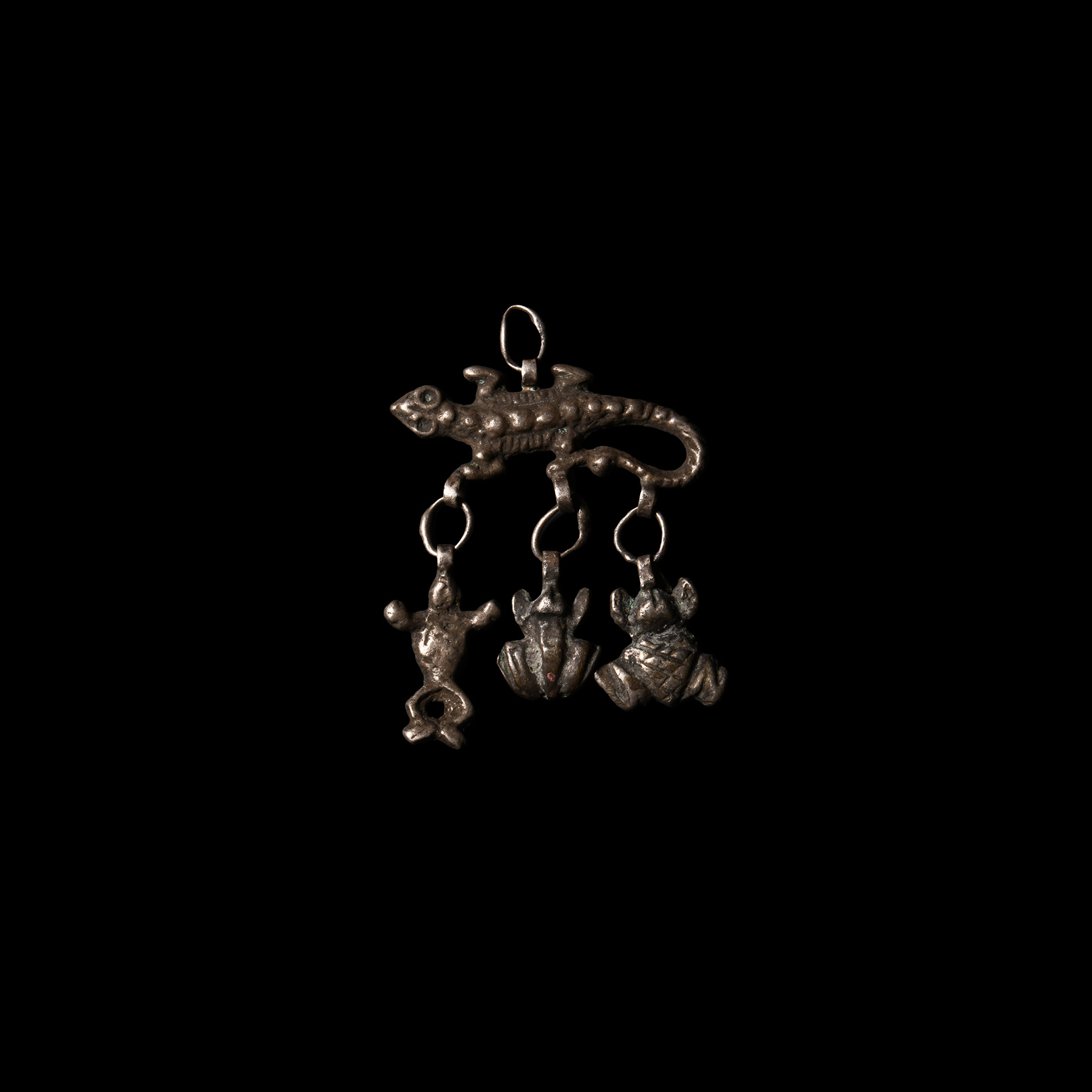
Post Medieval Silver Salamander Pendant with Frogs
CIRCA 17TH-18TH CENTURY A.D.
1 3/4 in. (10.2 grams, 46 mm high).
A silver zoomorphic pendant composed of a salamander with stylised anatomical detailing, a suspension loop with free-running ring to upper edge and three loops below, each suspending a frog pendant. [No Reserve]
ProvenanceEnglish collection formed in the 1990s.
UK art market.
Property of an Essex gentleman.
TimeLine Auctions follows a vetting process to ensure the authenticity and legality of all items, reinforcing our commitment to integrity and responsible trading. Each antiquity, antique, and coin lot undergoes thorough examination by a vetting committee of at least ten external specialists, professional trade association members, scientists, and archaeologists: Our Vetting Process
AUCTIONS:
TimeLine is a leading auction house specialising in antiquities, ancient art, collectables, natural history, coins, medals, and books. Our auctions offer museums, collectors, historians, and enthusiasts the opportunity to acquire unique and historically significant pieces.
-
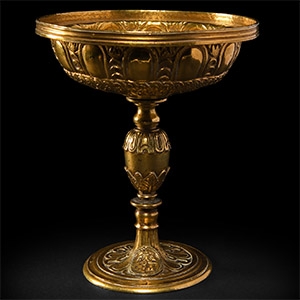
Post Medieval Gilt Silver Dated Decorated Chalice
15th-16th century A.D.Sold for (Inc. bp): £1,950
A gilt silver chalice with bowl decorated with repoussé arcading, fluting and entwined motifs, balustered stem with ovoid centre adorned with pseud-architectural and leaf detailing, fluting below splaying out onto a circular foot bearing an applied oval armorial cartouche; interior base with foliate roundel in raised relief; dated 1589 in Roman numerals incised on the base. 309 grams, 13.5 cm high
English private collection. -
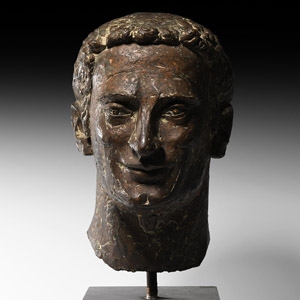
Bronze Head of a Man
20th century A.D.Estimate: £800 - 1,000 (+bp*)
Opening Bid: £400
A hollow-formed bronze bust of a youthful clean-shaven male with short curly hair, with a subtle smiling expression; mounted on a custom-made stand. 18.4 kg total, 42 cm high including stand
French collection, 1960s-early 2000s. From an important Paris gallery, France. -
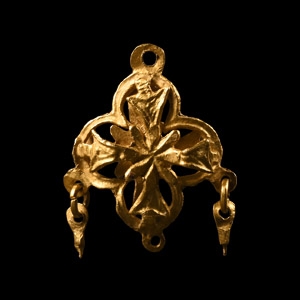
Elizabethan Gold Cross Pendant
16th-early 17th century A.D.Sold for (Inc. bp): £910
A gold bifacial cruciform pendant comprising: outer frame of four lobes confining a cross moline with saltire to the centre, pierced lug to three arms each with a gold dangle, fourth with larger pierced tab for suspension. 1.59 grams, 21 mm
Acquired 1980-2015. Ex Abelita family collection.
