
Loading, please wait...
LOT 2182
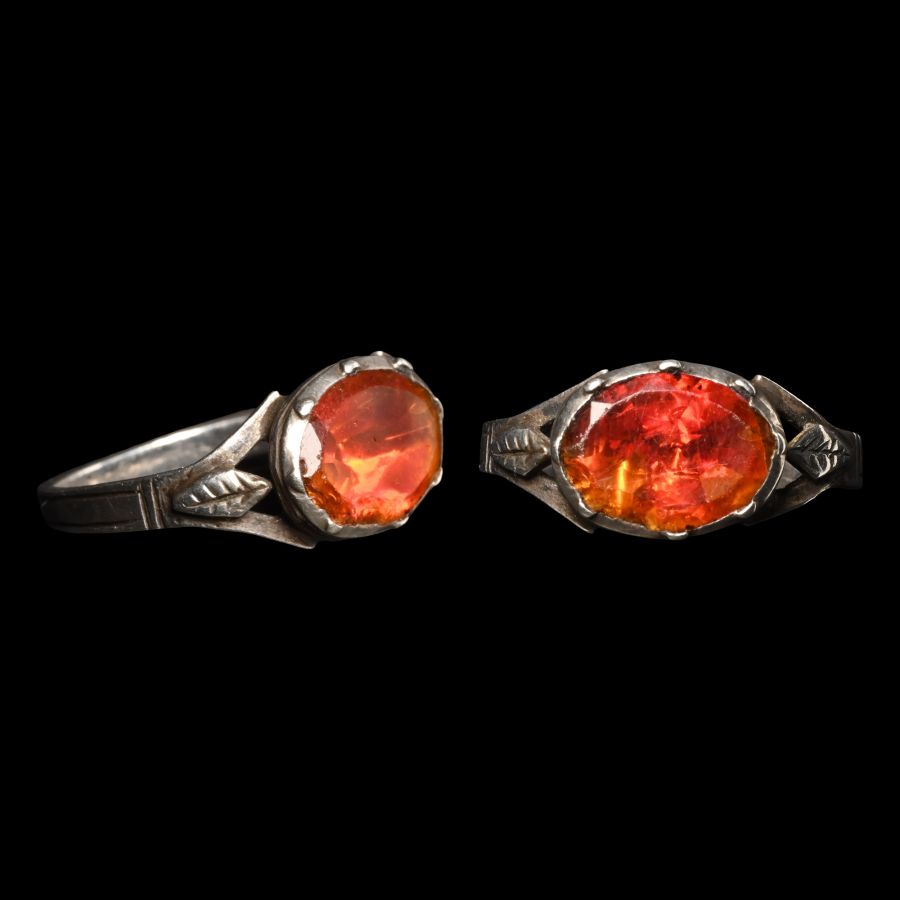
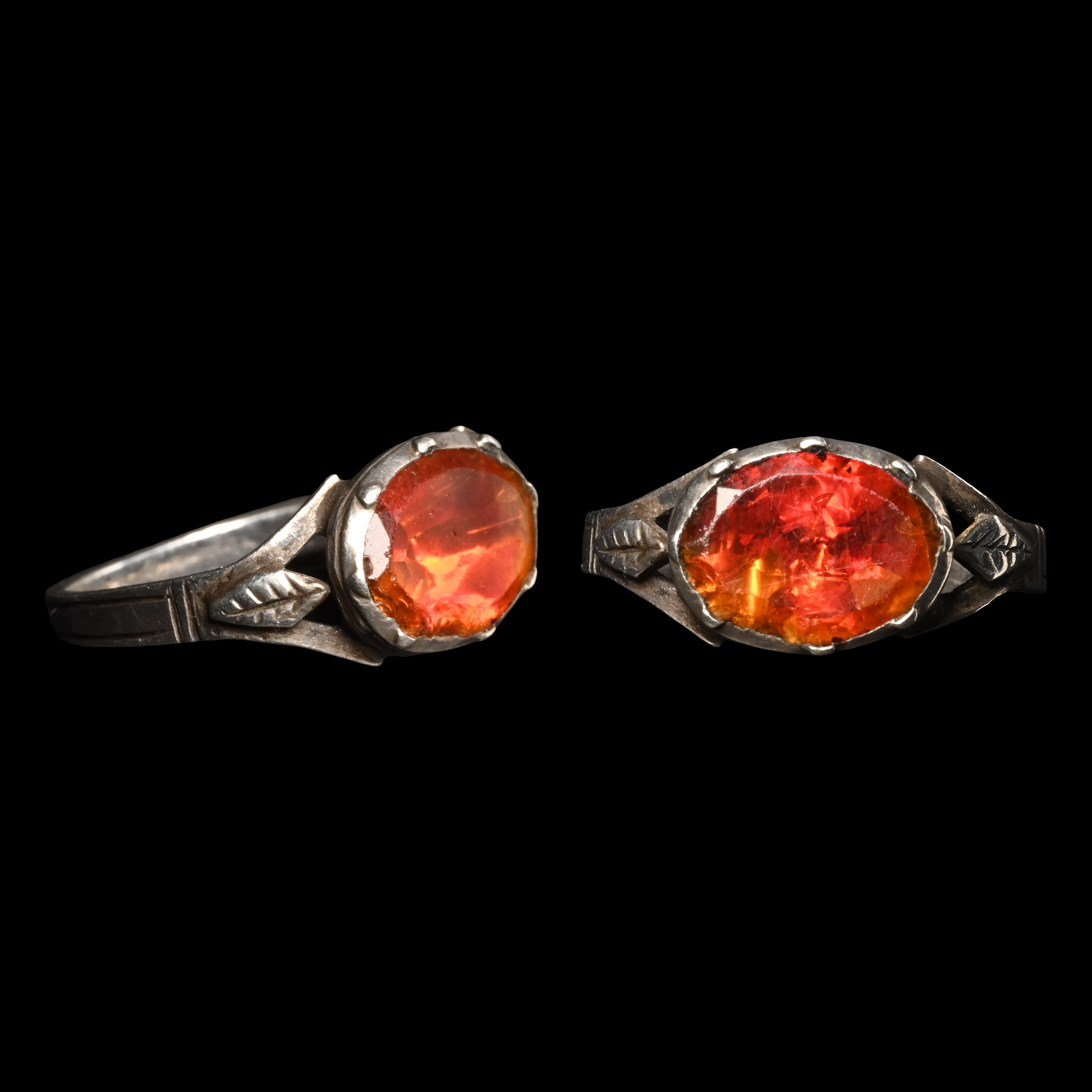
Post Medieval Silver Ring with Vibrant Blood Orange Insert
FRANCE, 18TH CENTURY A.D.
7/8 in. (2.07 grams, 21.36 mm overall, 17.44 x 15.72 mm internal diameter (approximate size British O, USA 7, Europe 14.98, Japan 14)).
Flat-section hoop and ellipsoid bezel with leaf detail to the shoulder, orange glass insert.
ProvenancePrivate collection, Europe.
Acquired on the English art market.
TimeLine Auctions follows a vetting process to ensure the authenticity and legality of all items, reinforcing our commitment to integrity and responsible trading. Each antiquity, antique, and coin lot undergoes thorough examination by a vetting committee of at least ten external specialists, professional trade association members, scientists, and archaeologists: Our Vetting Process
AUCTIONS:
TimeLine is a leading auction house specialising in antiquities, ancient art, collectables, natural history, coins, medals, and books. Our auctions offer museums, collectors, historians, and enthusiasts the opportunity to acquire unique and historically significant pieces.
LOT 2182
Post Medieval Silver Ring with Vibrant Blood Orange Insert
Estimate £200 - 300€230 - 350 (for guidance only)$270 - 410 (for guidance only)
-
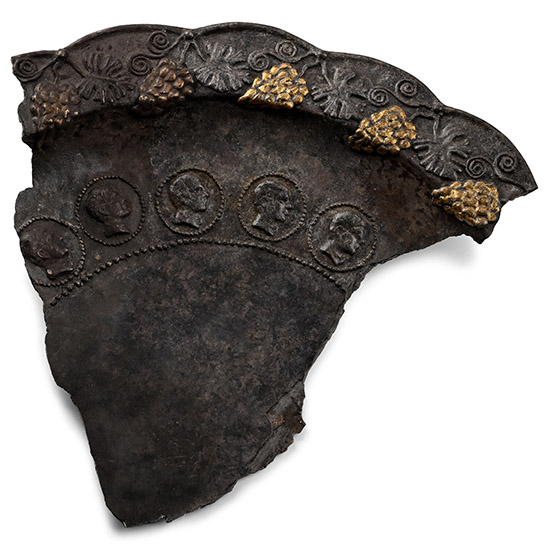
Bactrian Style Silver Dish Fragment with Hellenistic Portraits
20th century A.D.Sold for (Inc. bp): £98
Comprising a portion of the silver-coloured metal rim; rim with vine tendrils, leaves and bunches of grapes modelled in high-relief and extending into the bowl; base with a ring of right-facing male profile busts each within a pelletted hoop, and border of larger pellets below; underside abraded. 152 grams, 22.5 cm
From the London collection of the late Mr S.M., 1969-1999. -
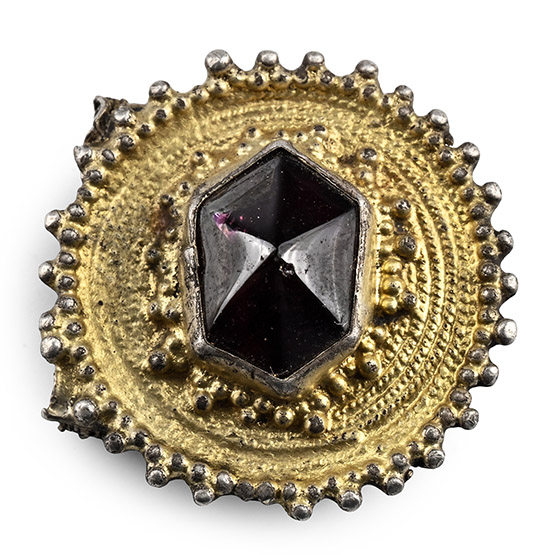
Tudor Period Silver-Gilt Mount with Facetted Garnet
16th-17th century A.D.Sold for (Inc. bp): £169
Discoid plaque with granules to the rim, concentric rings to the face and central hexagonal cell with inset garnet gemstone, mounting loops to reverse. 3.16 grams, 20 mm
Ex German art market, 2000s. Acquired from an EU collector living in London. From the collection of a Surrey, UK, gentleman. -
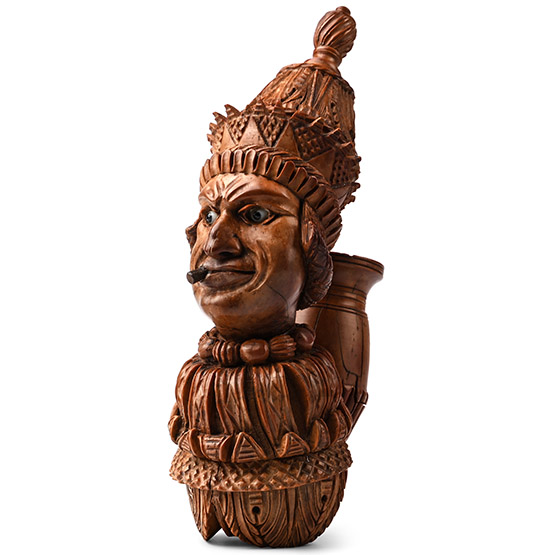
Post Medieval Figural Coquilla Pipe
French Colonies, 19th century A.D.Sold for (Inc. bp): £845
Bowl formed as a jester head with prominent hooked nose and insert glass eyes, smoking a cigar, wearing a crown and prominent necklace, removable cylindrical cap to the top of the head; ascending stem with ribbed bottom and everted flat rim at the back. 177 grams, 15.5 cm
Private collection, Europe. Acquired on the English art market.
