
Loading, please wait...
LOT 2177
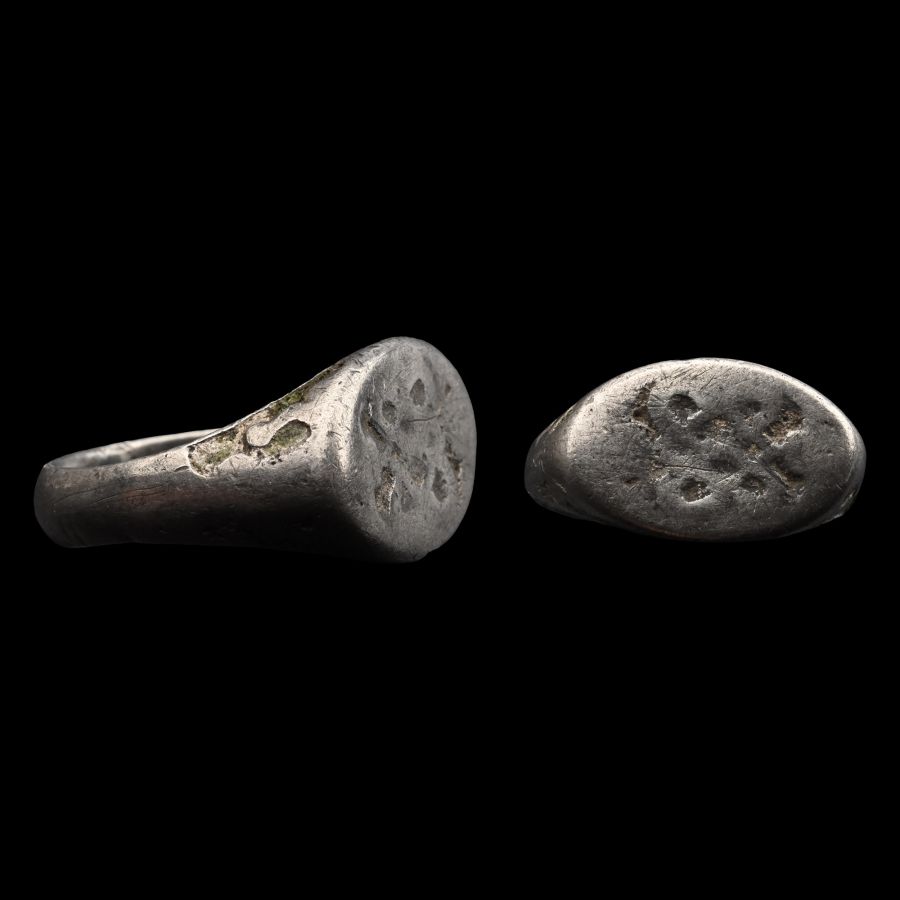
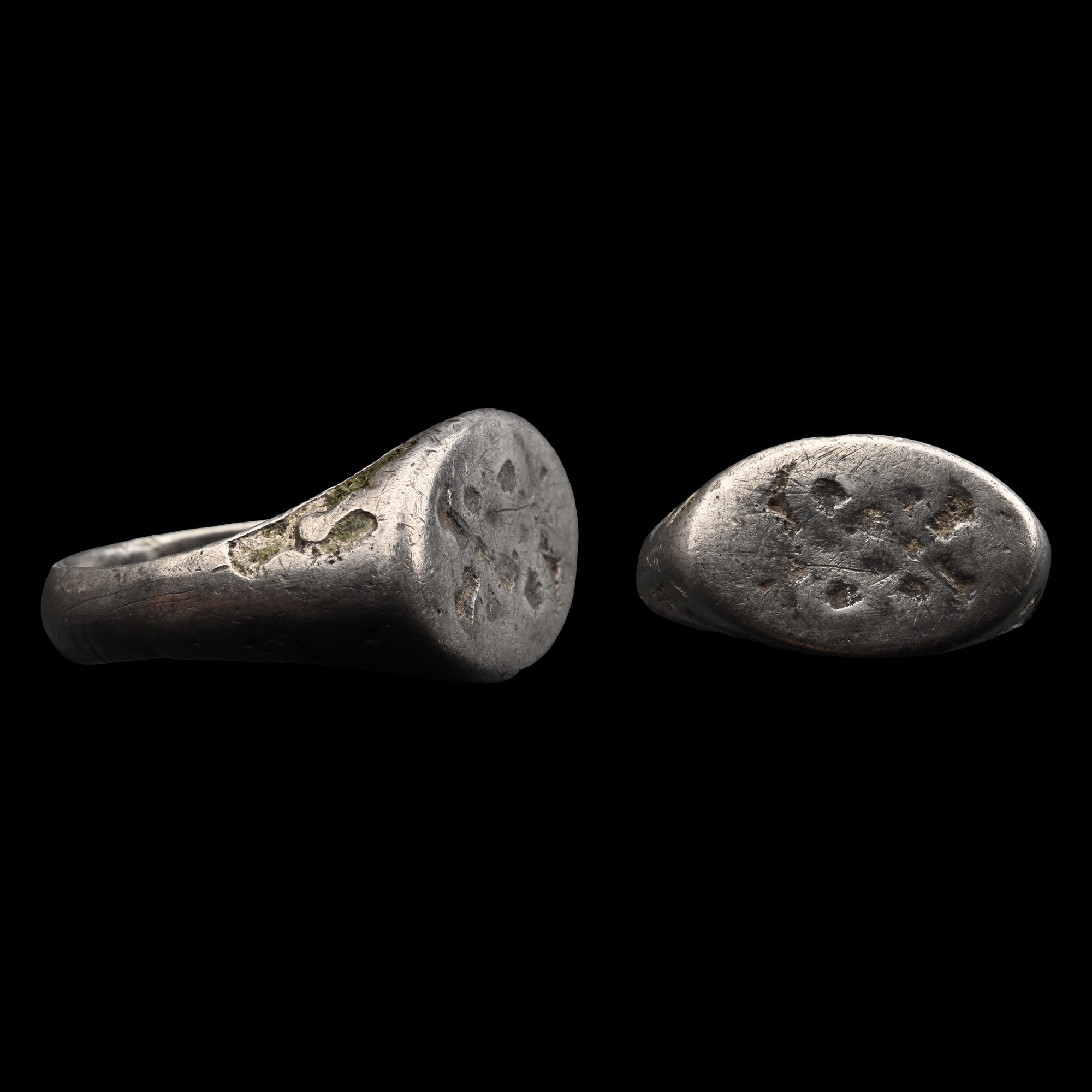
Post Medieval Silver Memento Mori Ring with Skulls on Crossed Bones
16TH-17TH CENTURY A.D.
7/8 in. (5.28 grams, 21.1 mm overall, 18.07 mm internal diameter (approximate size British O, USA 7, Europe 14.98, Japan 14)).
Ellipsoid integral plaque with low-relief motif of two opposed skulls between crossed long-bones. [No Reserve]
ProvenanceFrom an old English collection, 1980s.
CONDITIONTimeLine Auctions follows a vetting process to ensure the authenticity and legality of all items, reinforcing our commitment to integrity and responsible trading. Each antiquity, antique, and coin lot undergoes thorough examination by a vetting committee of at least ten external specialists, professional trade association members, scientists, and archaeologists: Our Vetting Process
AUCTIONS:
TimeLine is a leading auction house specialising in antiquities, ancient art, collectables, natural history, coins, medals, and books. Our auctions offer museums, collectors, historians, and enthusiasts the opportunity to acquire unique and historically significant pieces.
LOT 2177
Post Medieval Silver Memento Mori Ring with Skulls on Crossed Bones
Sold for (Inc. bp): £39
-
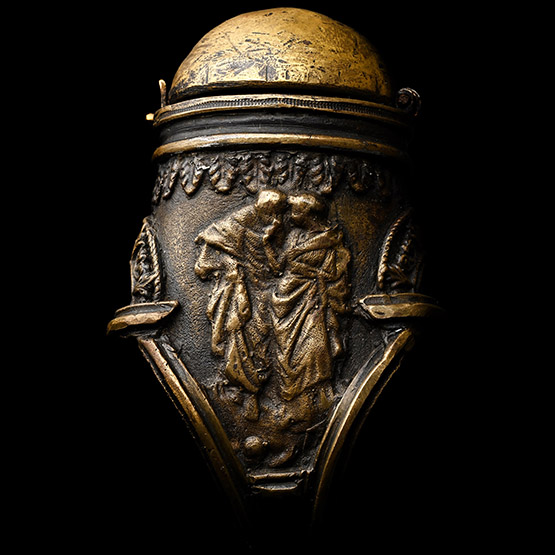
Renaissance Bronze Glove Ring with an Inkwell
Italian, 17th-18th century A.D.Estimate: £400 - 600 (+bp*)
Opening Bid: £200
Flat-section hoop with raised rim to each edge, tubular shank with frieze of robed figures between decorated arches and with pendant fronds above; domed lid with hinge and catch, stepped rim and chamber. 115 grams, 64.40 mm overall, 22.38 mm internal diameter (approximate size British Y 1/2, USA 12 1/4, Europe 28.2, Japan 27)
Private collection, UK. -
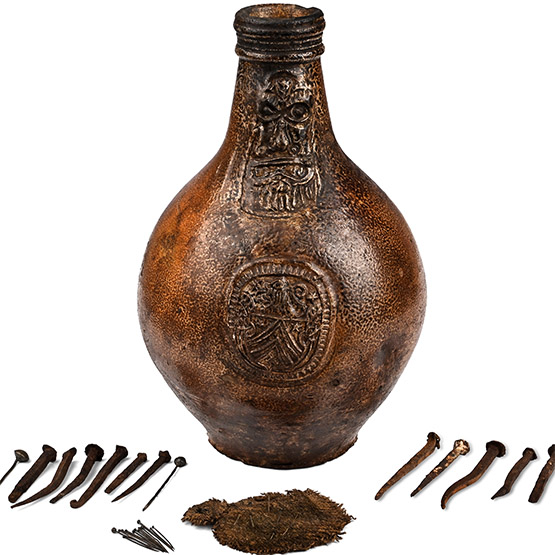
Very Large Glazed Bellarmine Witch's Bottle with Contents
Late 16th-early 17th century A.D.Sold for (Inc. bp): £9,750
Vessel of squat spherical form with a broad cylindrical neck, strap handle and foot with rolled rim, bearded face (Bartmann 'mask') and other detailing; with original contents comprising: eight iron clout nails with square-section shank and domed head; three similar with flat head; base metal dress pin with hollow-formed spherical head; similar with biconvex head; fragment of coarse-woven textile with five pins in situ; thirteen unassociated pins. 1.7 kg total, bottle: 26.5 cm
From the private collection of a London, UK, gentleman.
Witch bottles were a response to the common belief in witchcraft, which was feared in the Puritan culture of those times. The process involved heating the victim’s urine in a bottle, mixed with human hair and metal nails and pins, sometimes inserted into a cloth panel representing the victim's heart. The bottle was then either buried under the hearth of a house (East Anglian tradition) or thrown into a river (London tradition). The heating of the bottle was supposed to transfer to the body of the witch who had caused the victim to be afflicted. -
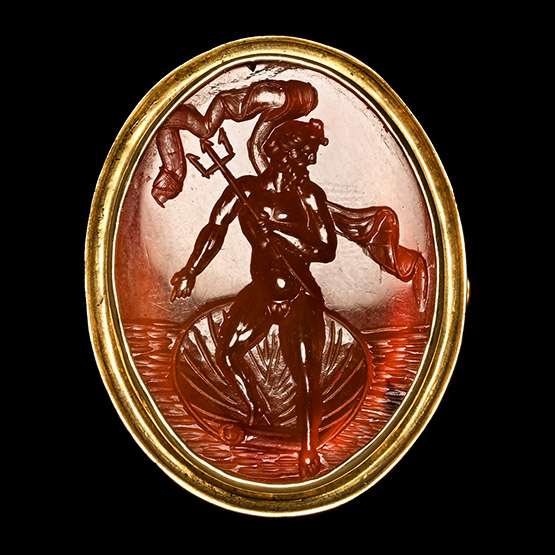
Post Medieval Gold Ring with Carnelian Gemstone Depicting the Roman God Neptune
Italy, 19th century A.D.Sold for (Inc. bp): £2,340
Depicting Neptune advancing nude from a scallop shell, holding a trident in one hand and pointing with the other; billowing banner to his rear; supplied with a museum-quality impression. 15.19 grams, 31.43 mm overall, 19.60 mm internal diameter (approximate size British R, USA 8 1/2, Europe 18 3/4, Japan 18)
Private collection, Europe. Acquired on the English art market. This lot has been checked against the Interpol Database of stolen works of art and is accompanied by search certificate number no.13053-248373.
Throughout Europe, and far beyond, talented gem-cutters were at work in the 19th century. Neptune was appreciated by Neoclassical cutters, as shown by a carnelian gemstone with the profile of Neptune, his face serene amidst a storm, by the American engraver George Hewitt Cushman (1814-1876).
