
Loading, please wait...


LOT 2129
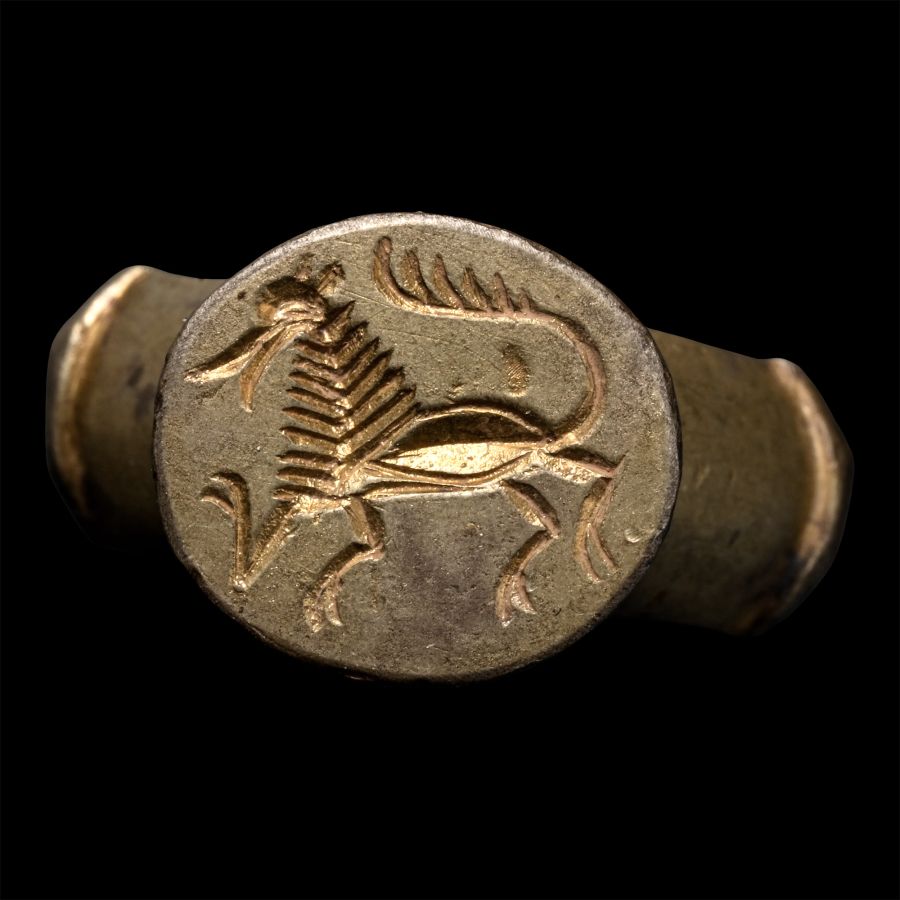
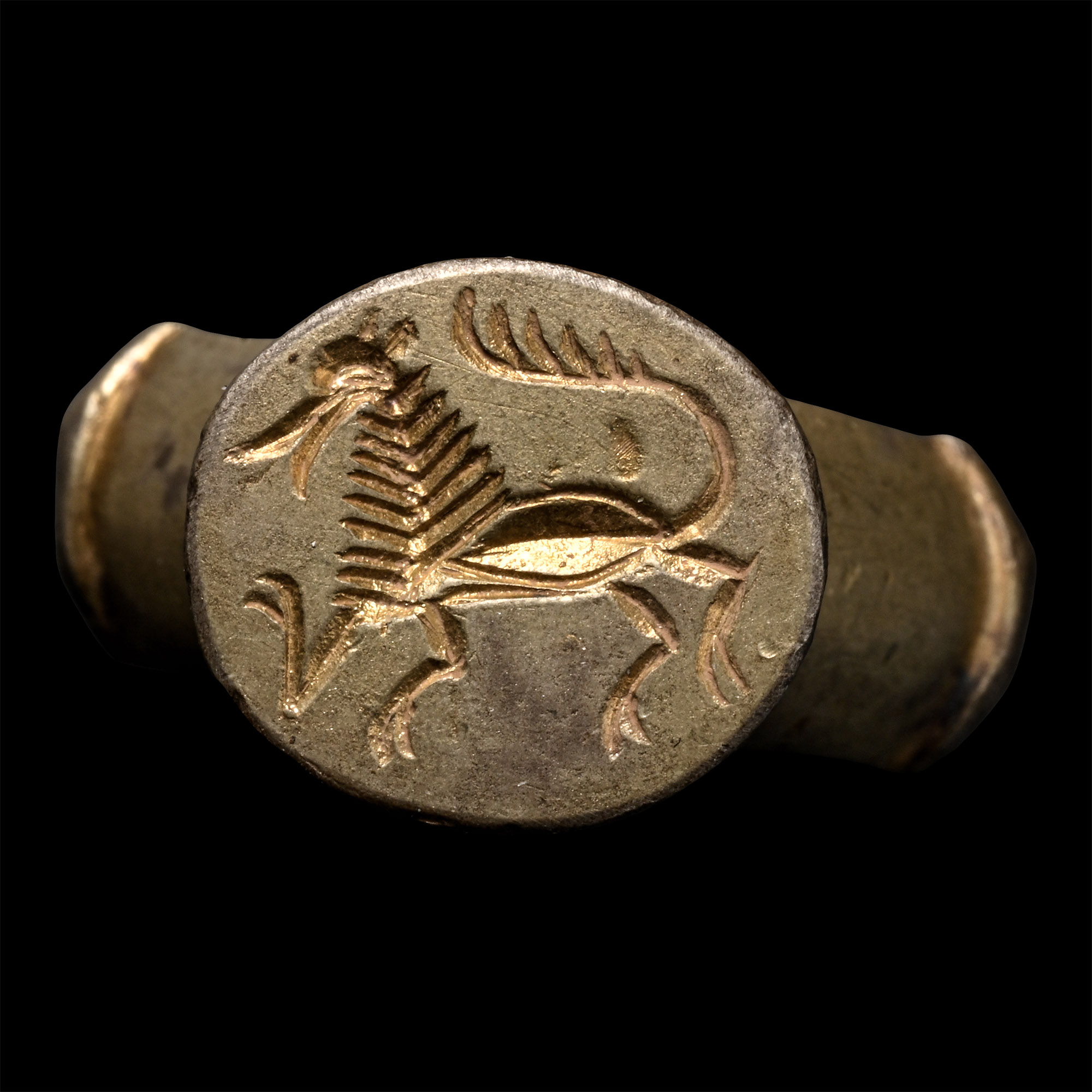
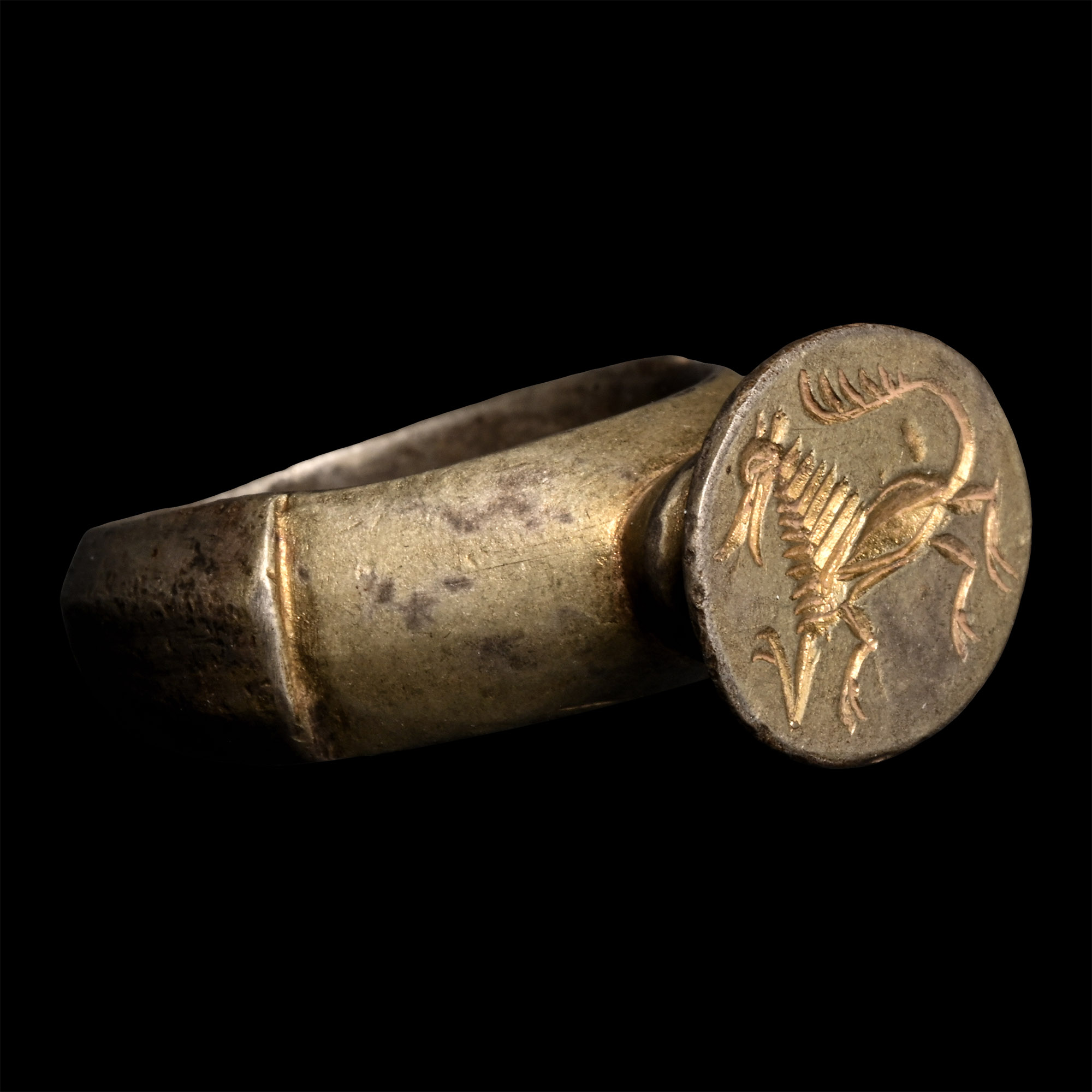
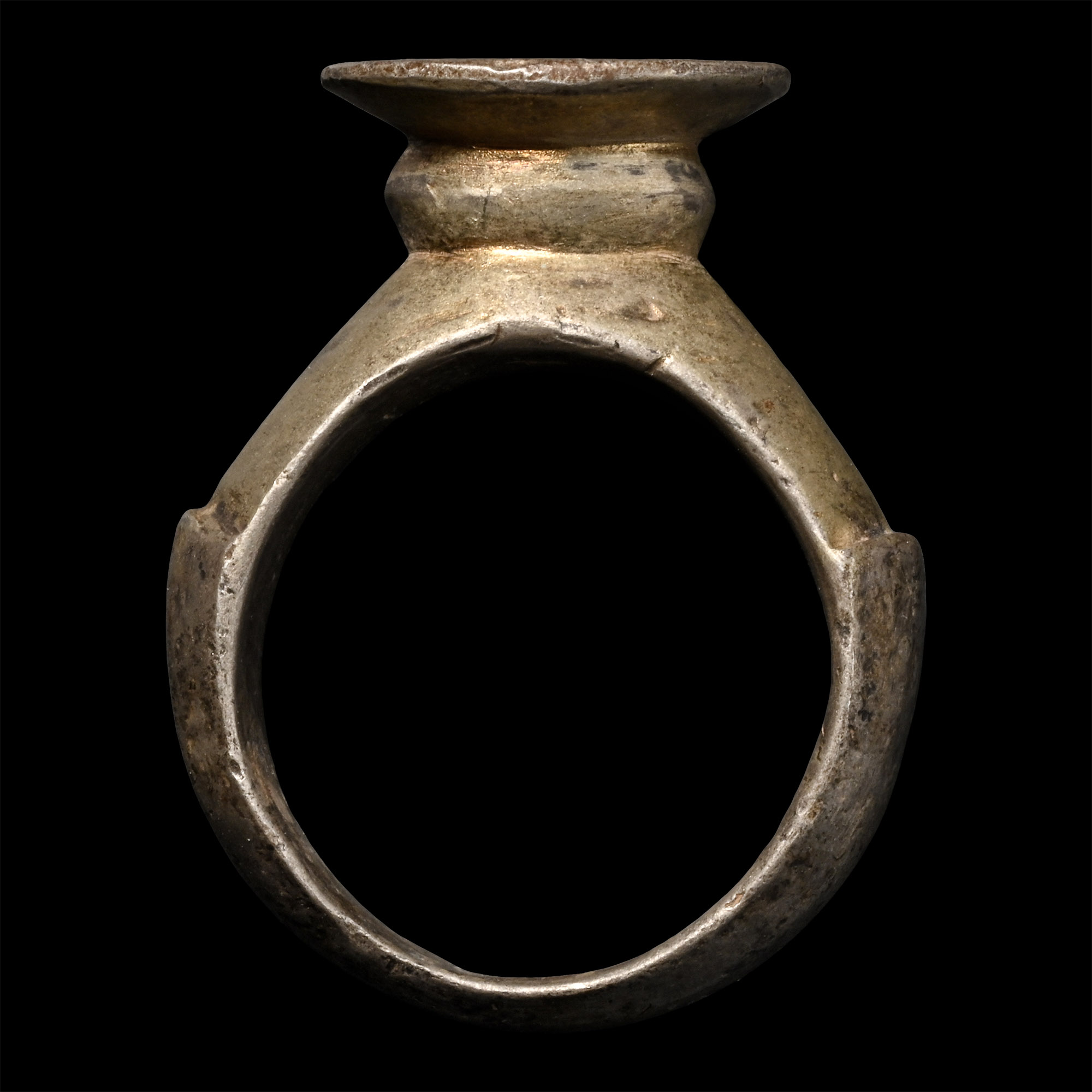
Post Medieval Silver-Gilt Ring with Lion
17TH-18TH CENTURY A.D.
1 3/8 in. (21.08 grams, 34.05 mm overall, 19.90 x 21.15 mm internal diameter (approximate size British U, USA 10, Europe 22.52, Japan 21)).
D-section hoop with stepped shoulders, trumpet-shaped bezel with incuse lion rampant motif.
ProvenanceEx German art market, 2000s.
Acquired from an EU collector living in London.
From the collection of a Surrey, UK, gentleman.
TimeLine Auctions follows a vetting process to ensure the authenticity and legality of all items, reinforcing our commitment to integrity and responsible trading. Each antiquity, antique, and coin lot undergoes thorough examination by a vetting committee of at least ten external specialists, professional trade association members, scientists, and archaeologists: Our Vetting Process
AUCTIONS:
TimeLine is a leading auction house specialising in antiquities, ancient art, collectables, natural history, coins, medals, and books. Our auctions offer museums, collectors, historians, and enthusiasts the opportunity to acquire unique and historically significant pieces.
-
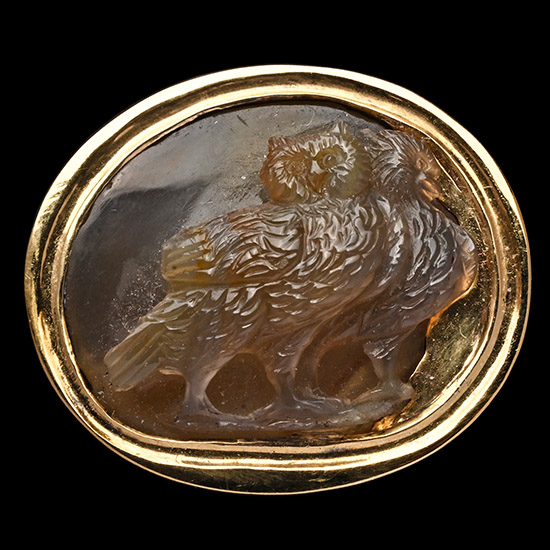
Renaissance Agate Cameo of Two Owls in Gold Ring
Italy, 17th century A.D.Sold for (Inc. bp): £5,200
Comprising a D-section hoop expanding towards the open-backed setting set with a large brown agate intaglio modelled as two conjoined standing owls, the one at the front facing, and the other looking to the right, intricate feather and facial details, the cameo with a loss on the right-hand side, with the ring incorporating a fine gold repair. 12.74 grams, 24.90 mm overall, 17.00 mm internal diameter (approximate size British M 1/2, USA 6 1/4, Europe 13.09, Japan 12)
Acquired on the European art market. This lot has been checked against the Interpol Database of stolen works of art and is accompanied by search certificate number no.13318-257961.
Even in the Italian Renaissance, the owl, an ancient symbol of the goddess Athena, symbolised wisdom. The owl was also a symbol of the night and death, as is so eloquently illustrated in the 17th-century painting Vanité à la chouette in the Musée des Beaux-Arts de Dijon, which depicts an owl sitting on a human skull next to an extinguished candle. -
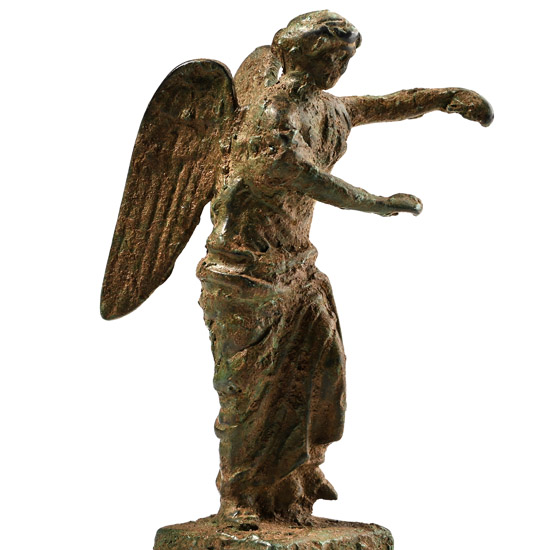
Roman Style Bronze Statuette of Victory
20th century A.D.Sold for (Inc. bp): £91
Modelled in the round figure of Victory standing on a rectangular base, with a palla draped from her shoulders and hips; wings spread to the rear (one tip absent); arms extended as if supporting a patera or similar item. 422 grams, 11.8 cm
Previously belonging to J Stewart, Mayfair, London, UK; acquired in the early 1980s. Property of a Middlesex gentleman. -
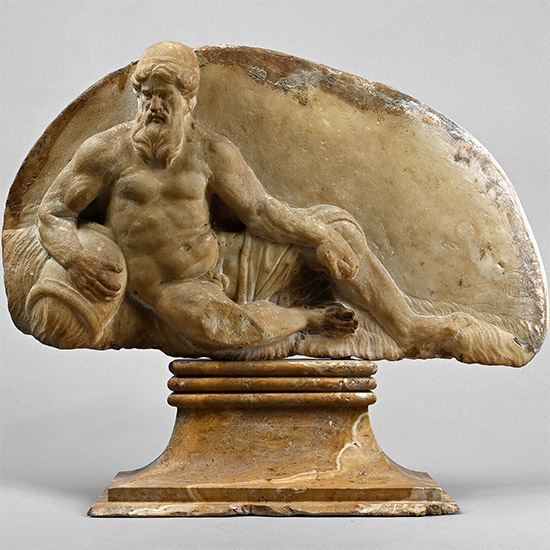
Baroque Period Marble Frieze Depicting a River God
17th-18th century A.D.Sold for (Inc. bp): £3,380
Depicted lying on a riverbed, leaning on his right side, his aged face framed by a rich, flowing beard, his wavy hair held back by a taenia; his body, naked and corpulent, is covered only by a light cloak wrapping his legs; his left hand is stretched forward, his right hand resting on a vase pouring water from the river; the figure stands out against a smooth, semicircular cut wall; mounted on an old collection marble base. 13 kg, 44.5 cm wide
With evidence of break along outer edges suggesting the fragment was once part of a larger composition or fountain. Areas of old glue remnants to the broken edge. The marble is stable, with age staining to the entire surface; minor chips throughout but generally in very good condition.
Previously in an old European collection, probably from the 18th/19th century, based on the old collection marble base and mounting technique. Private collection, France. This lot has been checked against the Interpol Database of stolen works of art and is accompanied by search certificate no. 13239-251810.
The representations of river or sea divinities usually depicted them in the same position, with naked torso wrapped only in a wide cloak, and usually bearded. The sculpture bears similarities with the sculpture of a river divinity, in the Archaeological Museum of Napoli (inv. 5977), from Rome and belonging to the Farnese Collection, from the second half of the 2nd century A.D.
