Loading, please wait...
LOT 2066
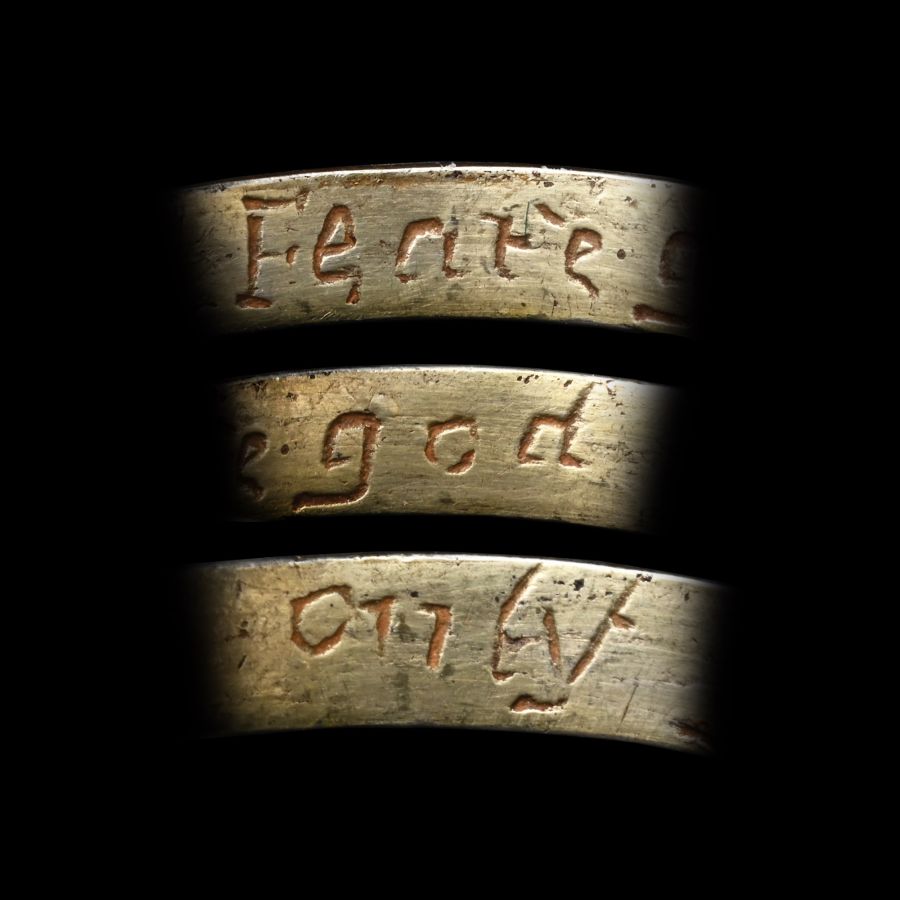
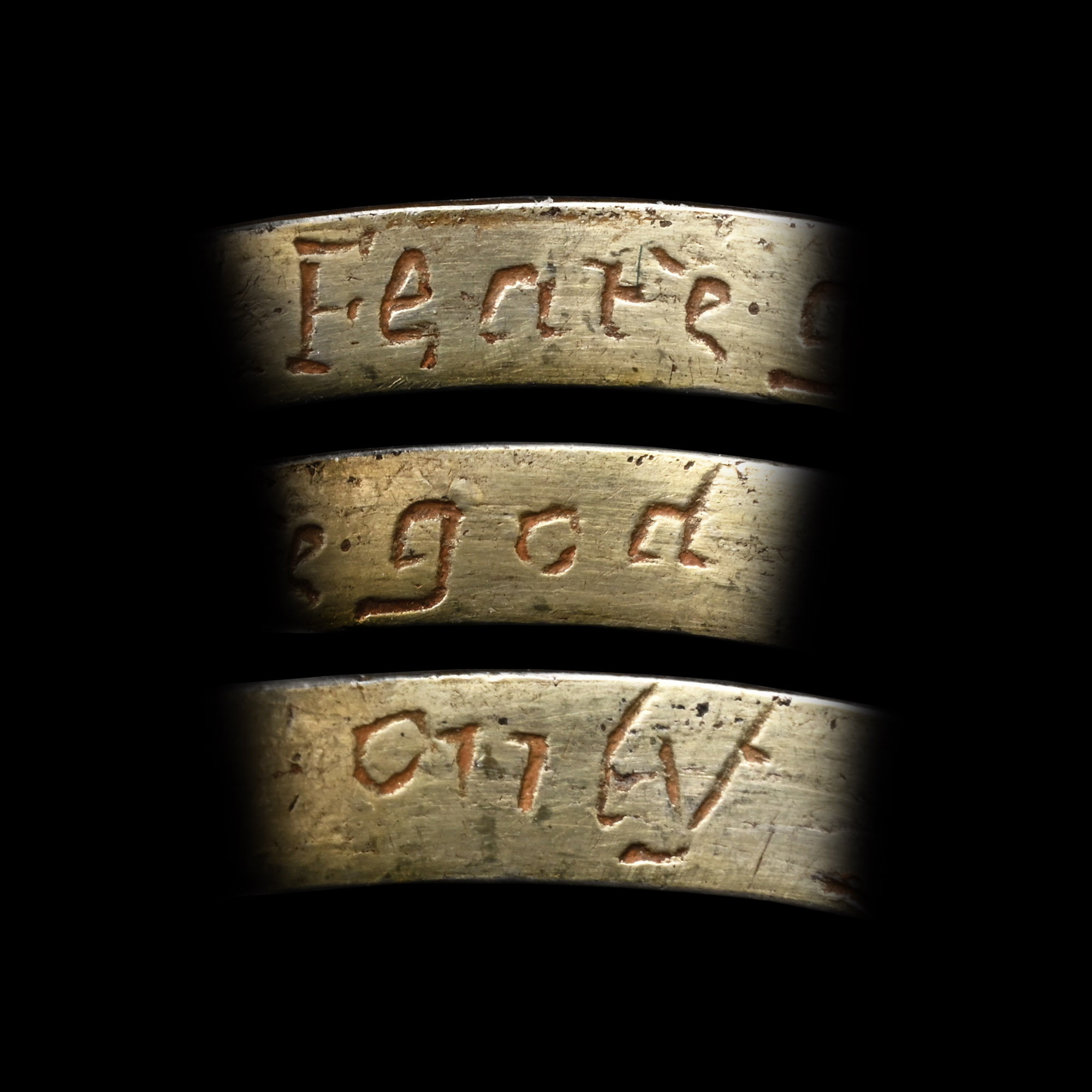
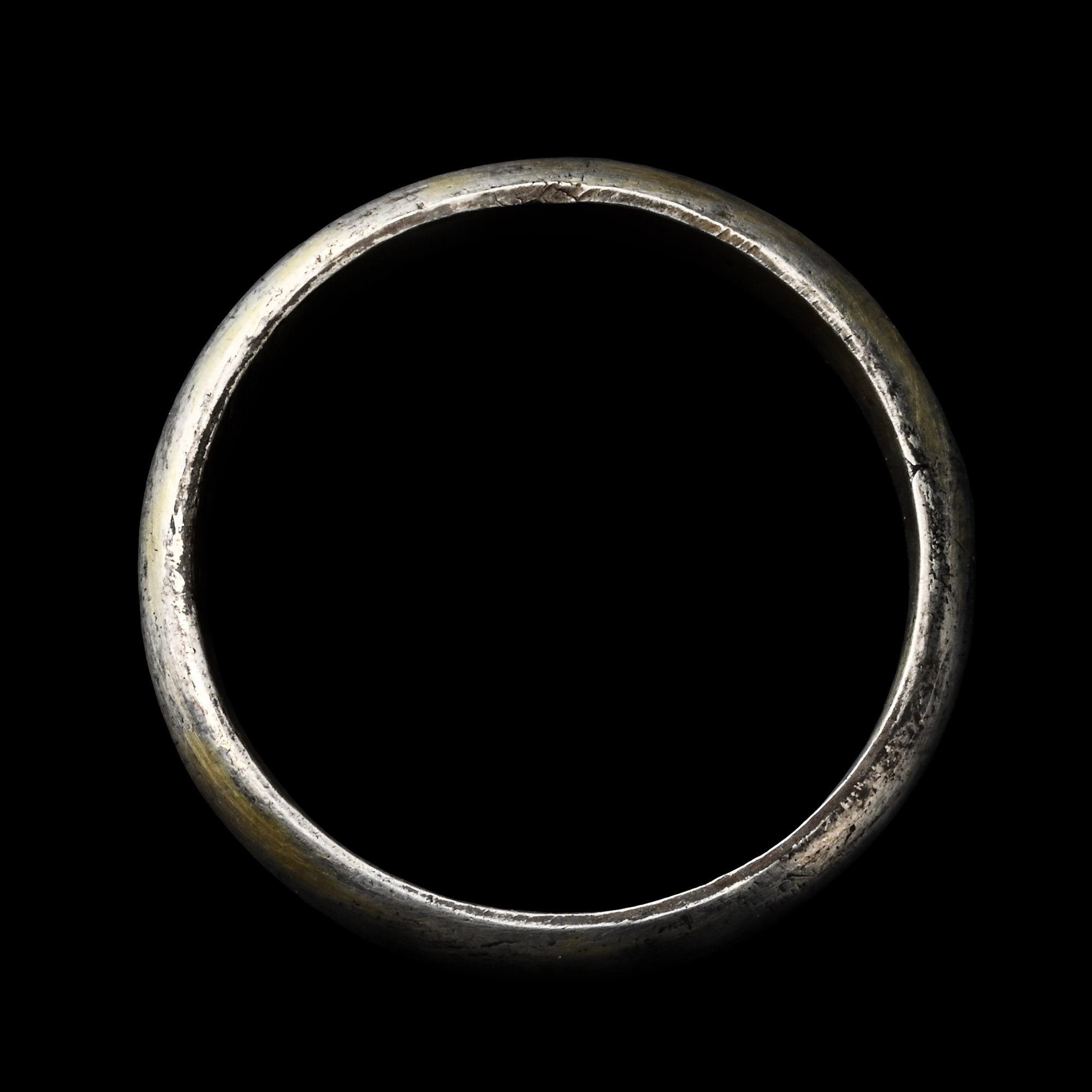
Post Medieval Silver-Gilt 'Feare God Only' Posy Ring
CIRCA 18TH CENTURY A.D.
7/8 in. (2.99 grams, 22.24 mm overall, 18.65 mm internal diameter (approximate size British R, USA 8 1/2, Europe 18 3/4, Japan 18)).
Comprising a D-section hoop with plain exterior, inner face inscribed with 'Feare God only'. [No Reserve]
ProvenanceAcquired on the UK art market.
Property of a Suffolk, UK, gentleman.
TimeLine Auctions follows a vetting process to ensure the authenticity and legality of all items, reinforcing our commitment to integrity and responsible trading. Each antiquity, antique, and coin lot undergoes thorough examination by a vetting committee of at least ten external specialists, professional trade association members, scientists, and archaeologists: Our Vetting Process
AUCTIONS:
TimeLine is a leading auction house specialising in antiquities, ancient art, collectables, natural history, coins, medals, and books. Our auctions offer museums, collectors, historians, and enthusiasts the opportunity to acquire unique and historically significant pieces.
LOT 2066
Post Medieval Silver-Gilt 'Feare God Only' Posy Ring
Estimate £120 - 170€140 - 200 (for guidance only)$160 - 230 (for guidance only)
-
Italy, Siena. AR Grosso in Later Silver Brooch
Circa AD 1250Estimate: £80 - 100 (+bp*)
Bids: 1 | Current Bid: £5
The obverse showing the profile bust of the king facing left with an inscription surrounding, and a king on horseback on the reverse; set in a later brooch frame. 6.05 grams, 30 mm
Acquired on the European art market. -
Georgian Era Gold Fob Seal with Carnelian Intaglio of Inigo Jones Attributed to Edward Burch
England, 18th century A.D.Estimate: £1,500 - 2,000 (+bp*)
Opening Bid: £750
Vibrant red carnelian intaglio skilfully carved with a bust of a mature man in three-quarter view, gazing right, wearing a wide-collared, buttoned tunic and a cap, long curly hair framing his bearded face with a deeply furrowed forehead; set in a gold frame with an amphora-like looped handle; supplied with a museum-quality impression. 11.72 grams, 33 mm
Acquired on the European art market.
Edward Burch (1730–1814) was a distinguished English gem engraver and miniaturist, celebrated for his intricate craftsmanship and artistic versatility. A founding member of the Royal Academy of Arts in 1768, Burch gained acclaim for his engraved gemstones, which often depicted classical and mythological themes, reflecting the neoclassical style of the Georgian era. His skill in miniature painting further demonstrated his artistic range and mastery of detail. Highly respected in his time, Burch’s works remain admired for their technical precision and elegance, preserving his legacy as a key figure in 18th-century British art. Inigo Jones (1573–1652) was a pioneering English architect who is widely regarded as the first significant figure to introduce the principles of Renaissance architecture to England. Influenced by his studies in Italy and the works of Andrea Palladio, Jones designed elegant structures characterised by classical symmetry, proportion, and restraint. His most famous works include the Banqueting House at Whitehall, the Queen’s House in Greenwich, and contributions to the layout of Covent Garden. Jones’s adoption of Palladian ideals marked a departure from the Gothic style that had dominated English architecture, laying the foundation for subsequent developments in the Classical tradition. -
Silver-Gilt Mounted Jet 'Figa' Amulet
Spain, 17th century A.D.Estimate: £600 - 800 (+bp*)
Opening Bid: £300
Formed as a hand showing figa gesture, silver mount with applied twisted wires; attachment loop and ring to the top. 19.6 grams, 56 mm
Private collection, Europe. Acquired on the English art market.
Mano Fico, as protective amulets, have been used since antiquity. It was believed to protect from the evil eye and other dark and magical forces and to promote fertility. In ancient Rome, the fig sign, or mano fico, was made by the pater familias (father of the family) to ward off the evil spirits of the dead as a part of the Lemuria ritual. The ancient Greeks wore amulets of the gesture around the neck to protect from the evil eye, and also used the gesture in artwork. What they considered an overtly sexual gesture was expected to distract evil spirits from causing harm. The pendant would have been worn from a belt or from a chatelaine containing other protective talismans. This carving would have served as a token representing a person's pilgrimage to Santiago de Compostela, one of the very few places in which jet can be found and mined since at least the Middle Ages.