
Loading, please wait...
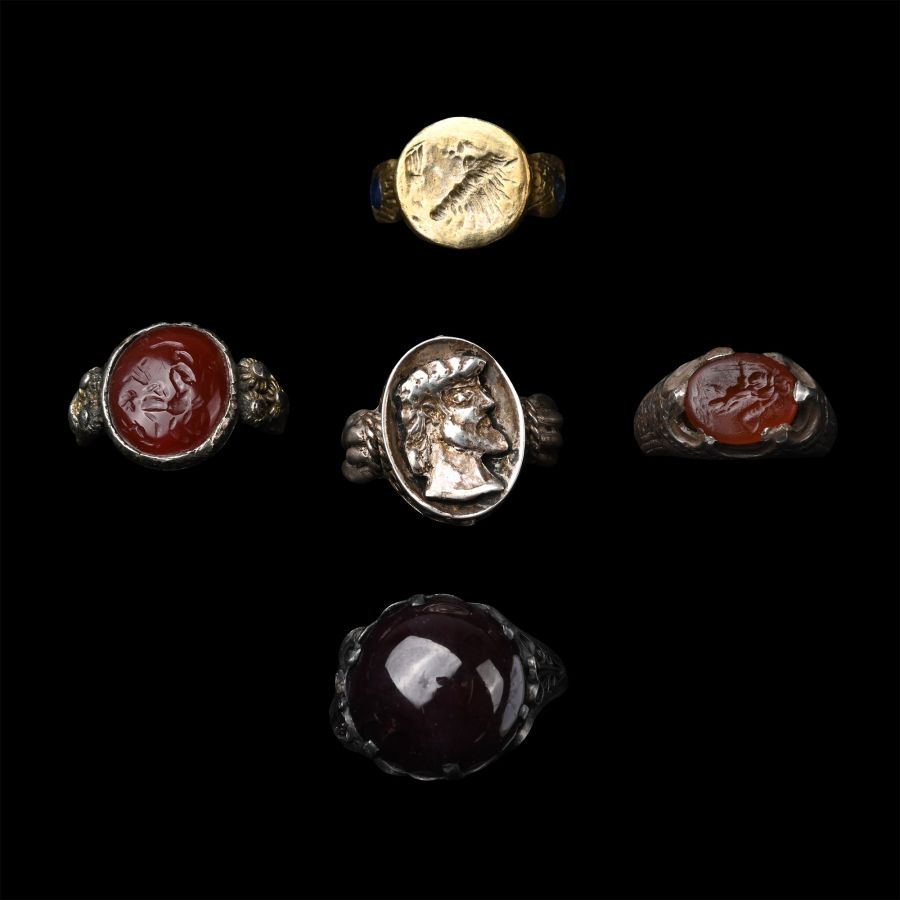
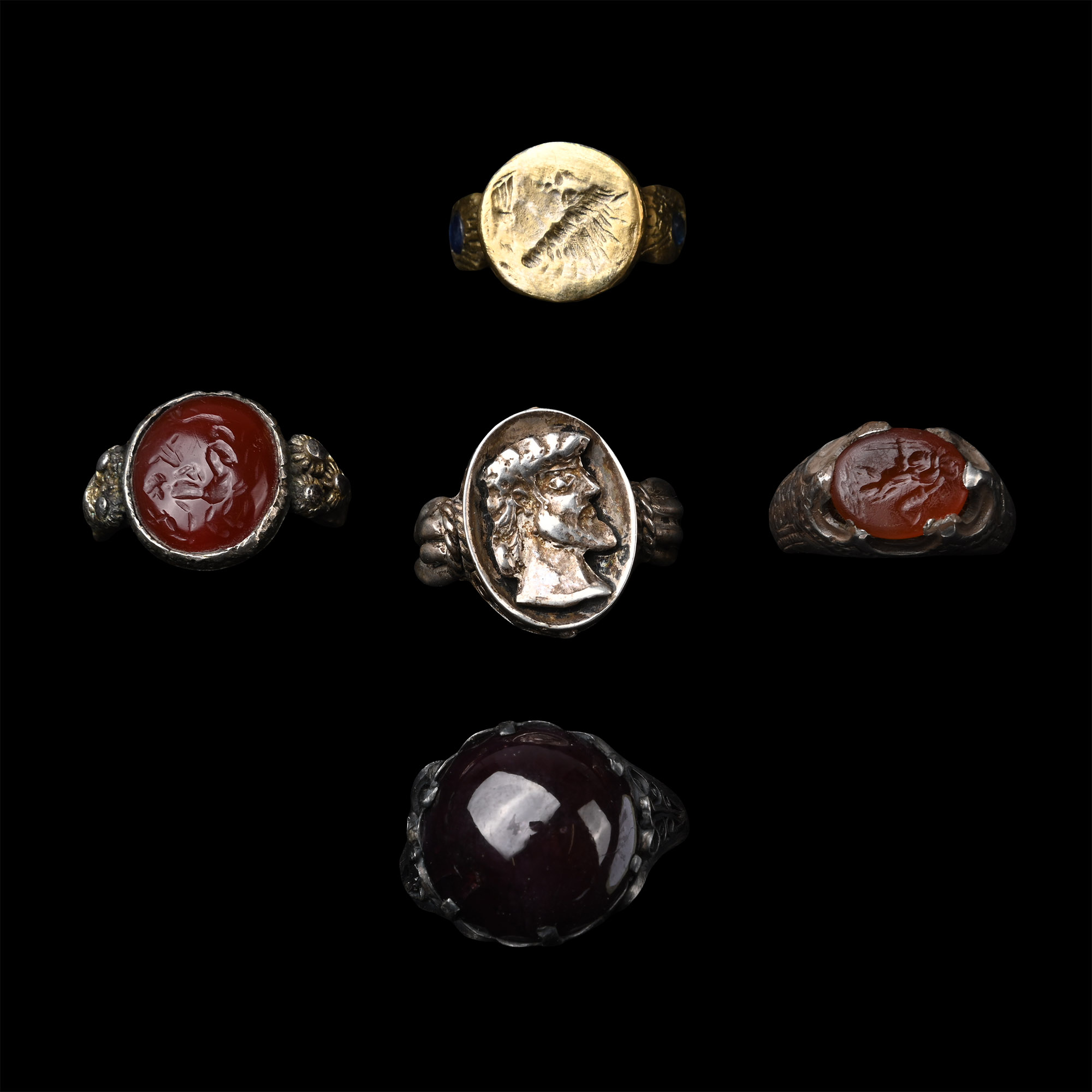
LOT 2361
Post Medieval Silver and Bronze Ring Group
CIRCA 19TH-20TH CENTURY A.D.
7/8 - 1 1/4 in. (42 grams total, 22-33 mm).
Including a signet ring with an inset glass jewel to each shoulder and profile bust of Sol, and other types. [5, No Reserve]
ProvenanceAcquired on the UK art market since the 1990s.
From the property of a late Lincolnshire, UK, gentleman; thence by descent.
TimeLine Auctions follows a vetting process to ensure the authenticity and legality of all items, reinforcing our commitment to integrity and responsible trading. Each antiquity, antique, and coin lot undergoes thorough examination by a vetting committee of at least ten external specialists, professional trade association members, scientists, and archaeologists: Our Vetting Process
AUCTIONS:
TimeLine is a leading auction house specialising in antiquities, ancient art, collectables, natural history, coins, medals, and books. Our auctions offer museums, collectors, historians, and enthusiasts the opportunity to acquire unique and historically significant pieces.
LOT 2361
Post Medieval Silver and Bronze Ring Group
Estimate £100 - 140€120 - 160 (for guidance only)$140 - 190 (for guidance only)
Opening Bid
£5 (EUR 6; USD 7) +BP*
-
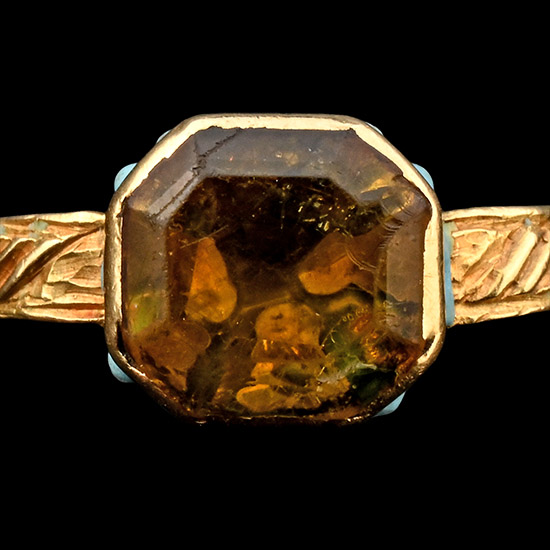
Stuart Period Gold and Enamel Ring with Citrine-Coloured Table-Cut Paste
England, mid-17th century A.D.Estimate: £1,500 - 2,000 (+bp*)
Opening Bid: £750
Set with a vivid orange-yellow table-cut paste in a raised octagonal collet, turquoise-coloured enamel decorating the bezel; the hoop chased with diagonal ornament, with remains of light-blue enamel. 2.58 grams, 22.63 mm overall, 17.40 x 15.66 mm internal diameter (approximate size British N, USA 6 1/2, Europe 13.72, Japan 13)
Acquired on the European art market. UK, private collection.
The projecting collet and table-cut paste belong to the seventeenth-century tradition of enamelled gemstone and imitation gem rings. -
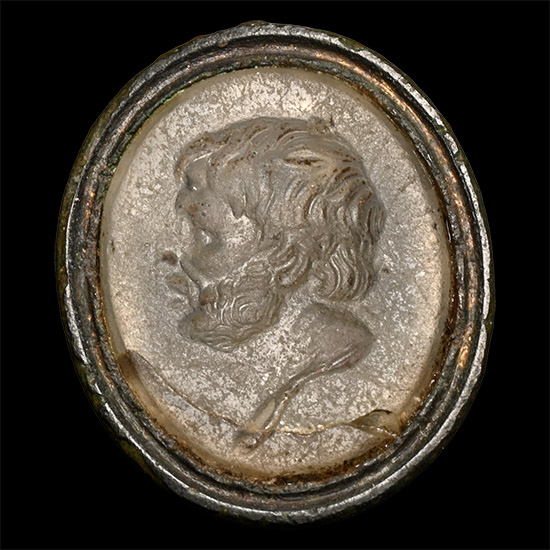
Neo-Classical Glass Fob Seal with Bust
19th century A.D.Estimate: £20 - 30 (+bp*)
Opening Bid: £5
Comprising an aqua glass seal with facetted handle, applied black glass frame; underside with incuse profile bust of a bearded man with tousled hair; supplied with a museum-quality impression. 4.7 grams, 21 mm
From the private collection of a European gentleman (1942-2024), formed since the 1970s. -
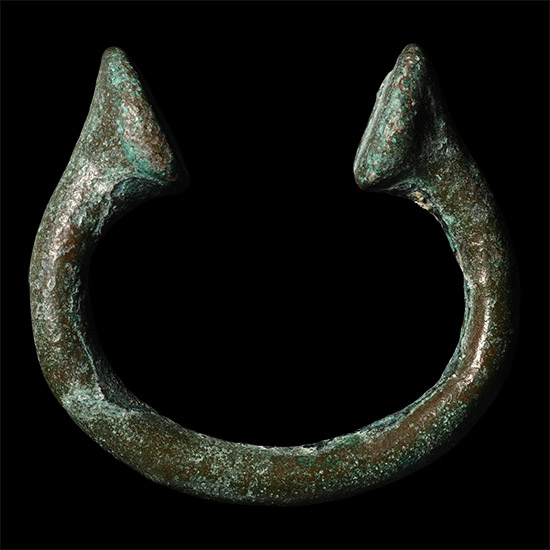
Shipwreck African Slave Trade Manilla Currency Bracelet from the Schooner Duoro
Sunk 1843 A.D.Estimate: £30 - 40 (+bp*)
Opening Bid: £5
Penannular bracelet with trumpet-shaped flaring terminals. 71 grams, 59 mm
From the shipwrecked English Schooner 'Duoro', sunk off the Isles of Scilly in 1843. Acquired on the UK art market. Property of a London, UK, antiquarian. Accompanied by the original box and certificate from The Isles of Scilly Underwater Centre.
The ship wrecked in 1843 on a voyage from Liverpool to Oporto. Manillas were used as currency in the transatlantic trade in enslaved African people, where enslaved people were traded for between 10 and 60 manillas. Manillas are also known as okpogho, ejemma, igbiki and kpugi. They were sometimes worn in African communities as body decoration, such as along the coast between modern-day Liberia and Côte d’Ivoire. Europeans later produced manillas to trade for enslaved African people, and they became a form of currency. This currency was used in parts of West Africa until it was demonetised in 1948.
