
Loading, please wait...
LOT 1991
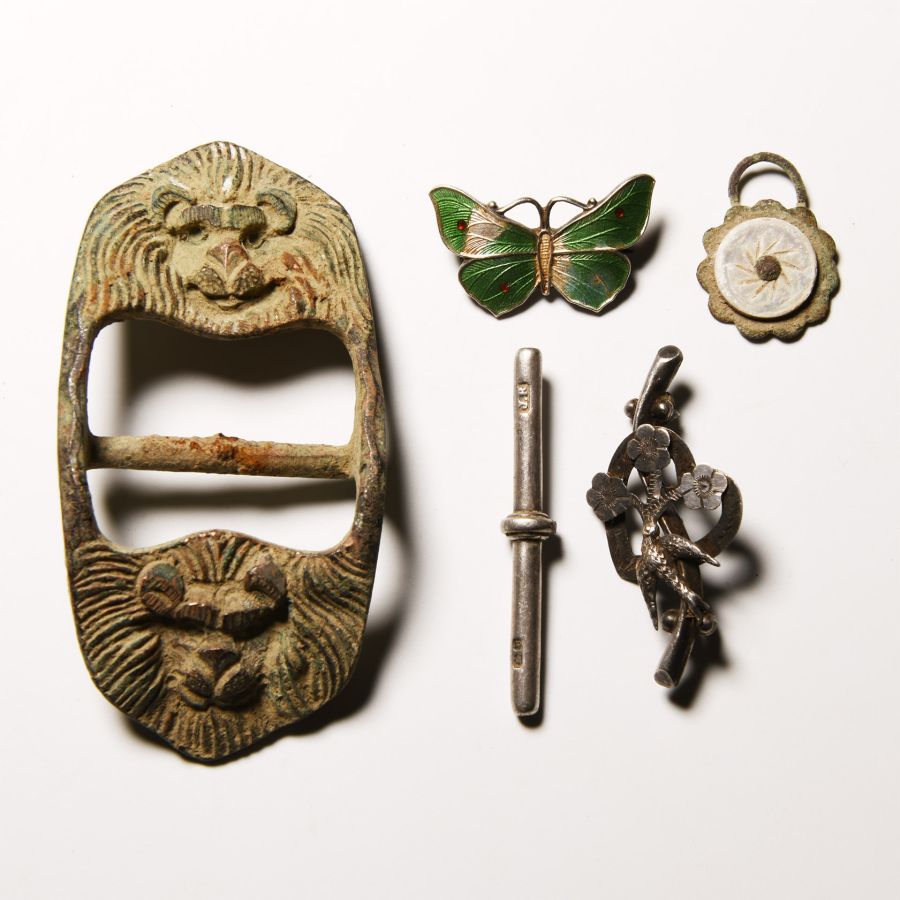
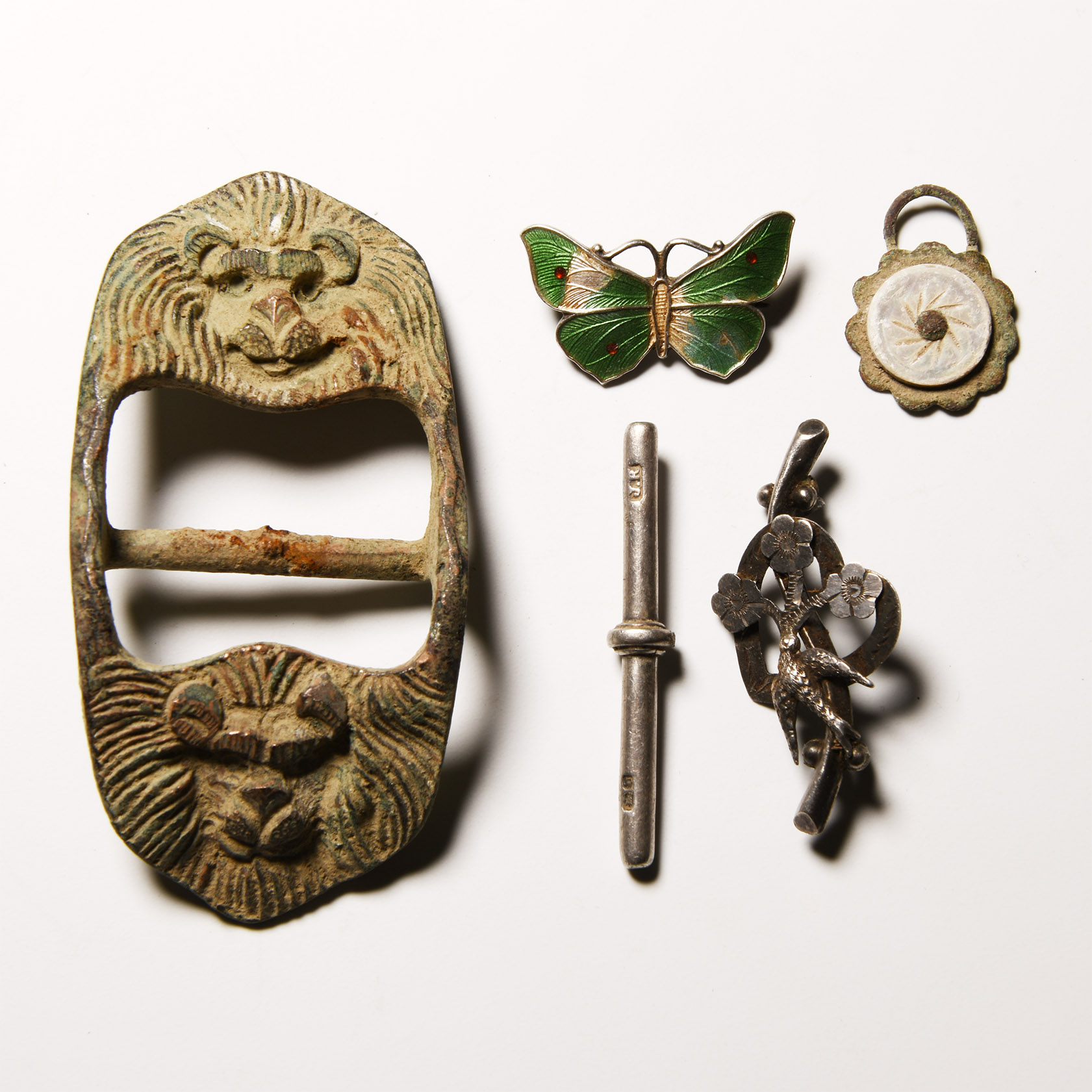
Post Medieval Silver and Bronze Artefact Group
19TH-20TH CENTURY A.D.
3/4 - 2 3/4 in. (48 grams total, 21-71 mm).
Comprising: a sterling silver butterfly brooch; a stamped silver mount; brooch designed with an openwork heart behind bird holding a spray of flowers, pin absent, silver marks to reverse; a button or other clothes fitting featuring a scalloped circumference and nacre disc with whorl design at centre, loop to edge; buckle plate with both arms formed as lions heads. [5, No Reserve]
ProvenanceFound Hampshire, UK.
CONDITIONTimeLine Auctions follows a vetting process to ensure the authenticity and legality of all items, reinforcing our commitment to integrity and responsible trading. Each antiquity, antique, and coin lot undergoes thorough examination by a vetting committee of at least ten external specialists, professional trade association members, scientists, and archaeologists: Our Vetting Process
AUCTIONS:
TimeLine is a leading auction house specialising in antiquities, ancient art, collectables, natural history, coins, medals, and books. Our auctions offer museums, collectors, historians, and enthusiasts the opportunity to acquire unique and historically significant pieces.
-
Framed Watercolour Painting
India, early 20th century A.D.Estimate: £60 - 80 (+bp*)
Opening Bid: £30
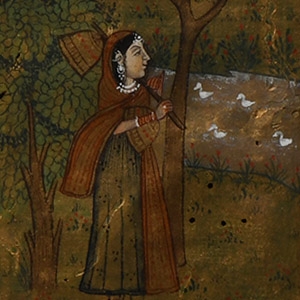
A rectangular manuscript page with panel depicting a female figure standing in a landscape with trees, water and birds, holding an instrument over her shoulder; set in a reveal within a glazed wooden frame. 559 grams, 27.5 x 20 cm
Fine condition, some worm holes.
Acquired on the UK art market, 1980s-1990s. The Woodbridge collection of Indo-Persian art. -
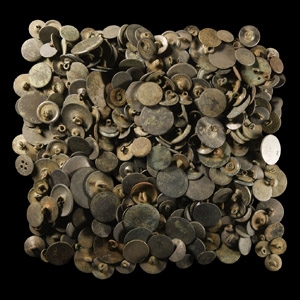
Post Medieval Bronze Button Group
18th-20th century A.D.Sold for (Inc. bp): £20
Comprising buttons of various sizes and dates, many retaining their attachment loops and including examples displaying decorative ornament and remains of gilding. 1.1 kg total, 11-34 mm
Found Berkshire, UK. -
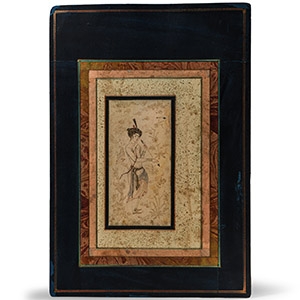
Persian Watercolour Painting
20th century A.D.Sold for (Inc. bp): £390
Showing an archer examining his arrow, bow hanging on his arm, standing amidst flowering plants, wisps of cloud above, framed by speckled gilt and marbled borders. 57 grams, 36 x 24.7 cm
London collection since the 1980s. Property of a Canadian family.
