
Loading, please wait...
LOT 1860
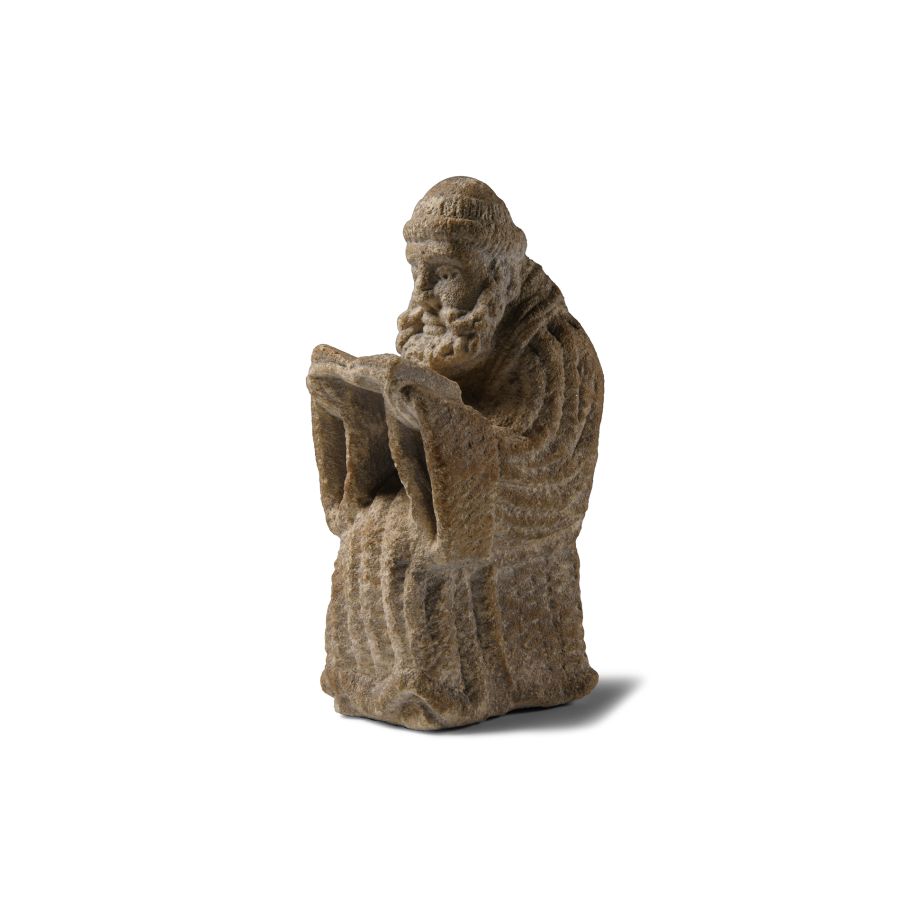
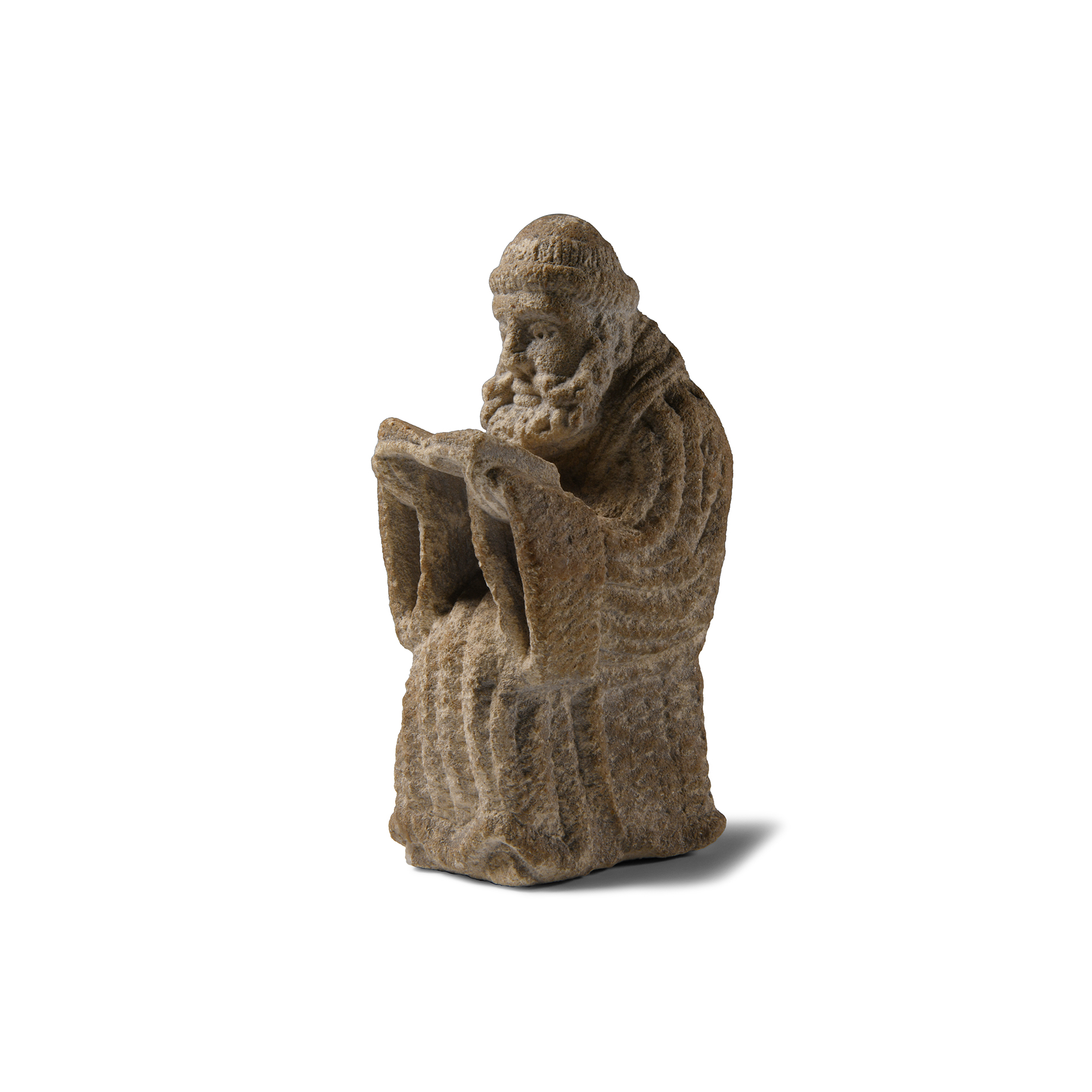
Post Medieval Sandstone Monk
WESTERN EUROPE, 17TH-18TH CENTURY A.D.
5 5/8 in. (600 grams, 14.2 cm high).
Carved with semi-naturalistic facial features and a tonsured head, wearing a hooded cloak with ample sleeves, seated reading from the gospels held open on his lap.
ProvenanceAcquired on the UK art market.
Property of an East Sussex, UK, gentleman.
TimeLine Auctions follows a vetting process to ensure the authenticity and legality of all items, reinforcing our commitment to integrity and responsible trading. Each antiquity, antique, and coin lot undergoes thorough examination by a vetting committee of at least ten external specialists, professional trade association members, scientists, and archaeologists: Our Vetting Process
AUCTIONS:
TimeLine is a leading auction house specialising in antiquities, ancient art, collectables, natural history, coins, medals, and books. Our auctions offer museums, collectors, historians, and enthusiasts the opportunity to acquire unique and historically significant pieces.
-
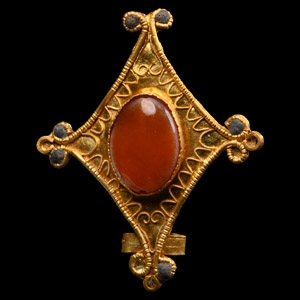
Gold Greek Style Brooch
20th century A.D. or earlierSold for (Inc. bp): £416
With beaded wire borders, inset lapis lazuli cabochons, filigree arcading and central carnelian cabochon. 9.38 grams, 54 mm
From the collection of a North American gentleman, formed in the 1990s. -
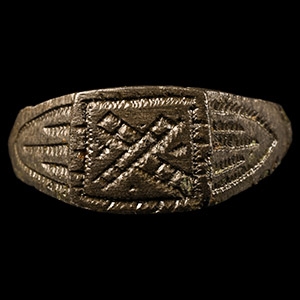
Tudor Period Bronze Armorial Signet Ring with Saltire Cross
16th-17th century A.D.Sold for (Inc. bp): £20
The hoop with expanded shoulders displaying geometric ornament, rectangular bezel with segmented X-motif within a simple border. 2.57 grams, 21.82 mm overall, 18.00 mm internal diameter (approximate size British O 1/2, USA 7 1/4, Europe 15.61, Japan 15)
Private collection formed since the 1940s. UK art market. Property of an Essex gentleman. -
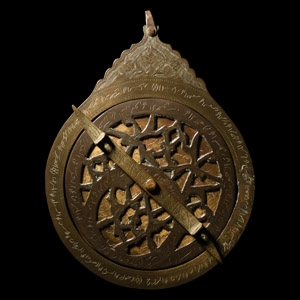
Brass Calligraphic Astrolabe
Late 20th century A.D.Sold for (Inc. bp): £286
Composed of three circular quadrants, the body surmounted with a shaped panel incised with a floral motif; suspension loop. 1.2 kg, 21 cm high
Fine condition.
Acquired on the UK art market, 2000s. Property of a Suffolk gentleman.
