
Loading, please wait...
LOT 1445
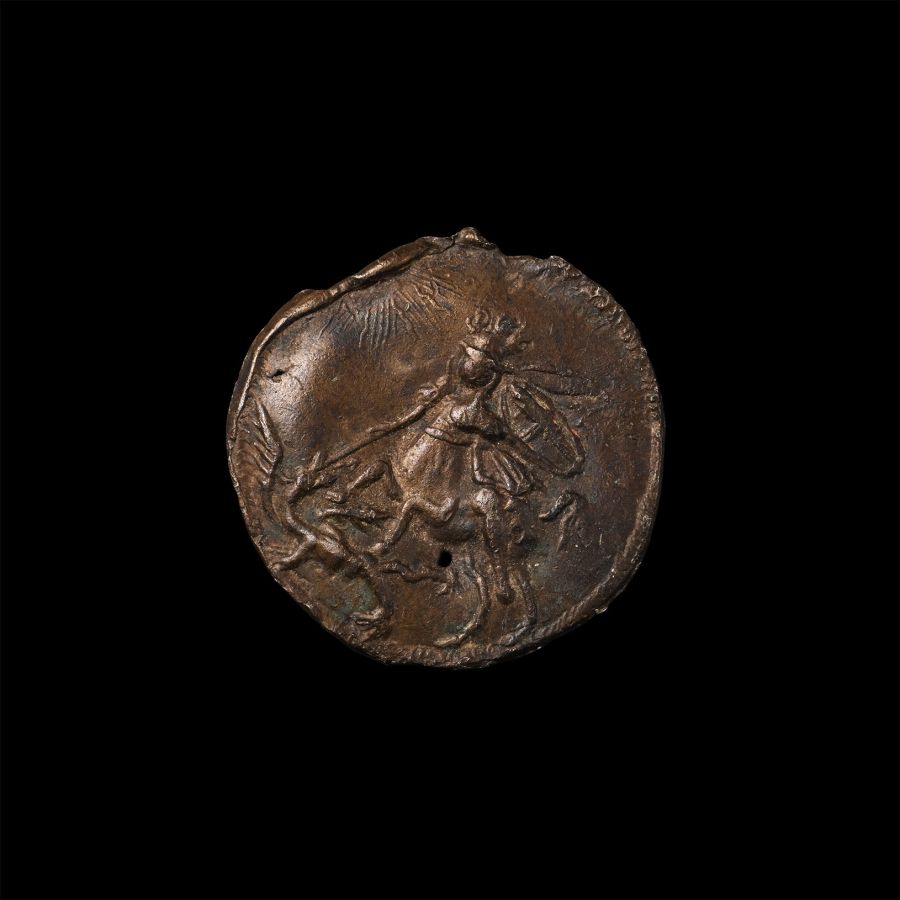
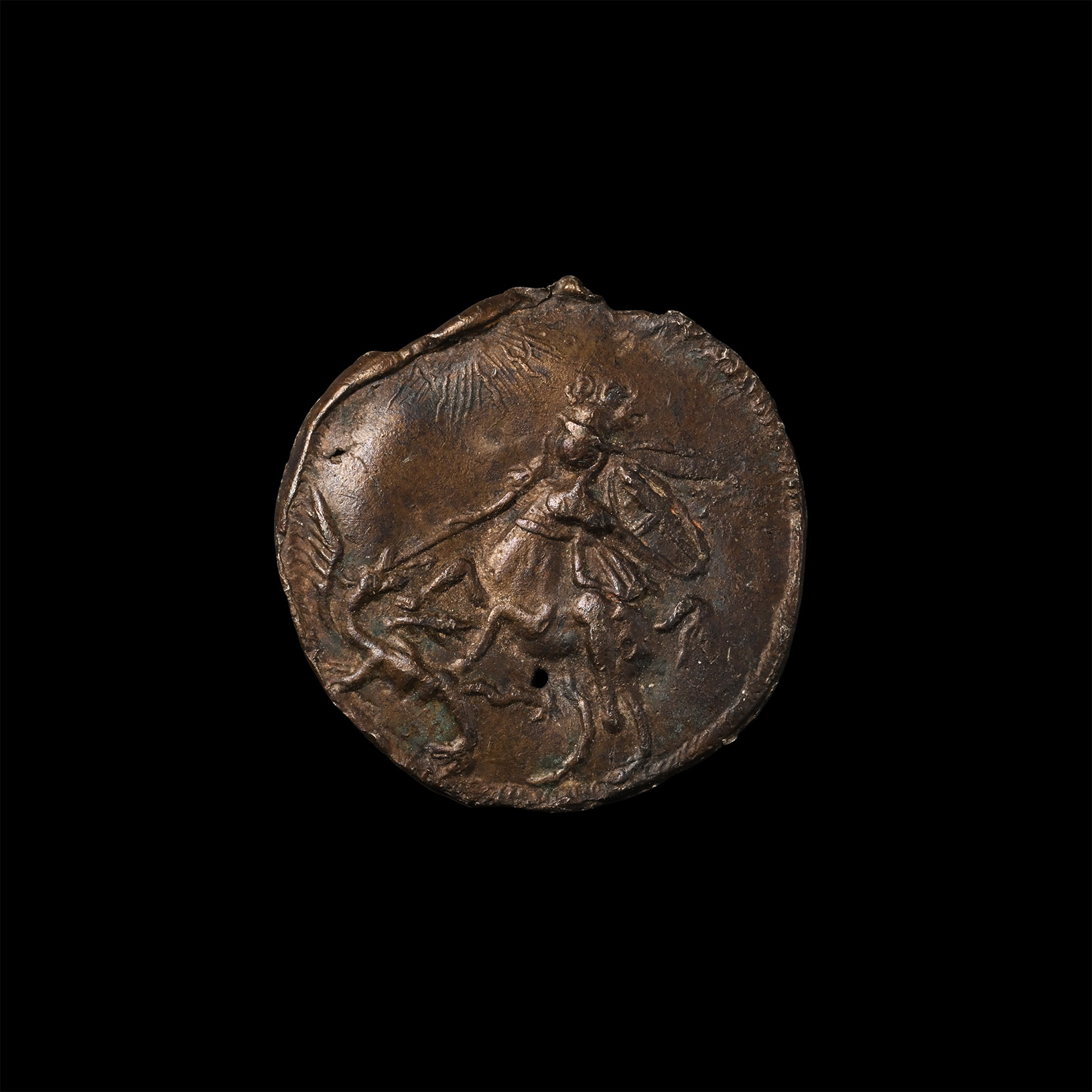
Post Medieval Roudel with George Slaying the Dragon
CIRCA 17TH CENTURY A.D.
1 3/8 in. (7.42 grams, 34 mm).
A copper-alloy roundel displaying Saint George on horseback slaying the dragon, the sun's rays beating down upon them; in relief. [No Reserve]
ProvenanceAcquired circa 2010.
From an old Essex, UK, collection.
TimeLine Auctions follows a vetting process to ensure the authenticity and legality of all items, reinforcing our commitment to integrity and responsible trading. Each antiquity, antique, and coin lot undergoes thorough examination by a vetting committee of at least ten external specialists, professional trade association members, scientists, and archaeologists: Our Vetting Process
AUCTIONS:
TimeLine is a leading auction house specialising in antiquities, ancient art, collectables, natural history, coins, medals, and books. Our auctions offer museums, collectors, historians, and enthusiasts the opportunity to acquire unique and historically significant pieces.
-
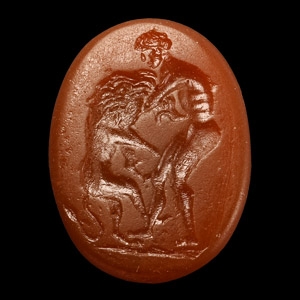
Glass Intaglio with Hercules and Nemean Lion
19th-20th century A.D.Sold for (Inc. bp): £46
An oval glass intaglio presenting a scene depicting Hercules' First Labour: the god wrestling the Nemean lion. 1.78 grams, 20 mm
Acquired 1969-1999. London collection of the late Mr S.M., thence by descent. -
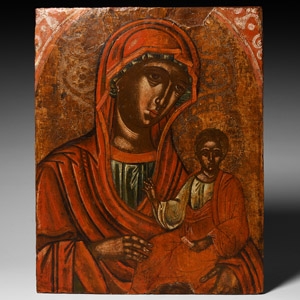
Greek Virgin and Child Hodegetria Icon
17th century A.D.Sold for (Inc. bp): £1,170
A tempera on wood icon depicting the Mother of God supporting the Child with her left forearm, his right hand raised and making the sign of blessing, left hand holding a scroll; the Virgin wearing a red maphorion with a light green veil and a blue chiton; both figures nimbate, the haloes tooled with foliate designs, gilt background with a red and white arch above. 520 grams, 27.5 x 21.5 cm
The lighter areas of the flesh further highlighted with fine white brushstrokes. The gilding of the background lost, minor losses, minimally restored
Property of a London lady, part of her family's collection.
The layout of the composition clearly indicates the icon's close link with Hodegetria type, the most typical iconography of the Mother of God in Byzantium since the 10th century. However, the type also recalls the iconography of the Virgin Psychosostria, i.e. 'Health of Souls'. -
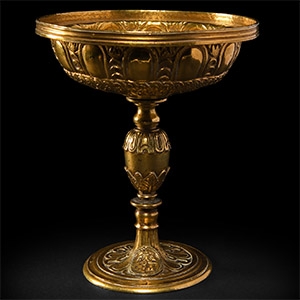
Post Medieval Gilt Silver Dated Decorated Chalice
15th-16th century A.D.Sold for (Inc. bp): £1,950
A gilt silver chalice with bowl decorated with repoussé arcading, fluting and entwined motifs, balustered stem with ovoid centre adorned with pseud-architectural and leaf detailing, fluting below splaying out onto a circular foot bearing an applied oval armorial cartouche; interior base with foliate roundel in raised relief; dated 1589 in Roman numerals incised on the base. 309 grams, 13.5 cm high
English private collection.
