
Loading, please wait...
LOT 1970
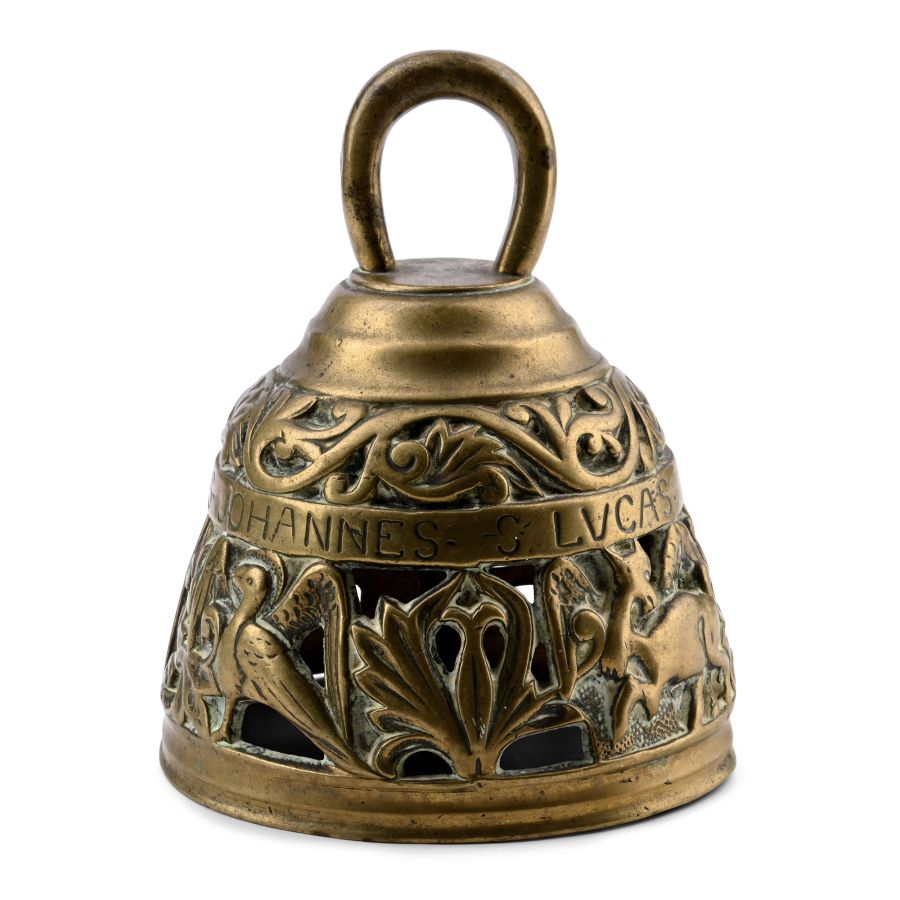
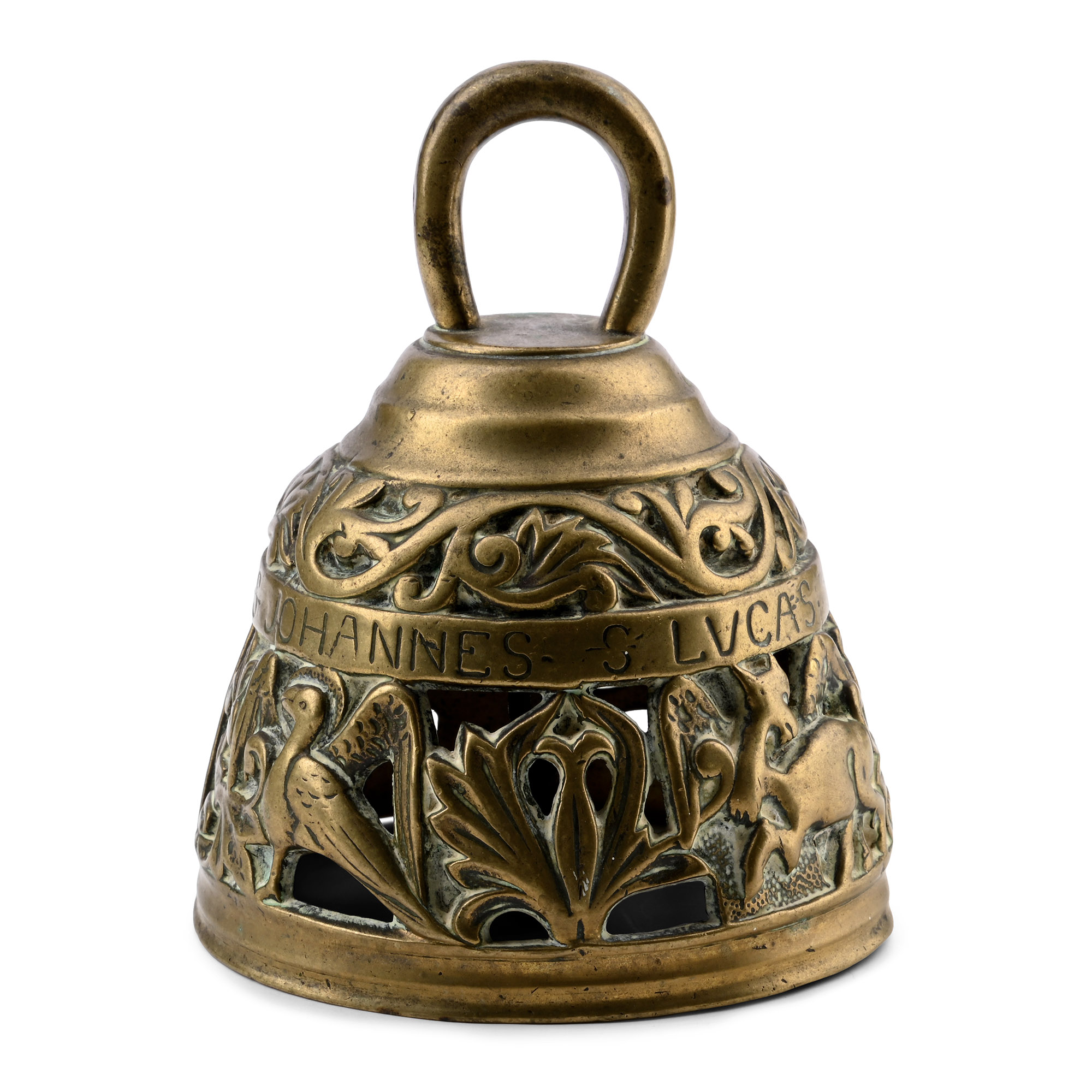
Post Medieval Reproduction Brass Bell
19TH-20TH CENTURY A.D.
4 1/2 in. (551 grams, 11.6 cm).
Openwork domed body with a large loop above, a circumferential band naming the four Evangelists with their symbols below. [No Reserve]
ProvenanceAcquired on the UK art market.
Property of a Suffolk, UK, gentleman.
TimeLine Auctions follows a vetting process to ensure the authenticity and legality of all items, reinforcing our commitment to integrity and responsible trading. Each antiquity, antique, and coin lot undergoes thorough examination by a vetting committee of at least ten external specialists, professional trade association members, scientists, and archaeologists: Our Vetting Process
AUCTIONS:
TimeLine is a leading auction house specialising in antiquities, ancient art, collectables, natural history, coins, medals, and books. Our auctions offer museums, collectors, historians, and enthusiasts the opportunity to acquire unique and historically significant pieces.
-
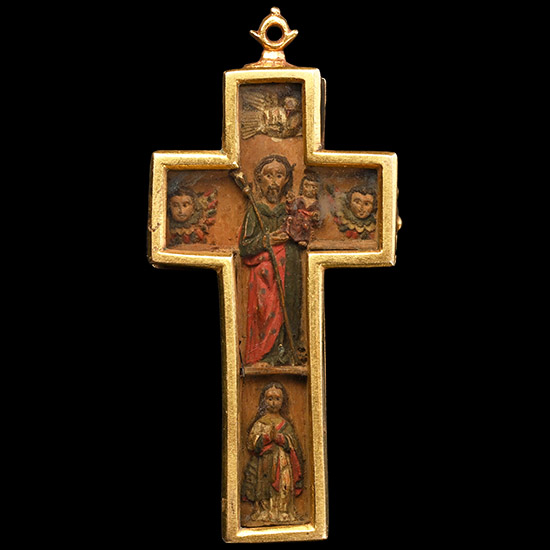
Mexican Gold Mounted Wooden Cross with Saint Joseph
Circa 1600 A.D.Sold for (Inc. bp): £5,720
The wooden cross set behind glass panels set within a large gold mount, the cross carved to one side with Saint Joseph holding the Christ child, beneath the Dove of the Holy Spirit, flanked by angels and above the praying Virgin; the other side with the crucified Christ, flanked on three sides by angels and above a Nun Saint. 50.7 grams, 81 mm
Acquired on the European art market. This lot has been checked against the Interpol Database of stolen works of art and is accompanied by search certificate number no.13345-257977.
The tradition of carving tiny devotional wooden reliefs for pendants began in the 16th century and continued throughout the 17th and 18th centuries in Mexico. The carvings were often sent to Spain, where they were mounted in pendants of silver and gold. Relicarios, The Forgotten Jewels of Latin America, by Martha J. Egan: ‘When ivory became difficult to obtain in Europe during the Middle Ages, following the Ottoman conquest of North Africa, European sculptors of miniature works, notably in the Netherlands and northern Europe, found boxwood to be a serviceable substitute. While only items of limited size can be carved in this hard, fine-grained wood, it can be highly polished, its light color is attractive, its density renders it unlikely to split or chip, and when finished, the carved material can resemble ivory.' -
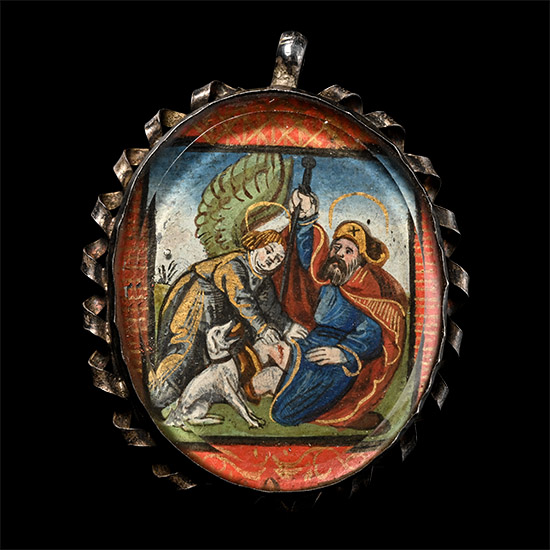
Silver Illuminated Miniature Pendant
France, 16th century A.D.Sold for (Inc. bp): £1,950
The glazed silver pendant containing illuminated miniatures on each side, one side depicting Saint Roch and the other Saint Matthew; Saint Roch shown seated on the ground while an angel is attending his bubonic plague sore on his thigh, and a white dog at his feet; Saint Matthew on the other side depicted writing the Gospel with a young attendant holding a book beside him; the frame with a fixed bale to the top and the sides adorned with a twisted silver wire decoration. 36.2 grams, 58 mm
Acquired on the European art market.
Saint Roch (c. 1348–1379) is a Catholic saint, revered as the patron of plague victims, dogs, and the sick. Born in Montpellier, France, he devoted his life to caring for those suffering from the plague. According to legend, he contracted the disease himself but was miraculously healed with the help of a dog that brought him food and licked his wounds. He is often depicted with a pilgrim’s staff, a dog by his side, and a wound on his leg. His feast day is celebrated on August 16. Saint Matthew was one of the twelve apostles of Jesus and the traditional author of the Gospel of Matthew. Before following Jesus, he was a tax collector, known as Levi. He is considered the patron saint of accountants, bankers, and tax collectors. His gospel emphasises Jesus as the Messiah and the fulfilment of Old Testament prophecies. According to tradition, he preached in various regions, including Ethiopia and Persia, before being martyred. His feast day is celebrated on September 21. -
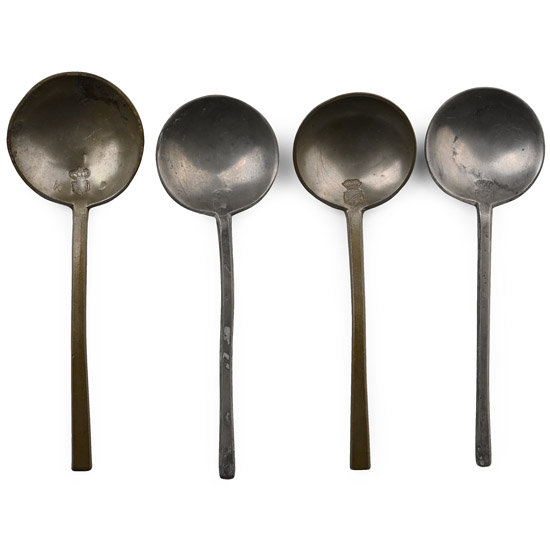
Post Medieval Pewter Spoon Group with Rose Marks
17th-18th century A.D.Sold for (Inc. bp): £117
A group of pewter spoons, each a broad shallow bowl with chamfered rim, trapezoidal-section handle, stamped at the junction of bowl and handle with a rosette and crown bearing initials 'HK'; one with further stamped letters 'I K D'. 286 grams total, 18.1-18.9 cm
Acquired on the London art market prior to 1980. Private collection, Suffolk.
