
Loading, please wait...
LOT 2428
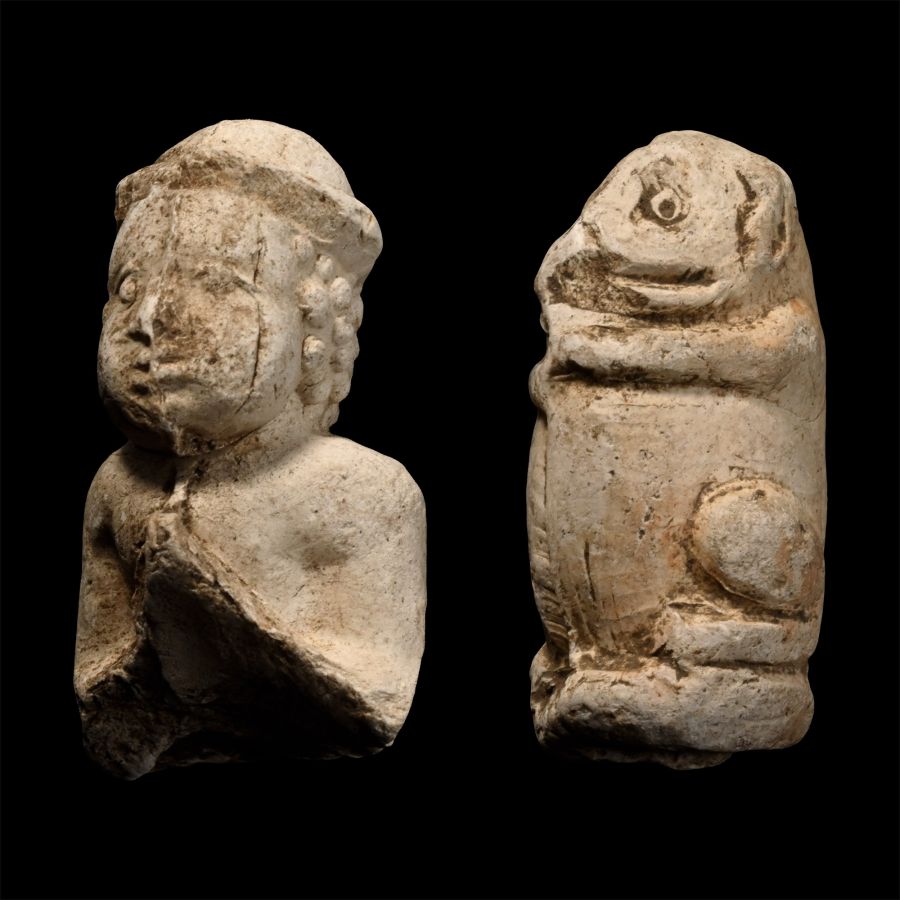
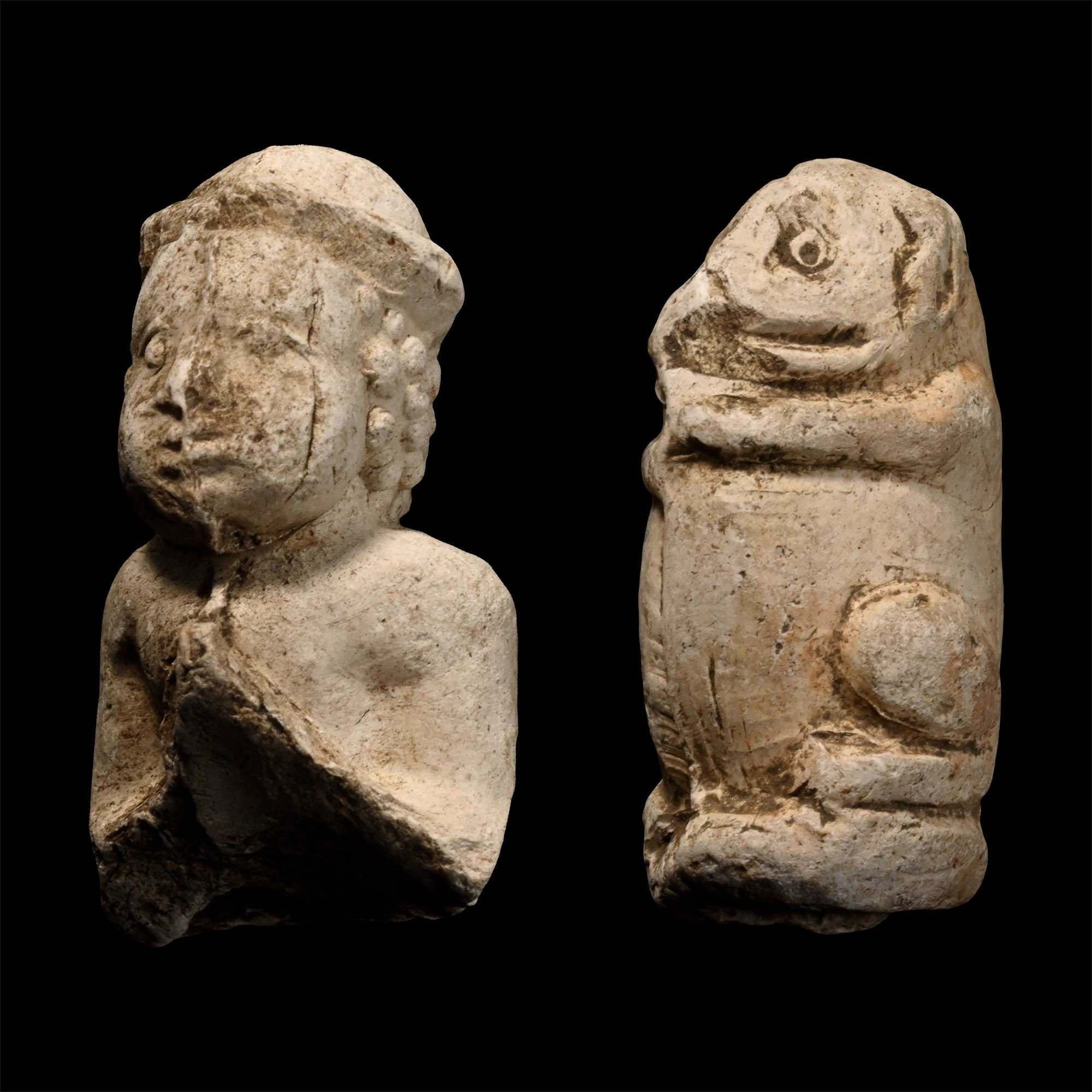
Post Medieval Pipe Clay Mouse and Bust
18TH-19TH CENTURY A.D.
1 1/8 in. (12.8 grams total, 29 mm each).
Comprising: a mouse standing on its hind legs with a prominent snout; a man wearing a low-crowned hat and sporting curly hair. [2, No Reserve]
ProvenanceFrom the collection of archaeologist Frederick William Robins.
LiteratureCf. Duco, D.H., ‘Pipe clay figurines from the West Netherlands’ in Pijpenkabinet Foundation, 2012, figs.1,16-19, for similar figurines of men and animals.
CONDITIONTimeLine Auctions follows a vetting process to ensure the authenticity and legality of all items, reinforcing our commitment to integrity and responsible trading. Each antiquity, antique, and coin lot undergoes thorough examination by a vetting committee of at least ten external specialists, professional trade association members, scientists, and archaeologists: Our Vetting Process
AUCTIONS:
TimeLine is a leading auction house specialising in antiquities, ancient art, collectables, natural history, coins, medals, and books. Our auctions offer museums, collectors, historians, and enthusiasts the opportunity to acquire unique and historically significant pieces.
LOT 2428
Post Medieval Pipe Clay Mouse and Bust
Estimate £20 - 30€23 - 35 (for guidance only)$27 - 41 (for guidance only)
Opening Bid
£5 (EUR 6; USD 7) +BP*
-
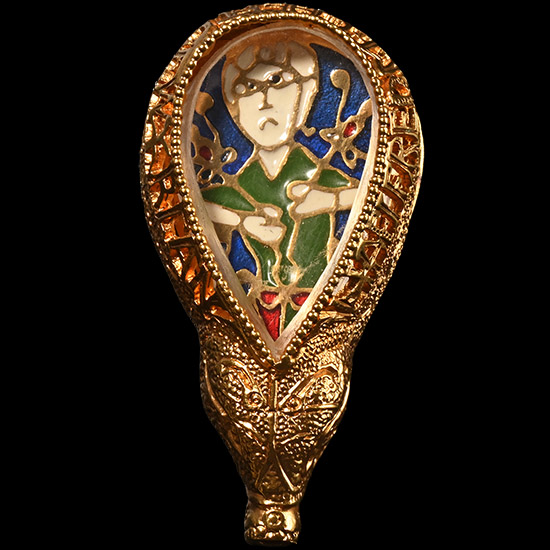
Anglo-Saxon 'King Alfred Jewel' Replica
21st century A.D.Estimate: £200 - 300 (+bp*)
Opening Bid: £100
Comprising: piriform gilt-framed cell with inset composition cover revealing enamelled facing figure with sceptre in each hand; pelleted rim of the cell in openwork with reserved early West Saxon legend 'AELFED MEC HEHT GEWYRCAN' ([King] Alfred ordered me [to be] made); to the apex a stylized beast-head with hollow muzzle to accept an insert; reverse with dense foliage design on a hatched field; mounted on a custom-made display stand. 30.59 grams, 53 mm
Private collection, UK. Accompanied by a copy of a previous information sheet.
A museum-quality copy of the famous æstel, a pointer used in reading. The hollow muzzle would have been provided with an ivory rod with tapering end (bone or wood might have been used, but ivory would be more suited to so prestigious an object). The original has a rock-crystal cover which reveals the cloisonné enamel image beneath. It is understood that these pointers were distributed from Winchester by the royal court alongside a handwritten manuscript of Gregory's Cura Pastoralis in English (West Saxon) translation to important ecclesiastical establishments with the instruction that the pointer should not be separated from the book, nor the book from the church. Alfred was responsible for undertaking the translation of the text, one of the 'books most needful for men to know' as his prologue states. -
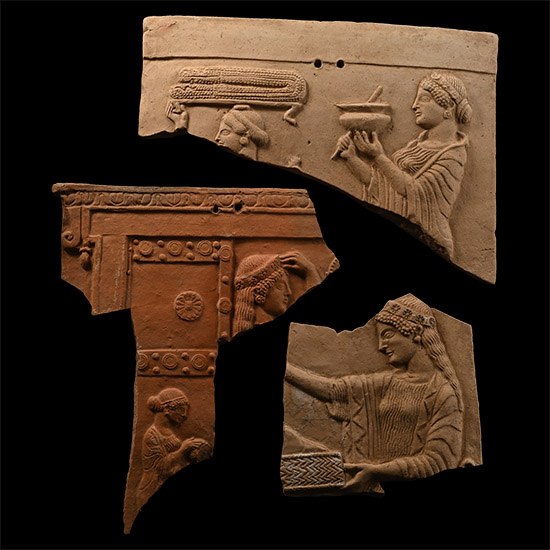
Greek Style Terracotta Plaque Frangment Group
Circa 19th century A.D.Estimate: £30 - 40 (+bp*)
Opening Bid: £5
Comprising: rectangular fragment with upper body of a Greek lady holding up a jar and reed-pipe, head of another before her balancing a tray with folded cloth; upper body of a woman in profile with arms extended placing a casket on a table; architrave with decorative border and door, head of a lady adjusting her diadem and chald behind her. 600 grams total, 11-20.6 cm
Acquired at auction in Geneva or Basel circa 1989. From the private collection of a Swiss gentleman collector, thence by decent 2018. -
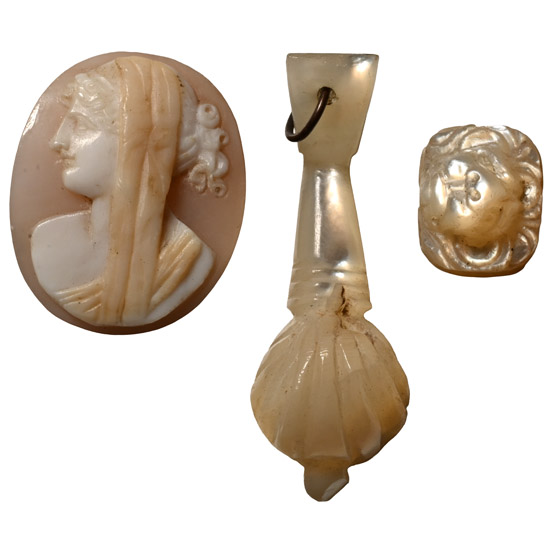
Neo-Classical Nacre Artefact Group
Circa 19th century A.D.Estimate: £20 - 30 (+bp*)
Opening Bid: £5
Including a cameo with female bust, and other items. 4.18 grams total, 10-31 mm
From the private collection of a European gentleman (1942-2024), formed since the 1970s.
