
Loading, please wait...
LOT 1504
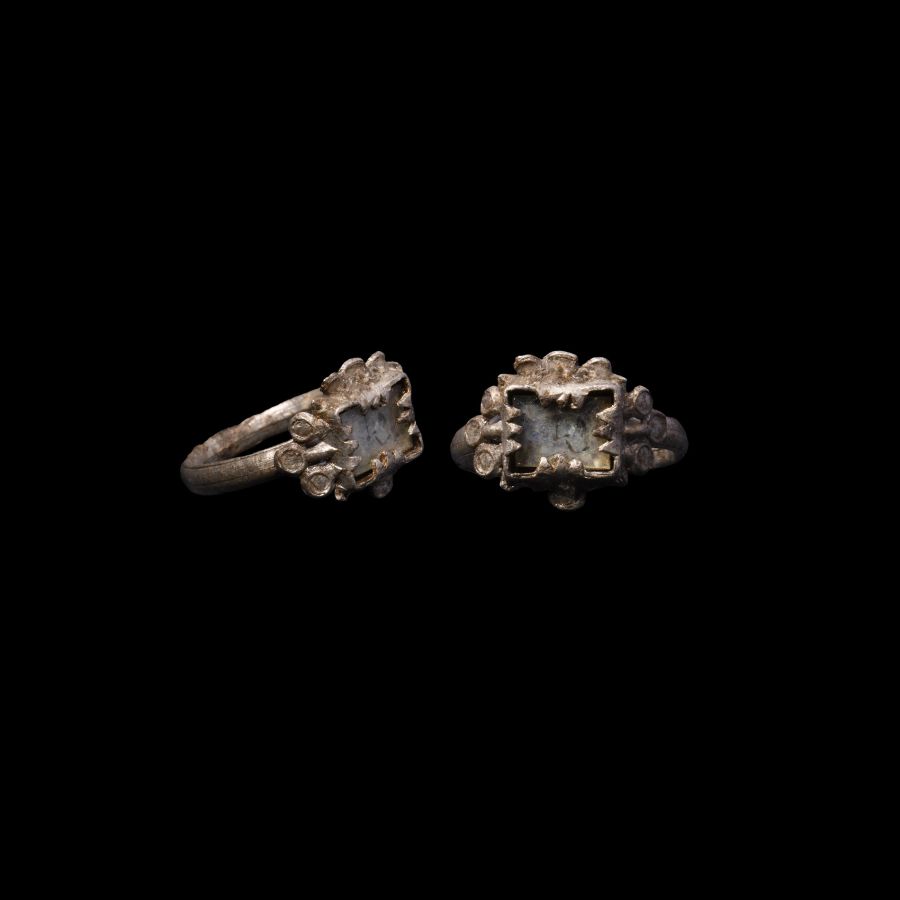
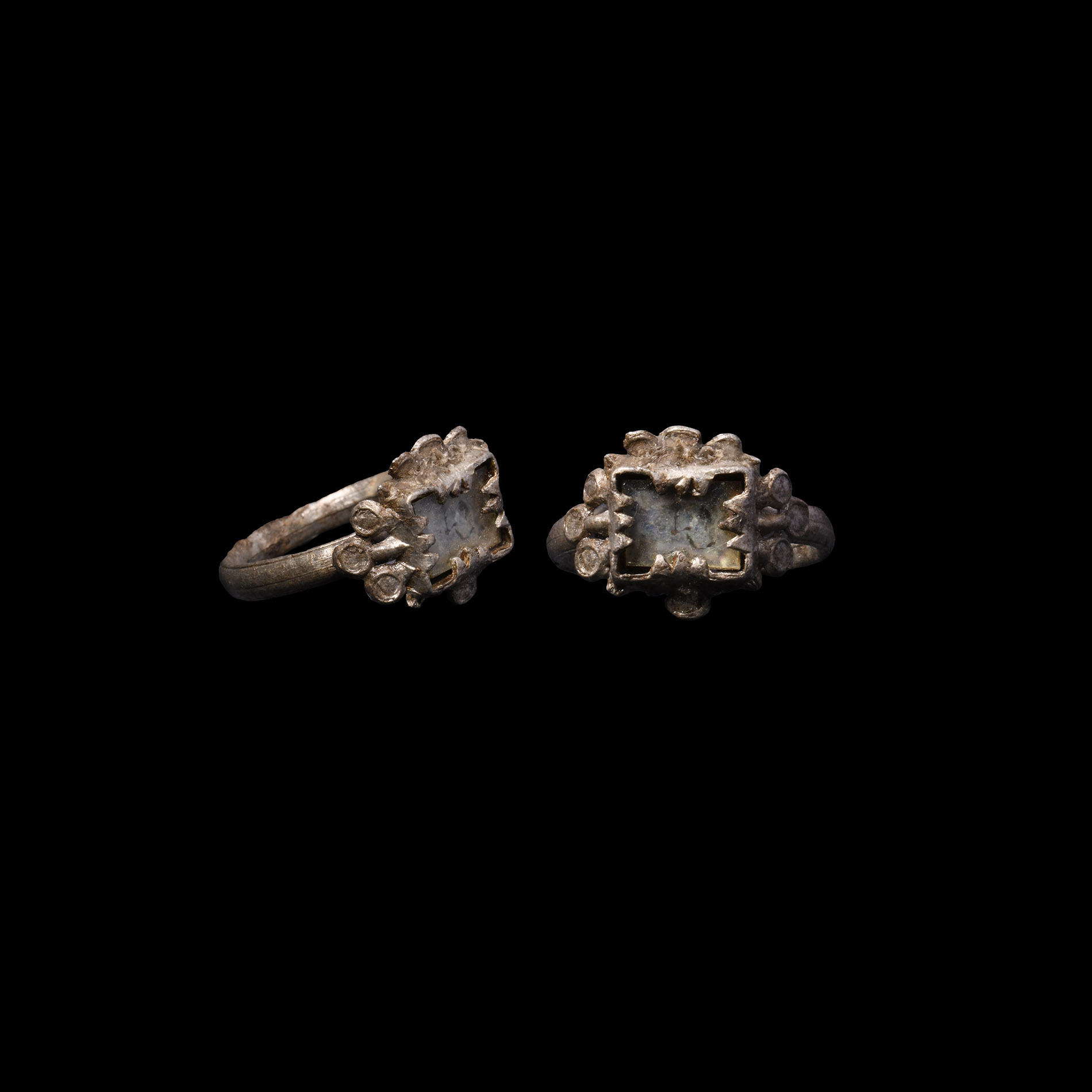
Post Medieval Pewter Ring with Inlay
CIRCA 16TH-18TH CENTURY A.D.
1 in. (4.02 grams, 26.59 mm overall, 19.50 mm internal diameter (approximate size British S, USA 9, Europe 20, Japan 19)).
A pewter finger ring composed of a lentoid-section hoop supporting a cushion-shaped bezel, decorated with three graduated arms at each shoulder terminating in shallow recessed circles, additional decorative lobes to the upper and lower edges and four clusters of claws holding a clear rectangular glass inlay. [No Reserve]
ProvenanceFound Cambridgeshire in the 1990s.
CONDITIONTimeLine Auctions follows a vetting process to ensure the authenticity and legality of all items, reinforcing our commitment to integrity and responsible trading. Each antiquity, antique, and coin lot undergoes thorough examination by a vetting committee of at least ten external specialists, professional trade association members, scientists, and archaeologists: Our Vetting Process
AUCTIONS:
TimeLine is a leading auction house specialising in antiquities, ancient art, collectables, natural history, coins, medals, and books. Our auctions offer museums, collectors, historians, and enthusiasts the opportunity to acquire unique and historically significant pieces.
-
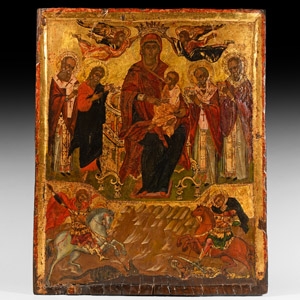
Greek Icon with Virgin and Saints George and Demetrius on Horseback
17th century A.D.Sold for (Inc. bp): £2,860
An exquisite tempera with gold ground on wood icon depicting Mary surrounded by saints and holding the Divine Child in her arms; Mary seated on an elaborate throne and crowned as the Queen of the Universe with two angels supporting her crown, Greek inscription 'MP' and 'ΘΥ' for Mother of God to each side of the crown, wearing a scarlet red maphorion embroidered with gold and a long dark blue tunica talaris; Jesus dressed in a linen tunic and a yellow cloak, affectionately gazing up and making the sign of blessing with his right hand; four saints flanking the throne, three of whom dressed in Bishop's attire, far left Saint Basil with his name written in Greek, and the others possibly saints Elias, Nicholas and Gregorius Nazianzus; the lower part of the icon with Saint George on horseback killing the dragon and Saint Demetrius on horseback killing the king of Avars, both saints dressed in pseudo-Roman armour and armed with a spear. 2.4 kg, 44 x 35 cm
Property of a London lady, part of her family's collection. Accompanied by an academic report by Dr Raffaele D’Amato. This lot has been checked against the Interpol Database of stolen works of art and is accompanied by search certificate number no.11570-198597.
The representation of the icon is centred on the image of the Mother of God as ‘The Sovereign’ (Vasilissa, Queen of the Universe). Here, Mary assumes the function of the protector of the believers, reinforced by the presence of the angels. Due to her earthly origin, Mary always maintained an intermediary position in the heavenly realms, becoming an indispensable intercessor on behalf of humans before the Lord. The protection offered by her is reinforced by the presence of the two major protectors of the humans against evil: Saint George and Saint Demetrius. -
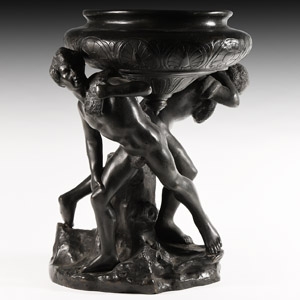
Post Medieval Water Basin with Figures
19th-20th century A.D.Estimate: £800 - 1,000 (+bp*)
Opening Bid: £400
A copper-alloy water basin held on the shoulders of two muscular nude male figures traversing a wooded landscape, animal skin shawls draped around their necks and shoulders; the basin carinated with a frieze of stylised floral roundels to the shoulder. 15.2 kg total, 39 cm high
English private collection. -
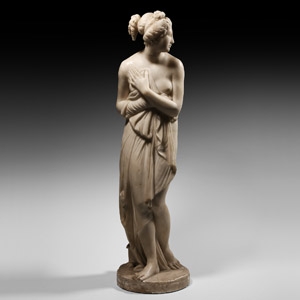
Marble Bathing Venus
Neoclassical, 19th century A.D.Sold for (Inc. bp): £1,235
A marble interpretation of the famous 'Bathing Venus' (Pudica Venus) statue, modelled naturalistically in the round, nude, hair piled behind her head, holding her garment to her breast, standing on a composite discoid base imitating a stone pavement, with a casket at her feet; after Giambologna's Renaissance original; restored. 21.2 kg, 78 cm high
Old repair to neck.
French collection, 1960s-early 2000s. From an important Paris gallery, France.
The original 'Bathing Venus' statue in bronze has been attributed to Giambologna (Giovanni da Bologna) (1529-1608), and was probably created for King Henry IV of France as a diplomatic gift from Ferdinando I de’ Medici, Grand Duke of Tuscany. This is a neoclassical interpretation of that Renaissance statue.
