
Loading, please wait...
LOT 1455
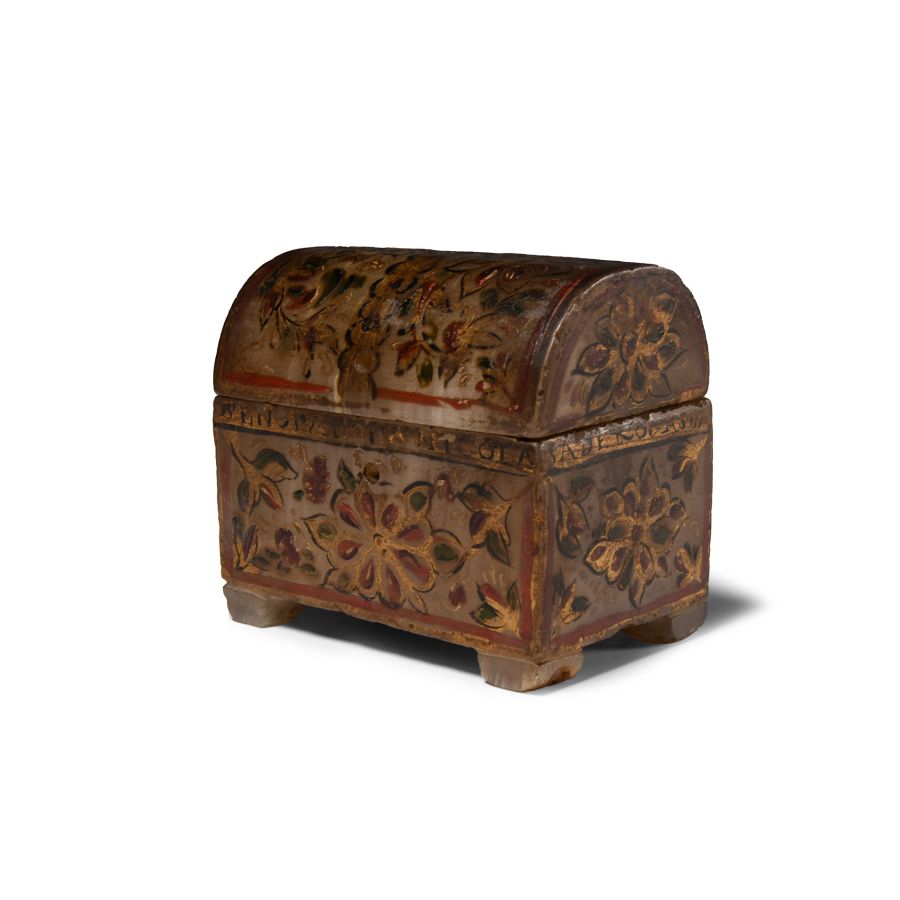
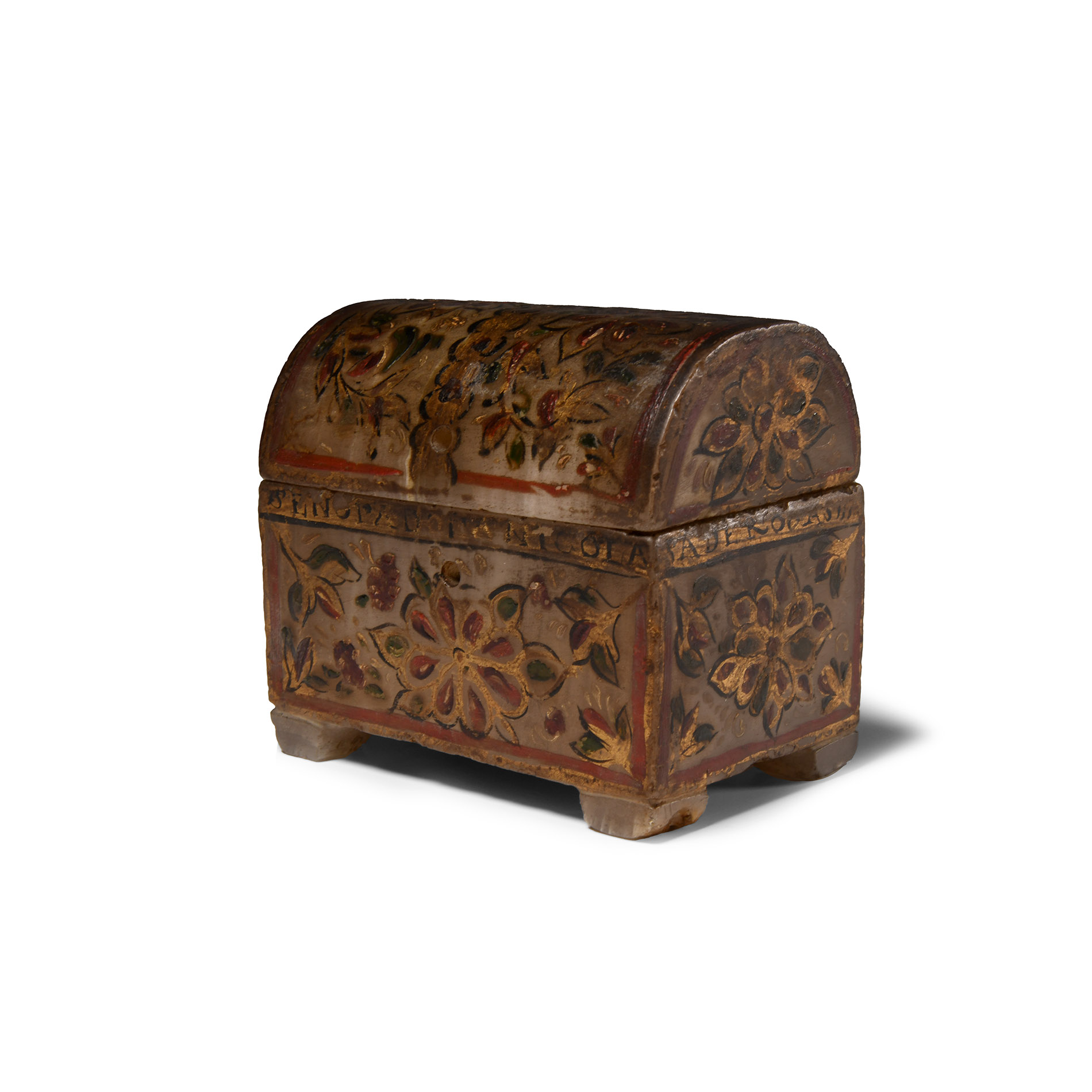
Post Medieval Painted Miniature Alabaster Casket
CIRCA 17TH CENTURY A.D.
3 1/4 in. (336 grams, 83 mm wide).
With D-section lid and four stub feet, painted panels of rosettes and foliage in red and green with liquide gold detailing; upper edge of base with legend 'SIrVOAMI / SENOr[A] DOrA NICOLA / SADERO[B]AS'.
ProvenanceFrom a Blackheath, London, UK, deceased estate.
Property of a Suffolk, UK, gentleman.
The text reads in part as a personal name 'Senora Dora Nicola ... de Robas', Spanish or Catalan.
CONDITIONTimeLine Auctions follows a vetting process to ensure the authenticity and legality of all items, reinforcing our commitment to integrity and responsible trading. Each antiquity, antique, and coin lot undergoes thorough examination by a vetting committee of at least ten external specialists, professional trade association members, scientists, and archaeologists: Our Vetting Process
AUCTIONS:
TimeLine is a leading auction house specialising in antiquities, ancient art, collectables, natural history, coins, medals, and books. Our auctions offer museums, collectors, historians, and enthusiasts the opportunity to acquire unique and historically significant pieces.
-
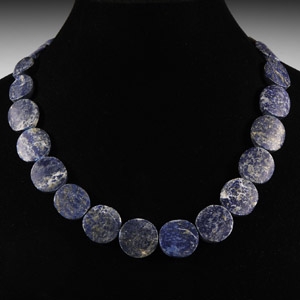
Lapis Lazuli Bead Necklace
20th century A.D.Sold for (Inc. bp): £26
Composed of coin-shaped beads with a hook-and-eye clasp. 104 grams, 44 cm long
UK gallery, early 2000s. -
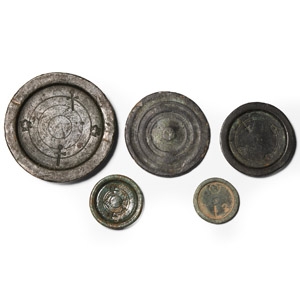
Georgian Bronze Trade Weight Collection
18th-early 19th century A.D.Sold for (Inc. bp): £13
Group of five disc weights with stamped markings, raised rim to obverse. 373 grams total, 25-60 mm
Ex Simmons Gallery, London E11, UK, in the 1990s. From a North London collection. -
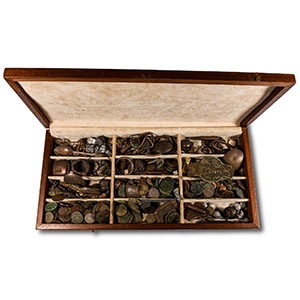
Post Medieval Mixed Metal Artefact Collection in Case
Circa 17th-20th century A.D.Sold for (Inc. bp): £111
Comprising a large quantity of milled coins, mainly English; various badges; rings; two spoons; keys; buckle loops; lead weights; a toy car and an interesting mixture of other items; housed in a velvet-lined wooden case. 5.5 kg total, 51 x 24.7 cm including box
Ex UK deceased estate. Property of a North London collector.
