
Loading, please wait...
LOT 1790
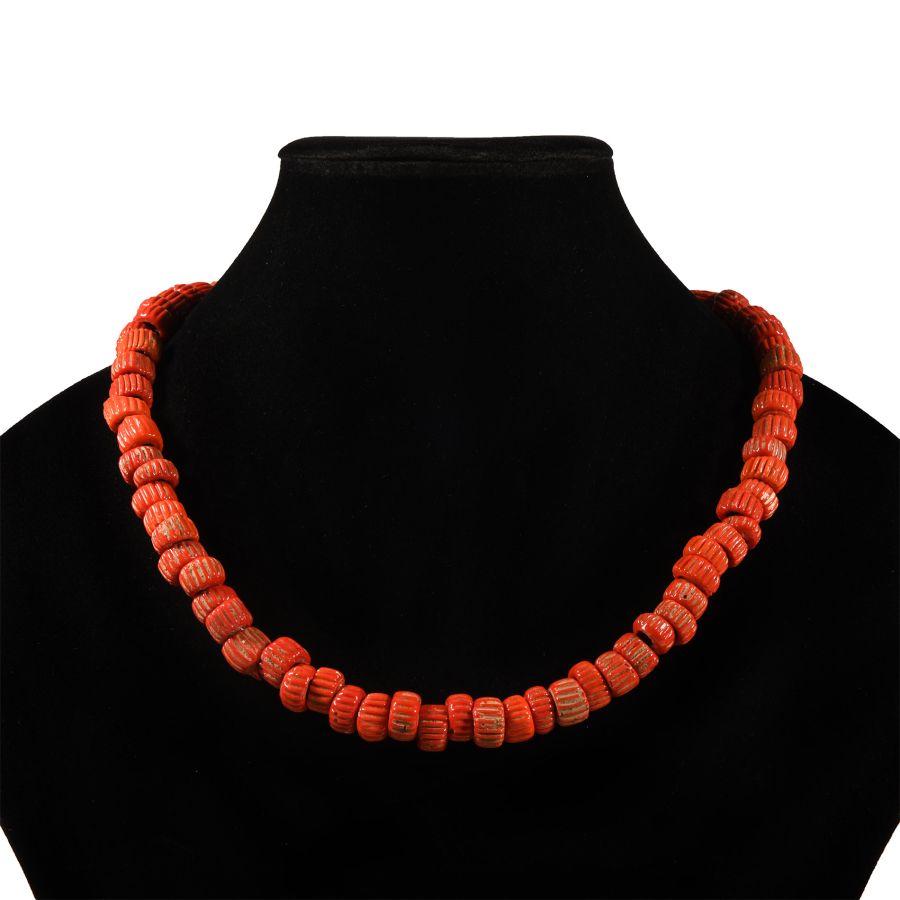
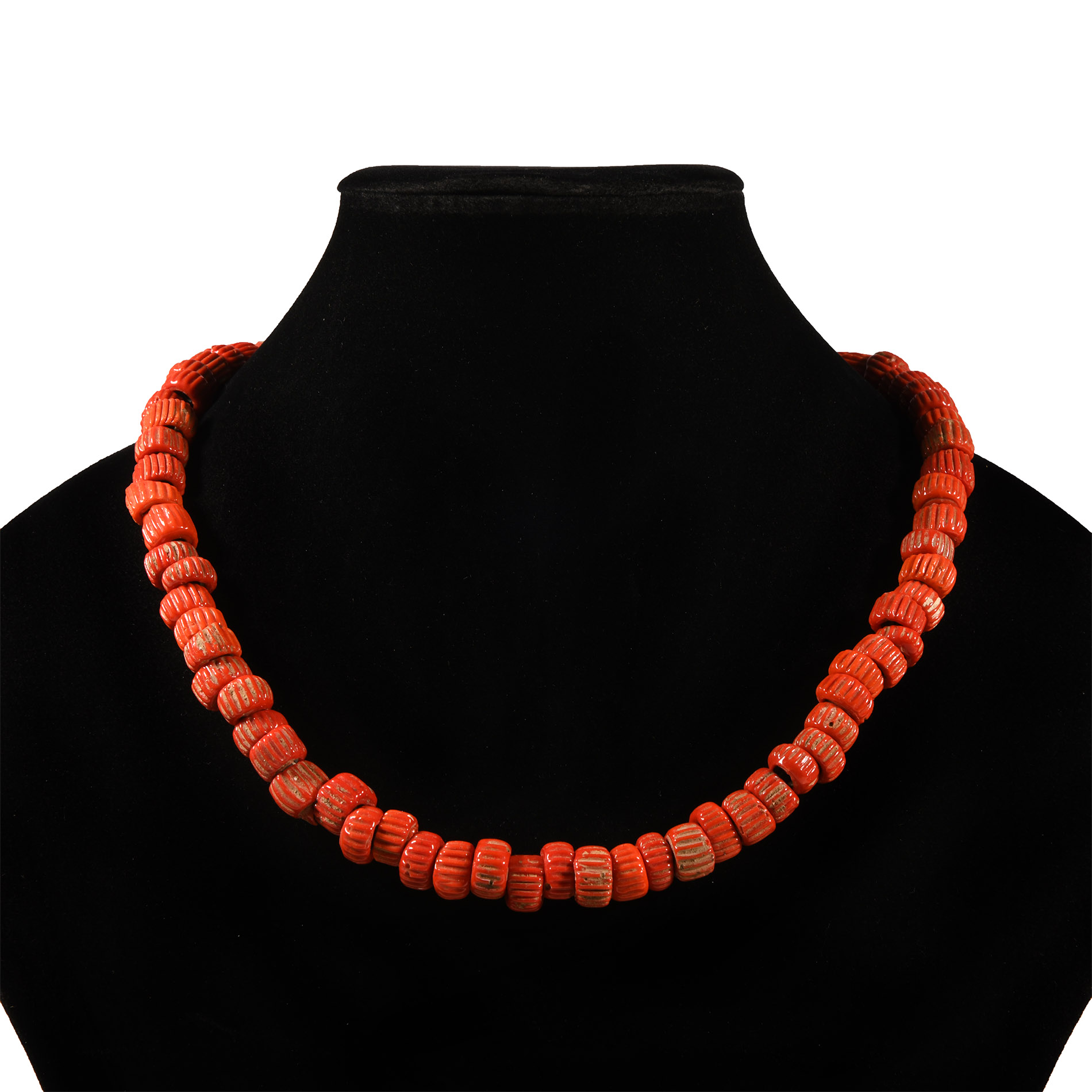
Post Medieval or Later Red Glass Bead Necklace String
19TH CENTURY A.D.
21 1/4 in. (73 grams, 54 cm long).
Comprising vibrant irregular red glass oblate beads.
ProvenanceUK gallery, early 2000s.
CONDITIONTimeLine Auctions follows a vetting process to ensure the authenticity and legality of all items, reinforcing our commitment to integrity and responsible trading. Each antiquity, antique, and coin lot undergoes thorough examination by a vetting committee of at least ten external specialists, professional trade association members, scientists, and archaeologists: Our Vetting Process
AUCTIONS:
TimeLine is a leading auction house specialising in antiquities, ancient art, collectables, natural history, coins, medals, and books. Our auctions offer museums, collectors, historians, and enthusiasts the opportunity to acquire unique and historically significant pieces.
LOT 1790
Post Medieval or Later Red Glass Bead Necklace String
Estimate £100 - 140€120 - 160 (for guidance only)$140 - 190 (for guidance only)
-
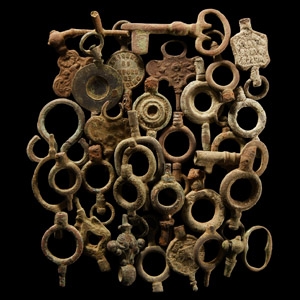
Post Medieval Bronze Watch Key Group
Circa 18th-19th century A.D.Sold for (Inc. bp): £59
Comprising watch keys of various types, including examples with trace remains of gilding and lettering. 70.2 grams total, 20-35 mm
Found Berkshire, UK. -
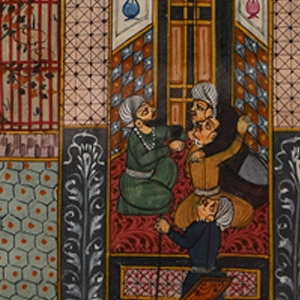
Framed Watercolour Painting with Male Figures Engaged in Conversation
Persia, 20th century A.D.Estimate: £80 - 100 (+bp*)
Opening Bid: £40
With extensive use of liquid gold; polychrome painted scene of three male figures within a building engaged in conversation; three passers-by outside with faces raised to another figure on the roof; panels of calligraphic nastaliq text above and below; mounted in a glazed wooden frame. 689 grams, 37 x 26.5 cm
Very fine condition.
Acquired on the UK art market, 1980s-1990s. The Woodbridge collection of Indo-Persian art. -
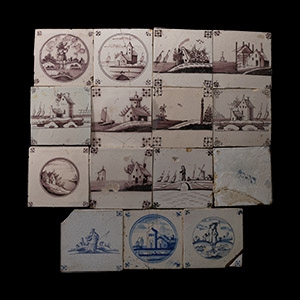
Post Medieval Dutch Glazed Ceramic Tile Group
Circa 18th century A.D. and laterEstimate: £120 - 170 (+bp*)
Opening Bid: £63
Displaying different colour glazes and designs including animals, figural vignettes and landscape scenes featuring buildings and sailing vessels. 3.4 kg total, 13 x 13 cm
Acquired 1990s-early 2000s. East Anglian private collection.
