Loading, please wait...
LOT 1565
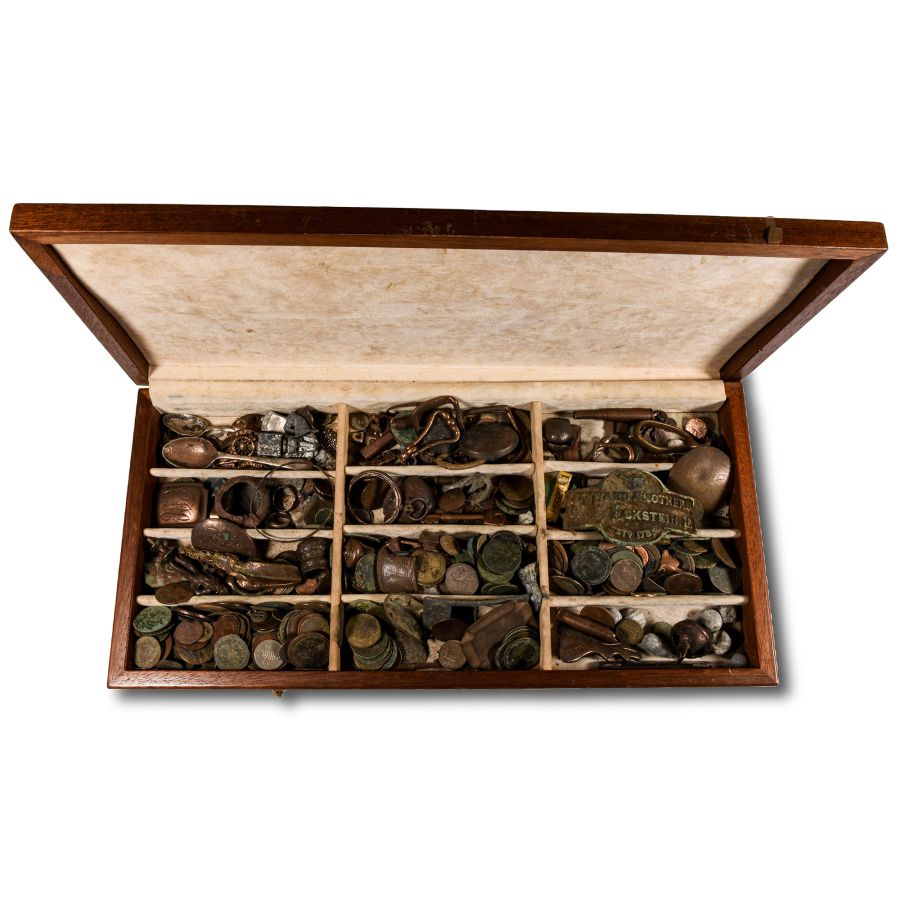
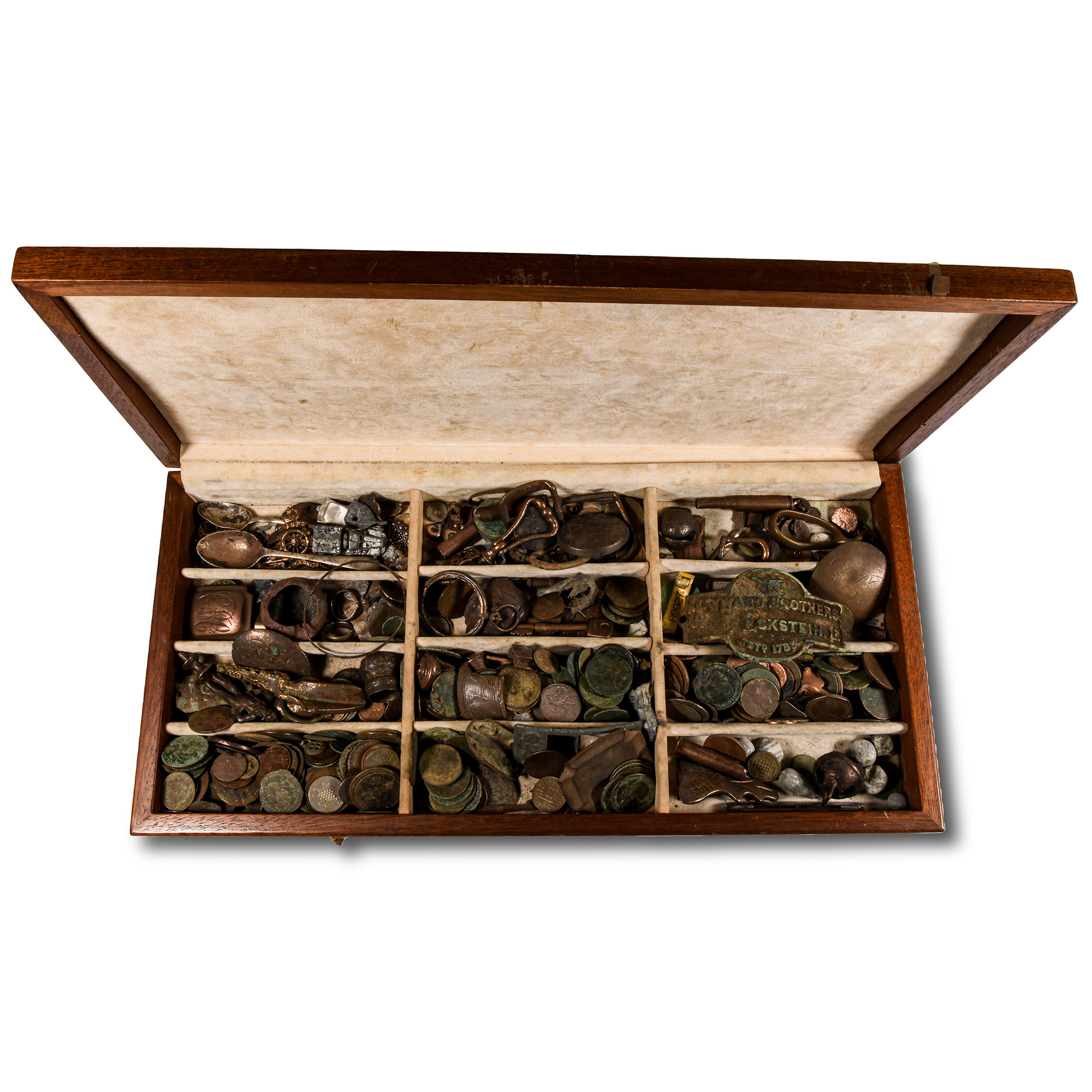
Post Medieval Mixed Metal Artefact Collection in Case
CIRCA 17TH-20TH CENTURY A.D.
20 x 9 3/4 in. (5.5 kg total, 51 x 24.7 cm including box).
Comprising a large quantity of milled coins, mainly English; various badges; rings; two spoons; keys; buckle loops; lead weights; a toy car and an interesting mixture of other items; housed in a velvet-lined wooden case. [A large quantity, No Reserve]
ProvenanceEx UK deceased estate.
Property of a North London collector.
TimeLine Auctions follows a vetting process to ensure the authenticity and legality of all items, reinforcing our commitment to integrity and responsible trading. Each antiquity, antique, and coin lot undergoes thorough examination by a vetting committee of at least ten external specialists, professional trade association members, scientists, and archaeologists: Our Vetting Process
AUCTIONS:
TimeLine is a leading auction house specialising in antiquities, ancient art, collectables, natural history, coins, medals, and books. Our auctions offer museums, collectors, historians, and enthusiasts the opportunity to acquire unique and historically significant pieces.
-
'The Wingham' Gold 'Fortune Favours the Brave' Posy Ring
1500-1650 A.D.Sold for (Inc. bp): £2,080
Broadly rectangular in cross-section and constructed from two sheets of gold; the external hoop carrying an etched decorative design comprised of a row of eight-armed stars in relief with a prominent horizontal line connecting the stars; the internal hoop with Latin inscription in block capitals reading '+FORTES FORTVNA IVVAT' translating to 'fortune favours the brave/strong'; straightened. 1.45 grams, 18.86 mm overall, 16.70 mm internal diameter (approximate size British L 1/2, USA 5 3/4, Europe 11.24, Japan 10)
Found whilst searching with a metal detector in Wingham, near Dover, Kent, UK, on Sunday 8th August 2021. Accompanied by a copy of the British Museum's Portable Antiquities Scheme (PAS) report for Oxfordshire under reference no.KENT-8F86BC. Accompanied by a copy of the report on find of potential Treasure for H M Coroner with reference no.2021T985. Accompanied by a copy of the letter from HM Senior Coroner for Oxfordshire disclaiming the Crown's interest in the find.
The inscription is a Latin proverb used in the play Phormio by Terence in 151 B.C. It is possible that the inscription was intended as a devotion of loyalty and symbol of pride, instead of being given as a symbol of fidelity. -
Large Egyptian Revival Painted Stone Plaque
20th century A.D.Sold for (Inc. bp): £130
A substantial decorative designer stele with high-relief standing figure of Hathor in profile wearing a headdress with solar disc flanked by bovine horns, wesekh segmented collar and tight-fitting ankle-length skirt; in her right hand, the ankh symbol of life, her left hand supporting a papyrus stalk; low-relief cartouche and hieroglyphs in the field; mounted on a custom-made stand; after the antique. 74.05 kg total, 1.01 m high including stand
From a French collection, Paris. Ex Parisian gallery, France; latterly with a London, UK, gallery. -
Russian Wooden Icon with St John the Baptist
19th century A.D.Estimate: £3,000 - 4,000 (+bp*)
Opening Bid: £1,500
Comprising a painted board with mounting panel and slots to the reverse, gessoed surface with painting of St John the Baptist standing nimbate with wings spread behind him, left hand supporting a bowl containing his severed head and holding an unfurled scroll with Cyrillic text 'Repent ye, for the Kingdom of Heaven is at hand,' (Matthew 3:2); right hand raised in blessing; landscape with sand-dunes and trees; gilded title above; the upper border with gilt Slavonic inscription reading 'Holy John the Forerunner'; from the Palekh Icon School, probably made in Mstera circa 1890. 1.02 kg, 31 cm high
Fine condition.
Ex property of a London lady, part of her family's collection. This lot has been checked against the Interpol Database of stolen works of art and is accompanied by search certificate no.11546-196366.
The Palekh icon school emerged in the 17th century, inspired by the Moscow and Suzdal traditions of icon painting. Although preserving many features of traditional Russian iconography, the school created its own style that remained active into the 18th century. The hallmarks of the school include the frequent use of gold on the clothes of the saints and a rich palette. Bodies are shown as tall and slender and abrupt transitions between light and shadow are distinctive features of Palekh icons. The wings of Saint John derive from the double meaning of the Greek word used to describe him in Mark 1:2 - Angelos, meaning both messenger and angel. John is often called a 'Heavenly Man' and 'Earthly Angel' in Orthodoxy. At his feet is shown a small tree with an axe cutting into it, illustrating Luke 3:9, 'And now also the axe is laid unto the root of the tree...'