
Loading, please wait...
LOT 0373
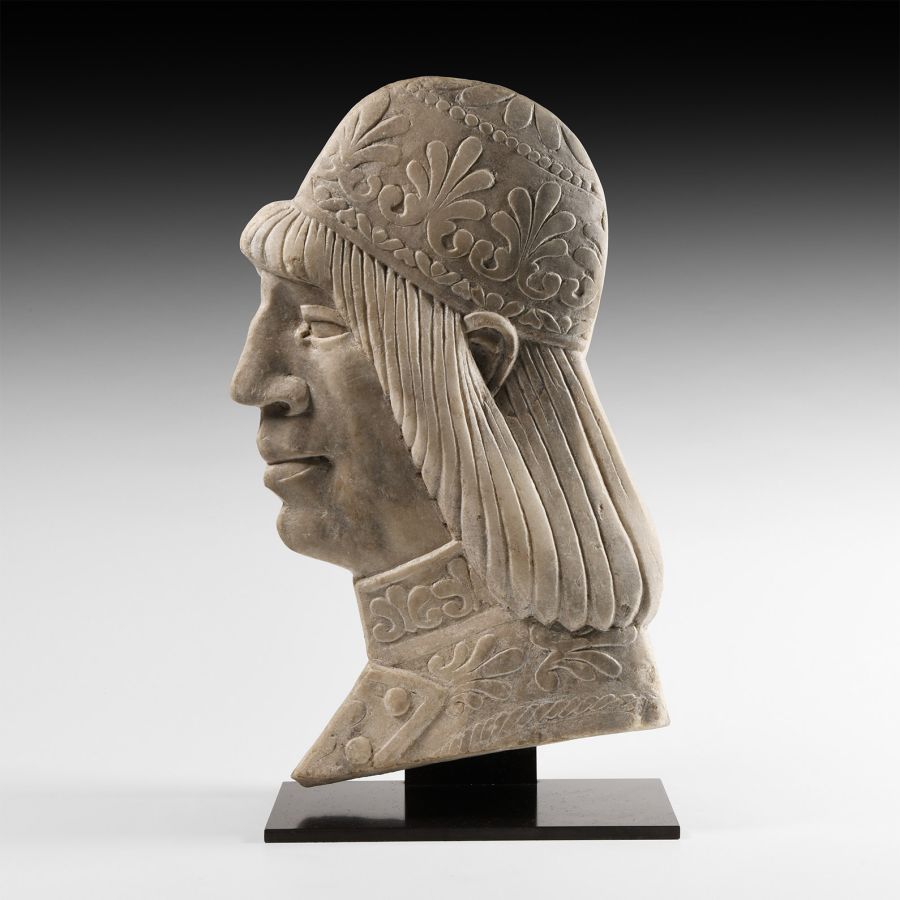
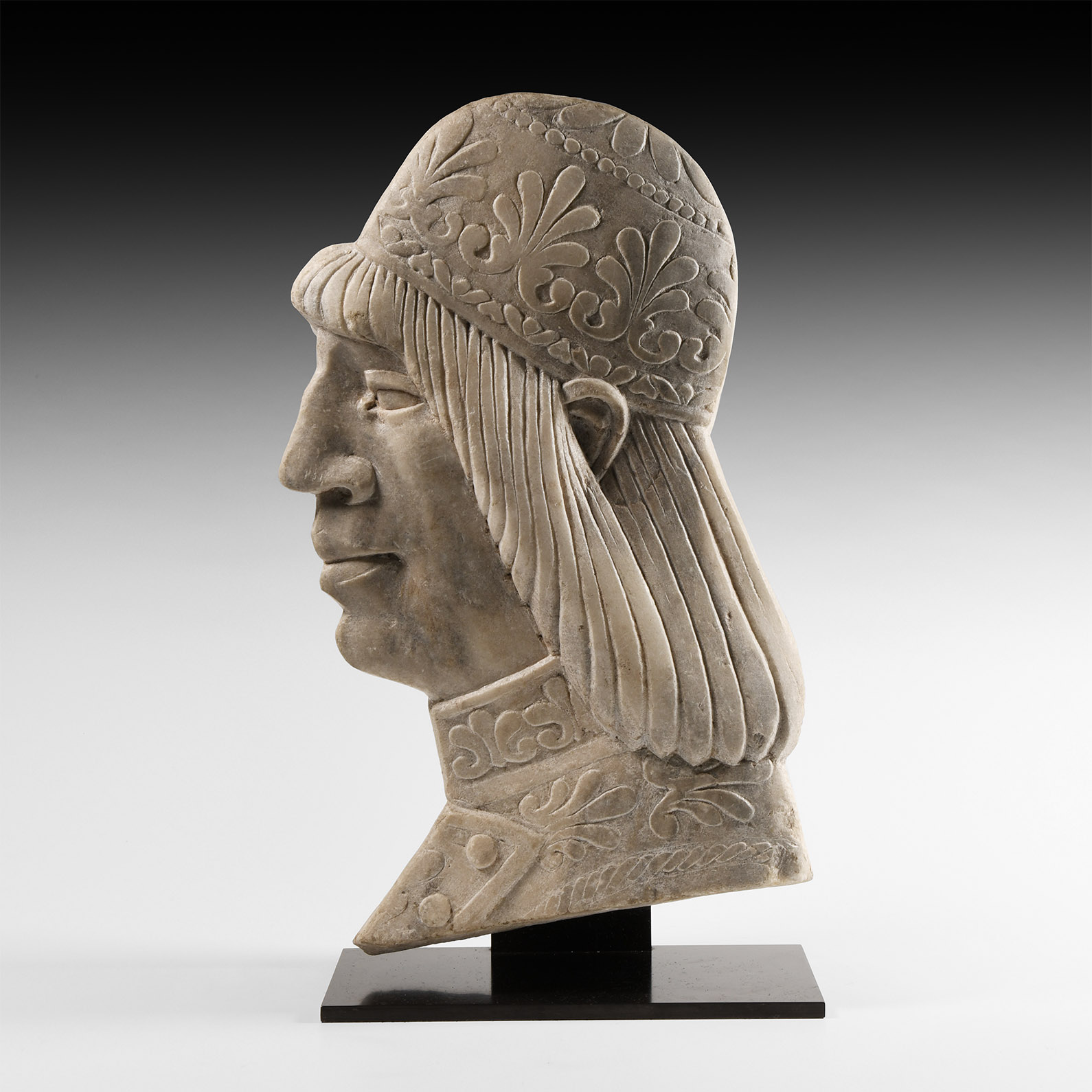
Post Medieval Marble Head of a Man
15TH CENTURY A.D. OR LATER
14 3/8 in. (12.7 kg total, 36.5 cm high including stand).
A carved marble portrait of a Renaissance man in profile left, depicted with stylised facial features and foliate detailing to his garments; mounted on a custom-made display stand.
ProvenanceEnglish private collection.
This lot has been checked against the Interpol Database of stolen works of art and is accompanied by search certificate number no.11681-199819
TimeLine Auctions follows a vetting process to ensure the authenticity and legality of all items, reinforcing our commitment to integrity and responsible trading. Each antiquity, antique, and coin lot undergoes thorough examination by a vetting committee of at least ten external specialists, professional trade association members, scientists, and archaeologists: Our Vetting Process
AUCTIONS:
TimeLine is a leading auction house specialising in antiquities, ancient art, collectables, natural history, coins, medals, and books. Our auctions offer museums, collectors, historians, and enthusiasts the opportunity to acquire unique and historically significant pieces.
LOT 0373
Post Medieval Marble Head of a Man
Estimate £4,000 - 6,000€4,640 - 6,960 (for guidance only)$5,400 - 8,100 (for guidance only)
-
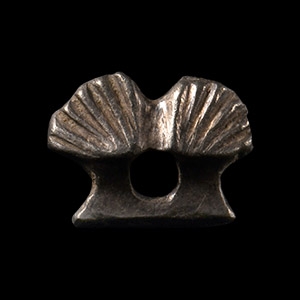
Tudor Silver Saint James Double Scallop Shell Dress Mount
16th century A.D.Sold for (Inc. bp): £59
A complete silver dress fitting or strap mount in the form of two conjoined scallop shells along one edge of a sub rectangular bar with sloping sides, the fitting with central perforation and two slender mounting lugs to reverse. 1.24 grams, 12 mm
Found whilst searching with a metal detector by Kevin Ford on 1st March 2019 in Chinnor, South Oxfordshire, UK. Accompanied by a copy of the British Museum's Portable Antiquities Scheme Report (PAS) number OXON-86C7C3. Accompanied by a letter to HM Coroner for Oxfordshire from the Oxfordshire Finds Liaison Officer (FLO) with treasure reference number 2019 T648.
The scallop shell was associated with St. James and the pilgrimage site of Santiago de Compostela in Spain, one of the most important pilgrimage centres in medieval Europe. The scallop shell became the symbol for pilgrimage more generally in this period. It is an overtly Catholic symbol which could have been worn with freedom before c. 1540, or in the period of the Marian revival of Catholicism from 1553-1558. Pilgrimage to the shrine at Compostela from England would have been interrupted by the English Reformation. The PAS report notes that similar examples have been declared as treasure, including: KENT-FEE744 (2014 T641) and NLM-538148 (2010 T539), both dating to the 16th century A.D. -
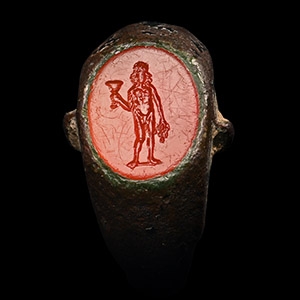
Ring with Standing Figure Gemstone
Circa 17th century A.D.Sold for (Inc. bp): £117
A copper-alloy ring with expanding arms and raised triangular knop to two faces, set with a carnelian intaglio gemstone engraved with a standing nude male figure holding a bunch of grapes and a goblet, possibly representing the god of wine. 9.25 grams, 26.43 mm overall, 17.76 mm internal diameter (approximate size British O 1/2, USA 7 1/4, Europe 15.61, Japan 15)
Acquired in the late 1990s-2000. Property of an East London gentleman. -
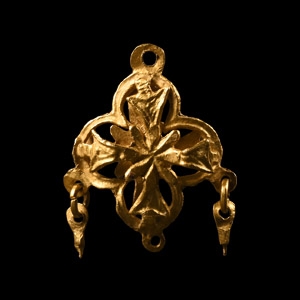
Elizabethan Gold Cross Pendant
16th-early 17th century A.D.Sold for (Inc. bp): £910
A gold bifacial cruciform pendant comprising: outer frame of four lobes confining a cross moline with saltire to the centre, pierced lug to three arms each with a gold dangle, fourth with larger pierced tab for suspension. 1.59 grams, 21 mm
Acquired 1980-2015. Ex Abelita family collection.
