
Loading, please wait...
LOT 2045
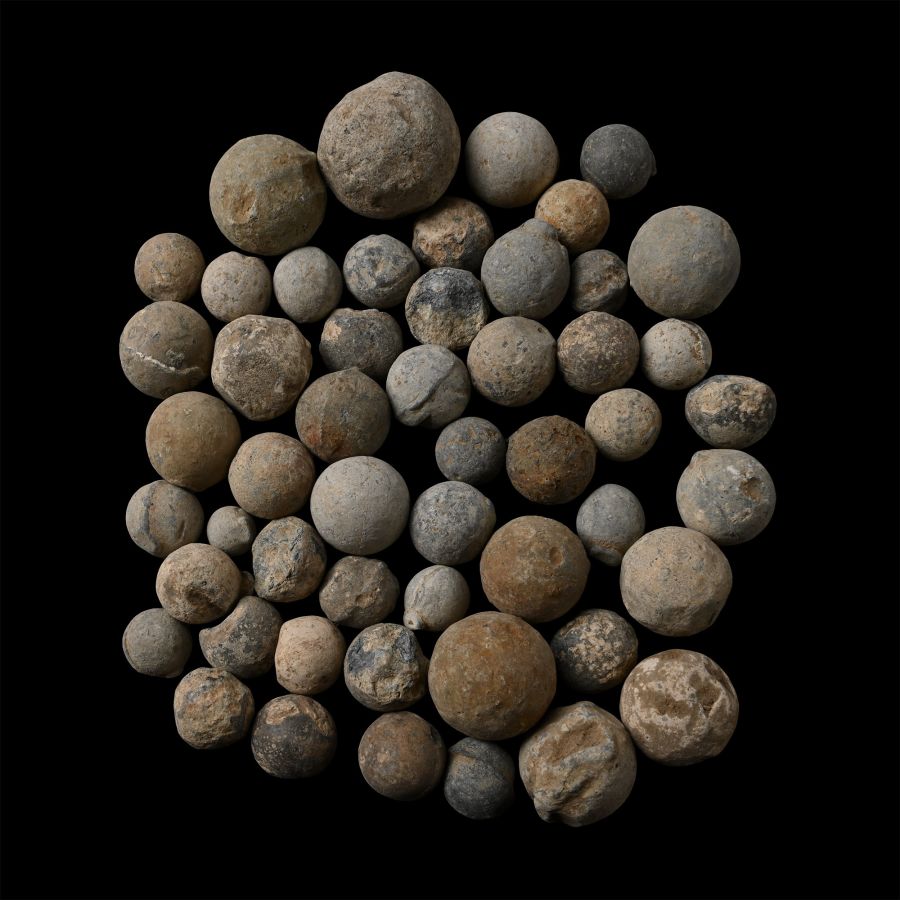
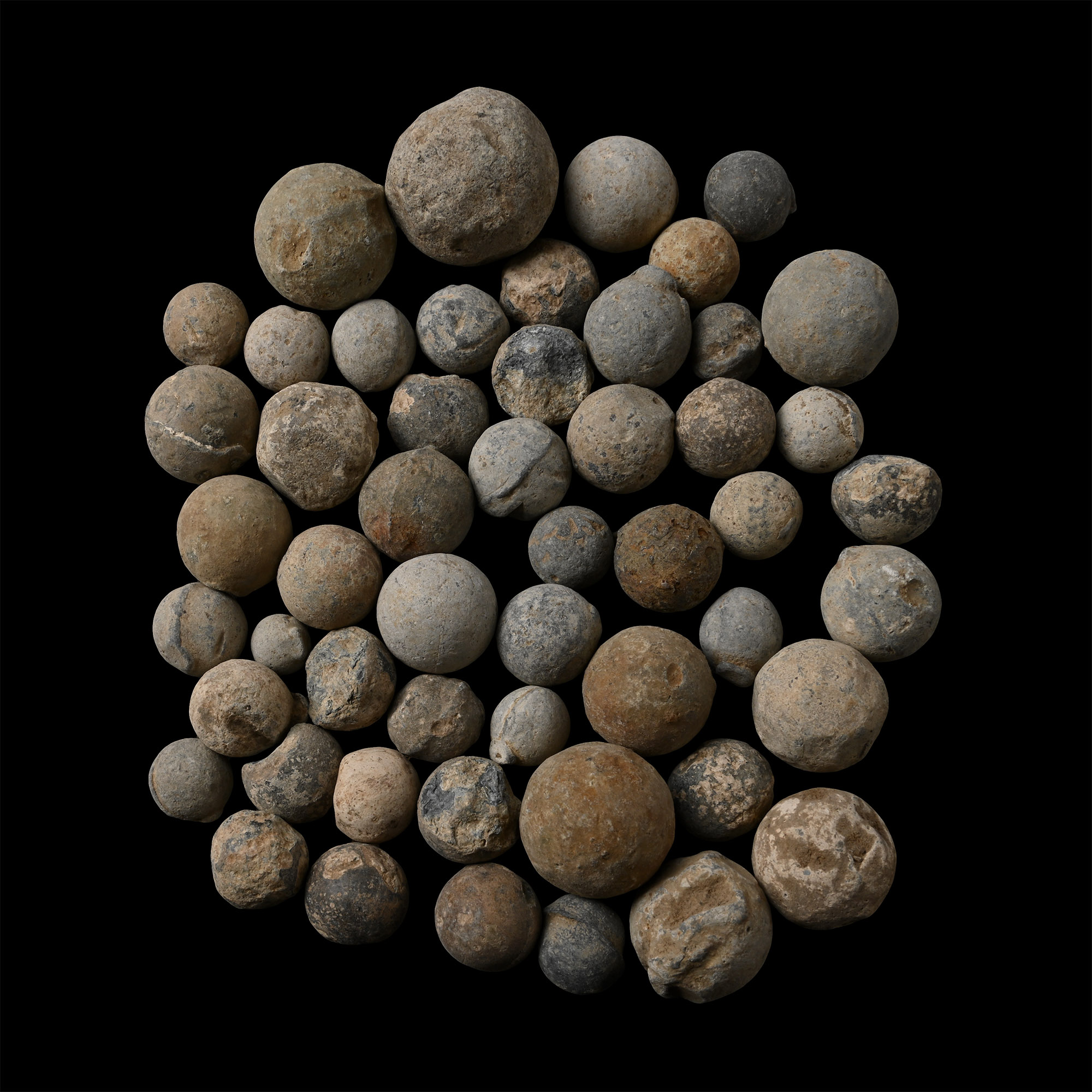
Post Medieval Lead Musket Ball Group
CIRCA 17TH-18TH CENTURY A.D.
1/8 - 7/8 in. (675 grams total, 7-22 mm).
Group of spherical shots, including some with sprues, and some impacted examples. [52, No Reserve]
ProvenanceFound Suffolk, UK.
Property of a Suffolk, UK, gentleman.
TimeLine Auctions follows a vetting process to ensure the authenticity and legality of all items, reinforcing our commitment to integrity and responsible trading. Each antiquity, antique, and coin lot undergoes thorough examination by a vetting committee of at least ten external specialists, professional trade association members, scientists, and archaeologists: Our Vetting Process
AUCTIONS:
TimeLine is a leading auction house specialising in antiquities, ancient art, collectables, natural history, coins, medals, and books. Our auctions offer museums, collectors, historians, and enthusiasts the opportunity to acquire unique and historically significant pieces.
-
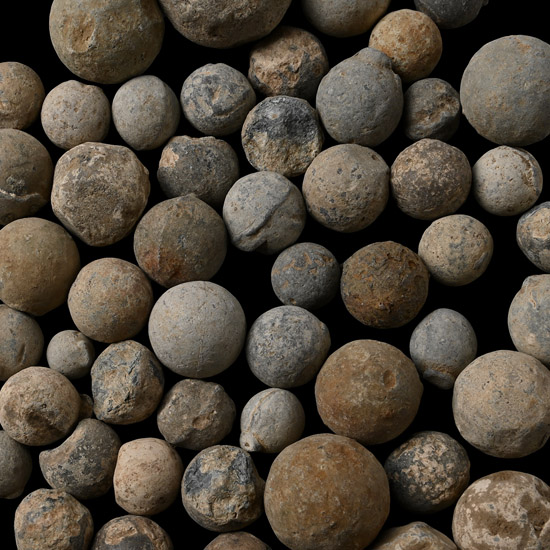
Post Medieval Lead Musket Ball Group
Circa 17th-18th century A.D.Sold for (Inc. bp): £20
Group of spherical shots, including some with sprues, and some impacted examples. 675 grams total, 7-22 mm
Found Suffolk, UK. Property of a Suffolk, UK, gentleman. -
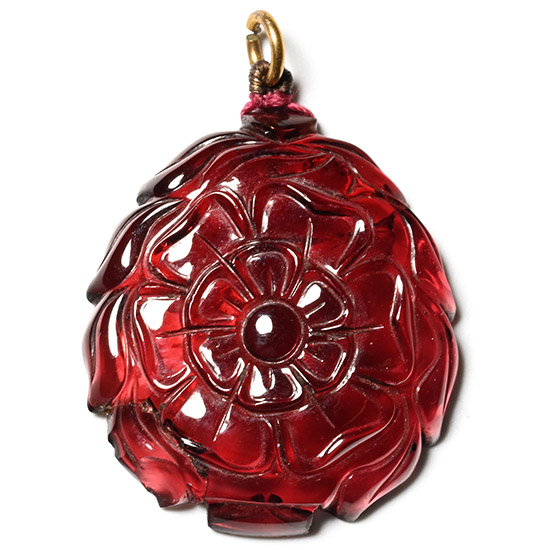
European Garnet Flower Pendant
18th century A.D.Sold for (Inc. bp): £2,340
Translucent purple-red carving of a six-petalled flower, slightly concave underside, pierced lug above. 4.43 grams, 29 mm
Acquired on the European art market. -
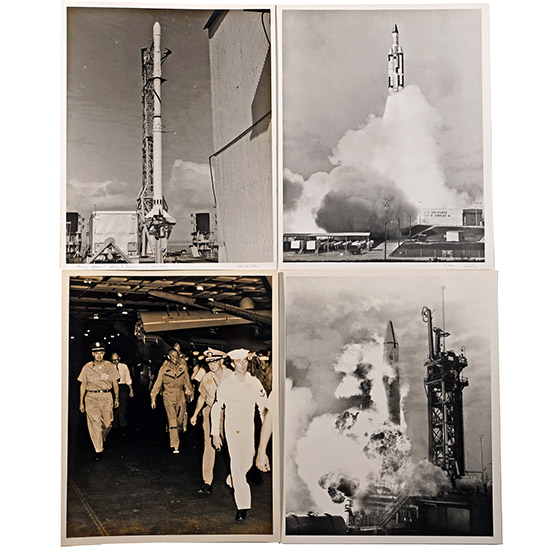
Original NASA Press Photograph Group
1962-1970 A.D.Sold for (Inc. bp): £59
Comprising monochrome gloss prints of NASA launches: an astronaut walking through a crowd of air force and navy personnel, endorsed 'NASA For Release February 22, 1962. NASA Photo no. 62-MA6-121. Cape Canaveral, FLA Aboard USS Randolph Astronaut John H. Glenn walks down the aircraft carrier's hangar deck following world orbital flight.'; rocket on launchpad in flames, endorsed 'Nasa Photo Unclassified 3-2-65 Nasa/Centaur. Cape Kennedy, FLA : 8:25 A.M. EST. March 2. 1966. The fifth experimental Atlas Centaur launch vehicle lifted off the pad, and the main stage prematurely cut off, causing the vehicle to fall back on the pad and explode.'; rocket leaving launchpad, endorsed 'U.S.Air Force Photo / Air Force Eastern T[est] Range / Photographic lLboratory Operated by [Y}CA. / P-66-75271 8/25/66 C[.]YA, Titan... Lift off of Titan ...Unclassified'; rocket on launchpad, endorsed 'NASA For Release: December 12, 1970 / Photo No. 70-H-1641 70-HC-1160 ... Kenya, Africa -- Italy to launch U.S. satellite - The first American satellite to be launched by another country will be placed in Earth orbit by a team of Italian space engineers operating from a mobile launch platform located in the Indian Ocean. The launch will take place off the coast of Kenya in East Africa, no earlier than December 12. The spacecraft is the Small Astronomy Satellite-A (SAS-A) 42 in the National Aeronautics and Space Administration's Explorer series. It is the first satellite equipped with sensitive experiments to detect high-energy X-ray sources in space, and is also known as the X-ray Explorer. Successful operation of the astronomy satellite will allow scientists to take the next giant step in astronomy -- the cataloguing of powerful X-ray sources both within and outside our galaxy, the Milky Way. During the first day of operation of its scientific instruments, the satellite is expected to collect more data than has been obtained with sounding rockets in the eight years since the science of X-ray astronomy was born.' 71 grams total, 25.3 x 20.4 - 25.3 x 20.3 cm
Acquired on the UK art market. Property of a Harwich, UK, collector.
