
Loading, please wait...
LOT 2095
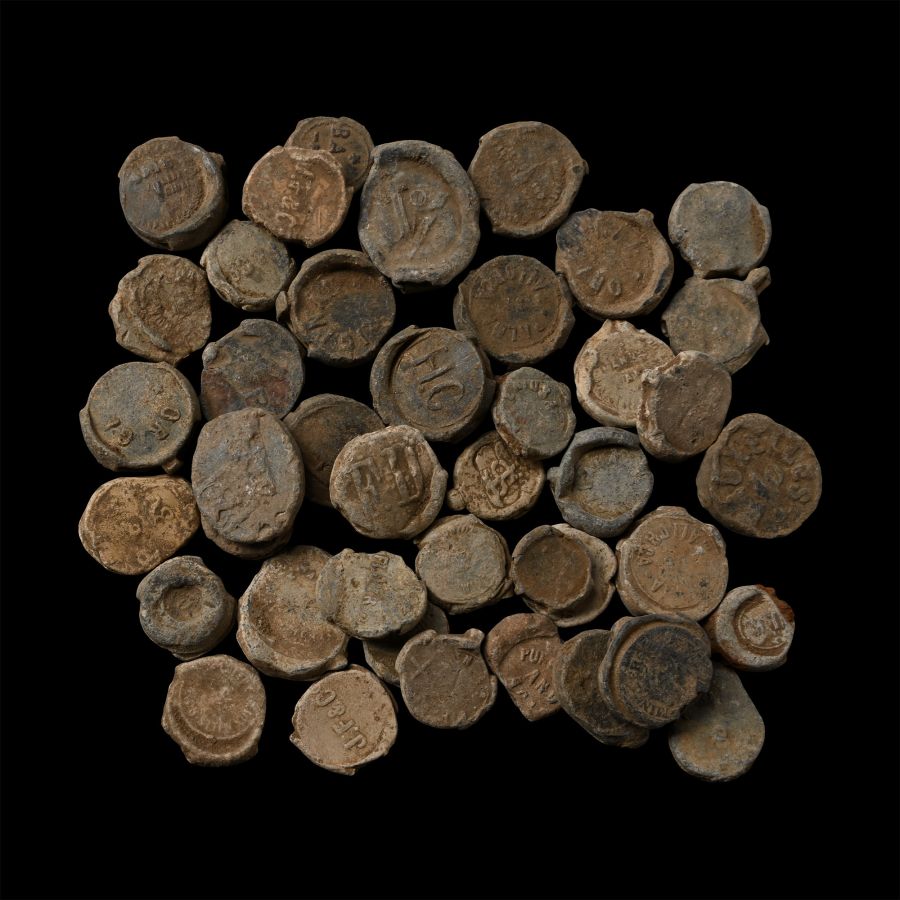
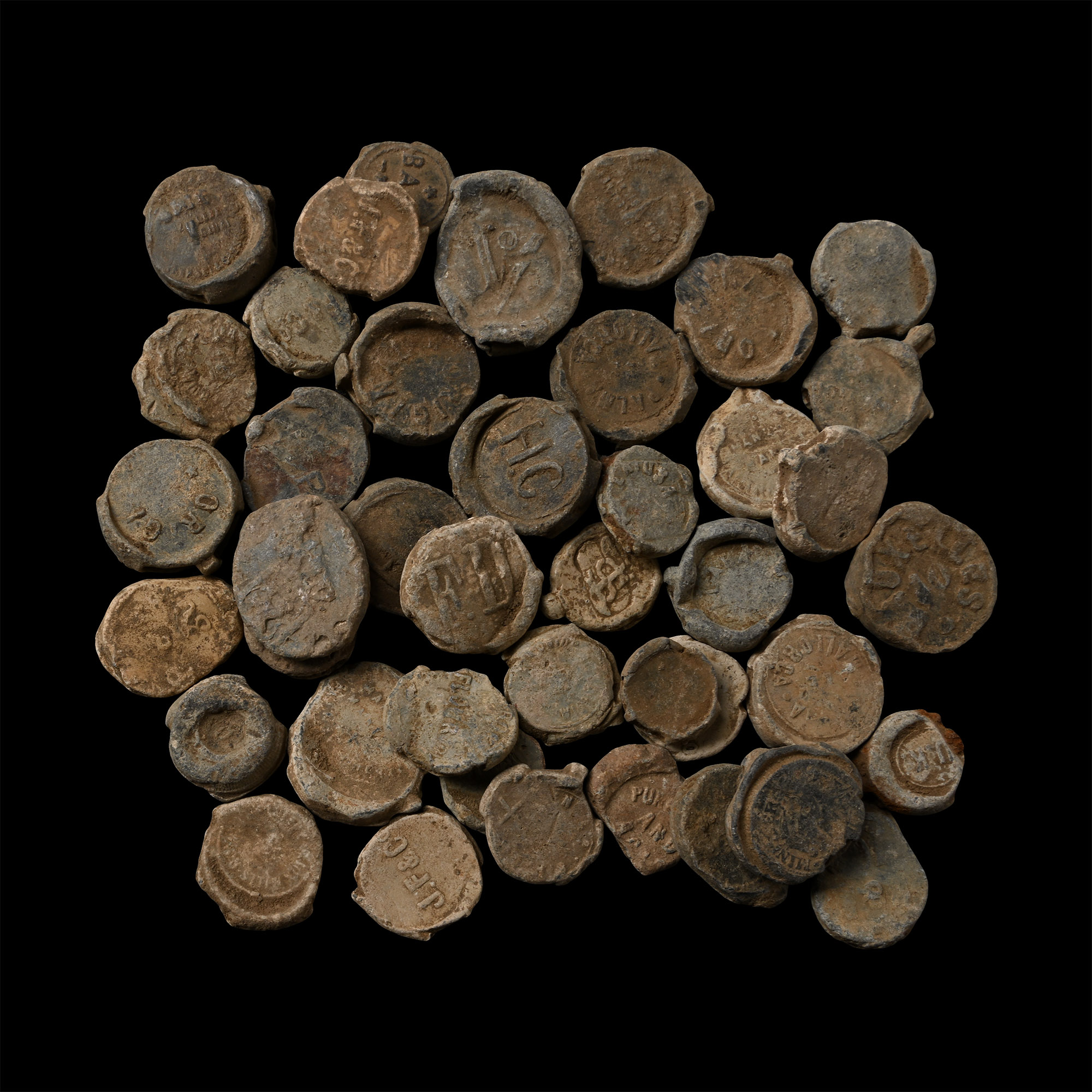
Post Medieval Lead Bag Seal Collection
CIRCA 19TH-20TH CENTURY A.D.
5/8 - 1 in. (370 grams total, 16-26 mm).
Comprising forty-three discoid seals with various emblems and inscriptions. [43, No Reserve]
ProvenanceFound Suffolk, UK.
CONDITIONTimeLine Auctions follows a vetting process to ensure the authenticity and legality of all items, reinforcing our commitment to integrity and responsible trading. Each antiquity, antique, and coin lot undergoes thorough examination by a vetting committee of at least ten external specialists, professional trade association members, scientists, and archaeologists: Our Vetting Process
AUCTIONS:
TimeLine is a leading auction house specialising in antiquities, ancient art, collectables, natural history, coins, medals, and books. Our auctions offer museums, collectors, historians, and enthusiasts the opportunity to acquire unique and historically significant pieces.
-
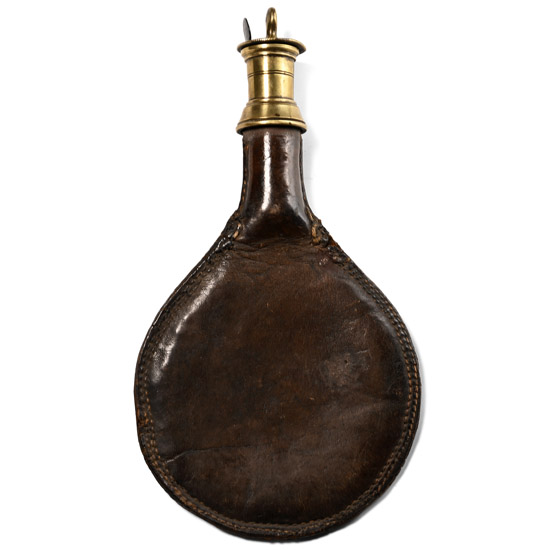
Irish Leather Powder Flask with Brass Fittings
19th century A.D.Sold for (Inc. bp): £13
Stitched edges and a tubular neck with brass fittings. 84 grams, 19.3 cm
Property of a Nottinghamshire, UK, gentleman. -
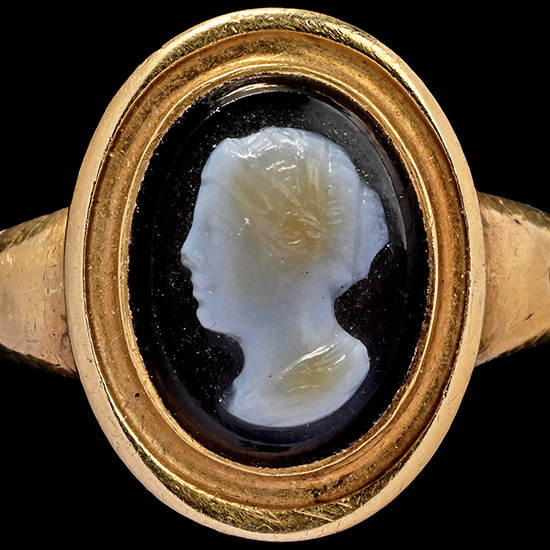
Post Medieval Banded Agate Cameo of a Woman in Gold Ring
18th century A.D.Estimate: £600 - 800 (+bp*)
Current Winning Bid: £30
Hollow-formed with pie-dish bezel and inset cameo. 3.17 grams, 21.26 mm overall, 17.72 mm internal diameter (approximate size British L, USA 5 3/4, Europe 11.24, Japan 10)
Private collection, Europe. Acquired on the English art market.
The cameo is Italian and carved in the classical style of the 2nd century AD, although it dates to the 18th century. Her hair is tied back, and she is wearing a double-banded diadem. The agate displays a deep umber hue, with the bust depicted in light bluish white with highlights of light caramel. In the late 18th century, interest in the classical world became exponentially high, and demand became great for objects from or relating to the ancient world. The high-carat gold ring dates to the late 18th century; there is a small dent to the shoulder of the band. -
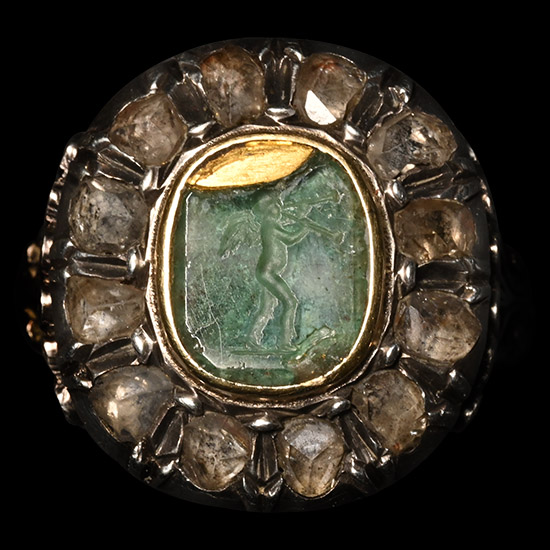
Diamond Locket Ring Set with Emerald Intaglio of Amor, God of Love, Playing Diaulos
Late 19th century A.D.Sold for (Inc. bp): £3,380
Comprising a segmented hoop with scroll-shaped shoulders, a hinged oval bezel with a secret compartment, and a bezel decorated with twelve cut diamonds around a central green stone intaglio of a winged Amor standing on a prora playing a diaulos. 5.82 grams, 23.60 mm overall, 16.50 mm internal diameter (approximate size British L 1/2, USA 6, Europe 11.87, Japan 11)
Private collection, Europe. Acquired on the English art market.
