
Loading, please wait...

LOT 1420
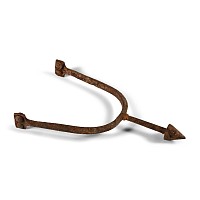
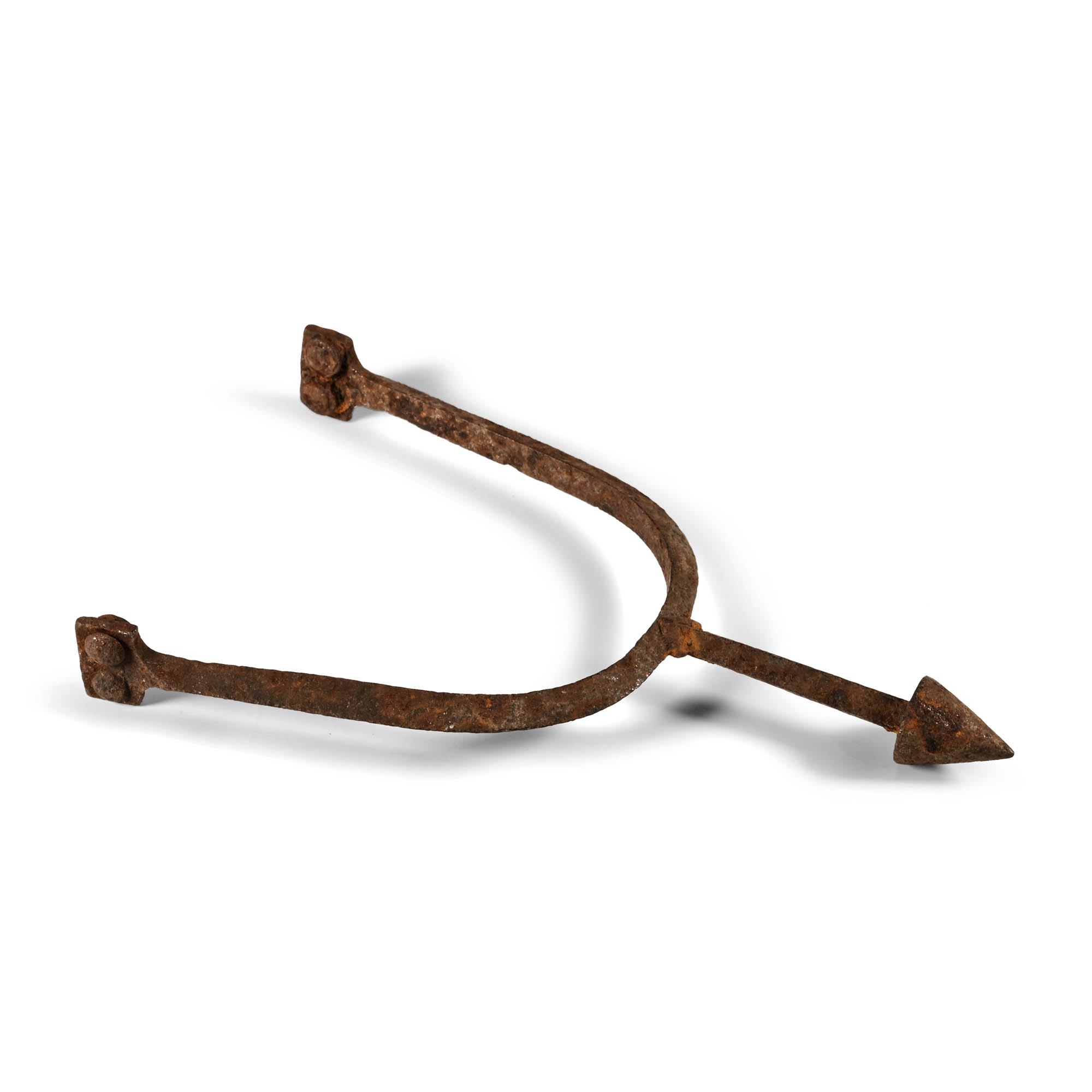
Post Medieval Iron Prick Spur
20TH CENTURY A.D. OR EARLIER
6 1/8 in. (67 grams, 15.5 cm).
With rectangular finials, D-section frame and conical prick. [No Reserve]
ProvenanceFrom a private Barnsley, UK, family collection.
CONDITIONTimeLine Auctions follows a vetting process to ensure the authenticity and legality of all items, reinforcing our commitment to integrity and responsible trading. Each antiquity, antique, and coin lot undergoes thorough examination by a vetting committee of at least ten external specialists, professional trade association members, scientists, and archaeologists: Our Vetting Process
AUCTIONS:
TimeLine is a leading auction house specialising in antiquities, ancient art, collectables, natural history, coins, medals, and books. Our auctions offer museums, collectors, historians, and enthusiasts the opportunity to acquire unique and historically significant pieces.
-
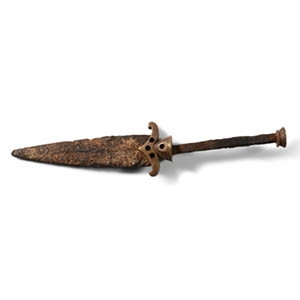
Medieval Iron Dagger with Bronze Fittings
14th-16th century A.D.Sold for (Inc. bp): £117
With triangular iron blade and tang, bronze quillons with cupped bolster and gusseted pommel. 34 grams, 14.5 cm
From a private Barnsley, UK, family collection. -
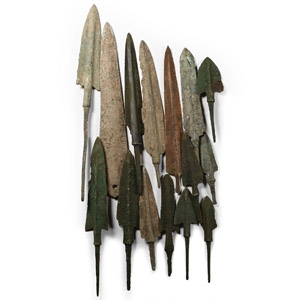
Luristan Bronze Arrow and Blade Group
13th-7th century B.C.Sold for (Inc. bp): £364
Including narrow two-edged dagger blade, barbed-and-tanged arrowhead and other types. 422 grams total, 7.5-20.5 cm
Ex London, UK, collection, 1990s. -
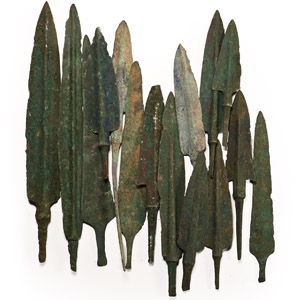
Luristan Bronze Arrow and Blade Group
13th-7th century B.C.Sold for (Inc. bp): £247
Comprising mainly two-edged narrow blades with thick midrib. 431 grams total, 9.5-19.5 cm
Ex London, UK, collection, 1990s.
