
Loading, please wait...
LOT 1783
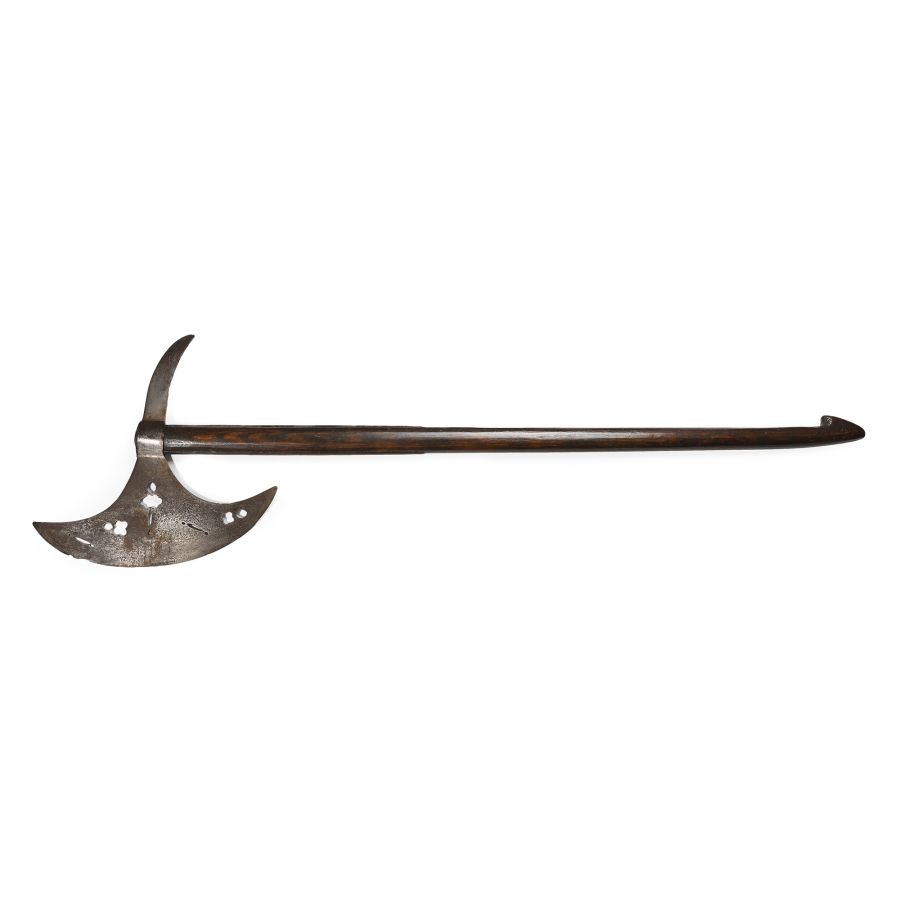
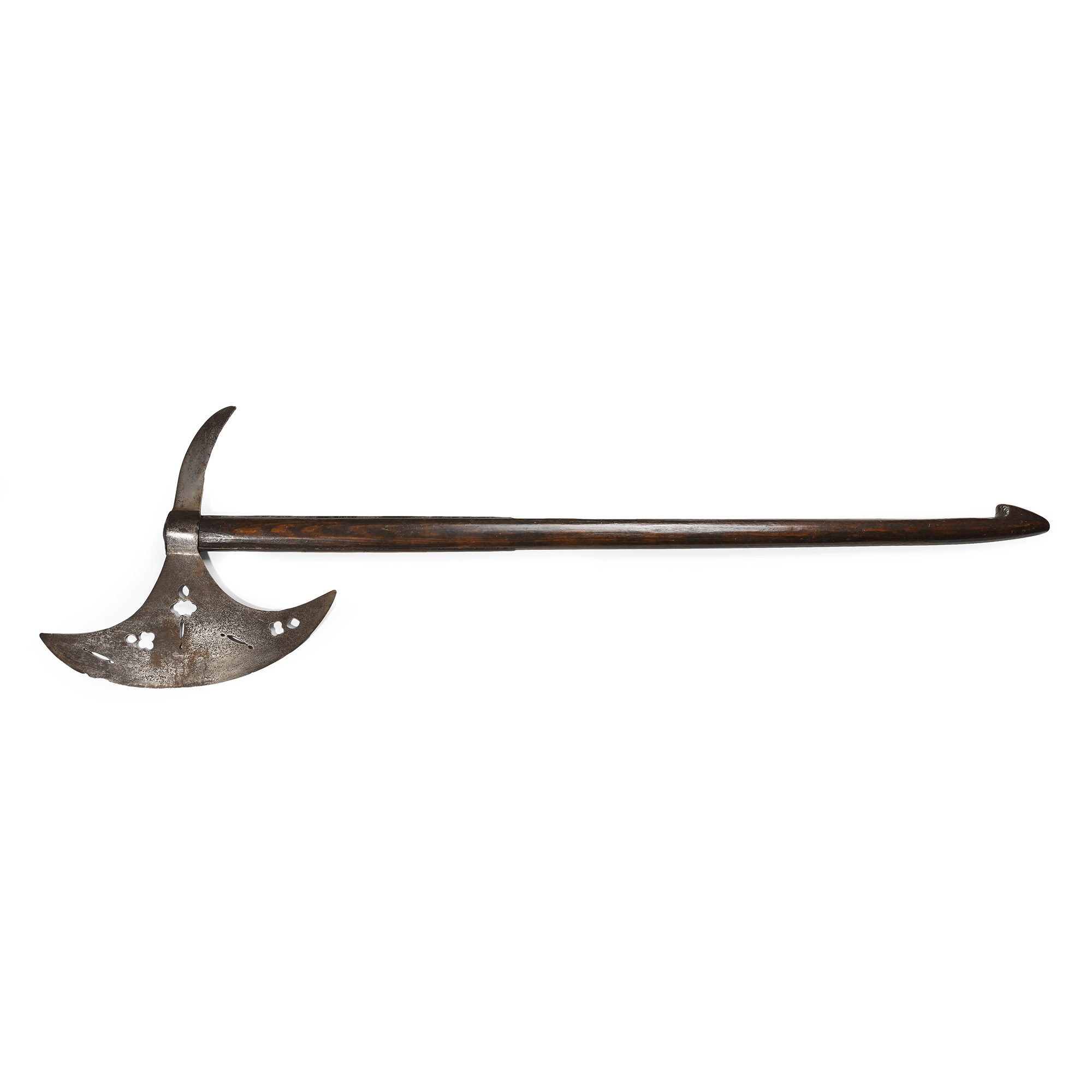
Post Medieval Iron Poleaxe with Wooden Handle
GERMANY OR ENGLAND, 16TH CENTURY A.D.
55 3/8 in. (1.75 kg, 140.5 cm).
With a broad, flaring triangular-section blade extending to a curved edge with carination to its rear, pointed extension to the reverse of the socket; the blade decorated with openwork floral and vegetal patterns; mounted on a wooden shaft.
ProvenanceAcquired from Lyon & Turnbull, UK, in 2013.
From a large West London collection formed from the 1990s.
Cf. a similar English 16th-century war-axe in Hart, H.H., Weapons and Armour, A Pictorial Archive of Woodcuts & Engravings, New York, 1978, p.12.
FootnotesThis is a war weapon issued to infantry, intended for use against cavalry. The distinctive openwork blade suggests it was a standard-issue weapon, not for an occasional use.
CONDITIONTimeLine Auctions follows a vetting process to ensure the authenticity and legality of all items, reinforcing our commitment to integrity and responsible trading. Each antiquity, antique, and coin lot undergoes thorough examination by a vetting committee of at least ten external specialists, professional trade association members, scientists, and archaeologists: Our Vetting Process
AUCTIONS:
TimeLine is a leading auction house specialising in antiquities, ancient art, collectables, natural history, coins, medals, and books. Our auctions offer museums, collectors, historians, and enthusiasts the opportunity to acquire unique and historically significant pieces.
-
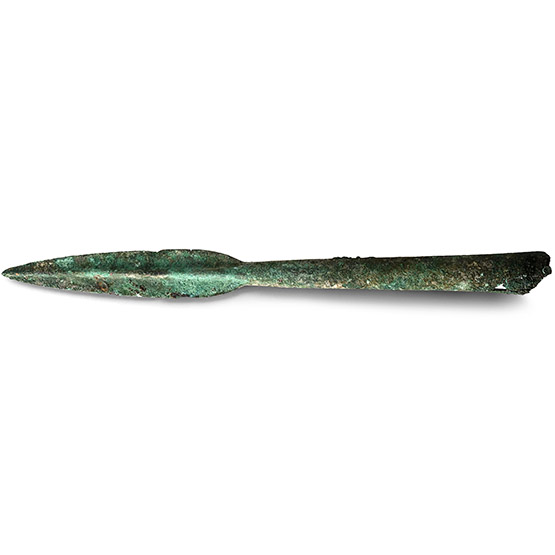
Western Asiatic Bronze Spearhead
9th-7th century B.C.Estimate: £120 - 170 (+bp*)
Opening Bid: £67
Comprising a leaf-shaped blade with a midrib and a long tapering socket; accompanied by a display stand, repaired. 365 grams total, spearhead: 36.5 cm (38.2 cm including stand)
Ex Abelita family collection, 1980s-2000s.
The spear, belonging to type 3 of the Khorasani classification, was used by chariot fighters to strike each other or the enemy infantry from above. Similar specimens with longer sockets were excavated by Negahban in the Amlash area. According to Moorey, sockets as long, if not longer than the blade, are a characteristic of Iranian spearheads in the late 2nd and early 1st millennium B.C. A similar spearhead from the Tappeh Sialk has been dated to the 9th-7th century B.C. -
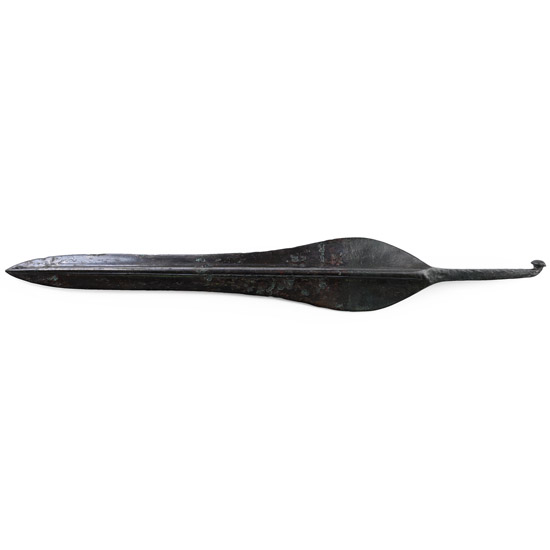
Luristan Bronze Spearhead
Early 2nd millennium B.C.Sold for (Inc. bp): £442
Foliate blade with a central rib and slender shoulders, short rectangular shaft and tang with a bent finial. 643 grams, 42.2 cm
Ex Abelita family collection, 1980s-2000s.
A number of similar blades, some considered to be spearheads and others to be daggers, all with a bent tang, derived from Tepe Hissar Culture III. Some of them, like our specimen, have a button terminal, and some others have a plain, pointed terminal. The general dating of these specimens is fixed to the early 2nd millennium B.C. -
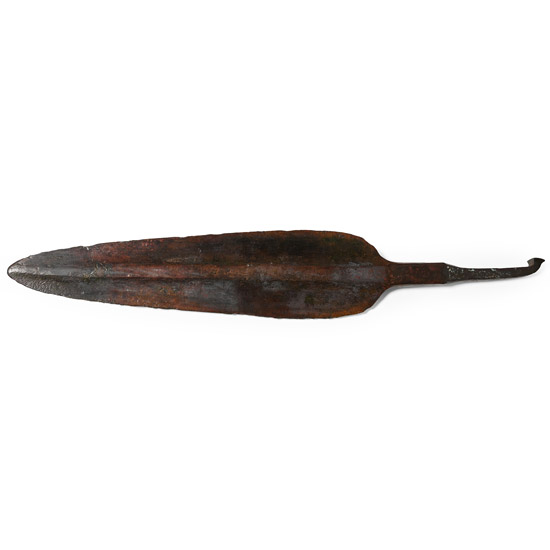
Western Asiatic Bronze Spear Blade
2nd-1st millennium B.C.Estimate: £200 - 300 (+bp*)
Opening Bid: £100
Comprising a triangular blade with a broad midrib, a short neck and a square-section tang with a bent finial. 309 grams, 32.6 cm
Ex Abelita family collection, 1980s-2000s.
