Loading, please wait...

Use mousewheel to zoom in and out, click to enlarge

Details

LOT 2149

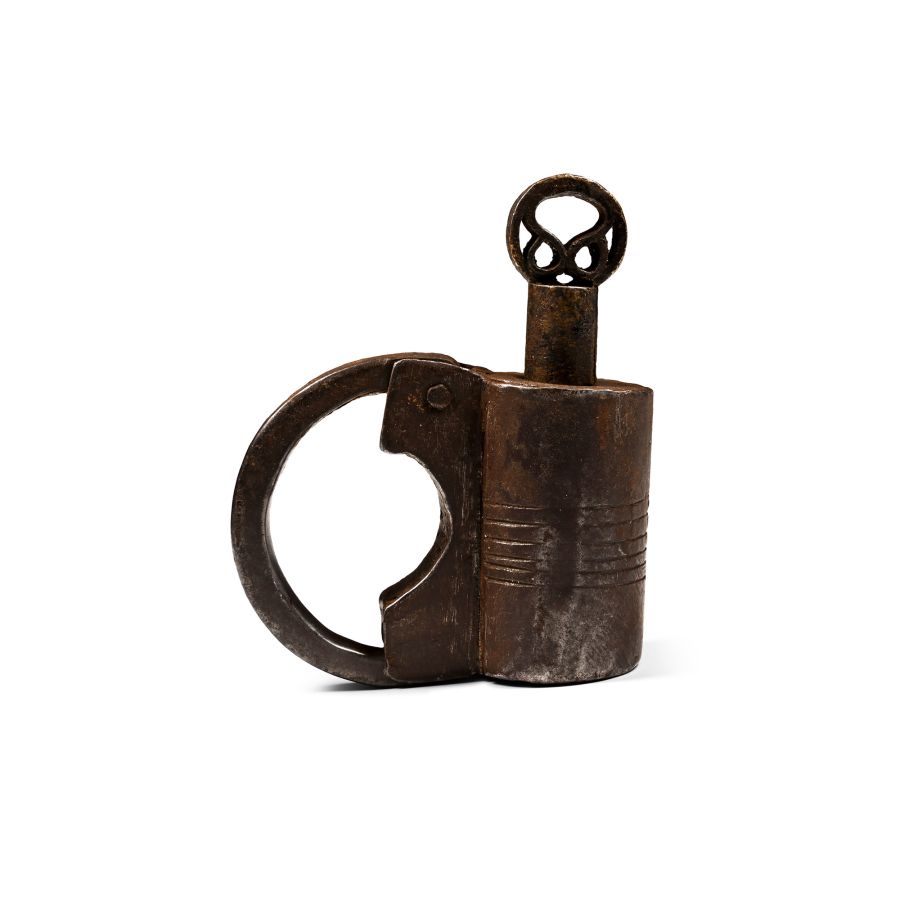
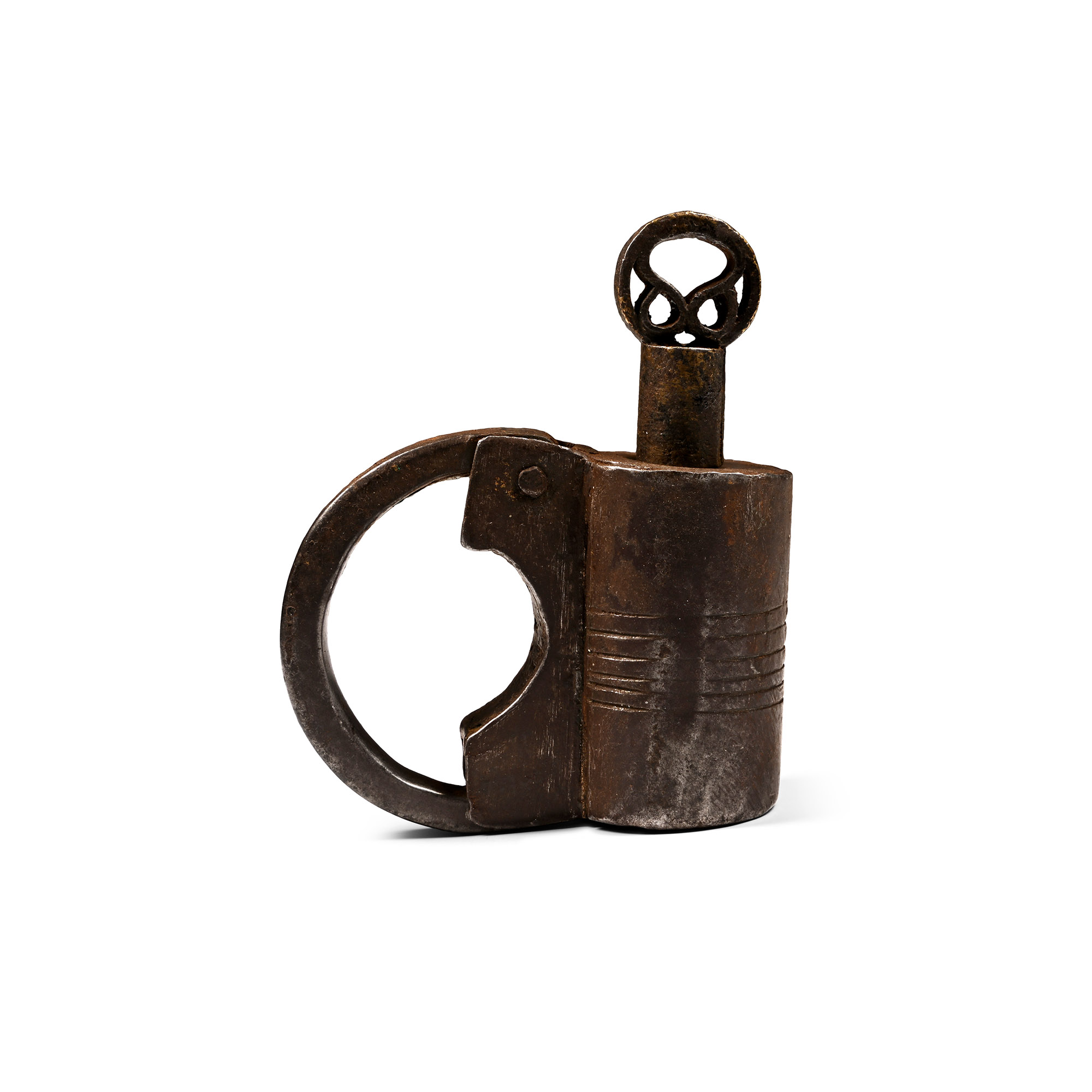
Post Medieval Iron Padlock with Key

19TH CENTURY A.D.

3 1/2 in. (213 grams, 90 mm).

Barrel-shaped with arching lock mechanism, key with openwork handle. [No Reserve]

Provenance

Acquired on the UK art market.
Property of a Nottinghamshire, UK, gentleman.
This lot is accompanied by an illustrated lot declaration signed by the Head of the Antiquities Department, Dr Raffaele D'Amato.

Published

Exhibited at the Harwich Museum, Harwich, Essex, UK, 26th May-15th September 2025; accompanied by a copy of a photograph of the artefacts on display.

CONDITION

VETTING:

TimeLine Auctions follows a vetting process to ensure the authenticity and legality of all items, reinforcing our commitment to integrity and responsible trading. Each antiquity, antique, and coin lot undergoes thorough examination by a vetting committee of at least ten external specialists, professional trade association members, scientists, and archaeologists: Our Vetting Process


AUCTIONS:

TimeLine is a leading auction house specialising in antiquities, ancient art, collectables, natural history, coins, medals, and books. Our auctions offer museums, collectors, historians, and enthusiasts the opportunity to acquire unique and historically significant pieces.

LOT 2149

Post Medieval Iron Padlock with Key

Sold for (Inc. bp): £59

Print page

RELATED LOTS

  • Western Asiatic Style Terracotta Figure Group
    Western Asiatic Style Terracotta Figure Group
    20th century A.D.

    Sold for (Inc. bp): £33

    Including nude male gripping his buttocks, female with tall spiked hairstyle and other types. 204 grams total, 6.3-15.3 cm


    Acquired 1980-2015. Ex Abelita family collection. This lot is accompanied by an illustrated lot declaration signed by the Head of the Antiquities Department, Dr Raffaele D’Amato. This lot is accompanied by an illustrated lot declaration signed by the Head of the Antiquities Department, Dr Raffaele D'Amato.

    Lot Details

  • Large Diptych of the Mother of God as Hodegetria
    Large Diptych of the Mother of God as Hodegetria
    Early 16th century A.D.

    Estimate: £8,000 - 10,000 (+bp*)

    Opening Bid: £4,000

    Tempera on two wooden panels executed on a green ground; the upper part of the left panel showing the nimbate Theotokos (Mother of God) with veiled head and mantle, pointing the infant Jesus supported by her left hand, wearing a red-gold maphorion mantle over a dark blue robe with gold cuffs; the infant facing away to left, dressed in blue tunic, wrapped in a red orange shawl, right hand extended towards his mother in a blessing gesture; beside Mary inscriptions in red Greek letters 'ΜΡ' and 'ΘΥ' (Μήτηρ (τοῦ) Θεοῦ = Mother of God), and beside the child the Greek letters 'ΙϹ ΧϹ' (ΙΗϹΟΥϹ ΧΡΙϹΤΟϹ = Jesus Christ); in the lower part of the panel, God emerging as a half-bust from the sky, blessing the three theologians, Saint Basil of Caesarea, Saint John Chrysostom and Saint Gregory the Theologian, all dressed in ecclesiastic high garments, their names written in Greek beside their heads; the upper part of the right panel showing Christ Pantokrator, Lord of the Universe, the right hand in blessing gesture, the left hand holding a Gospel decorated with precious stones, wearing a blue chlamys and red sticharion embroidered with a gold clavus; in the lower part Saints Onuphrius, Saint Nicholas of Myra and Antony the Great of the Desert, the first naked and covered only by a leaf, the second in bishopric garments and the third in monastic garments, their names written in Greek beside their heads; all the haloes are in gold, the ones of Christ marked by a red cross. 3.6 kg, 49 x 55.5 cm (opened)


    Acquired on the European art market. Private collection, London, UK. Accompanied by an academic report by Dr Raffaele D'Amato. This lot has been checked against the Interpol Database of stolen works of art and is accompanied by a search certificate number no.12794-240887. This lot has been cleared against the Art Loss Register database, and is accompanied by an illustrated lot declaration signed by the Head of the Antiquities Department, Dr Raffaele D'Amato.

    The diptych is a synthesis of Orthodox belief: from one point of view, it shows the human nature of God, born from the Virgin; from the other the divine nature of Jesus Christ as the supreme Lord of the Universe. The icon skilfully depicts the subjects, with Mary pointing towards the infant Jesus, the faces rendered with dramatically emphasised features and dark tones.

    Lot Details

  • Medieval Style Billy and Charley Lead Alloy Shadwell Type Shrine Forgery
    Medieval Style 'Billy and Charley' Lead Alloy Shadwell Type Shrine Forgery
    19th century A.D.

    Sold for (Inc. bp): £260

    Vesica-shaped diptych with standing nimbate Mary and child; openwork panel with mail-clad knight wearing a plumed helmet; believed to be by William Smith and Charles Eaton, 'dated' 1006 A.D. 241 grams total, 16 cm


    Received from the curator of Leeds Museum by descent, circa mid 1980s. Ex property of a Yorkshire lady. From the private collection of a Cheshire, UK, gentleman. This lot is accompanied by an illustrated lot declaration signed by the Head of the Antiquities Department, Dr Raffaele D'Amato.

    "Billy and Charlies", also known as the Shadwell forgeries, refer to a very extensive series of fake antiquities made in Victorian London by William Smith (Billy) and Charles Eaton (Charley). They were mudlarks who searched the Thames for items of value. William Edwards, a London antique dealer, made Billy's acquaintance around 1845, and he met Charley some years later. He paid them for items of interest that they found. Billy and Charley earned money from this until 1857, when they decided to counterfeit antiquities. They cast objects from lead or pewter, cutting dies into plaster of Paris moulds with nails and knives, and bathing the finished items in acid to simulate aging. Their commonest products were medallions, but others included daggers, statuettes, ampullae and even small shrines; as they were both illiterate the inscriptions on many of the objects are nonsense. They sold their forgeries to very prominent collectors of the time who thought they were genuine. Eventually, due to the large volume of objects that were appearing on the market, they were arrested and tried at court though they could not be found guilty of any crime at the time. They were released and carried on producing fakes but their style of manufacture had become well known and they eventually disappeared from history.

    Lot Details

Stay up-to-date with the latest from TimeLine Auctions by joining our mailing list