
Loading, please wait...
LOT 1961
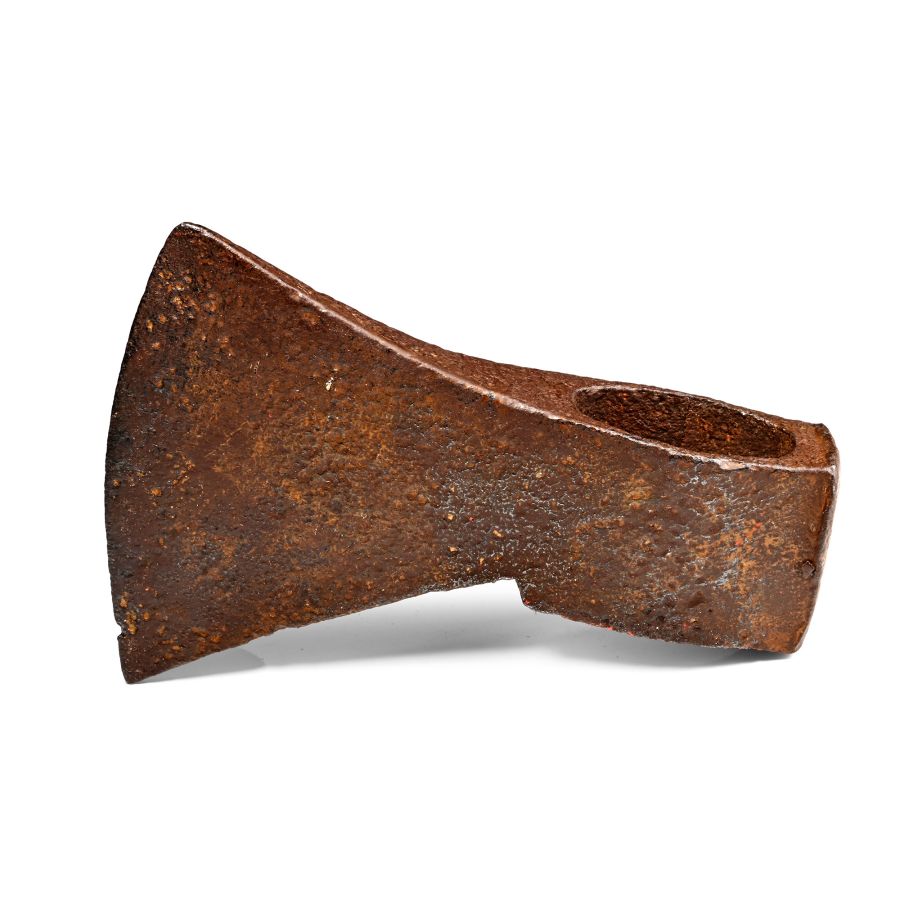
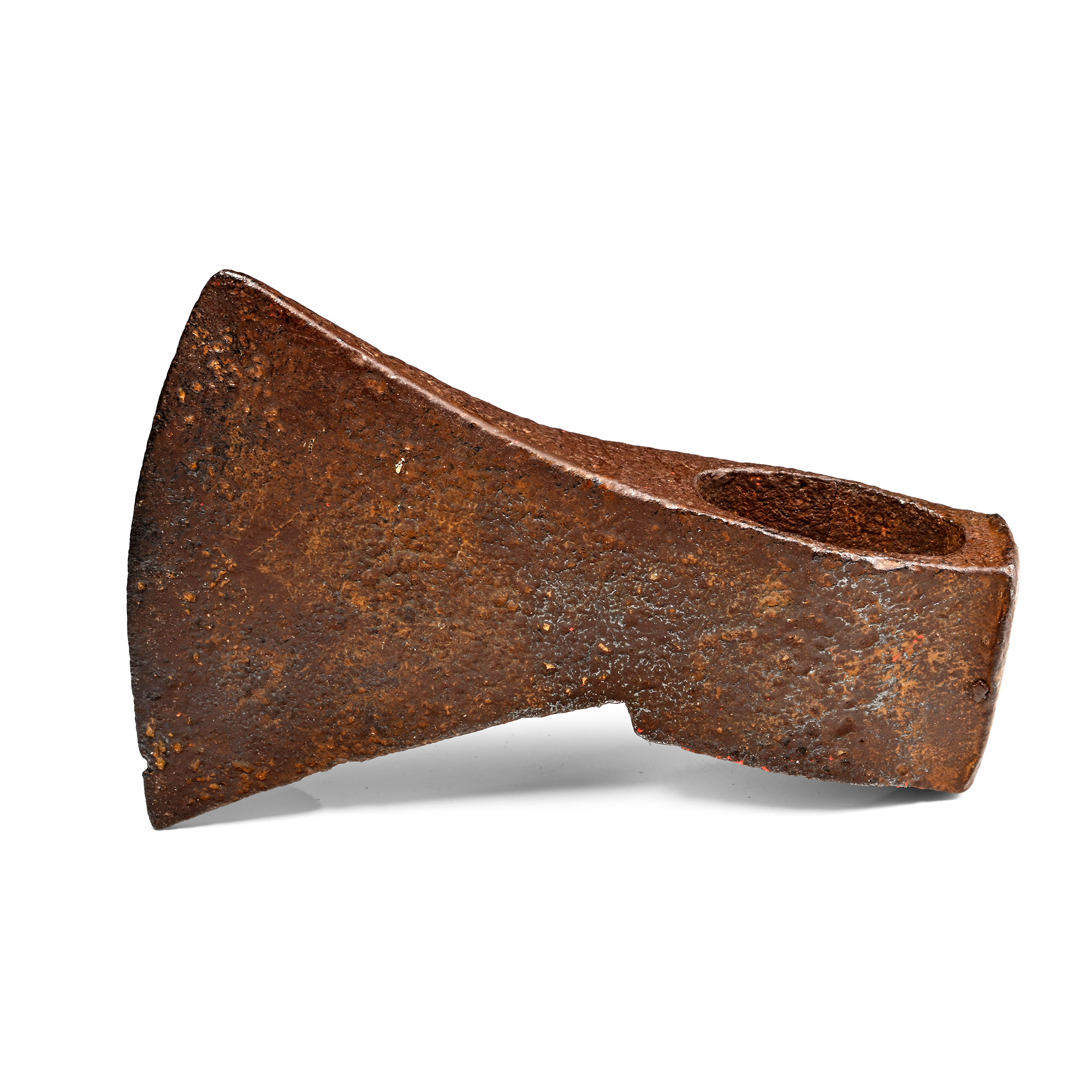
Post Medieval Iron Axehead
17TH-18TH CENTURY A.D.
6 1/8 in. (839 grams, 15.6 cm).
With a wide, curving blade and an oval socket. [No Reserve]
ProvenanceProperty of a Nottinghamshire, UK, gentleman.
CONDITIONTimeLine Auctions follows a vetting process to ensure the authenticity and legality of all items, reinforcing our commitment to integrity and responsible trading. Each antiquity, antique, and coin lot undergoes thorough examination by a vetting committee of at least ten external specialists, professional trade association members, scientists, and archaeologists: Our Vetting Process
AUCTIONS:
TimeLine is a leading auction house specialising in antiquities, ancient art, collectables, natural history, coins, medals, and books. Our auctions offer museums, collectors, historians, and enthusiasts the opportunity to acquire unique and historically significant pieces.
-
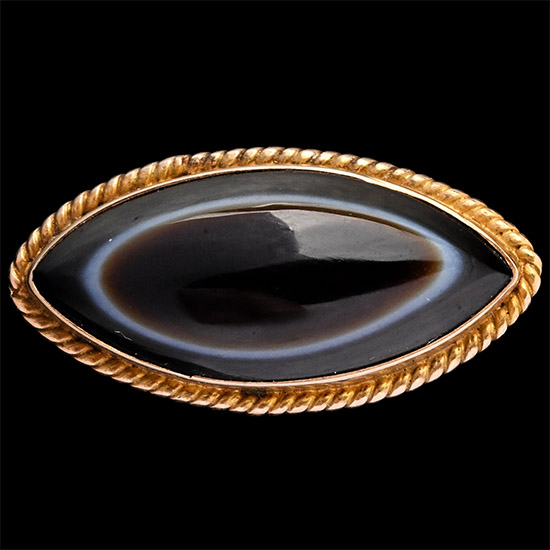
Archaelogical Revival Apotropaic 'Eye' Ring
Europe, 19th century A.D.Estimate: £600 - 800 (+bp*)
Opening Bid: £300
The ring with a U-shaped hoop and lentoid bezel with ropetwist border, set with a polished banded agate resembling the all-seeing eye. 3.57 grams, 24.17 mm overall, 19.26 x 17.26 mm internal diameter (approximate size British P 1/2, USA 7 3/4, Europe 16.86, Japan 16)
Acquired on the European art market.
Eye beads, often crafted with concentric circle motifs resembling an eye, served as powerful amulets thought to offer protection against the evil eye and malevolent forces. -
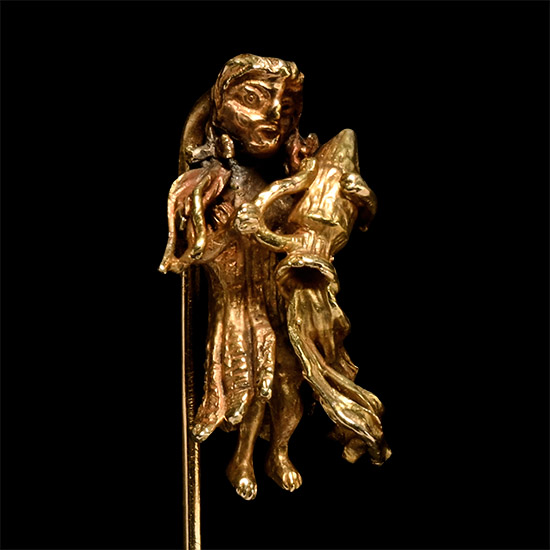
Post Medieval Gold Tie Pin of Aquarius
19th century A.D.Sold for (Inc. bp): £338
Modelled in the round female figure holding an inverted amphora with liquid flowing forth; mounted on a sturdy gold pin. 2.97 grams, 45 mm
Private collection, Europe. Acquired on the English art market. -
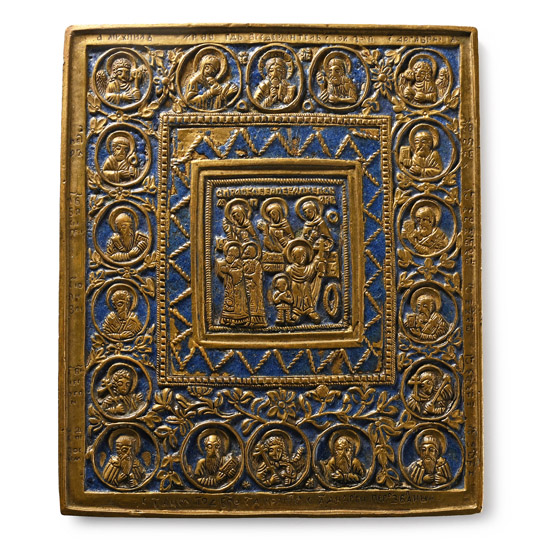
Russian Orthodox Enamelled Bronze Travel Icon with Saint Julitta, Cyricus and Deesis
19th century A.D.Sold for (Inc. bp): £234
With blue enamel and framed by a raised border; Saint Julitta and her son, Cyricus, Saint Gregory the Theologian and Saint John the Chrysostom standing beside them at the centre; three half-length figures above: St. Paraskeva (right), Eudokia, and Barbara (left); OCS inscriptions identifying the saints framing the scene; on the top a deesis, with Christ Pantokrator at the centre, flanked by Saint Mary and Saint John the Precursor; at the top left corner Archangel Michael, on the top right corner the Archangel Gabriel; beneath Saint Gabriel, in vertical order, Saint Paul, Saint Gregory the Theologian, Saint Nicholas of Myra, Saint Demetrios; beneath Saint Michael, in vertical order, Saint Peter, Saint Basil the Great, Saint John Chrysostomos and Saint George; in the last row, nearby Saint Andrew, at the centre, the Archangel Raphael, with sword and cross. 360 grams, 14 cm
Acquired from Chris Martin-Zakheim, Iconastas, 5 Piccadilly Arcade, London SW1. From the private collection of a West London, UK, gentleman, formed since the early 2000s.
This icon was intended for private devotion, often carried by pilgrims and Orthodox believers for spiritual protection. St. Julyttas and her son Cyricus (Ки́рик и Иули́тта), among the most venerated figures in Russian tradition, are depicted in the centre, surrounded by other saints, a symbol of the communion of the righteous in front of the Divine Deesis.
