
Loading, please wait...
LOT 1919
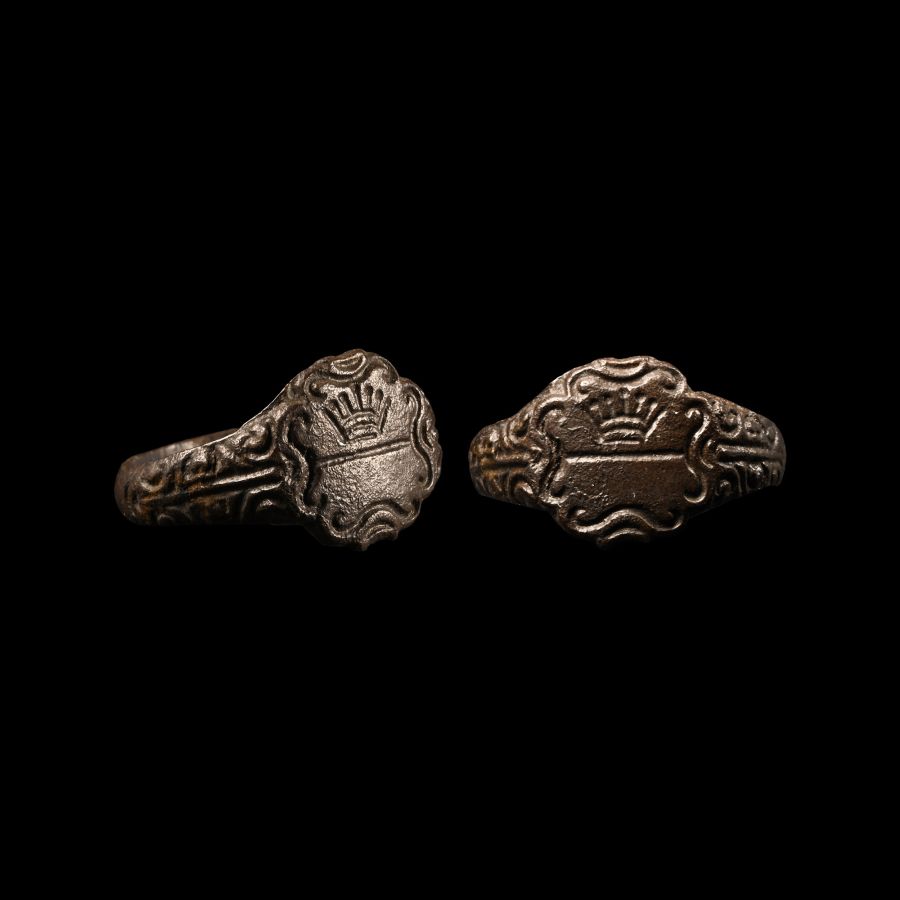
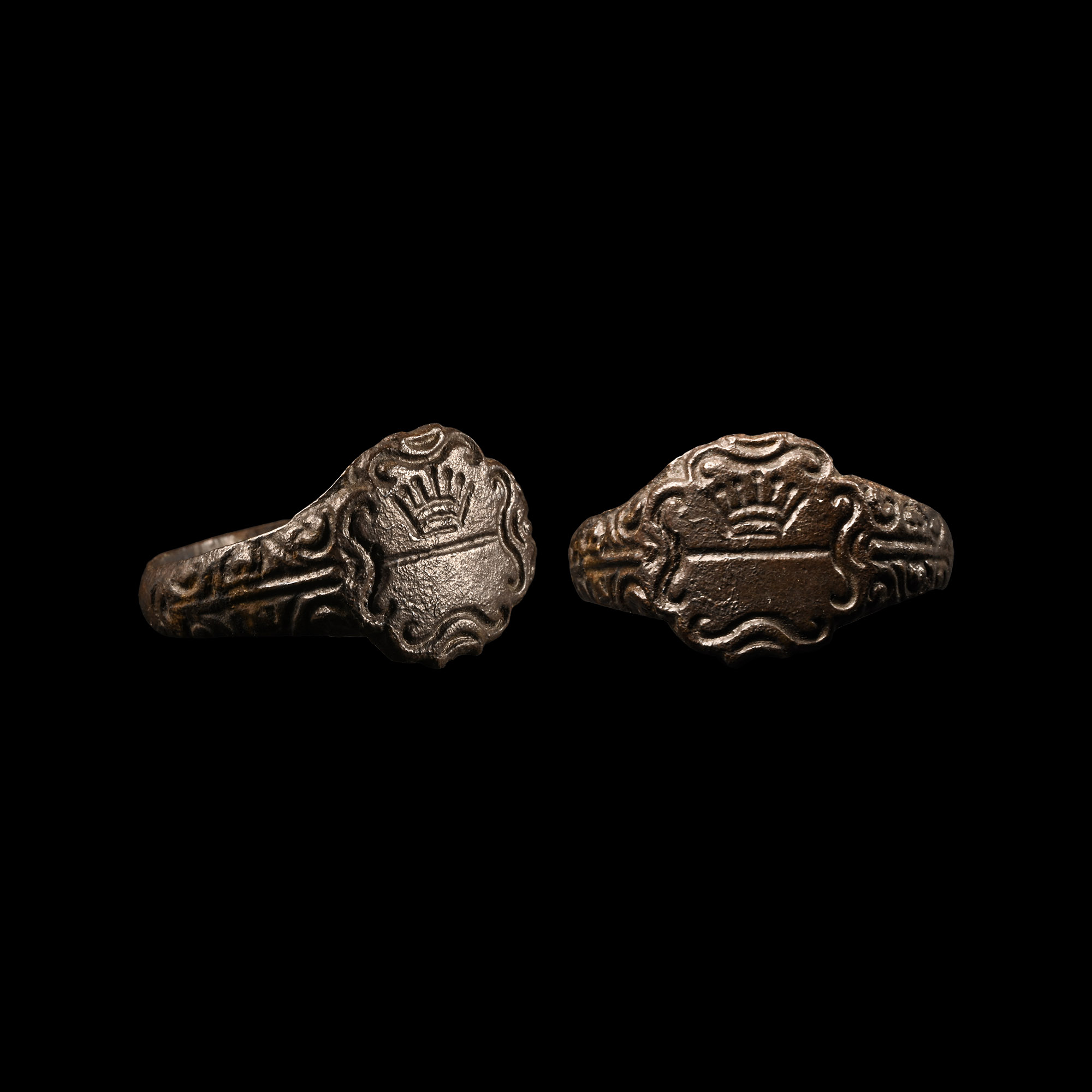
Post Medieval Inscribed Bronze Ring with Crown
17TH-18TH CENTURY A.D.
1 in. (4.16 grams, 23.80 mm overall, 21.03 mm internal diameter (approximate size British W 1/2, USA 11 1/2, Europe 25.66, Japan 24)).
Composed of a convex hoop with expanded shoulders with scrolling ornament, sub-circular bezel displaying polygonal shield divided horizontally, the top half occupied by a crown, the bottom blank. [No Reserve]
ProvenancePrivate collection formed since the 1940s.
UK art market.
Property of an Essex gentleman.
TimeLine Auctions follows a vetting process to ensure the authenticity and legality of all items, reinforcing our commitment to integrity and responsible trading. Each antiquity, antique, and coin lot undergoes thorough examination by a vetting committee of at least ten external specialists, professional trade association members, scientists, and archaeologists: Our Vetting Process
AUCTIONS:
TimeLine is a leading auction house specialising in antiquities, ancient art, collectables, natural history, coins, medals, and books. Our auctions offer museums, collectors, historians, and enthusiasts the opportunity to acquire unique and historically significant pieces.
-
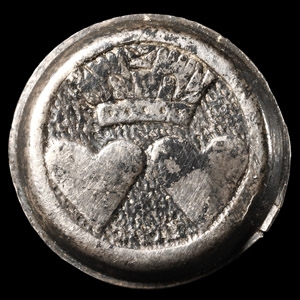
Stuart Period Silver Crowned Double Heart Cufflink
17th century A.D.Sold for (Inc. bp): £20
A button link with crowned hearts on a textured field. 0.96 grams, 15 mm
Acquired on the UK art market. Property of a Somerset collector, UK, since at least the early 2000s.
Cufflinks and other dress fittings such as buttons featuring crowned hearts design were originally conceived to commemorate the marriage of king Charles II of England to Catherine of Braganza in 1662, although the design continued as a general symbol of love and/or marriage. -
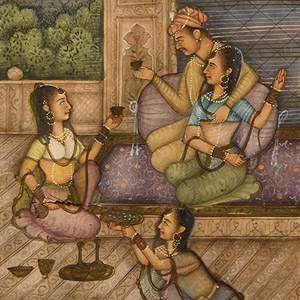
Framed Watercolour Painting
India, 20th century A.D.Estimate: £80 - 100 (+bp*)
Opening Bid: £40
Showing a convivial courtyard scene composed of a man and three women sharing drink and food, flowering plants in the foreground, moonlit treescape beyond; mounted in a reveal and a glazed wooden frame. 683 grams, 34.6 x 25 cm
Fine condition.
Acquired on the UK art market, 1980s-1990s. The Woodbridge collection of Indo-Persian art. -
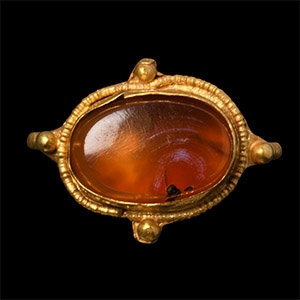
Gold Ring with Carnelian Gemstone
20th century A.D. or earlierSold for (Inc. bp): £338
Composed of a slender, decoratively notched round-section hoop, oval bezel adorned with granules and set with a polished carnelian gemstone. 5.77 grams, 25.68 mm overall, 21.64 mm internal diameter (approximate size British P, USA 7 1/2, Europe 16.23, Japan 15)
From the collection of a North American gentleman, formed in the 1990s.
