
Loading, please wait...
LOT 2112
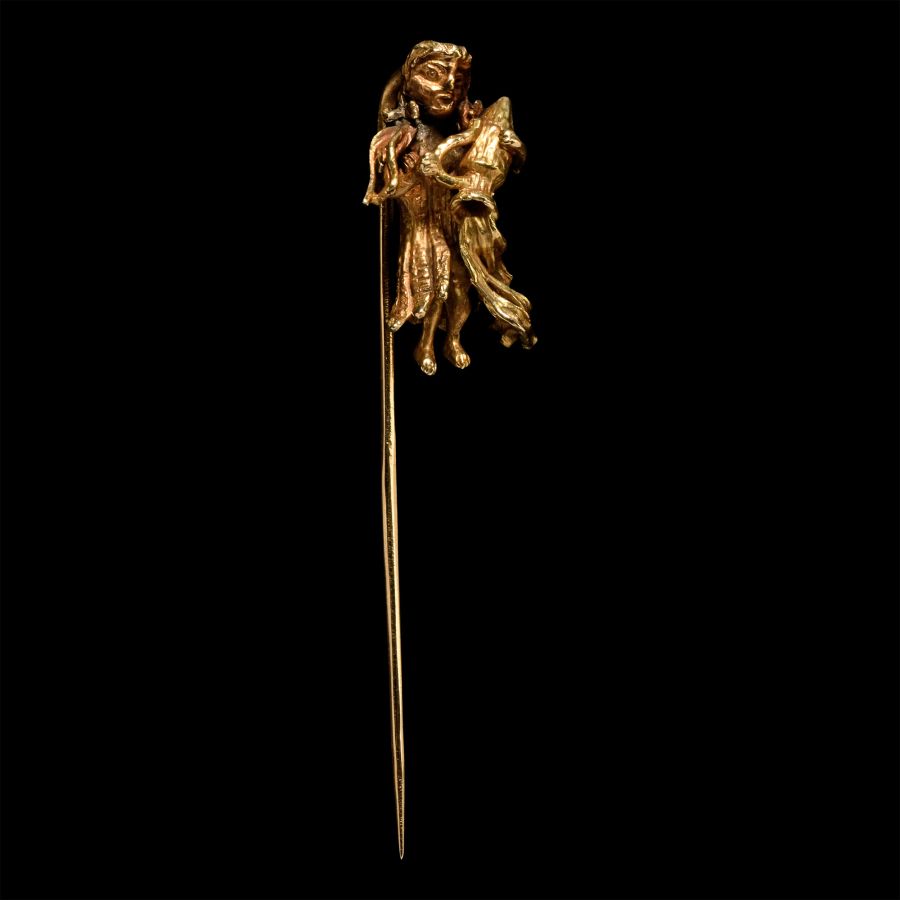
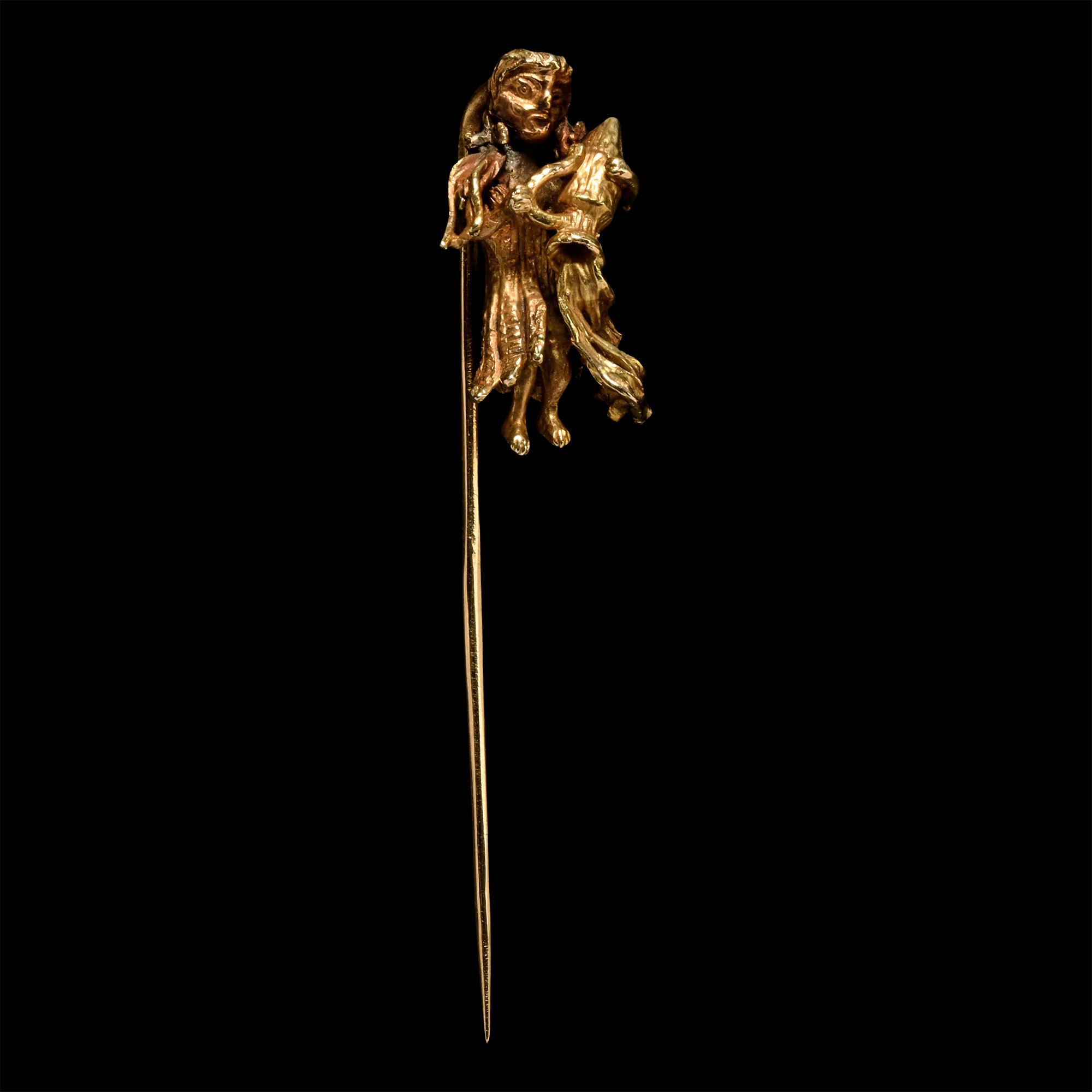
Post Medieval Gold Tie Pin of Aquarius
19TH CENTURY A.D.
1 3/4 in. (2.97 grams, 45 mm).
Modelled in the round female figure holding an inverted amphora with liquid flowing forth; mounted on a sturdy gold pin.
ProvenancePrivate collection, Europe.
Acquired on the English art market.
TimeLine Auctions follows a vetting process to ensure the authenticity and legality of all items, reinforcing our commitment to integrity and responsible trading. Each antiquity, antique, and coin lot undergoes thorough examination by a vetting committee of at least ten external specialists, professional trade association members, scientists, and archaeologists: Our Vetting Process
AUCTIONS:
TimeLine is a leading auction house specialising in antiquities, ancient art, collectables, natural history, coins, medals, and books. Our auctions offer museums, collectors, historians, and enthusiasts the opportunity to acquire unique and historically significant pieces.
-
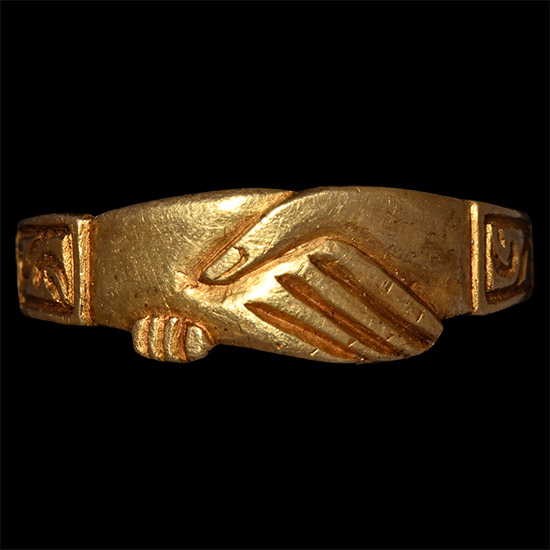
Post Medieval Gold Fede Ring
17th-18th century A.D.Sold for (Inc. bp): £1,170
Comprising a wide hoop, the shoulders with rectangular panels embellished with scrolling motifs framed by delicate wirework borders, the bezel formed as a pair of clasped hands, finely modelled in low relief, symbolising trust, fidelity, and contractual union, the hands articulated with tapering fingers and subtly defined cuffs. 4.08 grams, 21.08 mm overall, 18.89 mm internal diameter (approximate size British R, USA 8 1/2, Europe 18 3/4, Japan 18)
Acquired on the European art market.
The fede motif derives from the medieval formula mani in fede ('hands in trust'), a visual expression of loyalty and binding agreement. Rings of this type circulated widely from the late medieval period onward, gaining particular prominence in the seventeenth and eighteenth centuries as betrothal jewels embodying steadfast commitment. The present example, with its restrained decorative scheme and high gold purity, reflects the enduring appeal of intimate, symbolically charged jewels rooted in long-standing marital and devotional customs. -
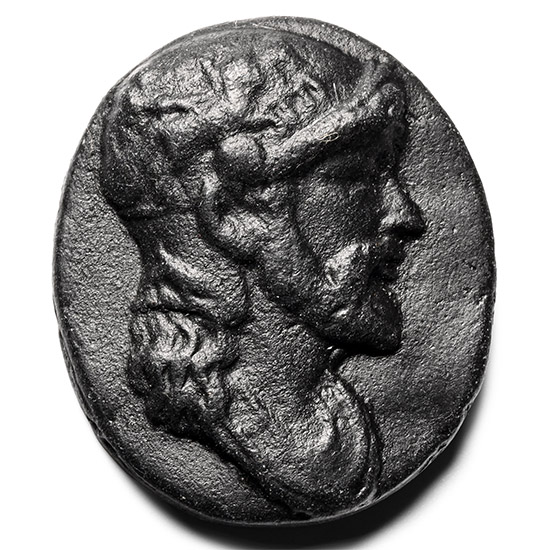
Post Medieval Black Glass Cameo of a Bearded Man
20th century A.D.Sold for (Inc. bp): £65
Oval cameo with a profile bust of a bearded man wearing a helmet with a leaping lion. 4.15 grams, 29 mm
Acquired on the European art market. -
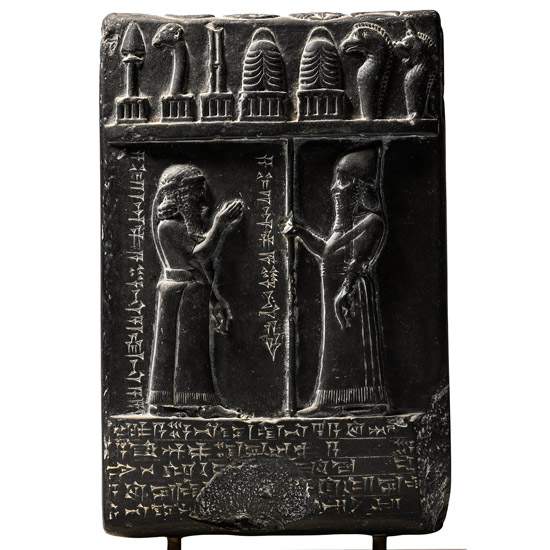
Museum Quality Replica the Babylonian Tablet of King Nabu- apla-iddina, Also Known as the Sun God Tablet in the British Museum
21st century A.D.Sold for (Inc. bp): £143
Resin casting of the tablet with ornament; obverse: frieze with two opposed standing figures below a pediment with mythological creatures, cuneiform text below and in the scene; reverse: dense panel of cuneiform text; cosmological symbols to upper edge; mounted on a custom-made stand. 1.15 kg total, 21 cm including stand
From the collection of David Donlan (1947-2025), a dedicated and lifelong collector with a passion for the ancient world and the natural sciences, forming his collection from 1960s onwards, using many reputable dealers across the United Kingdom, including the well-regarded Coincraft and The Parthenon Gallery.
