Loading, please wait...

Use mousewheel to zoom in and out, click to enlarge

Details

LOT 2072

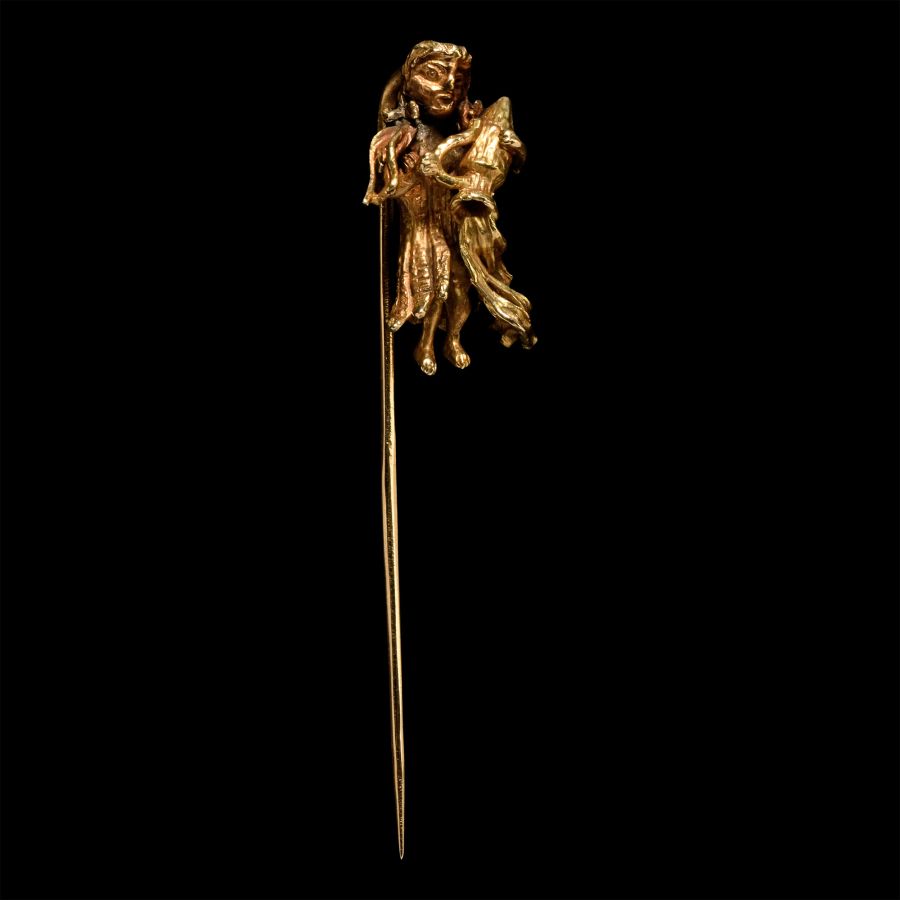
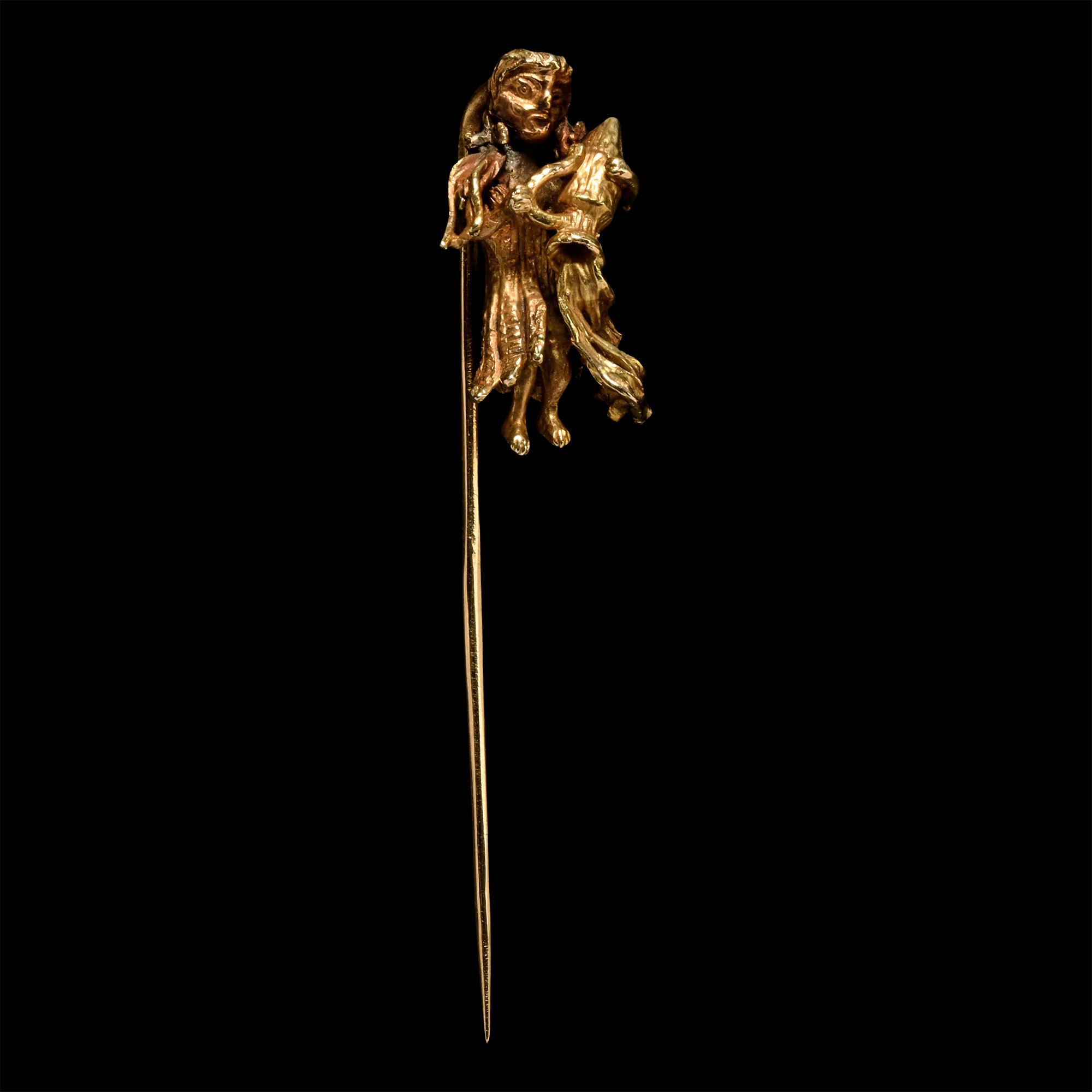
Post Medieval Gold Tie Pin of Aquarius

19TH CENTURY A.D.

1 3/4 in. (2.97 grams, 45 mm).

Modelled in the round female figure holding an inverted amphora with liquid flowing forth; mounted on a sturdy gold pin.

Provenance

Private collection, Europe.
Acquired on the English art market.

CONDITION

VETTING:

TimeLine Auctions follows a vetting process to ensure the authenticity and legality of all items, reinforcing our commitment to integrity and responsible trading. Each antiquity, antique, and coin lot undergoes thorough examination by a vetting committee of at least ten external specialists, professional trade association members, scientists, and archaeologists: Our Vetting Process


AUCTIONS:

TimeLine is a leading auction house specialising in antiquities, ancient art, collectables, natural history, coins, medals, and books. Our auctions offer museums, collectors, historians, and enthusiasts the opportunity to acquire unique and historically significant pieces.

LOT 2072

Post Medieval Gold Tie Pin of Aquarius

Estimate £300 - 400€350 - 460 (for guidance only)$410 - 540 (for guidance only)

Print page

RELATED LOTS

  • Renaissance Carnelian Intaglio of the Roman Emperor Nero in Gold Ring
    Renaissance Carnelian Intaglio of the Roman Emperor Nero in Gold Ring
    Italy, 16th-17th century A.D.

    Sold for (Inc. bp): £1,755

    With narrow shank and fleur-de-lys to each shoulder supporting an ellipsoid cell with inset carnelian intaglio profile bust of Nero with solar crown; supplied with a museum-quality impression. 3.64 grams, 22.23 mm overall, 20.44 mm internal diameter (approximate size British P, USA 7 1/2, Europe 16.23, Japan 15)


    Private collection, Europe. Acquired on the English art market.

    Nero, who reigned as Roman Emperor from 54 to 68 AD, is one of history’s most infamous rulers, known for his extravagant lifestyle, ruthless rule, and controversial actions. Born as Lucius Domitius Ahenobarbus, he was adopted by his great-uncle, Emperor Claudius, and ascended the throne at the age of 16, initially under the guidance of his mother, Agrippina the Younger, his tutor Seneca, and the Praetorian Prefect Burrus. Early in his reign, Nero promoted arts and cultural projects and enjoyed popularity, but as he gained autonomy, he became increasingly tyrannical. He allegedly ordered the deaths of his mother, wife, and other prominent figures. Nero is often (though likely inaccurately) associated with the Great Fire of Rome in 64 AD, after which he blamed and persecuted Christians, marking one of the earliest recorded persecutions of the group. His reign ended in turmoil and revolt, leading to his suicide in 68 AD, which marked the end of the Julio-Claudian dynasty. His legacy remains controversial, remembered as both a patron of the arts and an archetype of a decadent, cruel autocrat.

    Lot Details

  • Group of Seals and Scaraboids
    Group of Seals and Scaraboids
    20th century A.D.

    Estimate: £100 - 140 (+bp*)

    Opening Bid: £50

    Including scarab with figural scene and legend to underside, plano-convex type with wreath, perching bird and legend, and other types; after the antique. 78 grams total, 15-33 mm


    From the late S M collection, London, UK, 1969-1999.

    Lot Details

  • Large Post-Classical Glass Paste Cameo of a Female Figure with Eagle
    Large Post-Classical Glass Paste Cameo of a Female Figure with Eagle
    20th century A.D.

    Estimate: £2,000 - 3,000 (+bp*)

    Opening Bid: £1,000

    A cameo scene comprising a standing female figure with hair tied in a chignon, approaching a perching eagle with wings spread and clutching a sphere in one claw; the woman drawing the bird's beak close to her forehead; the eagle with claws extended leaning on a branch; exergue below. 118 grams, 87 mm


    Private collection, England. This lot has been checked against the Interpol Database of stolen works of art and is accompanied by search certificate number no.13172-249567.

    The eagle is probably a metamorphosed personification of Jupiter, and the globe is a symbol of domain and military power. The scene is an interesting allegorical composition with possible references to the metamorphosis and Jupiter's love affairs, considering the presence of the naked female figure. The peculiar superimposition of the limbs is inspired by ancient models. The scene is engraved on the white layer of the glass paste, characterised by a dark violet second layer (seen with a powerful light from the back). On the back, traces of the glass dough melting. The evident presence of clear engraving marks and the cut glass bubbles confirms the fact that this work is an intaglio (not a cast). A work with a personality, showing undercuts.

    Lot Details

Stay up-to-date with the latest from TimeLine Auctions by joining our mailing list