
Loading, please wait...
LOT 1506
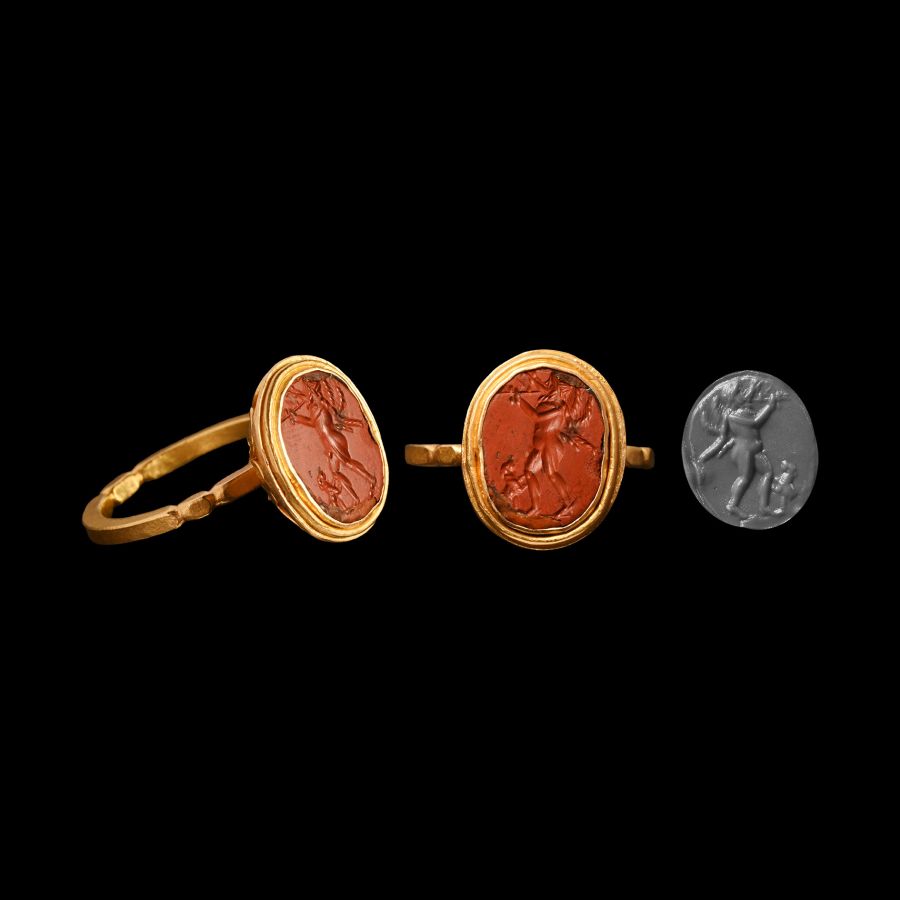
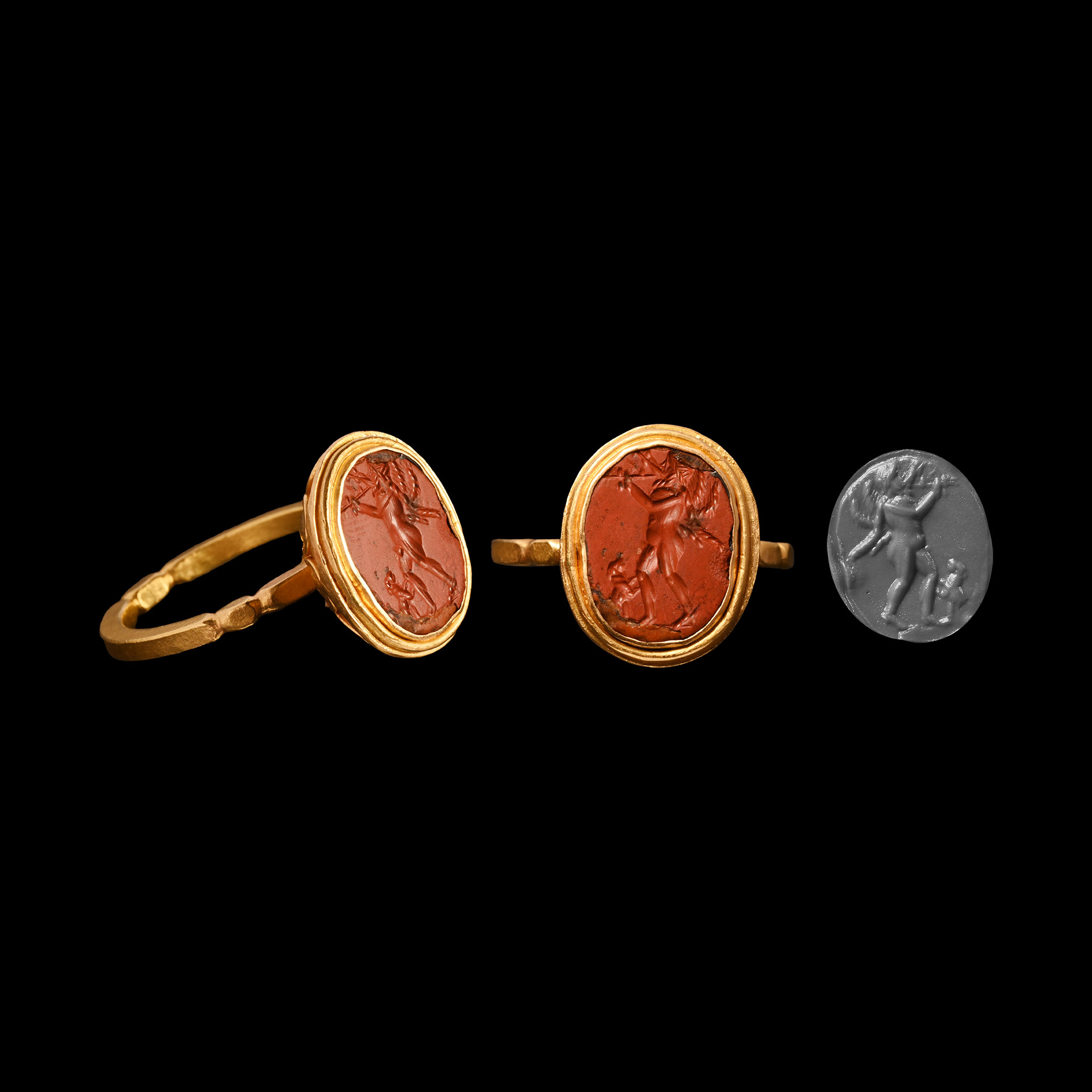
Post Medieval Gold Ring with Jester Gemstone
20TH CENTURY A.D. OR EARLIER
1 1/8 in. (8.27 grams, 30.52 mm overall, 18.80 mm internal diameter (approximate size British Q 1/2, USA 8 1/4, Europe 18.12, Japan 17)).
A gold finger ring with segmented hoop, cupped bezel with rosette to the underside, inset jasper cloison with intaglio advancing balatro jester playing pan-pipes while a dog jumps at his lower legs.
ProvenanceEnglish private collection.
CONDITIONTimeLine Auctions follows a vetting process to ensure the authenticity and legality of all items, reinforcing our commitment to integrity and responsible trading. Each antiquity, antique, and coin lot undergoes thorough examination by a vetting committee of at least ten external specialists, professional trade association members, scientists, and archaeologists: Our Vetting Process
AUCTIONS:
TimeLine is a leading auction house specialising in antiquities, ancient art, collectables, natural history, coins, medals, and books. Our auctions offer museums, collectors, historians, and enthusiasts the opportunity to acquire unique and historically significant pieces.
-
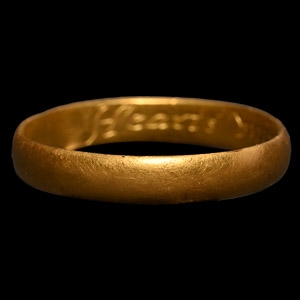
Post Medieval Gold 'Hearts United Lives Contented' Posy Ring
Circa 18th century A.D.Sold for (Inc. bp): £715
A large gold posy ring with D-section hoop, inscribed internally with 'Hearts vnited lives contented' lower case inscription with 'GM' maker's mark punch, possibly for the London goldsmith George Morris, recorded from a dated piece as working 1749-1750. 4.32 grams, 22.46 mm overall, 20.12 mm internal diameter (approximate size British T 1/2, USA 9 3/4, Europe 21.89, Japan 21)
Acquired on the UK antiques market between 1974-1985. Albert Ward collection, Essex, UK. -
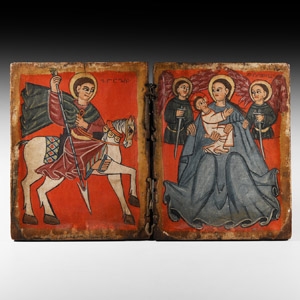
Ethiopian Icon with St George and Virgin
16th-17th century A.D.Sold for (Inc. bp): £1,235
A portable wooden diptych icon depicting Bet Giyorgis on horseback on the left, dressed in red mauve riding coat, green cloak and carrying a shaft with iron head; on the right the Nativity scene with Virgin and the Child escorted by the angels. 562 grams, 20 x 15.5 cm
Acquired on the London art market, 2006. UK private collection.
The presence of angels dressed in western garments, the uncovered head of the Virgin and the swords of the angels, could suggest that the diptych is strongly influenced by Italian Renaissance painters. However, the chopping tool used here is particularly Ethiopian, as is the depiction of the Virgin and Child, lacking the care visible in Ethiopian works copied from Italian paintings. Ethiopian paintings influenced by European art can be split into two groups according to Stanislaw Chojnacki: paintings that directly relate to an identified painting, and paintings which borrow themes and details from Western art. In both, however, the Western forms have been simplified to the Ethiopian mode of expression. The horse harness can suggest dating to 16th-17th century A.D. -
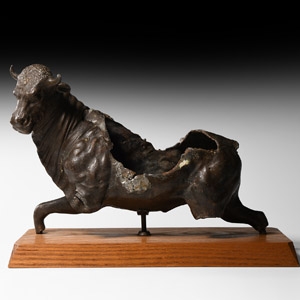
Bronze Fragmentary Bull
20th century A.D.Estimate: £700 - 900 (+bp*)
Opening Bid: £375
A dynamically poised bull, naturalistically modelled looking downwards and slightly to the left, with short curls to the top of the head; mounted on a custom-made display stand. 2.4 kg total, 30 cm wide including stand
From an important Paris gallery, France. with Adjug Auctions, Paris, France, 2 February 2020, lot 518.
