
Loading, please wait...
LOT 1431
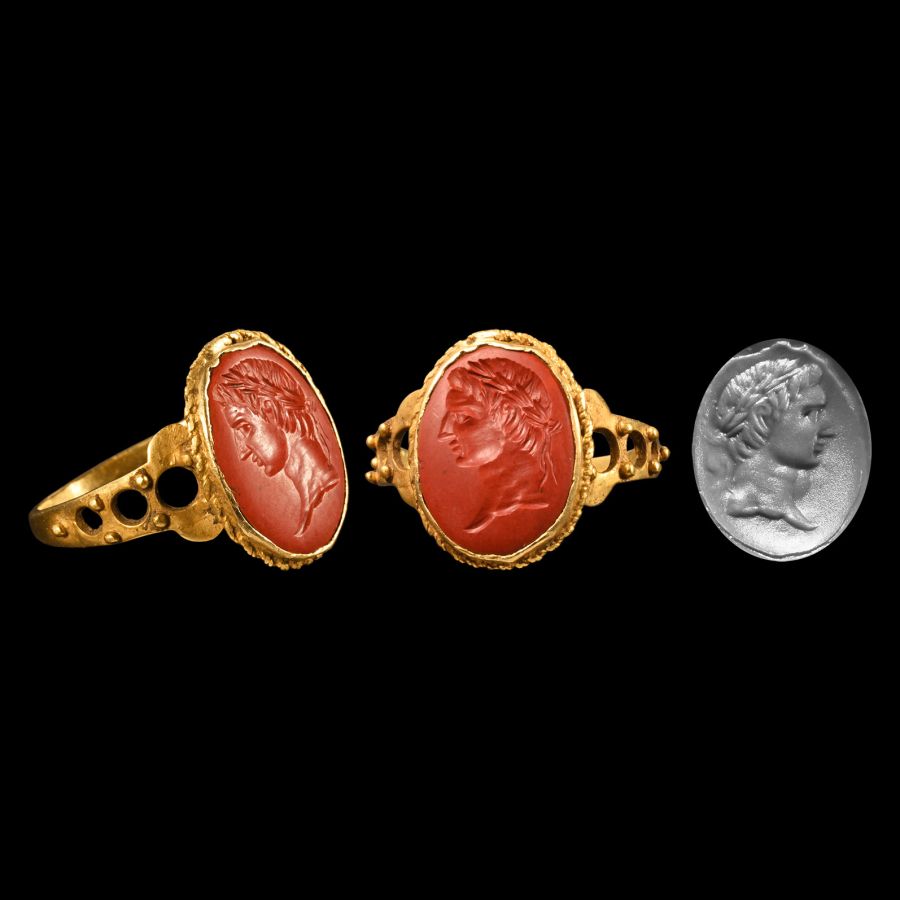
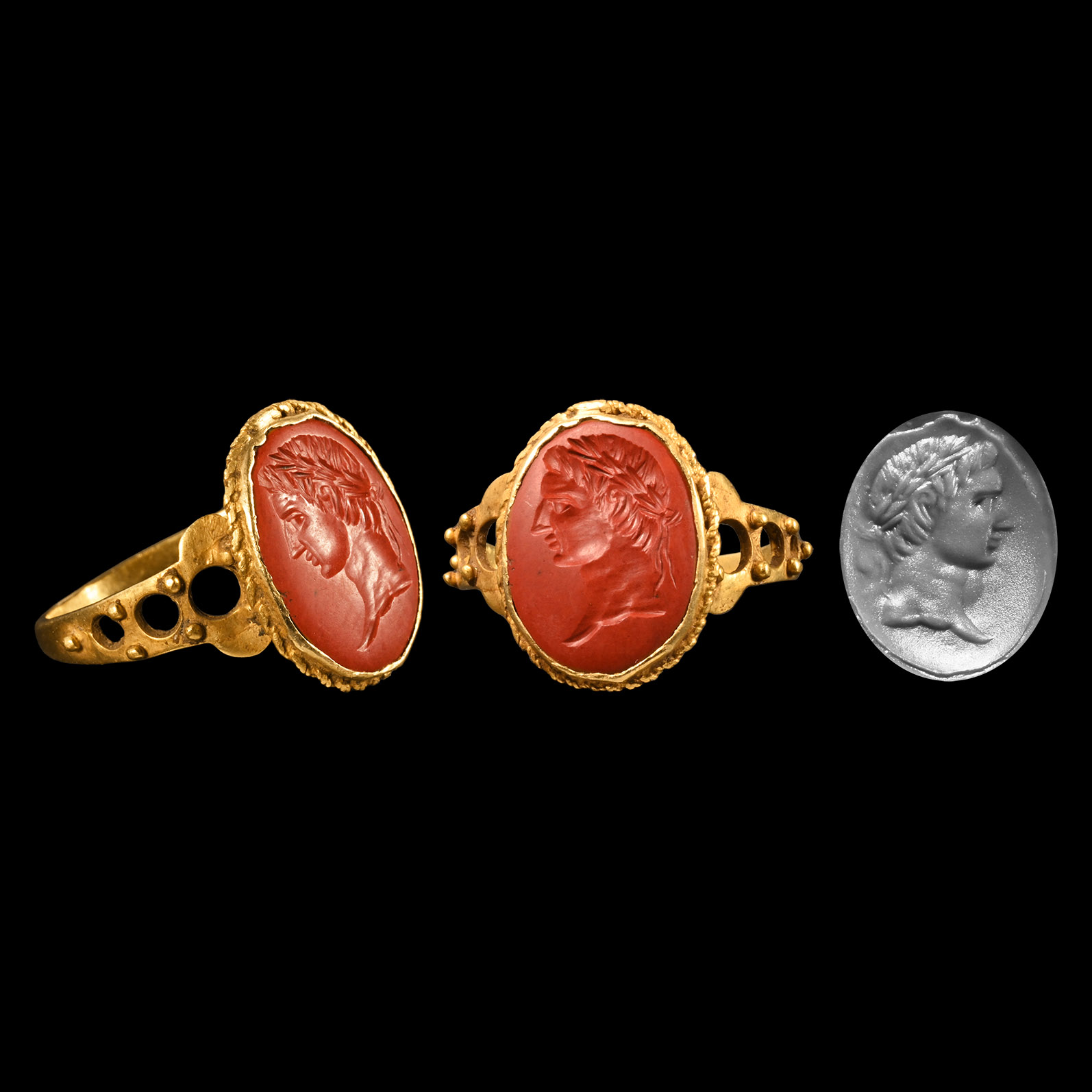
Post Medieval Gold Ring with Gemstone
19TH-20TH CENTURY A.D. OR EARLIER
1 in. (5.02 grams, 25.02 mm overall, 20.60 mm internal diameter (approximate size British V, USA 10 1/2, Europe 23.77, Japan 22)).
A gold finger ring with openwork and granulation to the shoulders, ellipsoid bezel with inset jasper cloison, intaglio profile male bust wearing a wreath.
ProvenanceEx private Swiss collection.
English private collection.
TimeLine Auctions follows a vetting process to ensure the authenticity and legality of all items, reinforcing our commitment to integrity and responsible trading. Each antiquity, antique, and coin lot undergoes thorough examination by a vetting committee of at least ten external specialists, professional trade association members, scientists, and archaeologists: Our Vetting Process
AUCTIONS:
TimeLine is a leading auction house specialising in antiquities, ancient art, collectables, natural history, coins, medals, and books. Our auctions offer museums, collectors, historians, and enthusiasts the opportunity to acquire unique and historically significant pieces.
-
Amethyst Bead Necklace
20th century A.D.Sold for (Inc. bp): £59
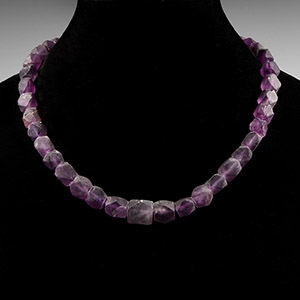
A necklace composed of graduated amethyst beads of facetted type. 99 grams, 42 cm long
Acquired 1980-2015. Ex Abelita family collection. -
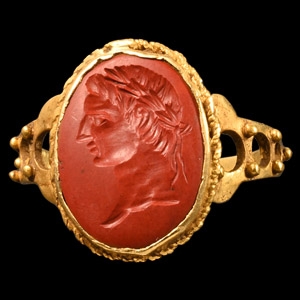
Post Medieval Gold Ring with Gemstone
19th-20th century A.D. or earlierSold for (Inc. bp): £1,170
A gold finger ring with openwork and granulation to the shoulders, ellipsoid bezel with inset jasper cloison, intaglio profile male bust wearing a wreath. 5.02 grams, 25.02 mm overall, 20.60 mm internal diameter (approximate size British V, USA 10 1/2, Europe 23.77, Japan 22)
Ex private Swiss collection. English private collection. -
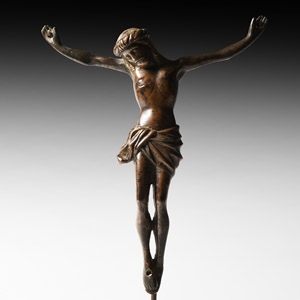
Tudor Period Bronze Corpus Christi
15th-17th century A.D.Estimate: £3,000 - 4,000 (+bp*)
Opening Bid: £1,500
A parcel-gilt bronze Corpus Christi with braided crown of thorns and draped loincloth; pierced at the extended hands and crossed feet; hollow to the reverse; mounted on a custom-made stand. 738 grams total, 23.2 cm high including stand
English private collection. This lot has been checked against the Interpol Database of stolen works of art and is accompanied by search certificate number no.11678-199807.
