
Loading, please wait...

LOT 0354
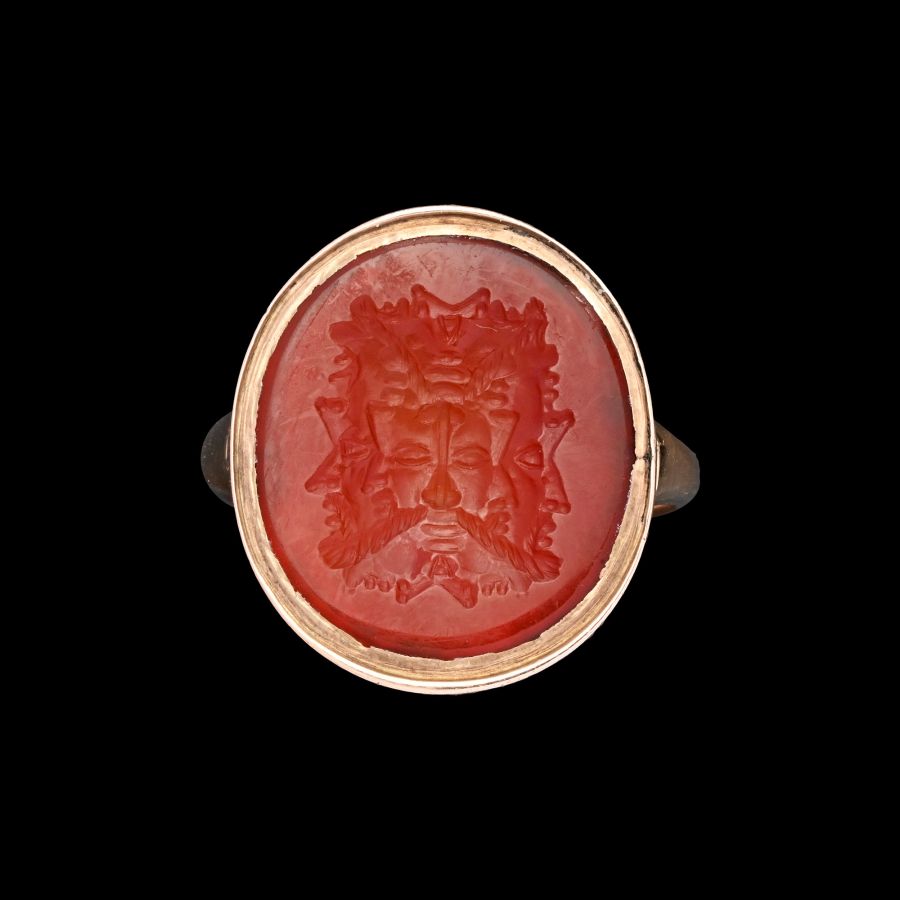
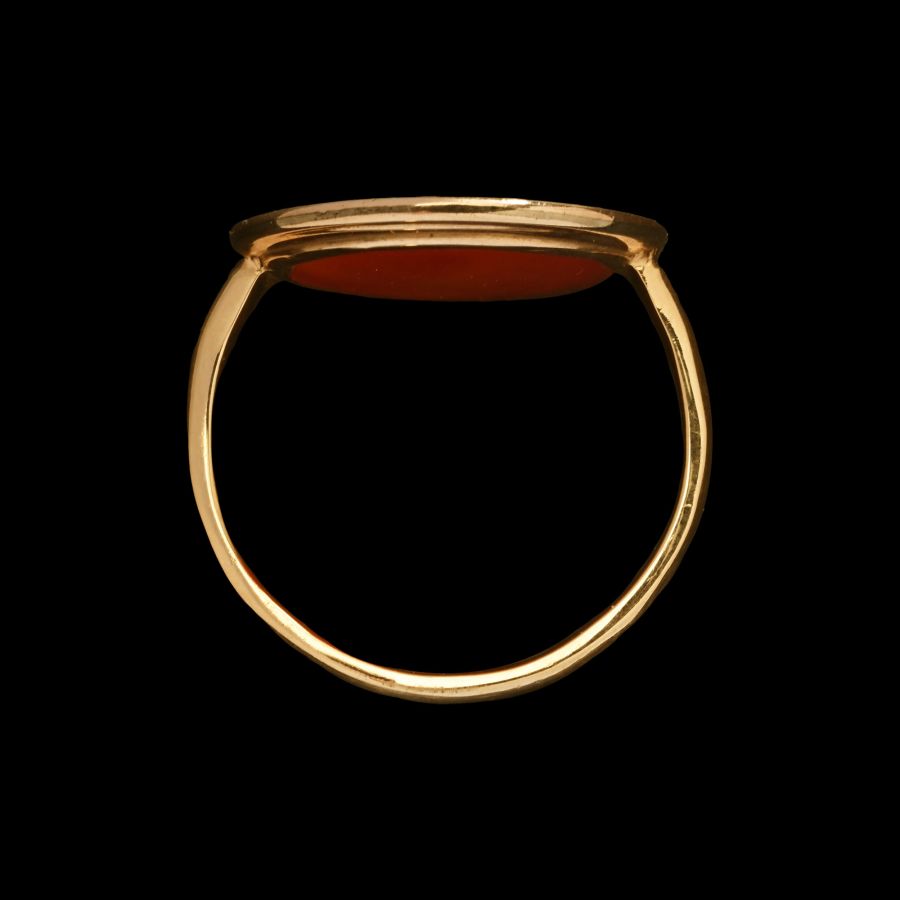
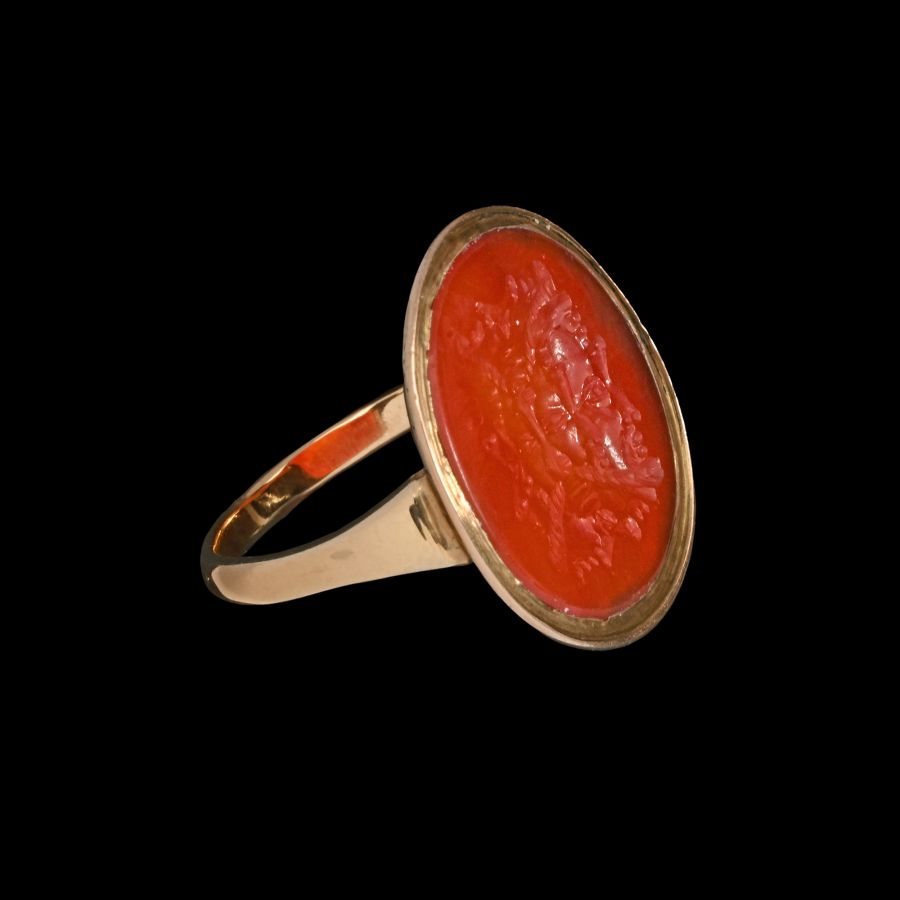
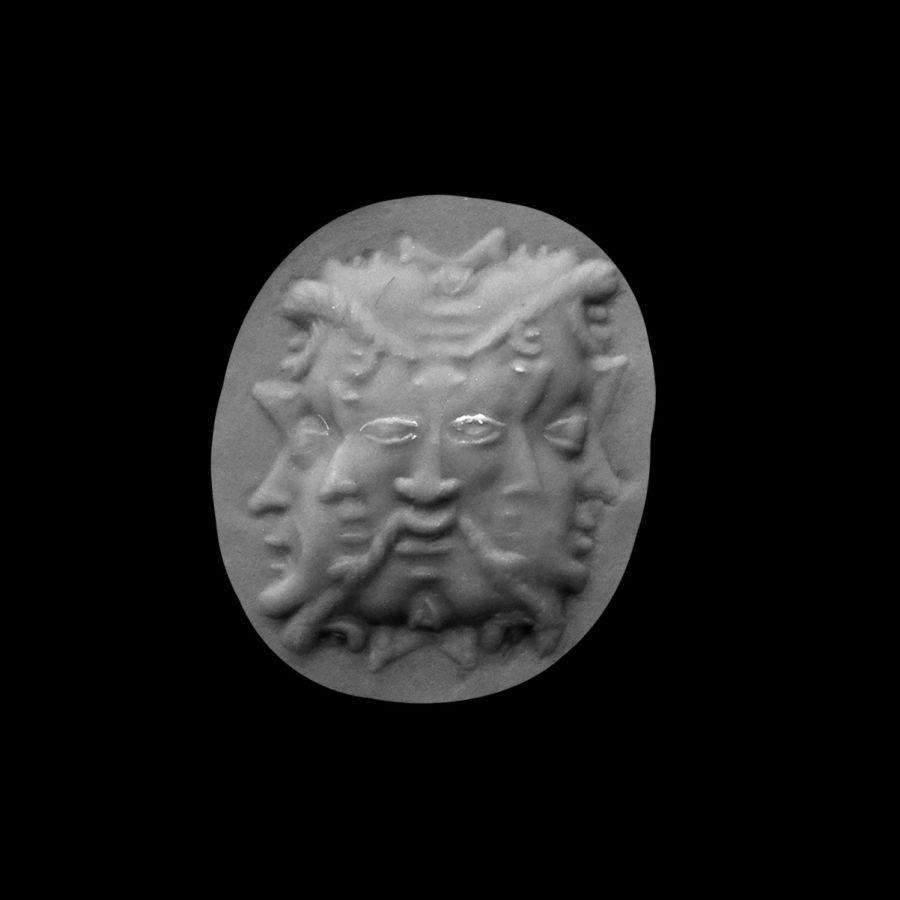
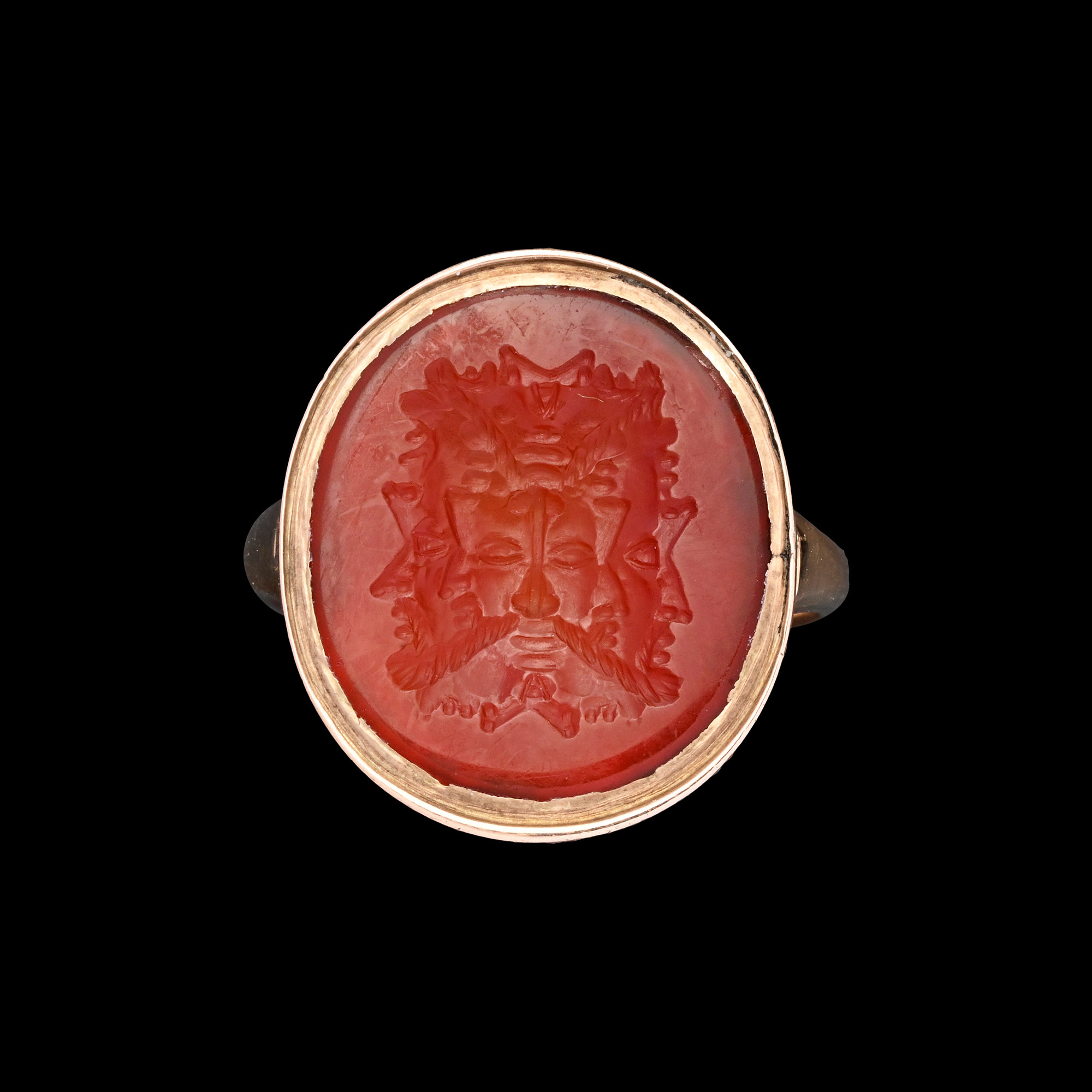
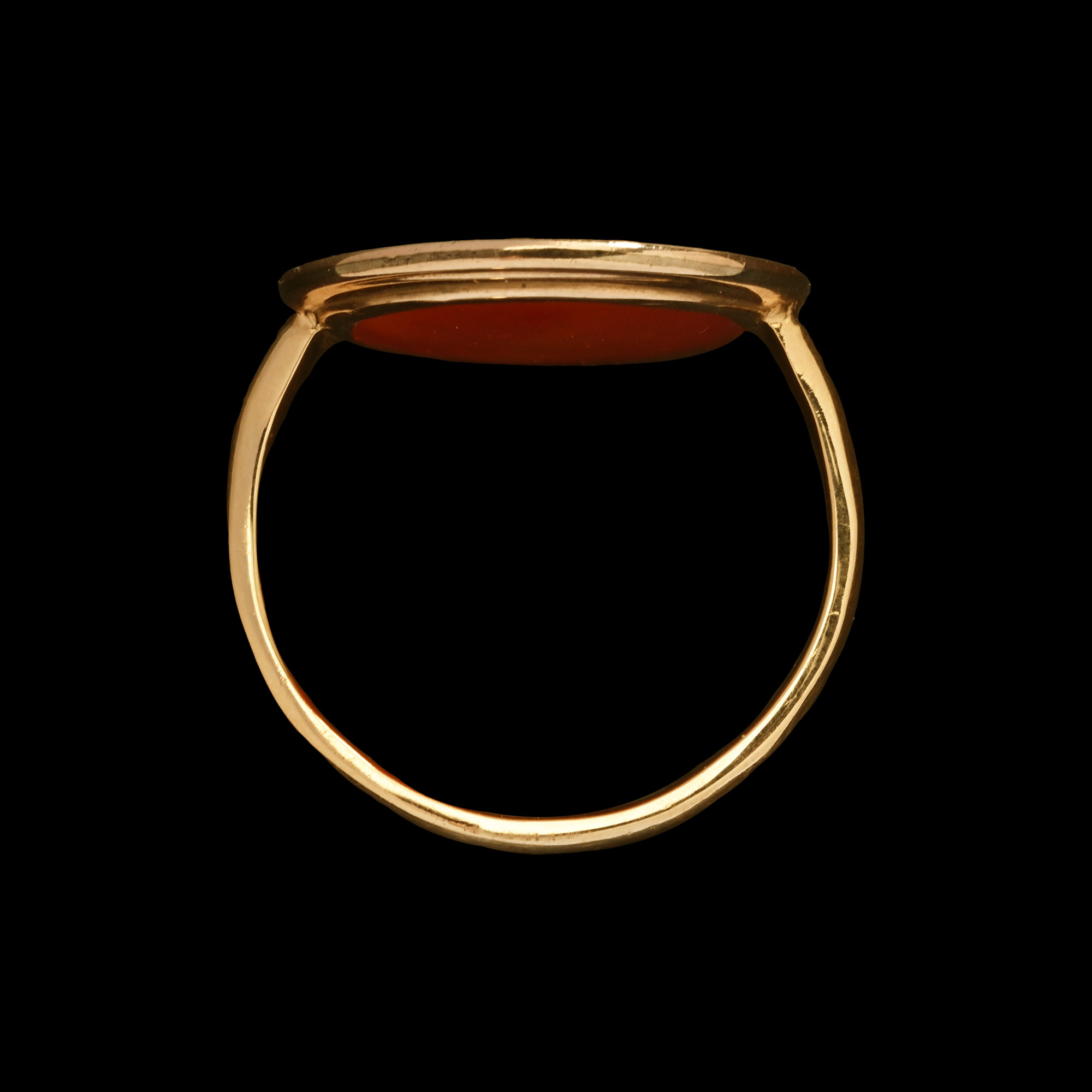
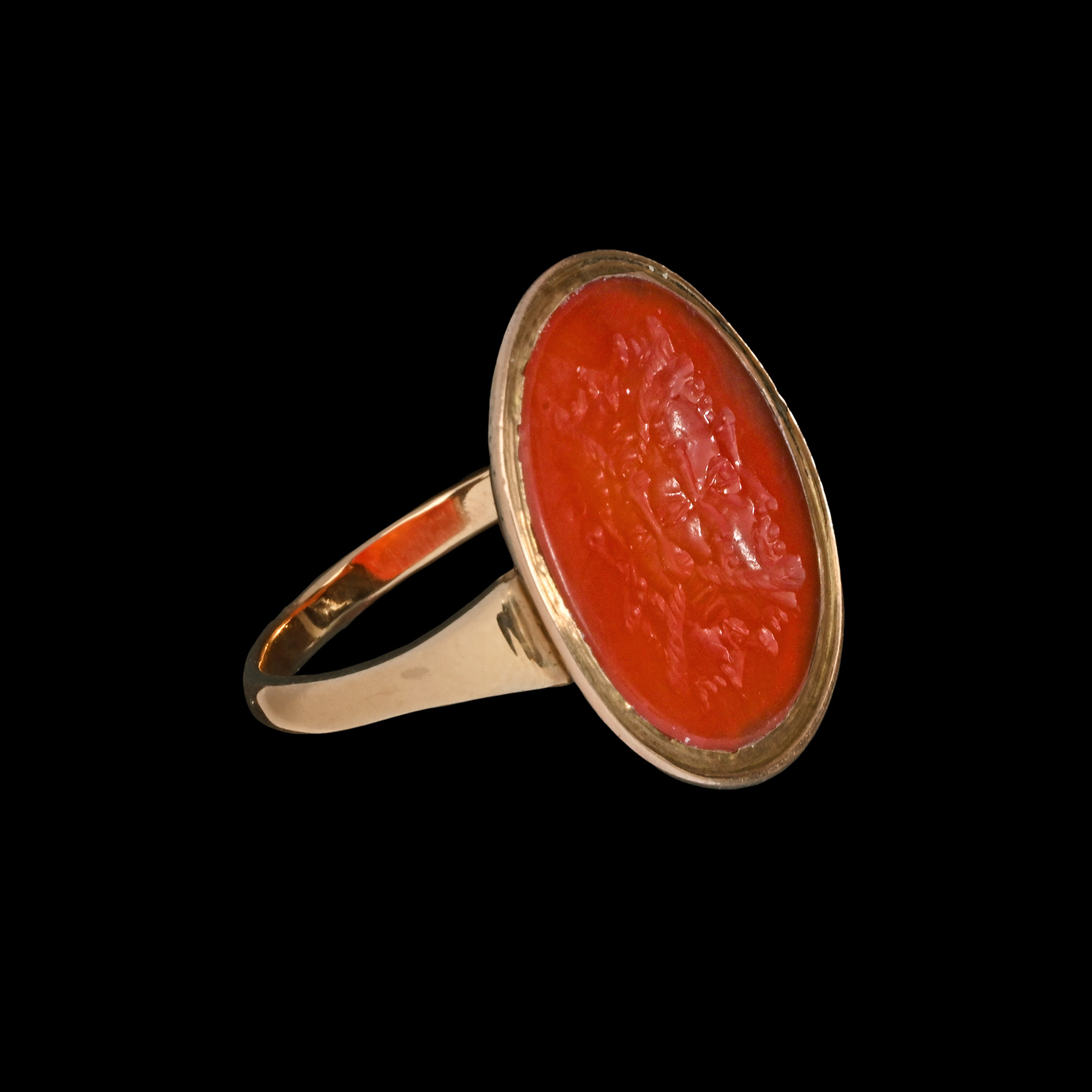
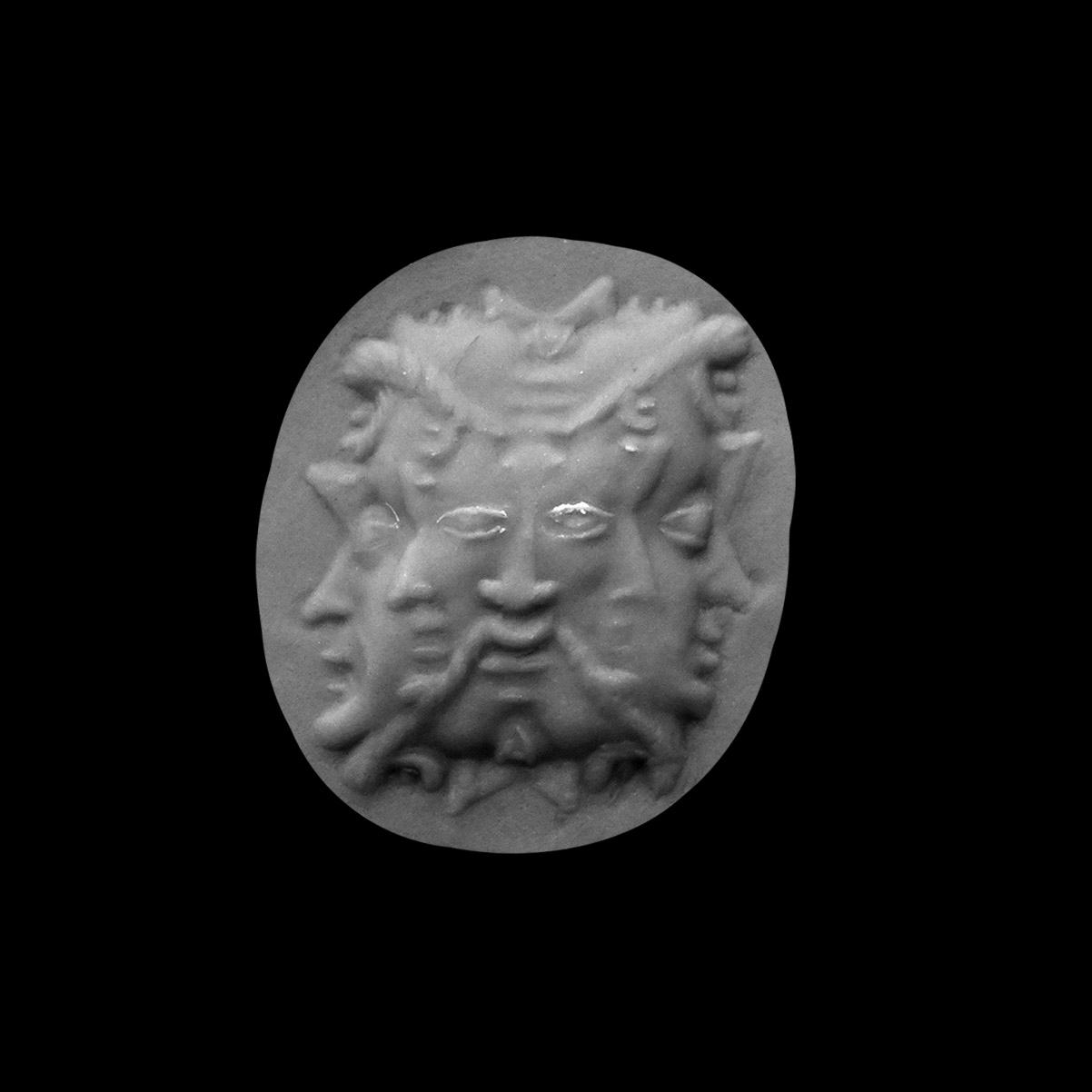
Post Medieval Gold Ring with Carnelian Gemstone with Fourteen Faces
ITALY, 17TH-18TH CENTURY A.D.
7/8 in. (4.66 grams, 22.60 mm overall, 20.70 mm internal diameter (approximate size British Q 1/2, USA 8 1/4, Europe 18.12, Japan 17)).
Composed of a D-section large hoop and an oval collet set with an intaglio intricately carved with a composite head composed of at least fourteen distinct faces, based on an image engraved after Jean Berain c.1675; supplied with a museum-quality impression.
ProvenanceAcquired on the European art market.
This lot has been checked against the Interpol Database of stolen works of art and is accompanied by search certificate number no.13397-257946.
Cf. Chadour, A.B., Rings. The Alice and Louis Koch Collection, volume I, Leeds, 1994, item 793, for a less elaborate example of the type.
CONDITIONTimeLine Auctions follows a vetting process to ensure the authenticity and legality of all items, reinforcing our commitment to integrity and responsible trading. Each antiquity, antique, and coin lot undergoes thorough examination by a vetting committee of at least ten external specialists, professional trade association members, scientists, and archaeologists: Our Vetting Process
AUCTIONS:
TimeLine is a leading auction house specialising in antiquities, ancient art, collectables, natural history, coins, medals, and books. Our auctions offer museums, collectors, historians, and enthusiasts the opportunity to acquire unique and historically significant pieces.
LOT 0354
Post Medieval Gold Ring with Carnelian Gemstone with Fourteen Faces
Estimate £3,500 - 4,500€4,060 - 5,220 (for guidance only)$4,730 - 6,080 (for guidance only)
-
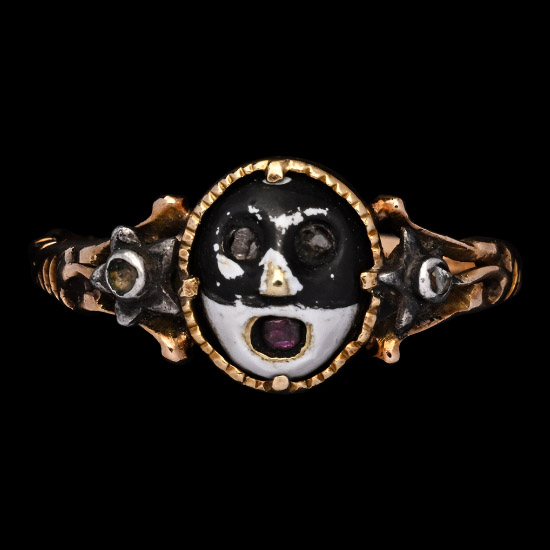
Gem-Set Gold Masquerade Ring with Love Inscription
Italy, circa 1760 A.D.Estimate: £5,000 - 7,000 (+bp*)
Current Winning Bid: £2,500
Finely modelled with a black-and-white enamelled mask, the features animated by rose-cut diamond eyes and a small ruby set into the open mouth; the head framed by a serrated gold collet and flanked by silver foliate clusters each set with a further rose-cut diamond; the shank formed as asymmetrical rococo scrolls with pierced and chased detailing throughout, the reverse of the bezel open, revealing white enamel engraved with faint traces of an original posy inscription. 2.28 grams, 21.10 mm overall, 17.45 x 16.35 mm internal diameter (approximate size British N, USA 6 1/2, Europe 13.72, Japan 13)
The enamel remains entirely original and unrestored.
Acquired on the European art market. This lot has been checked against the Interpol Database of stolen works of art and is accompanied by search certificate number no.13321-257909.
Though now largely worn, the underside of the bezel would likely have borne a concealed love sentiment, comparable to the formula Je cache mes amours ('I mask my love'), found on related rings of mid-18th-century manufacture. The theme of the masked lover, drawn from contemporary masquerade culture and its associations with flirtation, secrecy, and clandestine courtship, here transforms the jewel into a witty and intimate token. -
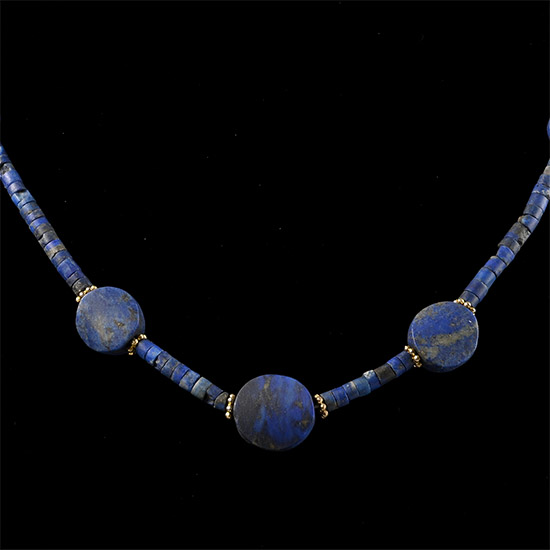
Bactrian Style Lapis Lazuli Bead Necklace String
20th century A.D.Sold for (Inc. bp): £72
Composed of coin-shaped and tubular beads interspersed with metal spacers, restrung. 31.7 grams, 47.5 cm
Acquired in the 1990s-early 2000s. Ex London, UK, collection. -
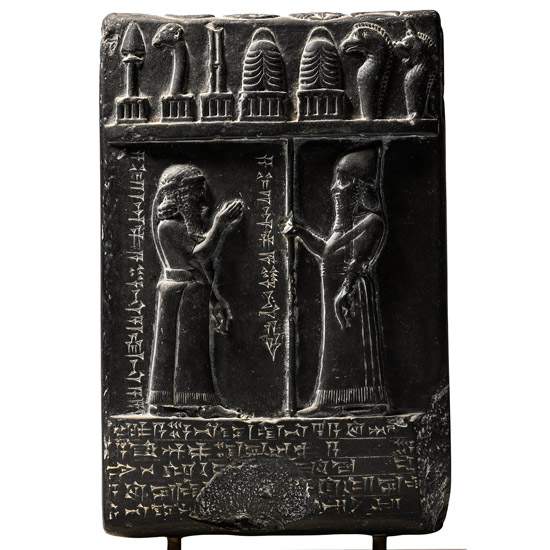
Museum Quality Replica the Babylonian Tablet of King Nabu- apla-iddina, Also Known as the Sun God Tablet in the British Museum
21st century A.D.Sold for (Inc. bp): £143
Resin casting of the tablet with ornament; obverse: frieze with two opposed standing figures below a pediment with mythological creatures, cuneiform text below and in the scene; reverse: dense panel of cuneiform text; cosmological symbols to upper edge; mounted on a custom-made stand. 1.15 kg total, 21 cm including stand
From the collection of David Donlan (1947-2025), a dedicated and lifelong collector with a passion for the ancient world and the natural sciences, forming his collection from 1960s onwards, using many reputable dealers across the United Kingdom, including the well-regarded Coincraft and The Parthenon Gallery.
