
Loading, please wait...
LOT 0411
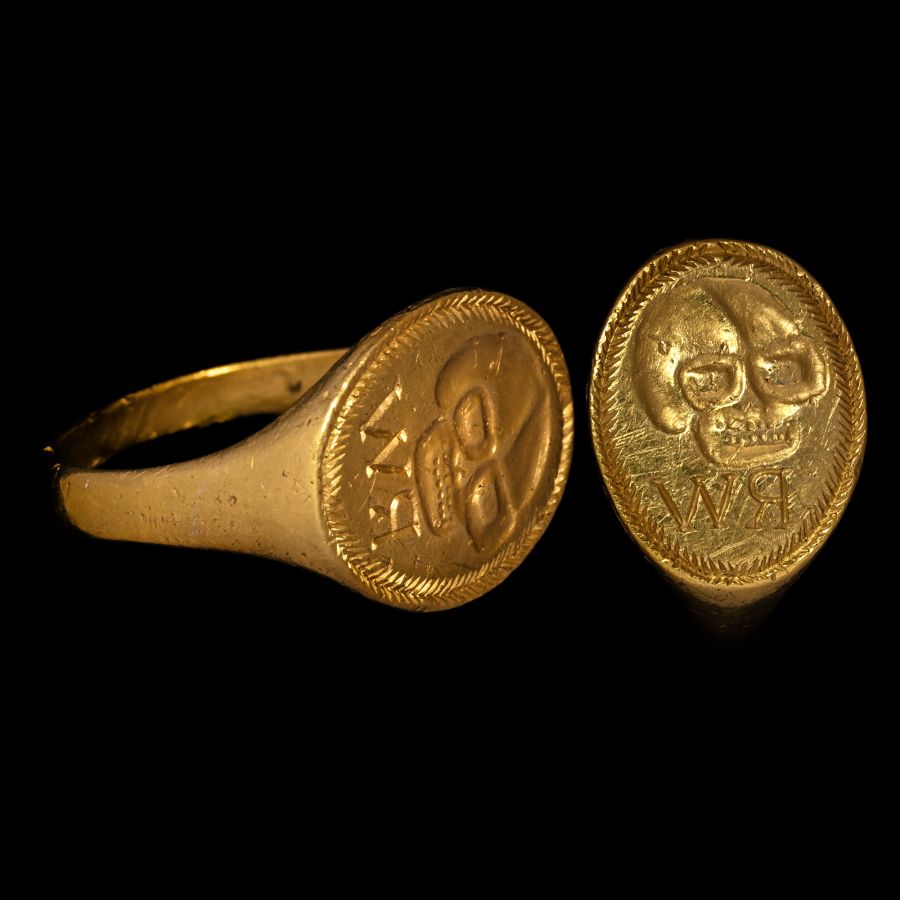
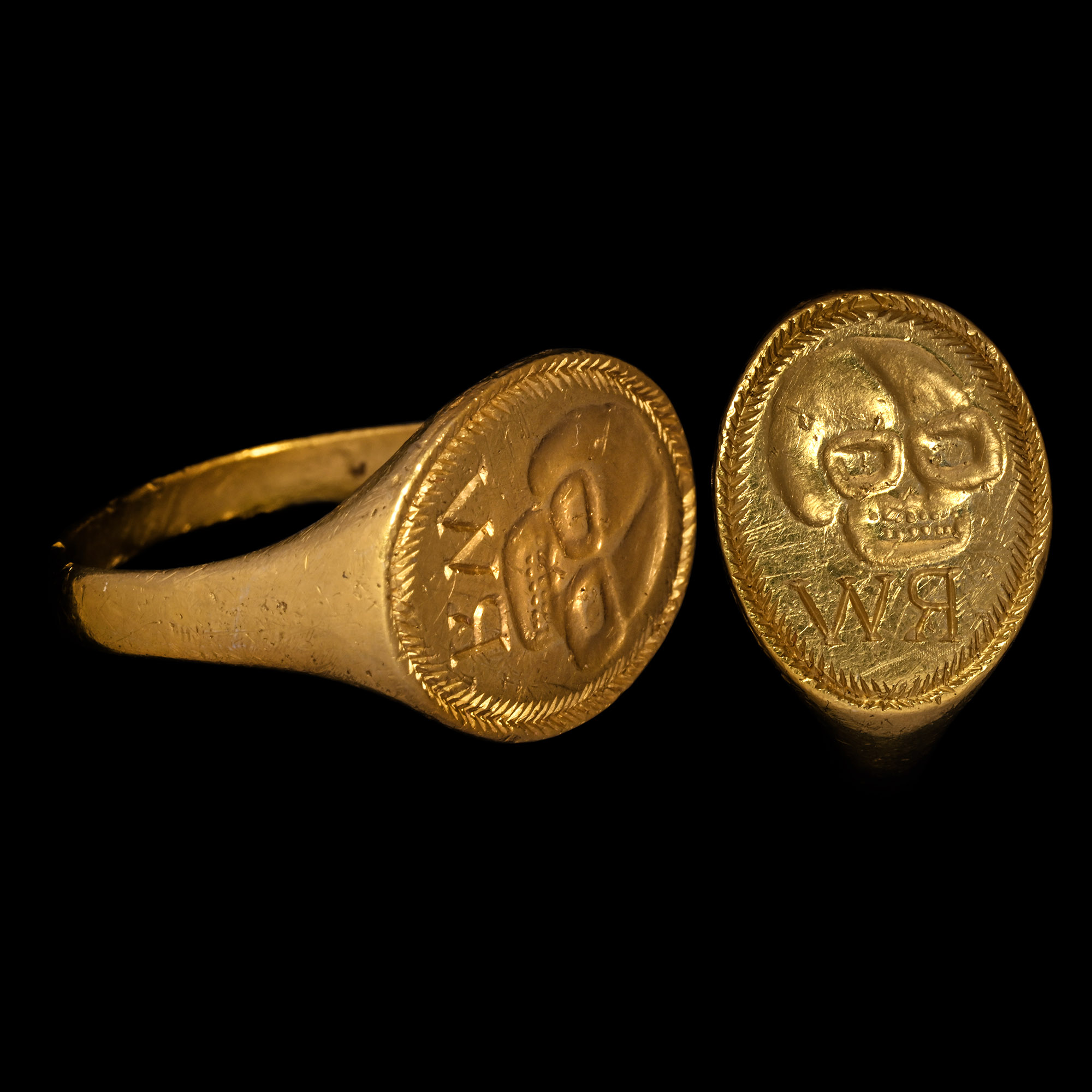
Post Medieval Gold Memento Mori Ring with Skull
17TH-19TH CENTURY A.D.
3/4 in. (7.73 grams, 21.01 mm overall, 19.06 x 18.44 mm internal diameter (approximate size British R, USA 8 1/2, Europe 18 3/4, Japan 18)).
Ellipsoid plaque with wreath border enclosing an incuse skull in three-quarter view and initials 'RW' below.
ProvenancePrivate collection, Europe.
Acquired on the English art market.
This lot has been checked against the Interpol Database of stolen works of art and is accompanied by a search certificate number no.13046-248360.
Cf. Oman, C.C., British Rings 800-1914, London, 1974, item 85(B), for type.
FootnotesThe memento mori jewellery of the 16th and 17th centuries served as wearable ‘reminders of mortality’. Typical motifs within this genre included skulls, skeletons, crossbones, hourglasses, coffins, the gravedigger’s pick and shovel, and various other emblems of death and decay.
CONDITIONTimeLine Auctions follows a vetting process to ensure the authenticity and legality of all items, reinforcing our commitment to integrity and responsible trading. Each antiquity, antique, and coin lot undergoes thorough examination by a vetting committee of at least ten external specialists, professional trade association members, scientists, and archaeologists: Our Vetting Process
AUCTIONS:
TimeLine is a leading auction house specialising in antiquities, ancient art, collectables, natural history, coins, medals, and books. Our auctions offer museums, collectors, historians, and enthusiasts the opportunity to acquire unique and historically significant pieces.
-
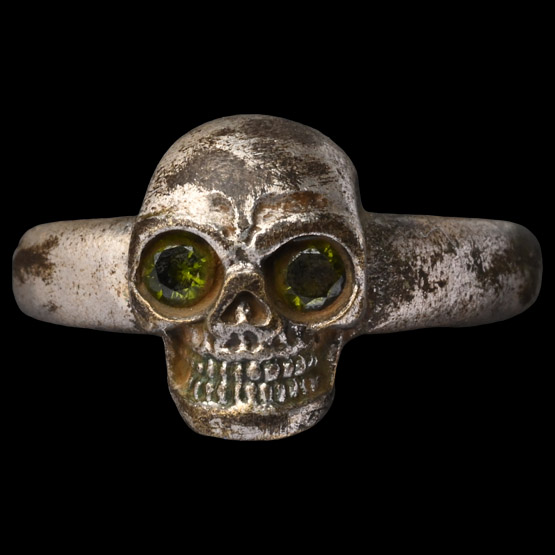
Victorian Silver Skull Ring
Late 19th century A.D.Sold for (Inc. bp): £208
D-section hop, the bezel formed as a skull with glass inserts in the eye-sockets. 5.08 grams, 25.79 mm overall, 18.5 mm internal diameter (approximate size British R, USA 8 1/2, Europe 18 3/4, Japan 18)
Ex private Warwick collection, 1980-2000. Acquired from an antique fair, Staffordshire, UK. Ex Buckinghamshire, UK, collection. -
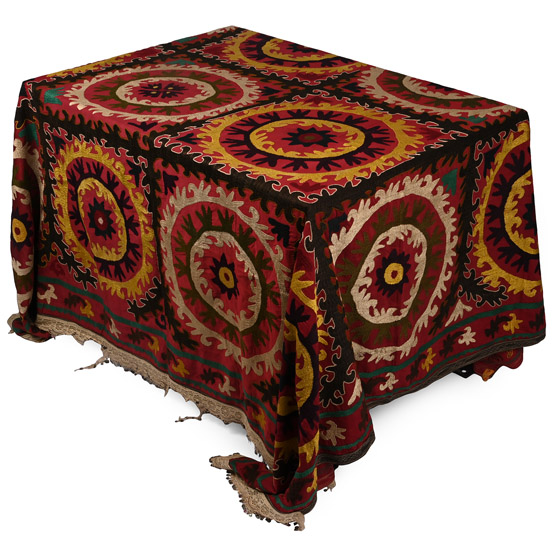
Very Large Uzbek Bed or Table Cover
20th century A.D.Sold for (Inc. bp): £1,690
Rectangular fabric panel with embroidered floral and geometric motifs, applied borders. 1.75 kg, 190 x 224 cm
Private collection, UK. -
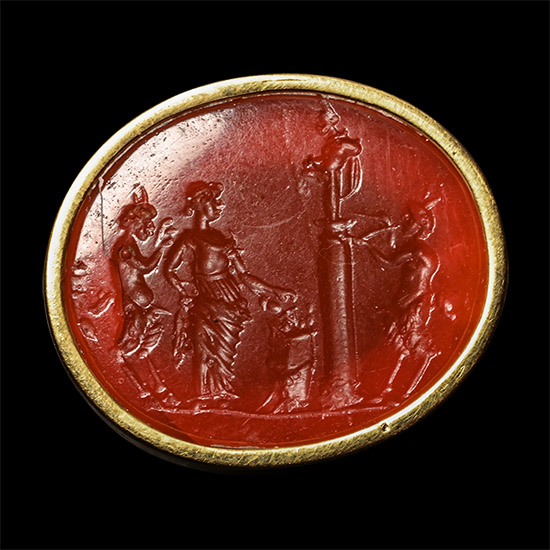
Post Medieval Gemstone Depicting Bacchanalian Sacrifice in Gold Ring
Italy, 18th century A.D.Estimate: £1,500 - 2,000 (+bp*)
Opening Bid: £750
Intaglio engraved with satyr playing aulos behind a tall column with statue on the top, a woman in long robe and satyr standing in front of an altar; set into a later gold ring with hoop formed from three round-section wires holding an oval bezel; supplied with a museum-quality impression. 9.36 grams, 25.97 mm overall, 19.15 mm internal diameter (approximate size British N, USA 6 1/2, Europe 13.72, Japan 13)
Private collection, Europe. Acquired on the English art market.
