
Loading, please wait...
LOT 0330
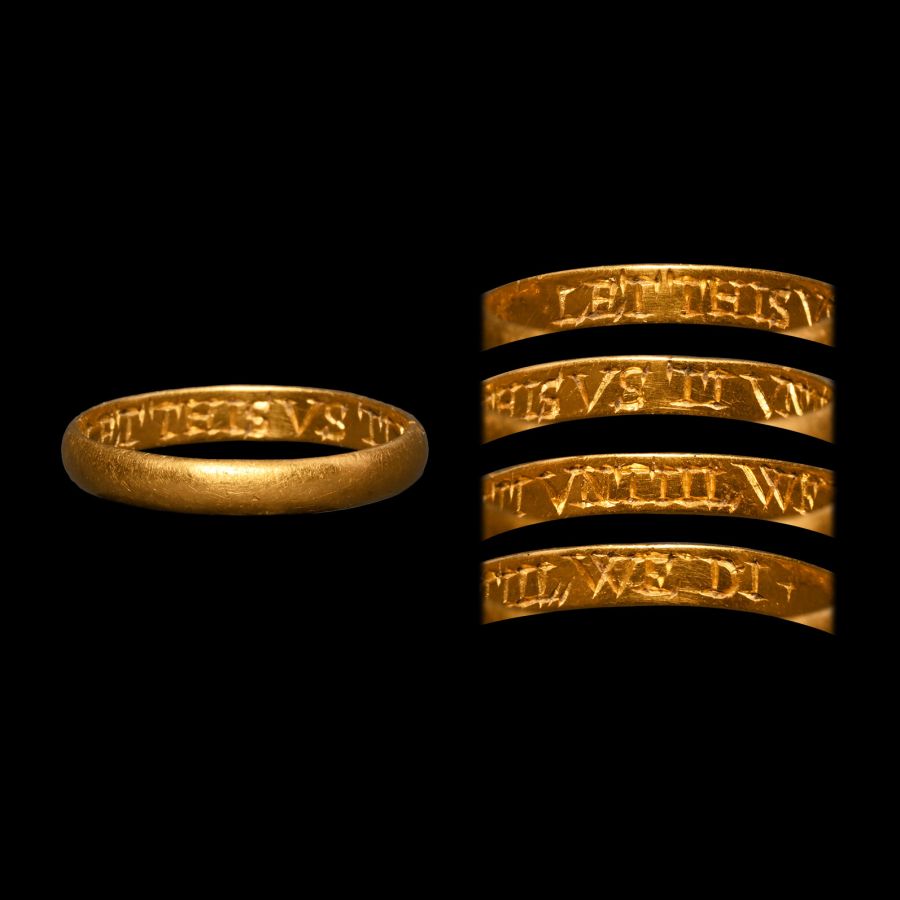
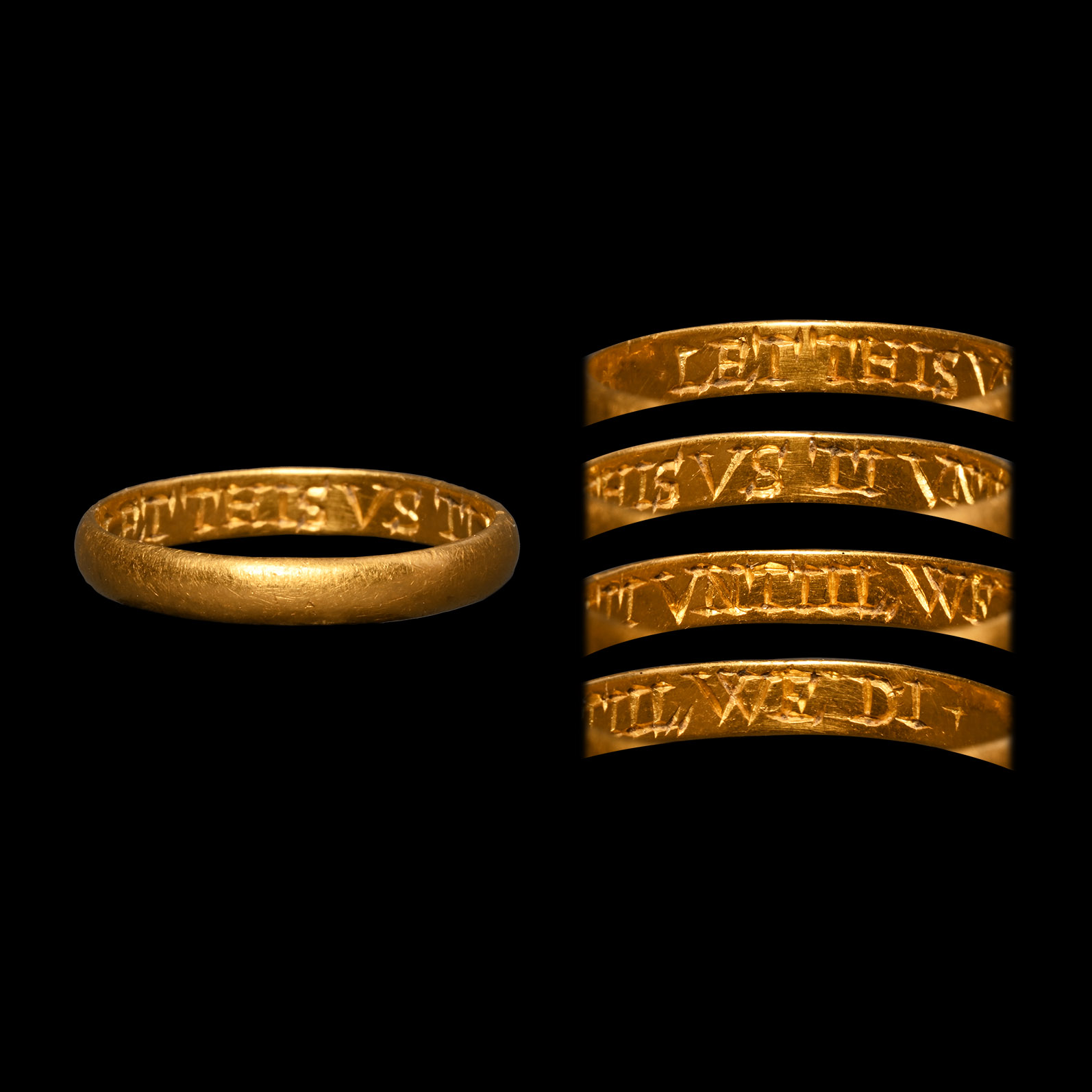
Post Medieval Gold 'Let This Vs Tie Vntil We Die' Posy Ring
CIRCA 18TH CENTURY A.D.
3/4 in. (1.66 grams, 17.36 mm overall, 15.61 mm internal diameter (approximate size British I 1/2, USA 4 1/2, Europe 8.07, Japan 7)).
A gold posy ring with D-section band, inscribed internally with 'LET THIS VS TI VNTIL WE DI' inscription (let this us tie until we die). [No Reserve]
ProvenanceAcquired on the UK antiques market between 1974-1985.
Albert Ward collection, Essex, UK.
See Evans, J., English Posies and Posy Rings, London, 1931, for many examples.
CONDITIONTimeLine Auctions follows a vetting process to ensure the authenticity and legality of all items, reinforcing our commitment to integrity and responsible trading. Each antiquity, antique, and coin lot undergoes thorough examination by a vetting committee of at least ten external specialists, professional trade association members, scientists, and archaeologists: Our Vetting Process
AUCTIONS:
TimeLine is a leading auction house specialising in antiquities, ancient art, collectables, natural history, coins, medals, and books. Our auctions offer museums, collectors, historians, and enthusiasts the opportunity to acquire unique and historically significant pieces.
LOT 0330
Post Medieval Gold 'Let This Vs Tie Vntil We Die' Posy Ring
Sold for (Inc. bp): £1,040
-
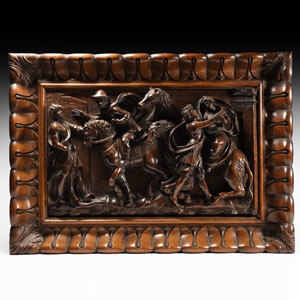
Renaissance Wooden Panel with Horse and Figures
Italian, circa 18th century A.D.Estimate: £1,500 - 2,000 (+bp*)
Opening Bid: £750
A carved wooden panel depicting a dynamic figural scene composed of mounted horse rider together with a rider mounted on a mythical creature with two heads, the body and hindlegs of a horse and head and forelegs of a lion or other creature, two standing figures beside them; egg-and-dart style frame with leaves to each corner. 4 kg, 54.5 x 38.5 cm
English private collection.
The timber shows some old insect flight holes and we are advised that this piece has been recently treated with Permethrin, as a precaution. -
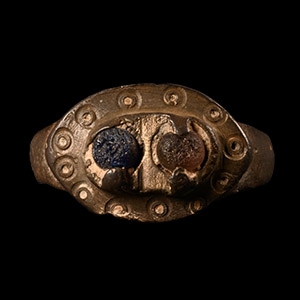
Tudor Period Ring with Cabochons
16th century A.D.Sold for (Inc. bp): £39
A copper-alloy finger ring with slightly convex hoop with a raised knop at the bottom, ellipsoidal bezel with ring-and-dot motifs to the perimeter and a blue and red glass cabochon on a raised central platform. 5.24 grams, 26.96 mm overall, 20.46 mm internal diameter (approximate size British U, USA 10, Europe 22.52, Japan 21)
Private collection formed since the 1940s. UK art market. Property of an Essex gentleman. -
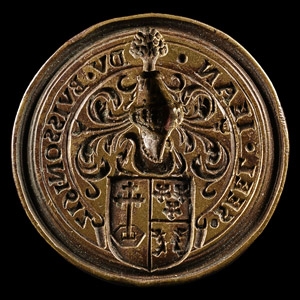
Large French Armorial Seal Matrix for Jean du Buisson
Dated 1617 A.D.Sold for (Inc. bp): £676
A bronze discoid seal matrix with hinged flap to the reverse pierced near the edge; incuse heraldic design comprising a heater shield, helmet with foliage mantle and oak-tree crest; the shield with three fields (i) an empty tomb with cross potent emerging from the centre (ii) three cinquefoils (iii) two fish addorsed; concentric multilinear borders with legend in block capitals '· SEEL · IEAN · DV · BVISSON · 1617' (seal of Jean du Buisson) and scroll detail to the ends. 26.2 grams, 36 mm
The Matrix Collection, formed by David Morris since the late 1980s. Matrix Collection catalogue no.5918. Many of the seals within the collection were published in a book titled 'The Matrix Collection', by David Morris in 2012. Accompanied by a copy of the illustrated collection notes.
Jean du Buisson, baron of Beauteville, married Jeanne de Lavenson de la Loubière in 1617 and died in 1634.
