
Loading, please wait...
LOT 1412
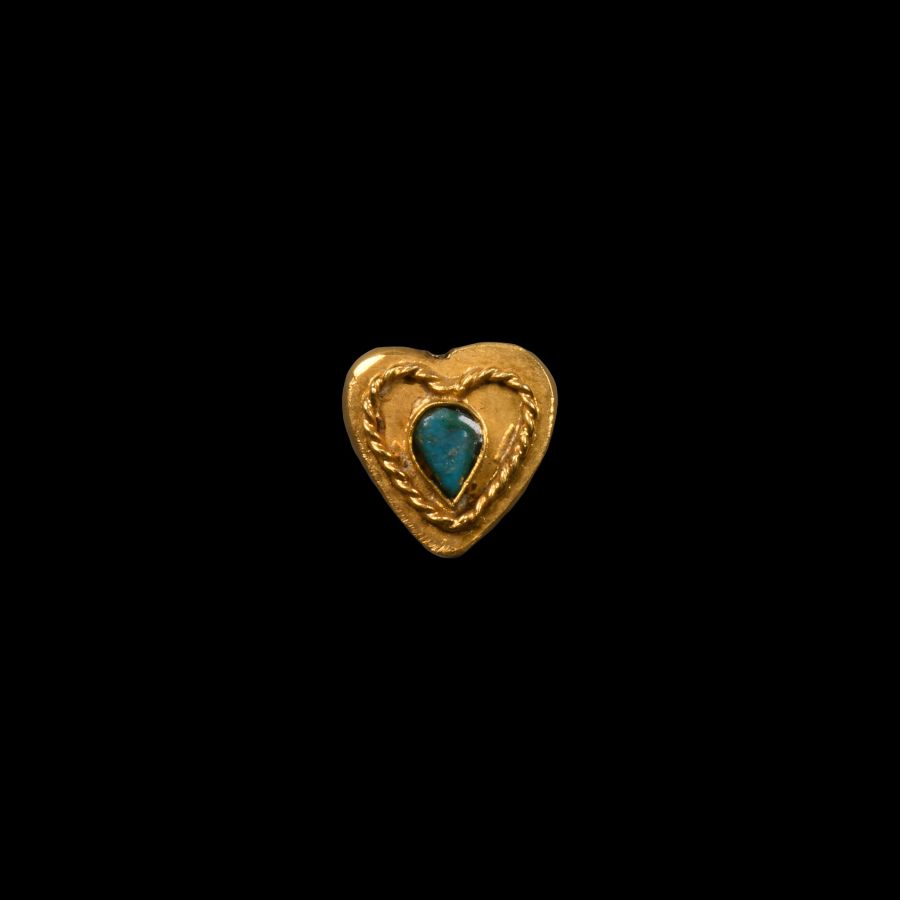
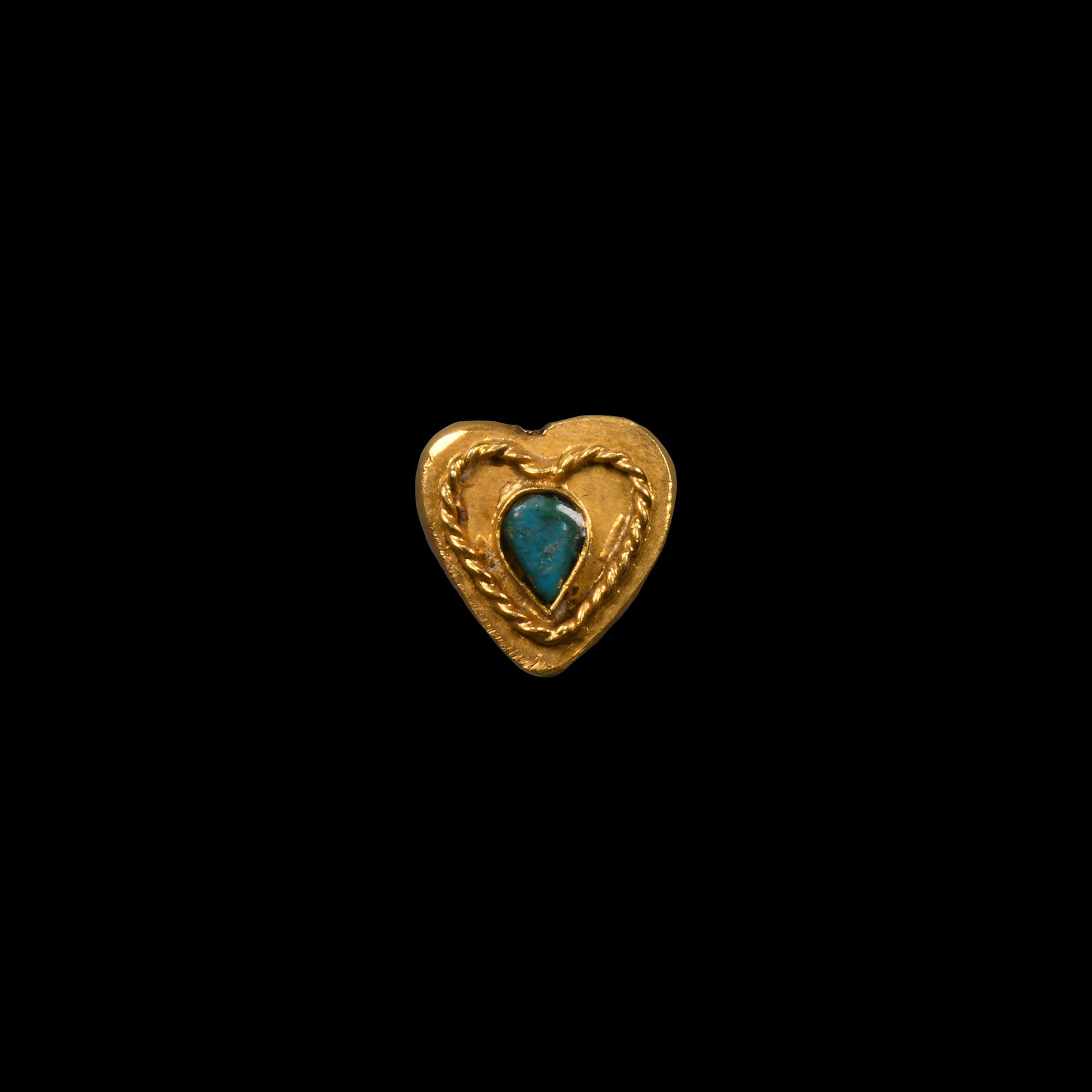
Post Medieval Gold Heart Bead with Turquoise
19TH-20TH CENTURY A.D.
1/4 in. (0.51 grams, 8 mm).
A bifacial gold bead with twisted filigree frame to each flat face, gold cell and inset turquoise teardrop.
ProvenanceAcquired 1980s-1990s.
North London, UK, collection.
TimeLine Auctions follows a vetting process to ensure the authenticity and legality of all items, reinforcing our commitment to integrity and responsible trading. Each antiquity, antique, and coin lot undergoes thorough examination by a vetting committee of at least ten external specialists, professional trade association members, scientists, and archaeologists: Our Vetting Process
AUCTIONS:
TimeLine is a leading auction house specialising in antiquities, ancient art, collectables, natural history, coins, medals, and books. Our auctions offer museums, collectors, historians, and enthusiasts the opportunity to acquire unique and historically significant pieces.
-
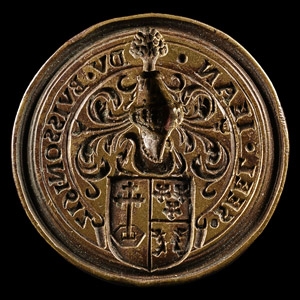
Large French Armorial Seal Matrix for Jean du Buisson
Dated 1617 A.D.Sold for (Inc. bp): £676
A bronze discoid seal matrix with hinged flap to the reverse pierced near the edge; incuse heraldic design comprising a heater shield, helmet with foliage mantle and oak-tree crest; the shield with three fields (i) an empty tomb with cross potent emerging from the centre (ii) three cinquefoils (iii) two fish addorsed; concentric multilinear borders with legend in block capitals '· SEEL · IEAN · DV · BVISSON · 1617' (seal of Jean du Buisson) and scroll detail to the ends. 26.2 grams, 36 mm
The Matrix Collection, formed by David Morris since the late 1980s. Matrix Collection catalogue no.5918. Many of the seals within the collection were published in a book titled 'The Matrix Collection', by David Morris in 2012. Accompanied by a copy of the illustrated collection notes.
Jean du Buisson, baron of Beauteville, married Jeanne de Lavenson de la Loubière in 1617 and died in 1634. -
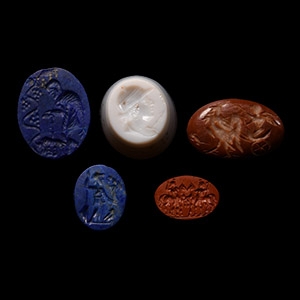
Gemstone Collection
17th-20th century A.D.Sold for (Inc. bp): £195
A mixed group of gemstones including lapis lazuli and sardonyx with intaglio motifs including bust of Mercury, figure of Mars and others. 8.4 grams total, 13-20 mm
English private collection. -
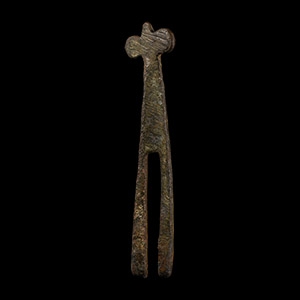
Post Medieval Culinary Artefact
16th-18th century A.D.Sold for (Inc. bp): £7
A copper-alloy artefact, likely a pastry cutter handle, composed of a lobed finial and two prongs with evidence of perforations for bar to suspend the cutter. 15.6 grams, 71 mm
Fine condition.
Found Wiltshire, UK.
