Loading, please wait...

Use mousewheel to zoom in and out, click to enlarge

Details

LOT 0333

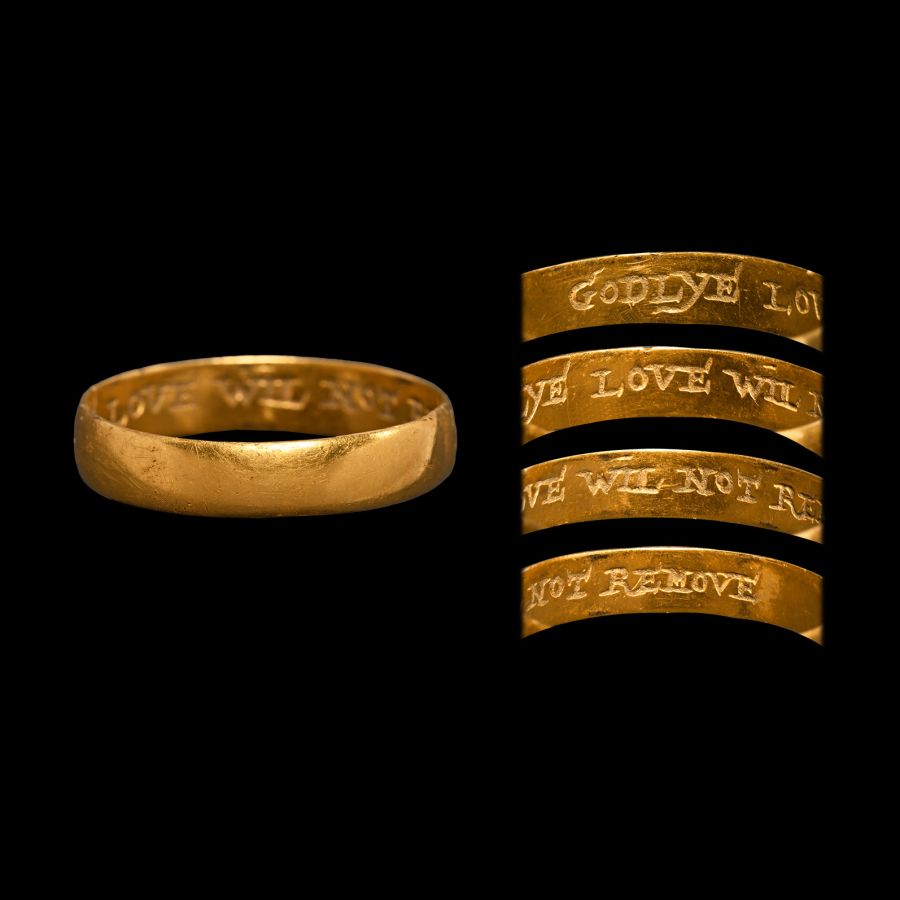
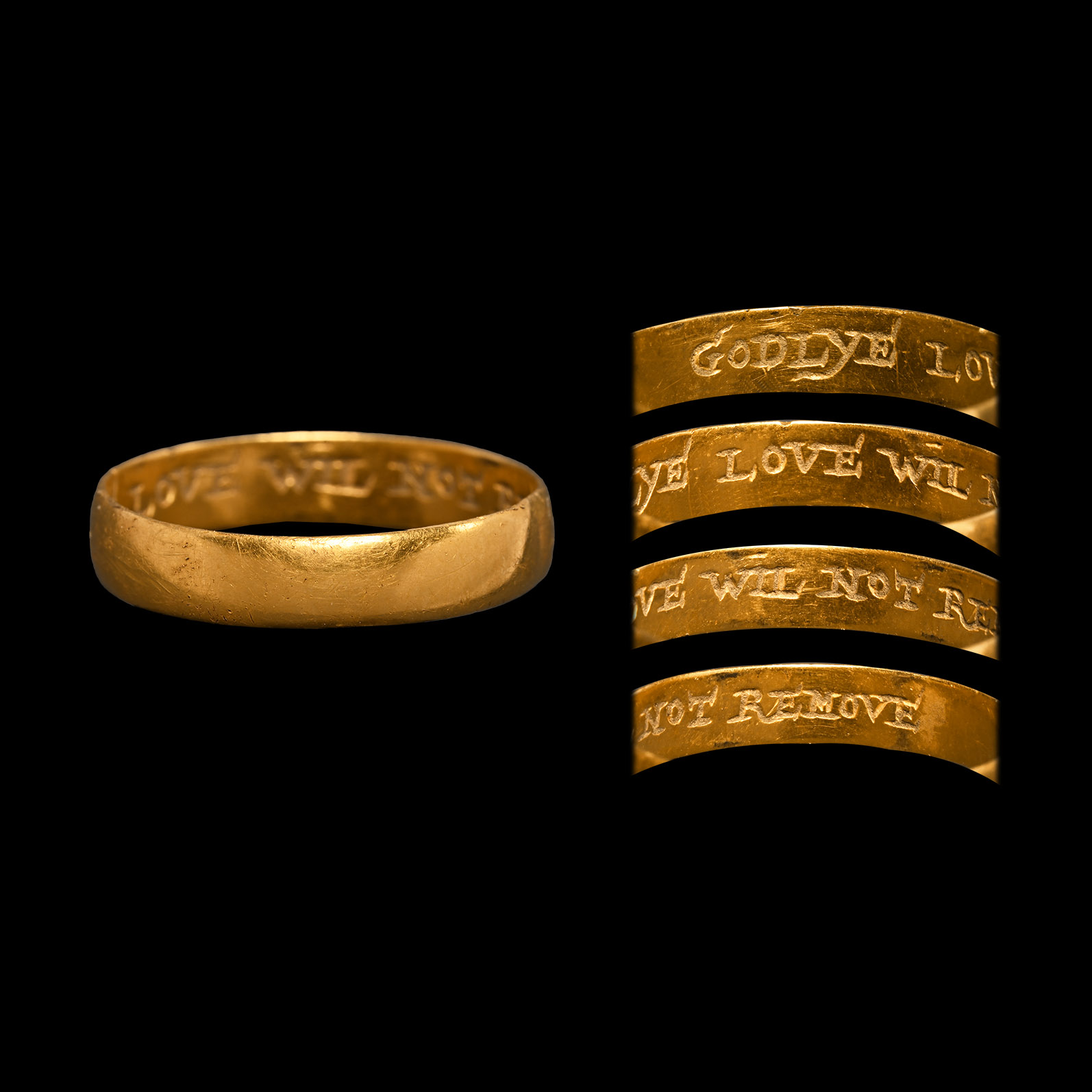
Post Medieval Gold 'Godlye Love Wil Not Remove' Posy Ring

CIRCA 18TH CENTURY A.D.

3/4 in. (2.95 grams, 21.16 mm overall, 19.37 mm internal diameter (approximate size British S 1/2, USA 9 1/4, Europe 20.63, Japan 19)).

A large gold posy ring with D-section hoop inscribed internally 'GODLYE LOVE WILL NOT REMOVE' in Roman capitals [No Reserve]

Provenance

Acquired on the UK antiques market between 1974-1985.
Albert Ward collection, Essex, UK.

Literature

See Evans, J., English Posies and Posy Rings, London, 1931, p.43, for this inscription.

CONDITION

VETTING:

TimeLine Auctions follows a vetting process to ensure the authenticity and legality of all items, reinforcing our commitment to integrity and responsible trading. Each antiquity, antique, and coin lot undergoes thorough examination by a vetting committee of at least ten external specialists, professional trade association members, scientists, and archaeologists: Our Vetting Process


AUCTIONS:

TimeLine is a leading auction house specialising in antiquities, ancient art, collectables, natural history, coins, medals, and books. Our auctions offer museums, collectors, historians, and enthusiasts the opportunity to acquire unique and historically significant pieces.

LOT 0333

Post Medieval Gold 'Godlye Love Wil Not Remove' Posy Ring

Sold for (Inc. bp): £715

Print page

RELATED LOTS

  • Post Medieval Papal Silver Reliquary Pendant with Portrait
    Post Medieval Papal Silver Reliquary Pendant with Portrait
    18th-19th century A.D.

    Estimate: £300 - 400 (+bp*)

    Opening Bid: £150

    A silver reliquary pendant composed of a hinged oval-shaped locket with articulate swivel clasp and perforated suspension loop; the upper face engraved with a bleeding heart wearing a crown of barbed wire and surmounted by a Christian cross, framed by two scrolled bars; reverse engraved with similar bars framing the initials 'MRA' (possibly 'Maria Regina Angelorum') with leaf below; the interior with polychrome bust of the Virgin glancing skywards, her hands clasped in front of her body to her right, a flaming heart impaled with five swords in front of her chest, painted onto glass; glass panel with fabric backing sewn with the papal insignia of crossed keys beneath cross-topped triple crown (tiara) in what appears to be gold and silver thread; possible inscription to upper face of the (articulate) hinge. 50.36 grams, 70 mm high

    Fine condition.

    Property of a Colchester, UK, collector.

    Lot Details

  • Post Medieval Gilt and Painted Wooden Cherub Pair
    Post Medieval Gilt and Painted Wooden Cherub Pair
    Germany, 17th century A.D.

    Estimate: £8,000 - 10,000 (+bp*)

    Opening Bid: £4,000

    A pair of naturalistically modelled cherubs shown naked and chubby with infant bodies and mature heads, perched with one crossed leg atop grotesque heads- that of the Devil and a pug, each dynamically posed as though playing an instrument or holding a bowl; with polychrome paint and gilding; Baroque; on octagonal plinth bases. 74-76 cm high


    with Hotel Des Ventes De Monte, Monaco, 14 December 2021, lot 60. English private collection. This lot has been checked against the Interpol Database of stolen works of art and is accompanied by search certificate number no.11676-199839.

    Lot Details

  • Bronze Aquamanile with Horse and Rider
    Bronze Aquamanile with Horse and Rider
    Early 19th century A.D.

    Estimate: £6,000 - 8,000 (+bp*)

    Opening Bid: £2,200

    A bronze aquamanile portraying a mounted rider, both horse and rider modelled in the round with semi-naturalistic anatomical and facial features; the horse standing facing forwards, ears pinned back and with short tail; the male figure positioned with one hand on the reins, the other raised to eye level, wearing period costume and boots; rectangular vessel mouth behind horse's forelock with remains of hinge for a lid (absent), conical pouring spout to its lower chest; some splits; modelled on c.15th century German examples. 5.6 kg, 30.5 cm high


    Acquired from St Marys Convent, Peekshill, New York. From Emily Gagnon, Dallas, USA. UK private collection, 2002. This lot has been checked against the Interpol Database of stolen works of art and is accompanied by search certificate number no.11686-197726

    The practical function of the aquamanile was to pour clean water over the hands before dining, and in religious contexts to symbolically purify the body before undertaking communion. The origins of the form are often traced to the area of Iran, and it reached Western Europe through contacts with the Byzantine Empire.

    Lot Details

Stay up-to-date with the latest from TimeLine Auctions by joining our mailing list