
Loading, please wait...
LOT 0315
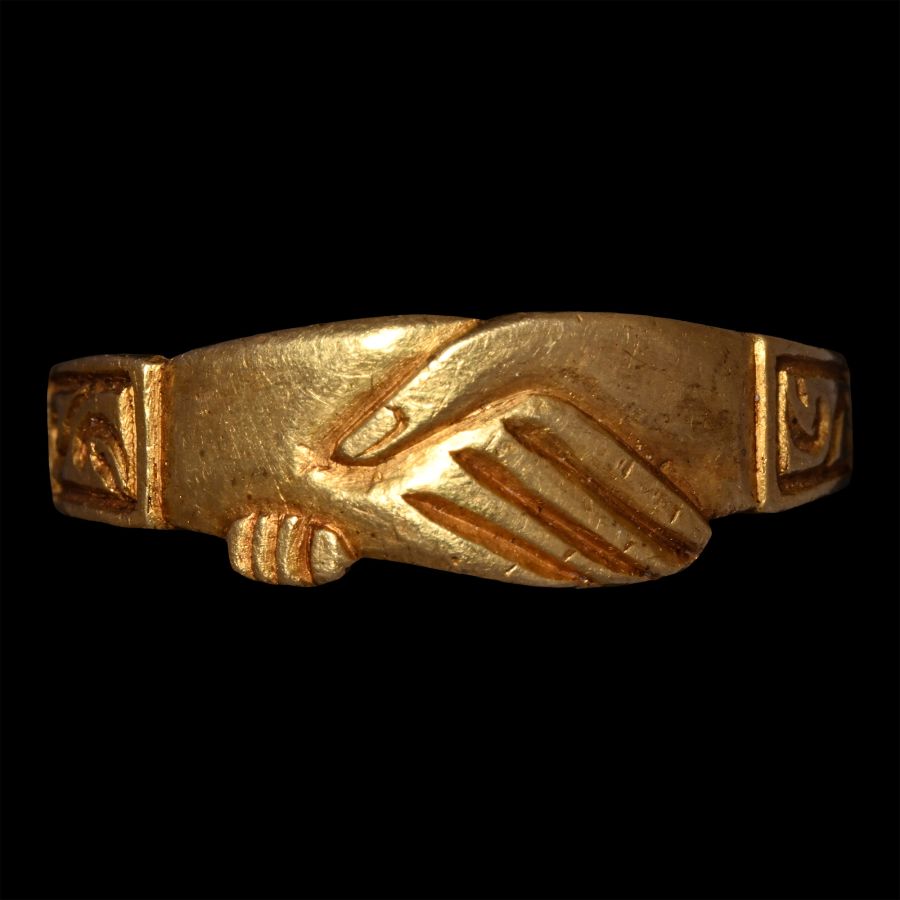
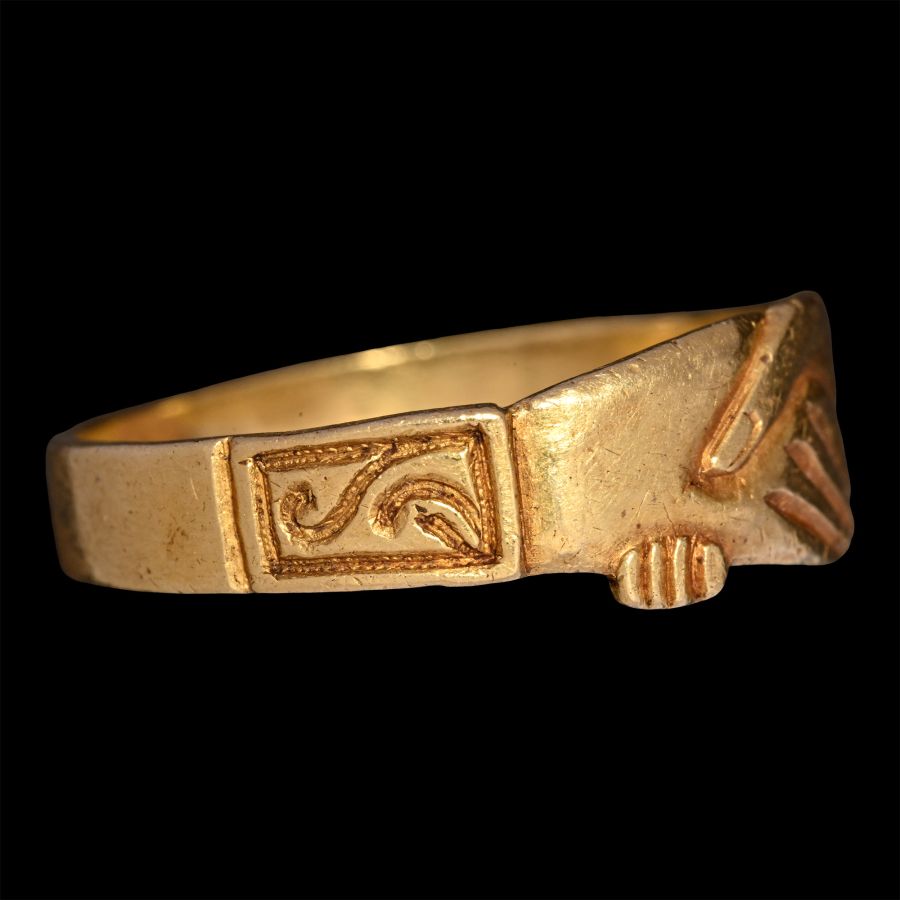
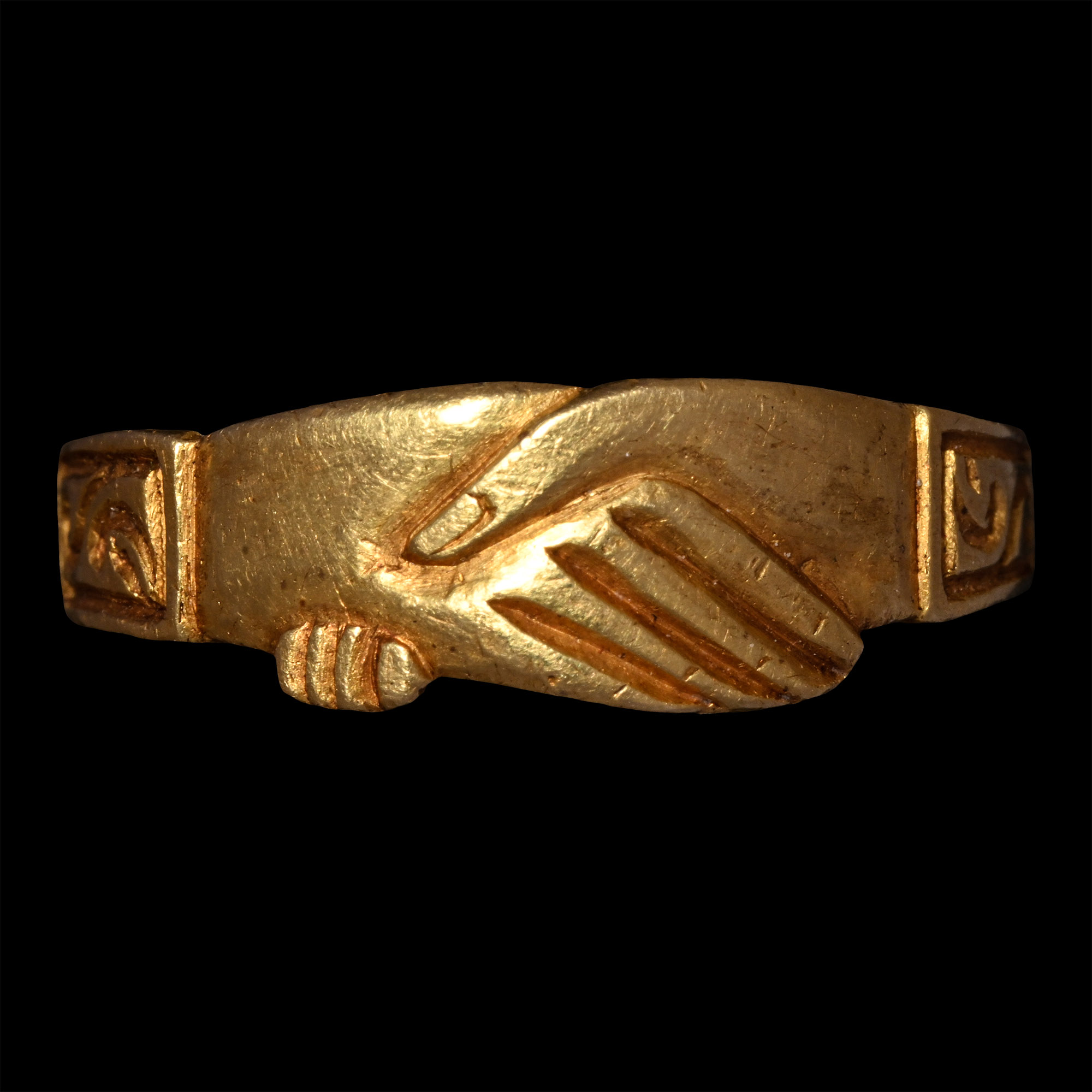
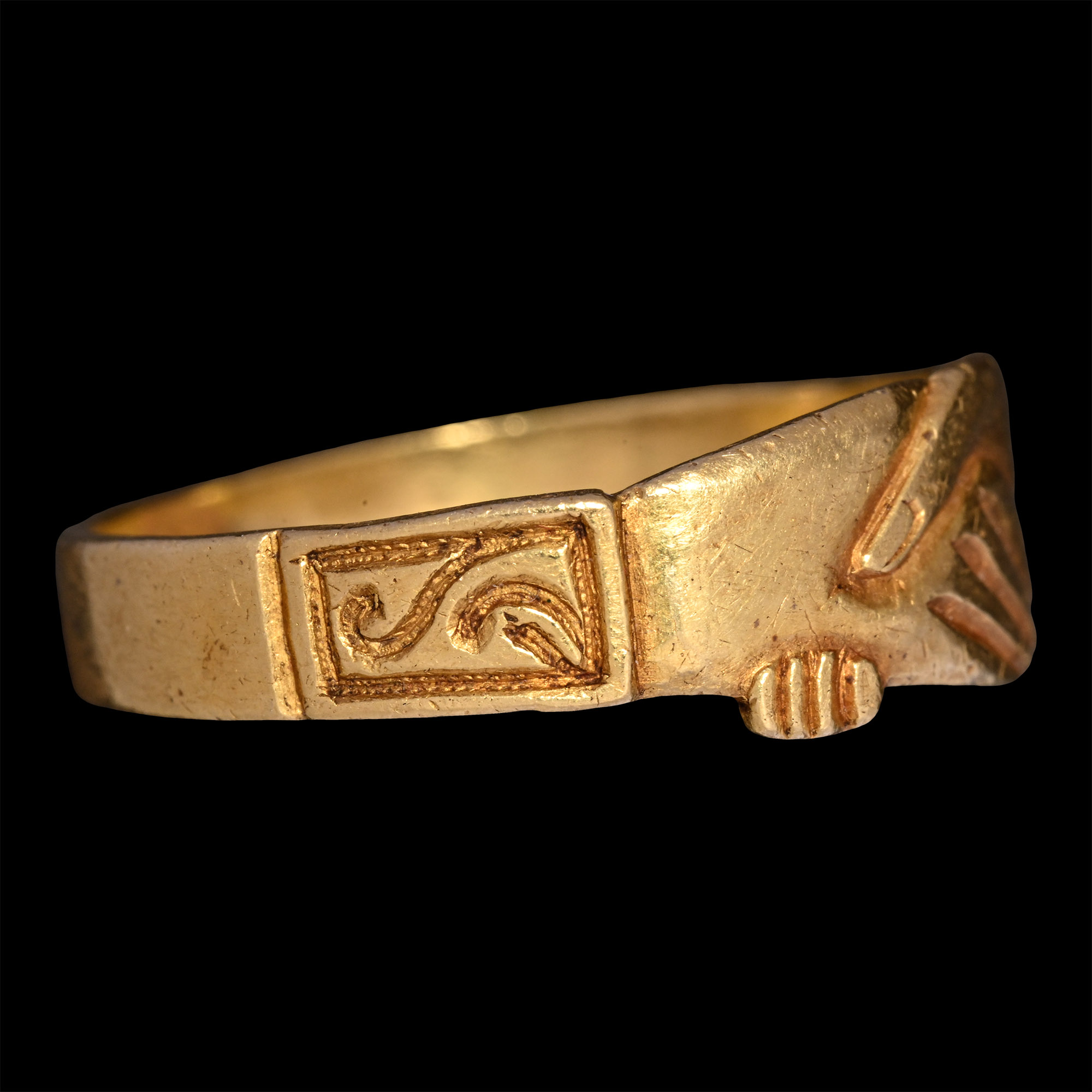
Post Medieval Gold Fede Ring
17TH-18TH CENTURY A.D.
7/8 in. (4.08 grams, 21.08 mm overall, 18.89 mm internal diameter (approximate size British R, USA 8 1/2, Europe 18 3/4, Japan 18)).
Comprising a wide hoop, the shoulders with rectangular panels embellished with scrolling motifs framed by delicate wirework borders, the bezel formed as a pair of clasped hands, finely modelled in low relief, symbolising trust, fidelity, and contractual union, the hands articulated with tapering fingers and subtly defined cuffs.
ProvenanceAcquired on the European art market.
FootnotesThe fede motif derives from the medieval formula mani in fede ('hands in trust'), a visual expression of loyalty and binding agreement. Rings of this type circulated widely from the late medieval period onward, gaining particular prominence in the seventeenth and eighteenth centuries as betrothal jewels embodying steadfast commitment. The present example, with its restrained decorative scheme and high gold purity, reflects the enduring appeal of intimate, symbolically charged jewels rooted in long-standing marital and devotional customs.
CONDITIONTimeLine Auctions follows a vetting process to ensure the authenticity and legality of all items, reinforcing our commitment to integrity and responsible trading. Each antiquity, antique, and coin lot undergoes thorough examination by a vetting committee of at least ten external specialists, professional trade association members, scientists, and archaeologists: Our Vetting Process
AUCTIONS:
TimeLine is a leading auction house specialising in antiquities, ancient art, collectables, natural history, coins, medals, and books. Our auctions offer museums, collectors, historians, and enthusiasts the opportunity to acquire unique and historically significant pieces.
-
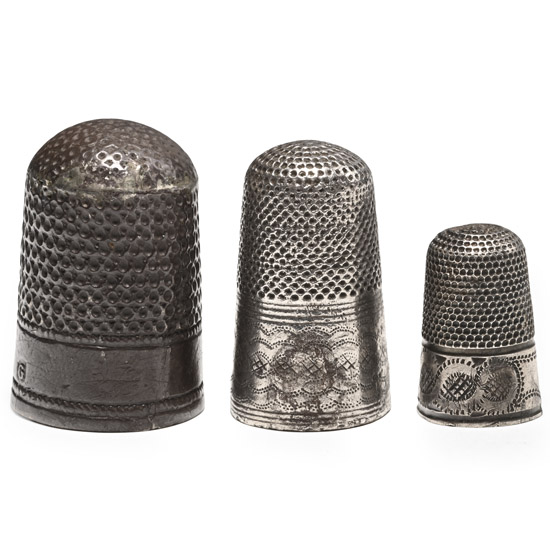
Post Medieval Silver Thimble Group
Circa 18th-19th century A.D.Sold for (Inc. bp): £78
Comprising three thimbles: the largest with a plain band stamped with 'G' and engraved with initials '*D*I*'; the second largest with a decorative band on the lower edge with a plain shield; the smallest with a decorative band to the lower edge resembling pinecones, and a plain shield. 11.15 grams total, 16-26 mm
Acquired on the UK art market. Property of a Lancashire, UK, collector. -
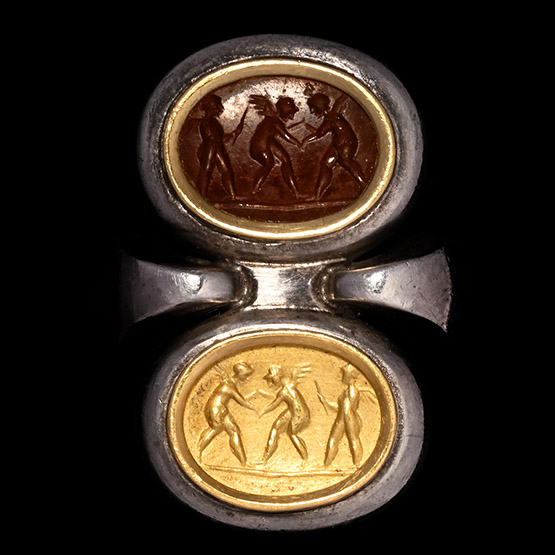
Roman Intaglio of Three Wrestling Erotes in Silver Ring
1st-2nd century A.D. and laterSold for (Inc. bp): £780
D-section hoop with widening lozenge-shaped shoulders supporting two discoid bezels; one with orange stone intaglio of three winged erotes, two engaged in a wrestling competition; a mirror image in gold below. 16.07 grams, 29.75 mm overall, 17.58 mm internal diameter (approximate size British O, USA 7, Europe 14.98, Japan 14)
Private collection, Europe. Acquired on the English art market. -
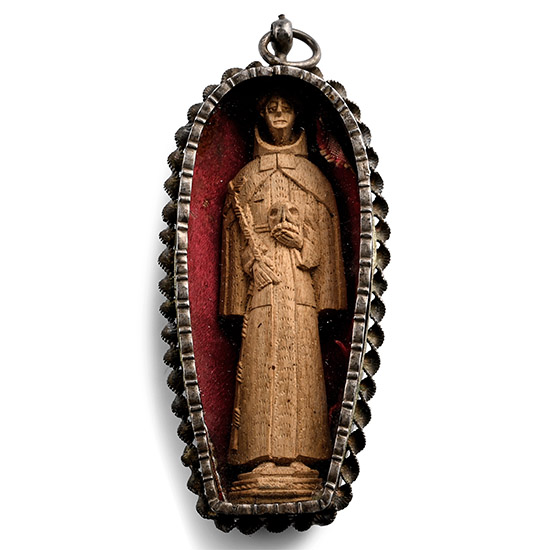
Wooden Sculpture of Saint Francis of Assisi in Silver Pendant
Spanish Colonies, 17th-18th century A.D.Sold for (Inc. bp): £390
A carved wooden figure of Saint Francis of Assisi holding a skull in his left hand and a cross in his right hand, set on a red fabric inside a silver tongue-shaped case with applied twisted wire decoration to the outer rim; attachment loop with ring to the top. 48.1 grams, 11 cm
Private collection, Europe. Acquired on the French art market.
