
Loading, please wait...


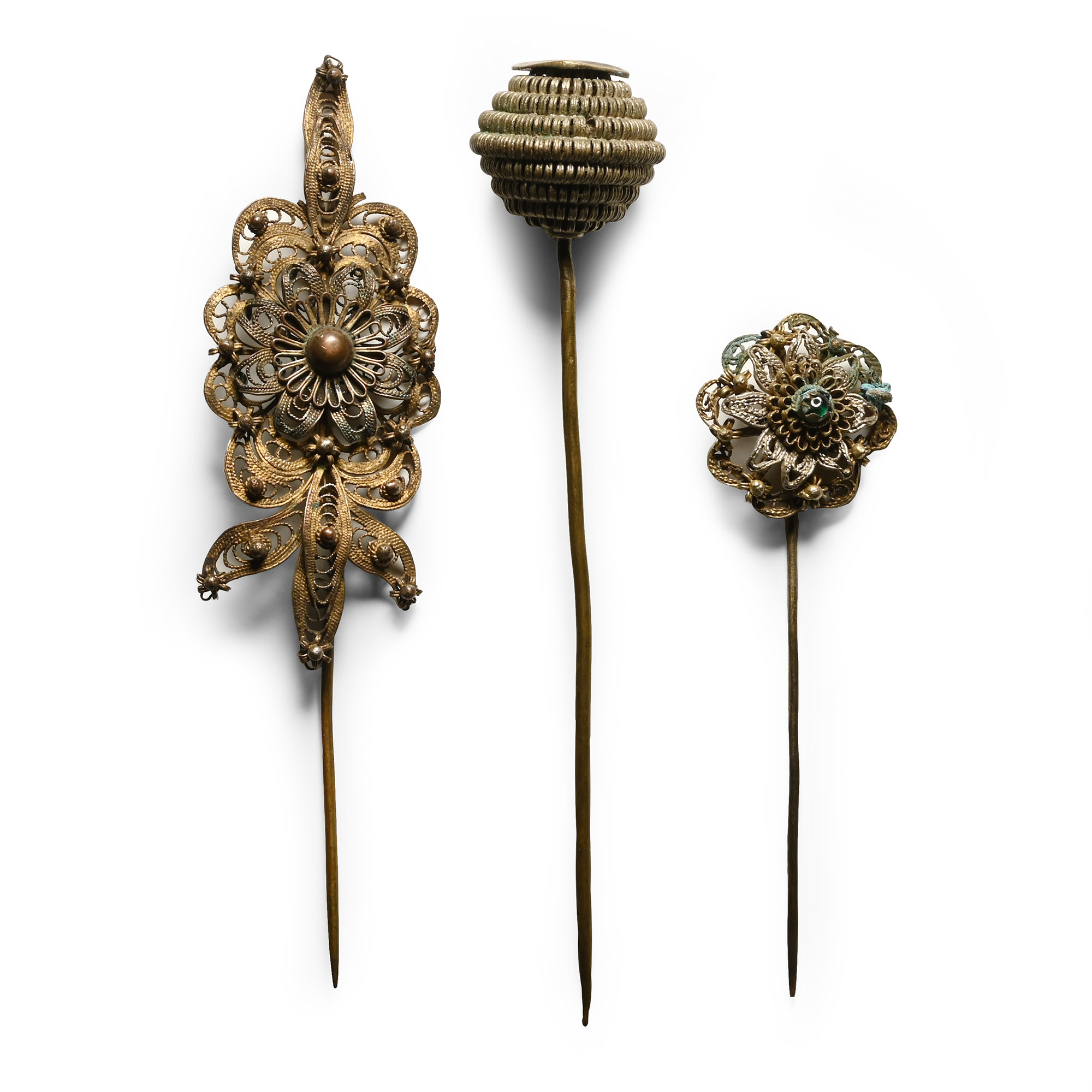
LOT 2097
Post Medieval Gilt Hair Pin Group
CIRCA 18TH-19TH CENTURY A.D.
3 3/8 - 4 7/8 in. (33 grams total, 8.7-12.3 cm).
Comprising: pin with hollow-formed stepped bulb; pin with canatille rosette; pin with canatille spray of leaves and flowers with granule detailing. [3, No Reserve]
ProvenanceAcquired Brigantia Antiques, York, UK, circa 2006.
Ian Wilkinson collection, Nottinghamshire, UK, formed since 1985.
This lot is accompanied by an illustrated lot declaration signed by the Head of the Antiquities Department, Dr Raffaele D’Amato.
TimeLine Auctions follows a vetting process to ensure the authenticity and legality of all items, reinforcing our commitment to integrity and responsible trading. Each antiquity, antique, and coin lot undergoes thorough examination by a vetting committee of at least ten external specialists, professional trade association members, scientists, and archaeologists: Our Vetting Process
AUCTIONS:
TimeLine is a leading auction house specialising in antiquities, ancient art, collectables, natural history, coins, medals, and books. Our auctions offer museums, collectors, historians, and enthusiasts the opportunity to acquire unique and historically significant pieces.
-
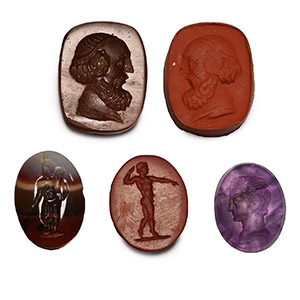
Collection of Roman Style Gemstones
19th century A.D.Sold for (Inc. bp): £91
Comprising: rectangular brown agate with profile bust, and impression from the same; ellipsoid sardonyx with intaglio Mercury standing; ellipsoid jasper with standing athlete; ellipsoid amethyst with profile bust. 5.9 grams total, 15-19 mm
From the collection of a London antiquarian, formed since the 1980s. This lot is accompanied by an illustrated lot declaration signed by the Head of the Antiquities Department, Dr Raffaele D’Amato. -
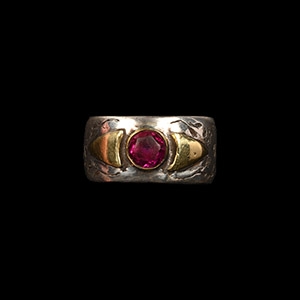
Georgian Silver and Gold 'The Heart Brings Love To You' Posy Ring
18th-19th century A.D.Sold for (Inc. bp): £442
Barrel-shaped hoop with incised inscription 'Corte Porta Amor' (The Heart Brings Love [To You]) amid tendrils and flowers; applied gold triangle to each shoulder, gold cel with inset facetted ruby-coloured gem. 11.30 grams, 24.72 mm overall, 19.18 mm internal diameter (approximate size British S, USA 9, Europe 20, Japan 19)
Private collection, Arundel, West Sussex, UK, 1980s. This lot is accompanied by an illustrated lot declaration signed by the Head of the Antiquities Department, Dr Raffaele D’Amato. -
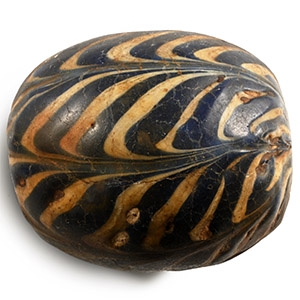
Massive Western Asiatic Style Glass Bead
20th century A.D.Sold for (Inc. bp): £65
A substantial oblate bead with dragged trails to the surface. 1.24 kg, 10.6 cm
Acquired 1970-1999. London collection of the late Mr S.M., thence by descent. This lot is accompanied by an illustrated lot declaration signed by the Head of the Antiquities Department, Dr Raffaele D’Amato.
