
Loading, please wait...
LOT 1503
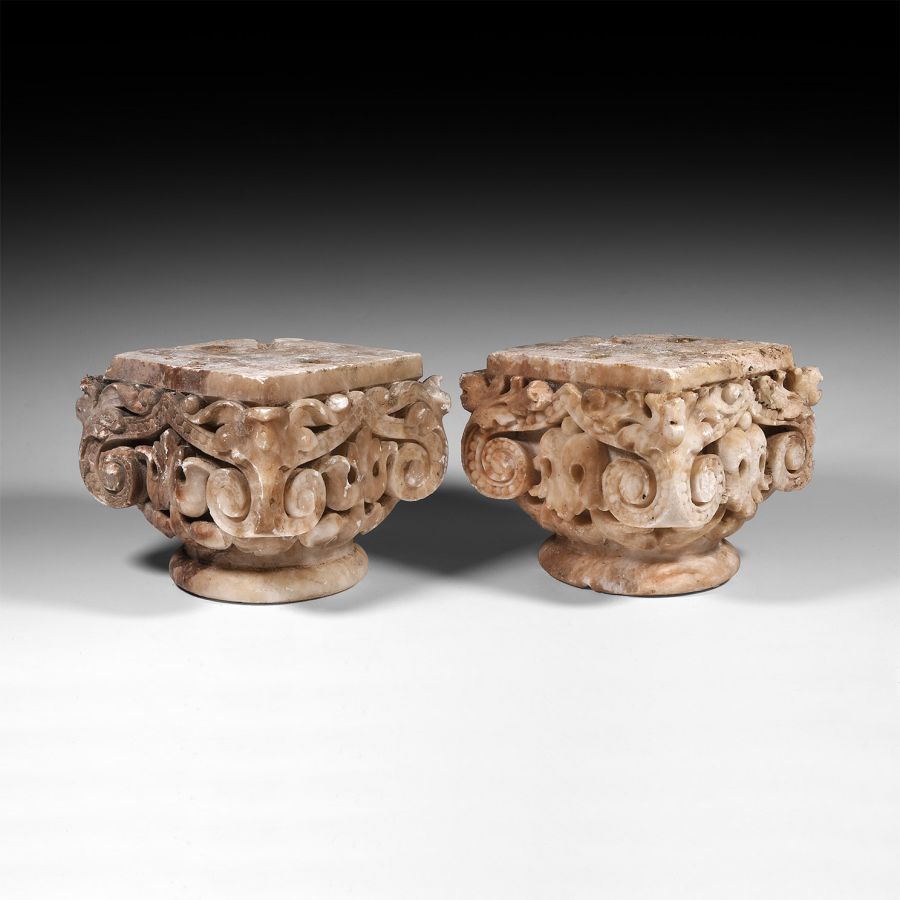
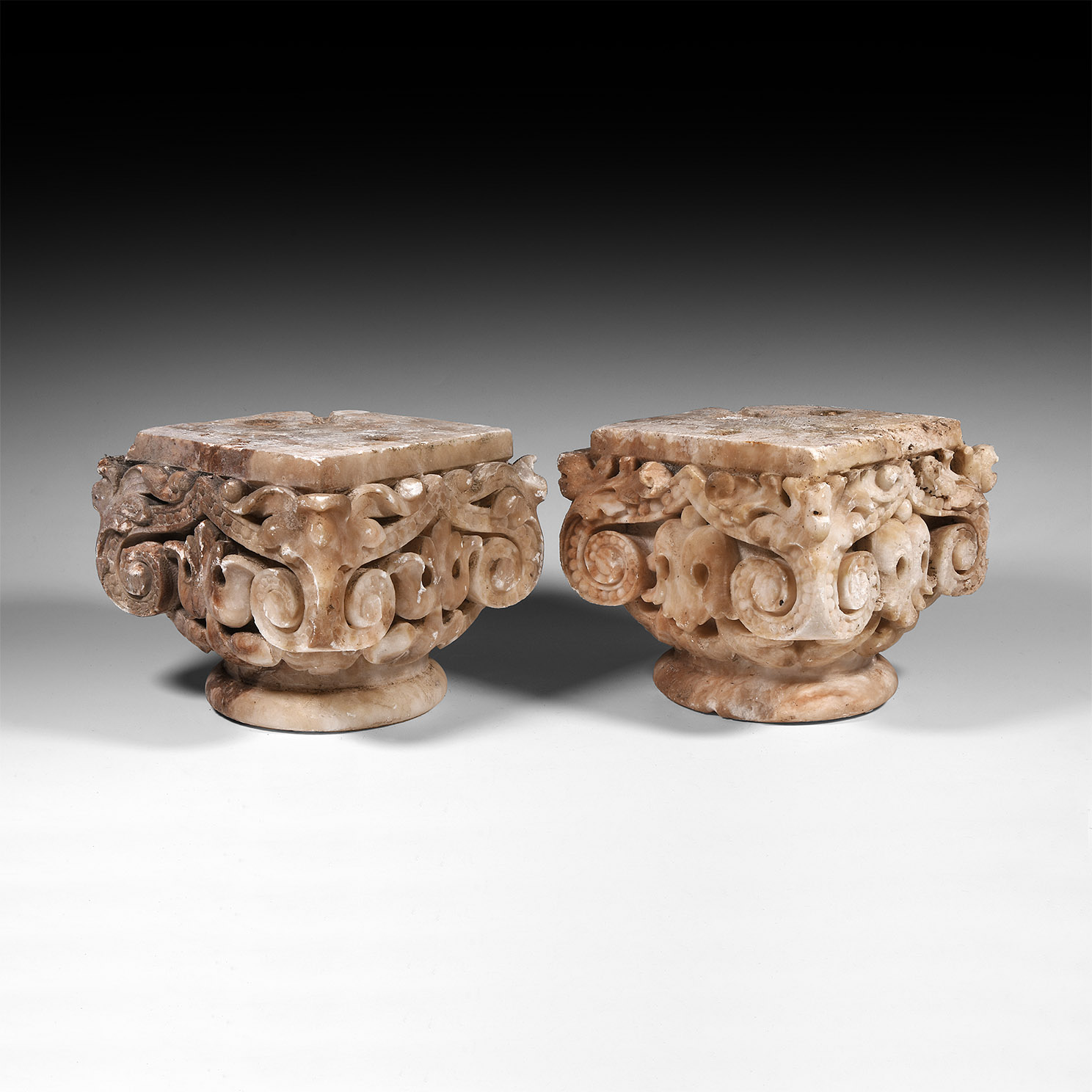
Post Medieval Georgian Pillar Capital Pair
18TH-EARLY 19TH CENTURY A.D.
7 1/8 x 7 1/8 in. (15.8 kg total, 18 x 18 cm each).
A matched pair of carved limestone pillar elements, each square in plan with three sides bearing ornamental scrolls and foliate motifs, a wreath of leaves to the base of the neck; pierced for support and one corner hollowed. [2, No Reserve]
ProvenanceUK gallery, acquired in the 2000s.
Property of an English gentleman.
TimeLine Auctions follows a vetting process to ensure the authenticity and legality of all items, reinforcing our commitment to integrity and responsible trading. Each antiquity, antique, and coin lot undergoes thorough examination by a vetting committee of at least ten external specialists, professional trade association members, scientists, and archaeologists: Our Vetting Process
AUCTIONS:
TimeLine is a leading auction house specialising in antiquities, ancient art, collectables, natural history, coins, medals, and books. Our auctions offer museums, collectors, historians, and enthusiasts the opportunity to acquire unique and historically significant pieces.
-
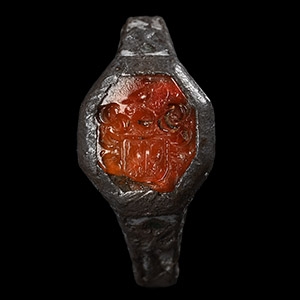
Tudor Period Ring with Armorial Gemstone
Circa 16th-17th century A.D.Sold for (Inc. bp): £85
A copper-alloy ring composed of a slightly misshapen rectangular-section hoop and octagonal bezel set with a polished carnelian intaglio, engraved with an armorial design composed of a shield surmounted by a helm and bird facing right; remains of polychrome enamelled cells of foliate and geometric forms. 6.87 grams, 26.26 mm overall, 19.02 mm internal diameter (approximate size British P, USA 7 1/2, Europe 16.23, Japan 15)
Found Cambridgeshire in the 1990s. -
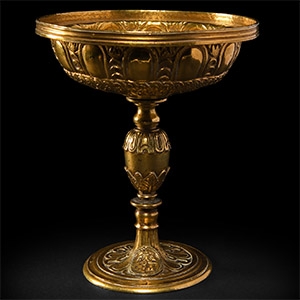
Post Medieval Gilt Silver Dated Decorated Chalice
15th-16th century A.D.Sold for (Inc. bp): £1,950
A gilt silver chalice with bowl decorated with repoussé arcading, fluting and entwined motifs, balustered stem with ovoid centre adorned with pseud-architectural and leaf detailing, fluting below splaying out onto a circular foot bearing an applied oval armorial cartouche; interior base with foliate roundel in raised relief; dated 1589 in Roman numerals incised on the base. 309 grams, 13.5 cm high
English private collection. -
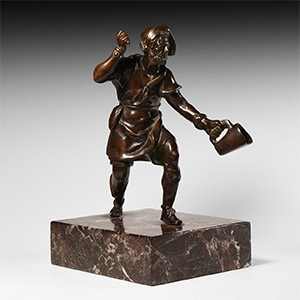
Bronze Bird Catcher Figure
18th-19th century A.D.Estimate: £1,000 - 1,400 (+bp*)
Opening Bid: £500
A bronze bird catcher figure clad in garments evoking the Middle Ages, modelled in the round stalking his prey with a cage in one hand and a cudgel or baton held in the other, ready to strike, a number of birds suspended from his belt, together with other pouches; mounted on a veined granite base. 6.15 kg total, 27 cm high including stand
English private collection.
