
Loading, please wait...
LOT 2050
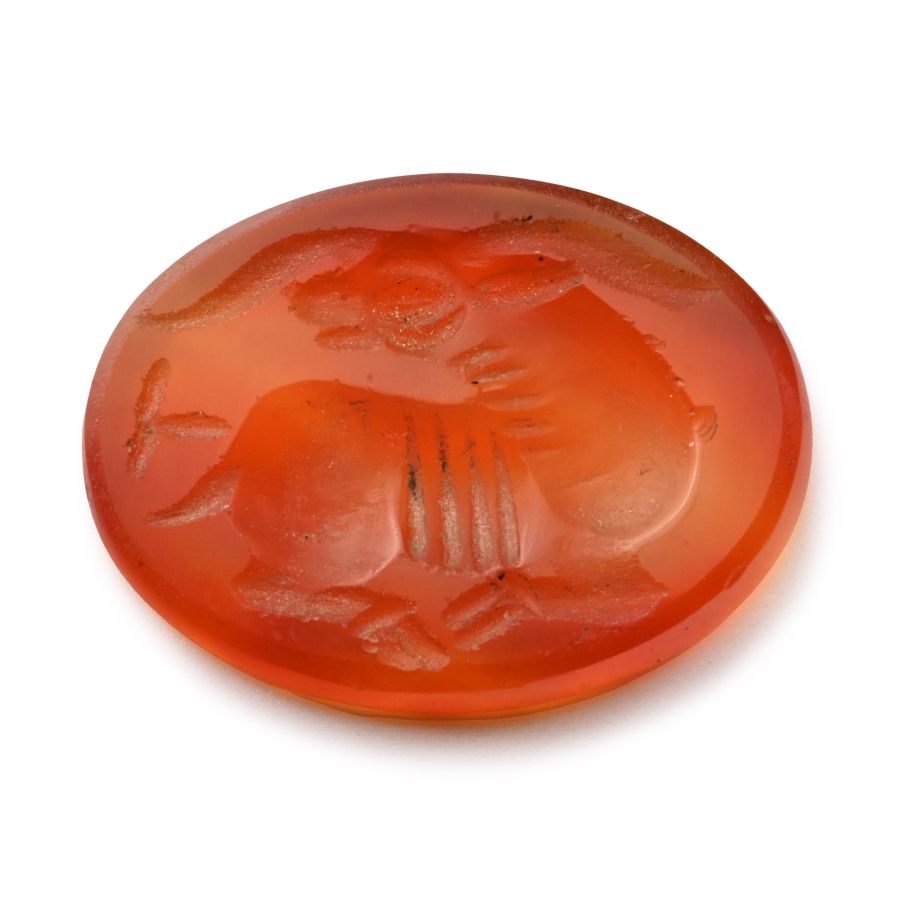
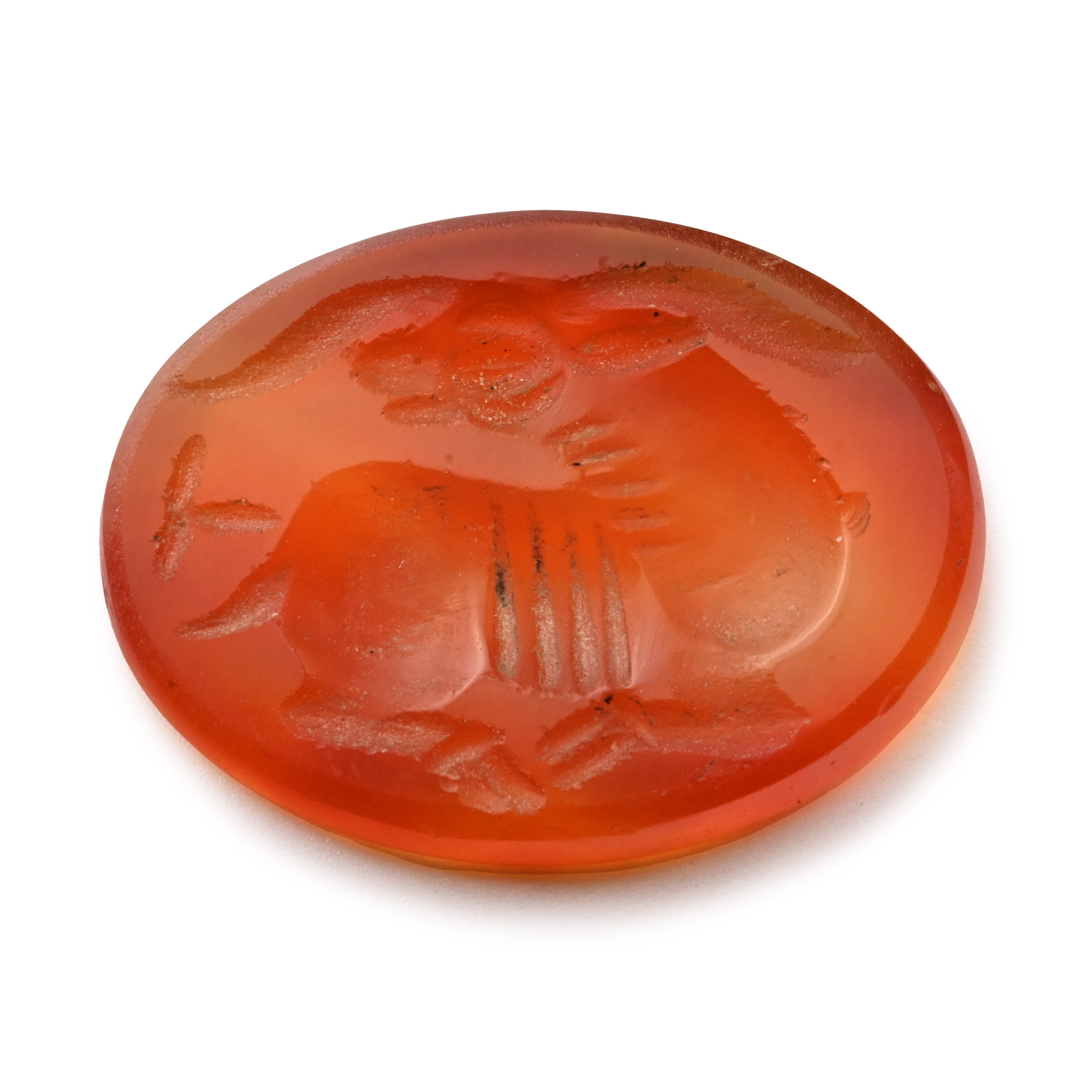
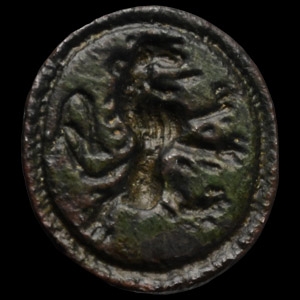
Post Medieval Gemstone with Crouching Ibex
20TH CENTURY A.D.
3/4 in. (1.6 grams, 18 mm).
Ellipsoid plaque with intaglio representing an ibex with head turned to the rear, legs folded beneath the body. [No Reserve]
ProvenanceProperty of a London lady; from her family collection formed in the 1970s.
From the private collection of John Meredith, acquired since the 1990s; thence by descent.
This lot is accompanied by an illustrated lot declaration signed by the Head of the Antiquities Department, Dr Raffaele D'Amato.
TimeLine Auctions follows a vetting process to ensure the authenticity and legality of all items, reinforcing our commitment to integrity and responsible trading. Each antiquity, antique, and coin lot undergoes thorough examination by a vetting committee of at least ten external specialists, professional trade association members, scientists, and archaeologists: Our Vetting Process
AUCTIONS:
TimeLine is a leading auction house specialising in antiquities, ancient art, collectables, natural history, coins, medals, and books. Our auctions offer museums, collectors, historians, and enthusiasts the opportunity to acquire unique and historically significant pieces.
-
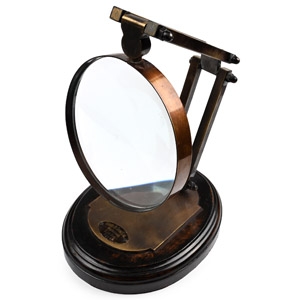
Reproduction 'Watts & Sons' Desk Magnifying Glass
20th century A.D.Sold for (Inc. bp): £20
Mounted on a stand for use on a desk with articulated arm. 1.15 kg, 28.5 cm
From the private collection of a Kent, UK, gentleman. This lot is accompanied by an illustrated lot declaration signed by the Head of the Antiquities Department, Dr Raffaele D'Amato. -

Large Ethiopian Manuscript Page from the Miracles of Mary
Ethiopia, circa 1650 A.D.Sold for (Inc. bp): £715
Depicting, recto: scenes of a soul being weighed by St. Michael and saved by the Virgin Mary, legends accompanying the images; verso: two columns of Ge'ez script. 18 grams, 29.5 x 27 cm
From the collection of David Buxton (1910-2003), author of 'Travels in Ethiopia', 1949. Ex central London gallery. This lot is accompanied by an illustrated lot declaration signed by the Head of the Antiquities Department, Dr Raffaele D'Amato. -
Georgian Bronze Seal Matrix with Rampant Lion
18th century A.D.Sold for (Inc. bp): £91
Discoid with trefoil handle and knop finial, underside with an intaglio motif of a rampant lion; supplied with a museum-quality impression. 3.38 grams, 25 mm
From continental Europe. Acquired on the UK art market in the 1970s-1990s. Property of a Nottinghamshire, UK, gentleman. This lot is accompanied by an illustrated lot declaration signed by the Head of the Antiquities Department, Dr Raffaele D'Amato.
